

Introduction – Religion of Absolute Truth or a Framework of Strategic Falsehood?
When any system is presented as the “Absolute Truth” or the “Divine Path,” it is fundamental that integrity and absolute truthfulness must hold the supreme, unconditional position within its moral foundation. However, a meticulous study of Islamic scriptures, Hadiths, and jurisprudence (Fiqh) reveals that lying, concealment, and deception are treated not merely as occasional personal exceptions, but as institutional and strategic tools.
This analysis adopts a strictly critical dimension to demonstrate how these theological principles operate in practice to serve a larger geopolitical project.
1. The Conceptual Framework: Institutionalized Lying and Its Variations
In Islamic law (Sharia) and its core doctrines, specific terminology has been classified to facilitate the concealment or manipulation of truth. Critics argue that this sophisticated categorization effectively transforms deception into a systematic science.
A. Taqiyya (تقية) – Strategic Concealment of Identity
- Definition and Principle: Concealing one’s true faith, intentions, or beliefs, and acting in accordance with the expectations of outsiders to avoid potential harm or to advance broader Islamic interests.
- Authentic Sources:
- Quran (3:28):“Let not believers take disbelievers as allies rather than believers… unless you safely guard yourselves against them by way of Taqiyya (Tuqatan).”
- Tafsir al-Jalalayn: The exegesis of this verse explicitly states that if Muslims are under the dominion or influence of non-Muslims, they may display superficial friendship outwardly to ensure their security or gain, while harboring enmity within their hearts.
- Shia Tradition (Al-Kafi, Vol. 2, p. 217): While Sunni jurisprudence limits this primarily to times of mortal peril, Shia jurisprudence elevates it to an indispensable pillar of faith: “Taqiyya is my religion and the religion of my ancestors; he who has no Taqiyya has no faith.”
- Critical Exposition: This principle dismantles the very foundation of social trust. If an individual is religiously authorized to mask their true allegiance, any public declaration of peaceful co-existence risk becoming nothing more than a strategic mask. If a religion requires a strategy of institutionalized lying for its preservation, it ceases to be just a spiritual path and reveals itself as a calculated political project.
B. Kitman (كتمان) – Half-Truths as Total Deception
- Definition and Principle: Telling only a selective portion of a fact in a manner that confuses the listener and completely alters the actual meaning. It is the art of selective truth-telling.

- The Classic Example (Quran 5:32 vs. 5:33):
- Modern apologists frequently quote the selective half of Quran 5:32: “Whoever kills a soul, it is as if he had slain mankind entirely.” This is routinely presented as absolute proof of Islam’s inherent peacefulness.
- The Concealed Fact (Kitman): The complete context of the verse reveals that this mandate was explicitly decreed for the Children of Israel (the Jews), not for Muslims. Immediately following this, in the very next verse—Quran 5:33—the actual directive for Muslims is laid bare:“Indeed, the penalty for those who wage war against Allah and His Messenger and spread mischief upon the land is none other than that they be killed or crucified or that their hands and feet be cut off from opposite sides…”
- Critical Exposition: The phrase “waging war against Allah and His Messenger” is defined so loosely in jurisprudence that criticizing the Prophet or resisting Islamic sovereignty falls under its purview. Presenting half a verse to charm the world while deliberately omitting the brutal penal codes of the consecutive verse is the ultimate demonstration of Kitman.
C. Tawriya (تورية) – Linguistic Duplicity (Mental Reservation)
- Definition and Principle: Carefully choosing words that possess double meanings. The speaker intends one specific meaning in their mind (which may be technically true), while intentionally ensuring the listener understands a completely different meaning.
- Practical Application: If a Muslim tells a non-Muslim, “I highly respect you,” under Tawriya, their internal meaning might be, “I respect your biological structure as a human creation, but I despise your identity as a Kafir.”
- Critical Exposition: This is a calculated linguistic fraud. While Islamic jurists defend it as a holy alternative to direct lying, on an ethical plane, it represents sheer double-dealing.

- Tafsir Ibn Kathir: Explicitly notes that a Muslim can use ambiguous words or misdirection to deceive a non-Muslim in times of conflict or struggle.
- The Root Paradigm: When Muhammad declared “Al-Harbu Khud’ah” (War is deceit), it established that the foundational roots of Islamic strategy are built upon deception. Until Islam achieves absolute political dominance, the employment of misdirection is deemed entirely legitimate.
Sahih Bukhari 3029 (Scan from Quran.com)
Sahih Muslim 1739 (Scan from sunna.com)
D. Darura (الضرورة) – Legalizing the Forbidden out of Necessity
- Definition and Principle: In a state of emergency or perceived threat, the restrictions on forbidden (Haram) actions are temporarily lifted to protect personal survival or Islamic interests, making them fully permissible (Halal).

- Authentic Source & Jurisprudential Rule:
- Quran (16:106): “Whoever disbelieves in Allah after his belief… except for one who is forced while his heart remains content in faith.”
- Legal Maxim (Fiqh): Al-Darurat Tubih al-Mahzurat meaning “Necessity dictates that the forbidden becomes permissible.”
- Critical Exposition: This implies that a Muslim can lie, cheat, or engage in un-Islamic conduct outwardly, and later absolve themselves by claiming their heart was pure in faith. It serves as a religious ‘safe-exit scheme,’ shielding individuals from genuine accountability in secular societies.
E. Maruna (مرونة) – Opportunistic Flexibility
- Definition and Principle: The temporary suspension or relaxation of rigorous Sharia laws within non-Islamic societies to appear “modern, moderate, and tolerant.”
- Practical Application (The Teachings of Yusuf al-Qaradawi): According to modern Islamist strategists (such as the Muslim Brotherhood), if the ultimate goal is the expansion and service of Islam, Muslims can bypass rigid literalism. They are permitted to frequent modern clubs, adopt Western attire, and dilute Sharia restrictions to blend seamlessly into modern societies.
- Critical Exposition: This is not authentic reformation; it is a calculated, opportunistic strategy: “Appear weak and modern when you are a minority; enforce the uncompromising face of Sharia once you attain majoritarian power.”
F. Taysir (تيسير) – Sharia of Convenience
- Definition and Principle: Diluting Islamic laws or presenting them as “easy” and “lenient” whenever they appear too harsh, impractical, or unpopular to non-Muslims.
- Authentic Sources:
- Quran (2:185): “Allah intends for you ease and does not intend for you hardship.”
- Legal Maxim (Fiqh): Al-Mashaqqah Tajlibu al-Taysir meaning “Hardship brings forth ease (concessions).”
- Critical Exposition: This principle is frequently deployed to project a soft, humanitarian facade of Islam to attract converts and allies, effectively masking the political, majoritarian, and punitive dimensions of Sharia until the state apparatus is secured.
2. The Institutionalization of Deception in Military and Political Diplomacy
In Islamic theology, peace is not a permanent state; rather, the world is bifurcated into two spheres: Dar al-Islam (The Domain of Islam) and Dar al-Harb (The Domain of War). Until absolute global Islamic sovereignty is established, conflict is viewed as inevitable, and deception is validated as a primary weapon of warfare.
A. “War is Deceit”

- Authentic Sources:
- Sahih Bukhari (Hadith 3029) and Sahih Muslim (Hadith 1739): The Prophet Muhammad explicitly declared:“War is deceit.” (Al-Harbu Khud’ah)
Sahih Bukhari 3029 (Scan from Quran.com)
Sahih Muslim 1739 (Scan from sunna.com)
- Historical Execution: The Assassination of Ka’b bin Al-Ashraf (Sahih Bukhari 4037):This event stands as clear evidence of how personal trust and premeditated deception were structurally deployed to eliminate a political opponent. Ka’b bin Al-Ashraf was a Jewish poet who wrote verses criticizing Muhammad. Frustrated by his criticism, Muhammad asked his followers who would rid him of Ka’b. Muhammad bin Maslama volunteered, explicitly requesting permission from the Prophet to lie and deceive Ka’b to gain his confidence. The Prophet granted him full permission.
- The Strategy of Treachery:Maslama went to Ka’b accompanied by two conspirators. Prior to the meeting, Maslama instructed his companions: “When Ka’b comes, I will touch his hair and smell it. When you see that I have got a strong hold of his head, strip him (strike him)!”When Ka’b bin Al-Ashraf came down from his fortress, diffusing the scent of high-class perfume, Maslama flattered him saying, “I have never smelt a better scent than this.” Ka’b proudly replied, “I have the best Arab women who know how to use high-class perfume.”Maslama then asked, “Will you allow me to smell your head?” Ka’b replied, “Yes.” Maslama smelled his hair and invited his companions to smell it too, completely lowering Ka’b’s guard. Maslama requested a second time, “Will you let me smell your head again?” Ka’b agreed. The moment Maslama secured an unyielding grip on Ka’b’s head, he shouted to his conspirators, “Get at him!” Caught completely off guard through a false display of friendship, Ka’b was assassinated. The killers immediately returned to the Prophet to inform him of the successful execution.
- Critical Exposition: This historical account demonstrates that outside of an active battlefield, simulating friendship, gaining trust, and launching an ambush against a political opponent was not only sanctioned but executed with the explicit blessing of the Prophet.
- The Raid on Banu Mustaliq (Sahih Bukhari 2541): Similarly, this tribe was attacked unexpectedly while they were completely unaware, tending to their fields and watering their cattle. Launching a full-scale assault without any prior warning or formal declaration of treaty termination underscores this doctrine of strategic surprise.
B. Diplomatic Subterfuge in Treaties
- Directive to Withhold Divine Protection (Sahih Muslim 1731C):During military campaigns, commanders were given a highly specific instruction: if an besieged enemy requested surrender under the protection (Aman) of Allah and His Messenger, the commanders must not grant protection under those divine names, but only under their own personal names or the names of their companions.

- The Strategic Reason and Critique: If a treaty sealed in the name of Allah or His Messenger had to be broken later for geopolitical advantages, it would damage the divine credibility of Islam. However, breaking a treaty signed merely in a human name could easily be dismissed as a personal error or a diplomatic necessity. This provides proof that treaties were viewed as temporary compromises to be honored only as long as Muslims remained in a position of weakness.
- The Treaty of Hudaybiyyah and Historical Precedents: The 10-year peace treaty of Hudaybiyyah was strategically utilized by Muslims as a breathing space to consolidate military strength, and it was abandoned to conquer Mecca as soon as tactical superiority was achieved. Subsequent historical betrayals—such as the calculated violations of oaths by later rulers like Aurangzeb against Sikh leaders—reflect this established tradition of diplomatic double-dealing.
3. Legitimacy of Falsehood in Social and Familial Spheres: The Ethical Crisis
The religious authorization of lying is not restricted to geopolitical warfare; it penetrates into the core of familial and social structures, diluting objective moral boundaries.
A. The Three Sanctioned Lies
- Authentic Sources:
- Jami` al-Tirmidhi (Hadith 1939) and Sahih Muslim (2605A): The Prophet stated that lying is not permissible except in three specific scenarios: in war, to bring reconciliation between two feuding parties, and between a husband and wife to maintain harmony.
Jami‘ al-Tirmidhi 1939 (Scan from sunna.com)
Sahih Muslim 2605 (Scan from sunna.com)
B. Logical and Ethical Critique of the Exceptions
Because these Hadiths fail to establish any quantitative or qualitative boundaries, they introduce systemic ethical instability into society:
- The Domestic Sphere: Apologists argue this merely permits harmless flattery, like falsely praising a spouse’s appearance. However, because no legal limit is defined, if a husband consistently lies about a secret polygamous marriage, hidden financial assets, or severe liabilities to preserve the relationship, he remains legally blameless within Islamic jurisprudence. This framework undermines trust and basic rights within family structures.
- The Social Sphere (Reconciliation over Justice): If two parties are involved in a dispute where one side has committed a severe offense (such as theft, financial fraud, or violence), a mediator is religiously authorized to distort facts or suppress the truth under the banner of “reconciliation.” By placing collective consensus above absolute truth, this doctrine compromises the fundamental principles of objective justice. With lying permitted with enemies, friends, and spouses, it leaves virtually no sector of human interaction where absolute truthfulness is unconditionally required.
4. “Al-Makr” – When Deception Becomes a Divine Attribute
The most profound theological concern within this framework is that plotting, scheming, and misdirection are attributed directly to the character of the Divine Creator.
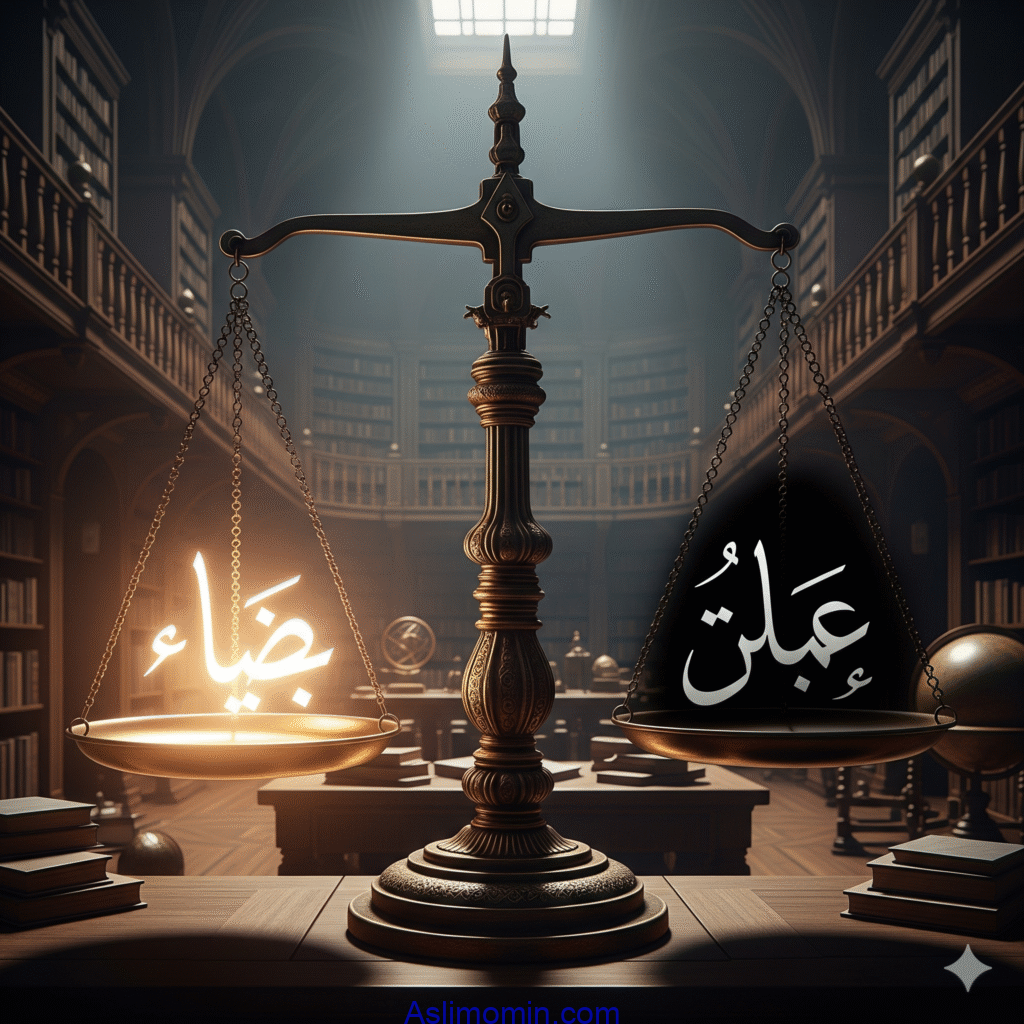
A. Linguistic and Exegetical Reality
- Quran (3:54):“And they plotted (Makaroo), and Allah plotted (Makara); and Allah is the best of plotters (Khayru-l-makirin).”
- Quran (8:30):“And they were plotting, and Allah was plotting, and Allah is the best of plotters.”
B. Classical Exegesis vs. Modern Apologetics
- The Verdict of Classical Scholars: Authoritative classical commentators like Al-Qurtubi and Ibn Kathir freely acknowledged that the literal root word ‘Makr’ (مكر) in Arabic signifies Khid’ah—which translates directly to deception, plotting, or a covert scheme. They asserted that Allah’s Makr is supreme because He overturns the secret schemes of His adversaries against them without their knowledge.
- The Shift in Modern Translation: Modern Islamic apologists deliberately replace this uncomfortable term in English and contemporary translations with softer phrases like “The Best of Planners.” However, classical Arabic possesses distinct words for transparent planning, such as Tadbeer or Plan. The precise theological selection of the word Makr indicates that the divine entity is conceptualized as a Grand Political Strategist rather than a manifestation of absolute, transparent truth.
- The Absolution of Broken Oaths (Quran 5:89): This systemic flexibility is further mirrored in the ease with which sacred oaths can be dissolved. According to Quran 5:89, if an individual breaks a solemn oath sworn in the name of Allah, they can fully expiate the sin by simply feeding ten needy people or offering a basic financial penalty. When oaths taken in the highest divine name can be undone through minimal material compensation, the foundational reliability of any covenant is called into question.

Conclusion: A Spiritual Faith or an Instrument of Political Expansionism?
A comprehensive and logical summation of these doctrines leads to a clear conclusion:
If a system requires systematic misdirection (Taqiyya), the selective suppression of context (Kitman), linguistic double meanings (Tawriya), opportunistic compromises (Darura, Maruna, Taysir), diplomatic subterfuge in treaties, and the elevation of plotting (Makr) into a divine attribute to sustain its growth, expand its borders, and preserve its authority – it moves away from being a purely moral or spiritual movement.
Instead, it functions as a highly ambitious geopolitical project wrapped in a mantle of piety, designed to establish absolute hegemony. Absolute truth never requires the crutches of institutionalized deception to validate its existence.
Final Reflection
If a system must rely on strategic falsehoods to propagate its “truth”… is that truth genuinely true? Or is it a sophisticated propaganda apparatus designed to execute political objectives under the guise of religion?
This analysis does not claim to present an absolute final verdict; rather, it introduces critical inquiries based on authentic textual sources. Review these dynamics through your own independent research and critical intellect.
If a faith requires multiple sanctioned methods of lying, deception, and oath-breaking, then it is not moving “towards God” but rather towards political domination.
True religion does not grow through conflict and trickery, but through morality and integrity.
Yet the Quran, the fiqh principles, and the Prophet’s own strategy demonstrate that falsehood is institutionalized as a tool of Islamic expansionism.
Final Question
If Islam must rely on lies even to spread its so-called “truth” — then is that “truth” truly divine?
Or is it merely a cunning propaganda machine disguised as religion?
This article does not claim to provide final conclusions; it merely raises questions and perspectives for reflection. Readers are encouraged to think and analyze with their own judgment.
📢 Did you find this article useful?
🙏 Support our work by clicking here.