

A Historical Analysis
Muslims in the Indian subcontinent firmly believe that the Quran is completely preserved and that not a single word has been changed. This belief is a fundamental part of Islamic teachings. However, historical evidence, Islamic sources, and scholarly research suggest that the process of Quranic preservation has been far more complex than commonly believed.
In this article, we will analyze the authenticity of the Quran based on historical records, ancient manuscripts, Hadith, and scholarly research to understand the reality of its preservation.
1. The Islamic Claim: Absolute Preservation of the Quran
Muslim scholars claim that Allah Himself has guaranteed the protection of the Quran, citing the following verse:

📖 Surah Al-Hijr (15:9)
“Indeed, We have sent down the Reminder (Quran), and indeed, We will be its Guardian.”
🔹 This verse is often used to prove that the Quran has never undergone any alterations.
🔹 However, Islamic sources and historical evidence suggest that the compilation and preservation of the Quran involved significant changes over time.
2. The Compilation of the Quran: A Historical Perspective
1️⃣ The Quran During Prophet Muhammad’s Time
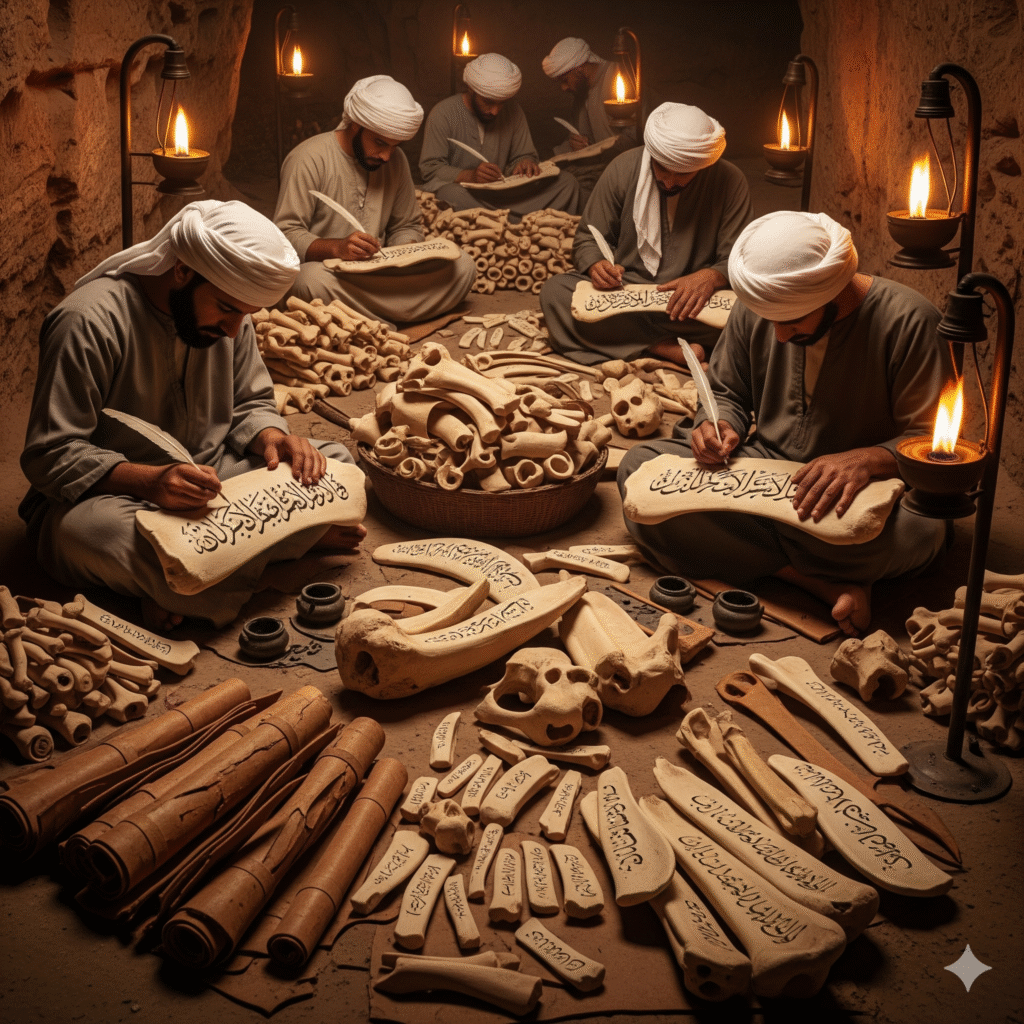
- The Quran was not compiled into a single book during Prophet Muhammad’s lifetime.
- It was written on bones, leaves, leather, stones, and was memorized by some of his companions.
- The Prophet (ﷺ) never instructed anyone to compile it into a book.
📖 Sahih Bukhari 4986
“The Prophet (ﷺ) passed away, and the Quran had not been compiled into a book.”
During the Battle of Yamama (fought against the false prophet Musaylima), many Qurra (memorizers of the Qur’an) among the Sahaba were martyred. This created the fear that parts of the Qur’an might be lost. Therefore, Umar ibn al-Khattab suggested to Abu Bakr that the Qur’an should be compiled into a single book.
🔹 If the Quran was fully preserved through oral tradition, why was there a need for written compilation?
Bukhari 49862️⃣ The First Compilation Under Abu Bakr (632-634 CE)
- During the Battle of Yamama, many Quran memorizers (Qaris) were killed, raising concerns about parts of the Quran being lost.
- Due to this, Caliph Abu Bakr ordered Zaid ibn Thabit to compile the Quran for the first time.
🔹 If the Quran was fully preserved orally, why was there a fear of it being lost?
This shows that there was a possibility of some portions of the Quran being lost.
3️⃣ The Standardization of the Quran by Uthman (650 CE)
- As the Islamic empire expanded, different regions began reciting the Quran differently, leading to disputes.
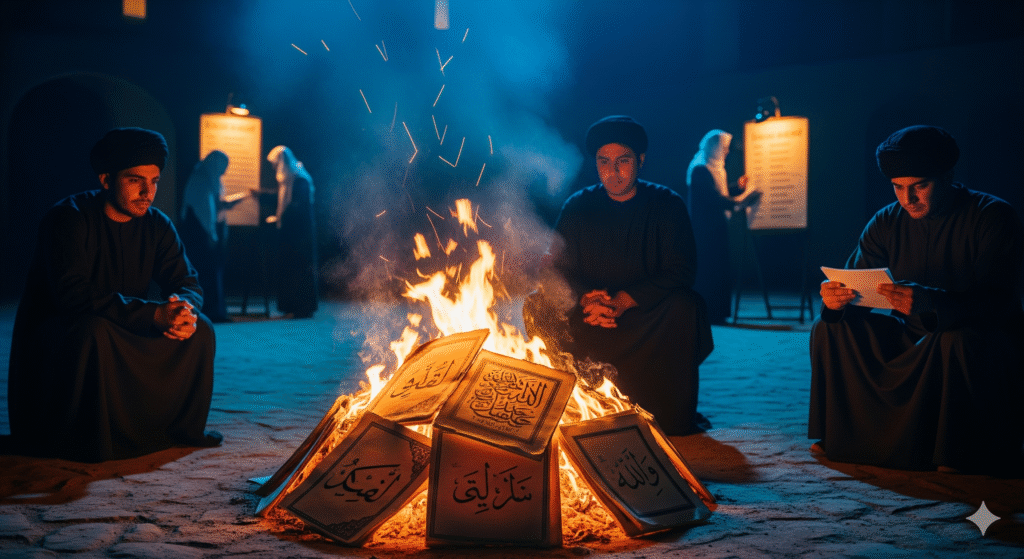
- To resolve this, Caliph Uthman ordered Zaid ibn Thabit to compile the Quran again and destroy all other versions.
📖 Sahih Bukhari 4987
“Uthman sent an official Quran copy to every region and ordered that all other copies be burned.”
📖 Sahih al-Bukhari 4987
Hudhayfah ibn al-Yaman came to ‘Uthman and said:
“The people of Iraq and al-Sham have begun to differ in their recitation of the Qur’an. Before they dispute over the Book as the Jews and Christians did, you (O Caliph) should bring the people together on one Mushaf.”
So ‘Uthman said to Hafsa:
“Send us the manuscripts (suhuf) so that we may make copies of them, and then we will return them to you.”
Then ‘Uthman summoned Zayd ibn Thabit, ‘Abdullah ibn az-Zubair, Sa‘id ibn al-‘As, and ‘Abdur-Rahman ibn al-Harith ibn Hisham, and said to them:
“If you and Zayd ibn Thabit disagree with regard to any part of the Qur’an, then write it in the dialect of Quraysh, for the Qur’an was revealed in their tongue.”
🔹 If the Quran was already perfectly preserved, why was it necessary to burn other versions?
🔹 This clearly indicates that multiple Quranic versions existed before Uthman’s standardization.
3. Missing Verses and Alterations in the Quran
1️⃣ Missing Verses in the Quran
- Several Hadiths suggest that some verses were lost or forgotten.
- For example, the verse on stoning adulterers (Rajm) is missing from today’s Quran.
📖 Sahih Muslim 1691
“Umar ibn Khattab said: ‘If I did not fear that people would say Umar added to the Quran, I would have written down the verse of stoning, because we used to recite it.’”
🔹 If Allah promised to protect the Quran, how did this verse disappear?
2️⃣ “A Goat Ate the Verse” Incident
📖 Sunan Ibn Majah 1944
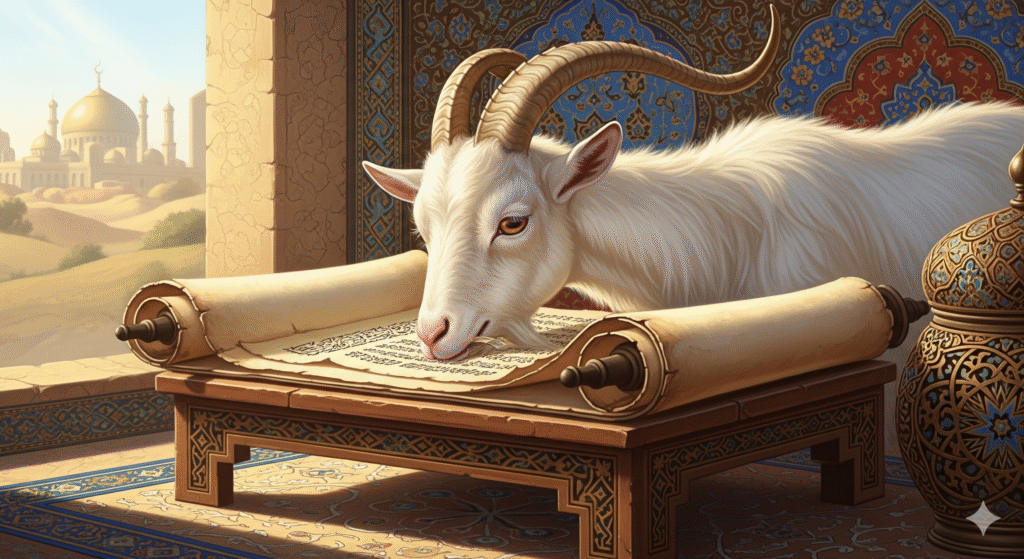
“Aisha (Prophet Muhammad’s wife) said: ‘The verse of stoning and the verse on adult breastfeeding were written on a paper under my bed. After the Prophet’s death, a goat came and ate them.’”
🔹 If the Quran was truly preserved, why was this verse lost?
4. The Dispute of Qira’at and Ahruf in the Quran
📖 Sahih Bukhari 2419
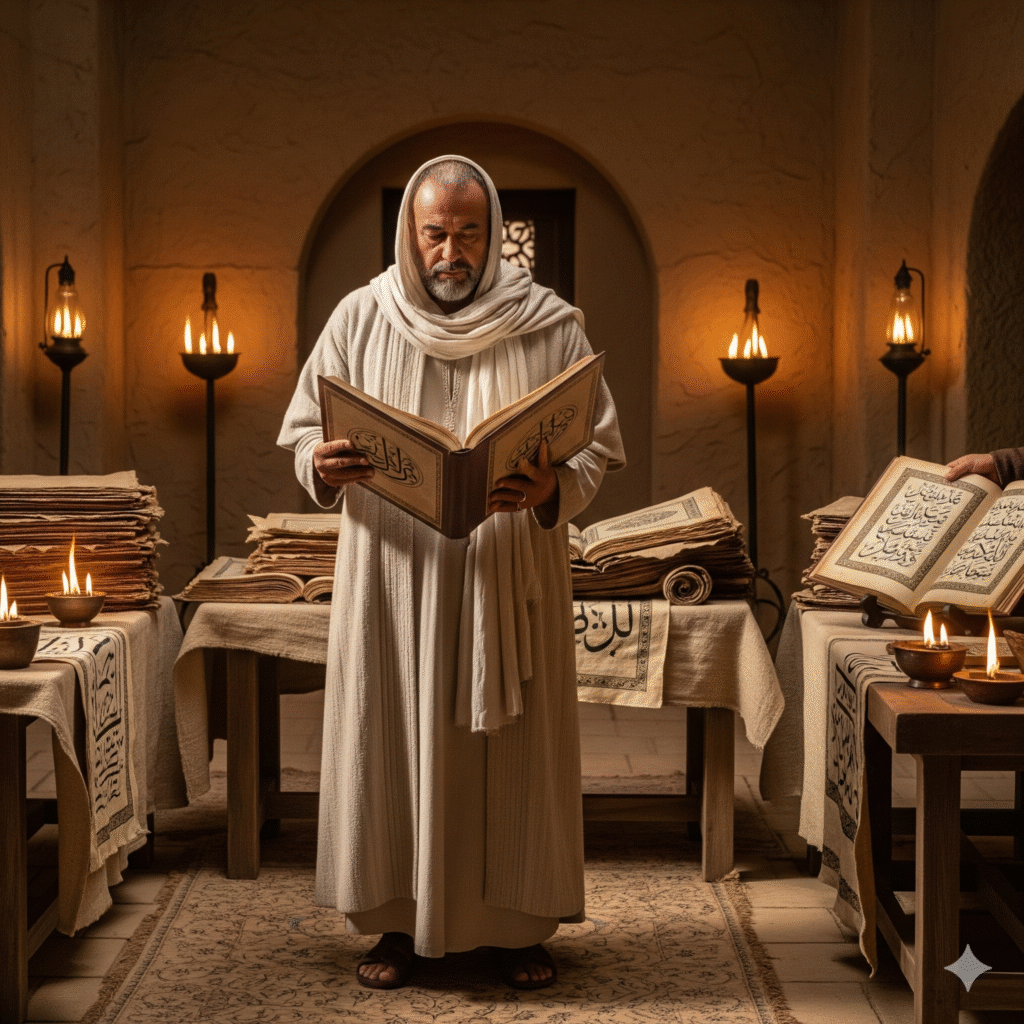
“Umar noticed that another person was reciting the Quran differently. When he brought the issue to Prophet Muhammad, the Prophet said, ‘Both are correct, as the Quran was revealed in seven Ahruf (dialects).’”
- However, in Urdu translations of this Hadith, the word “Ahruf” has been changed to “Qira’at” (recitation styles).
- Ahruf refers to actual textual differences, whereas Qira’at refers to pronunciation styles.
- Today, there are 28 known recitation styles of the Quran, contradicting the claim that there is only one unchanged Quran.
5. The Impact of Dots and Diacritics on the Quran
- Originally, the Quran did not have dots (Nuqtas) or vowel marks (Zabar-Zer-Pesh).
- Later, when these were added, some words’ meanings changed.
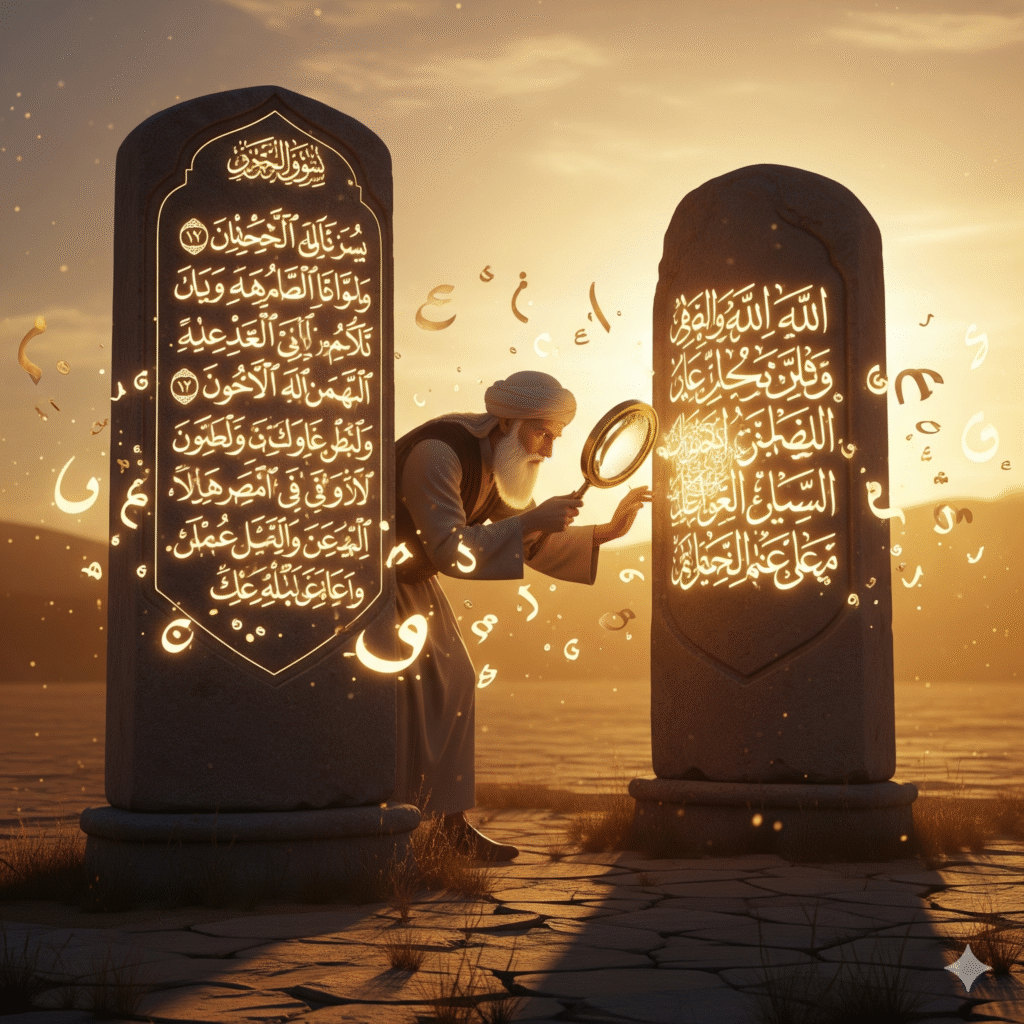
🔹 Example: Surah Ahzab, Ayah 68
1️⃣ Hafs Version:
📖 “والعنهم لعنا كبيرا” (Kabiran – كبيرا) → Meaning: “Allah will give them a great punishment.”
2️⃣ Warsh Version:
📖 “والعنهم لعنا كثيرا” (Kathiran – كثيرا) → Meaning: “Allah will give them many punishments.”
🔹 Even small textual differences can change the meaning of verses.
5.2 Early Versions of the Qur’an and Variations
The ninth-century Blue Qur’an can still be seen online; it was written without diacritical marks (dots).
In Al-Itqan fi ‘Ulum al-Qur’an, Al-Suyuti records that certain portions of the Qur’an were lost.
🔹 The Sana’a Manuscripts (1972)
In 1972, ancient Qur’anic manuscripts were discovered in a Yemeni mosque. When compared with today’s Qur’an, clear textual differences were found.
According to the German scholar Dr. Gerd Puin, these manuscripts reveal that the Qur’anic text underwent changes during the early period of Islam.
Abu ‘Ubayd reports: “Ibn ‘Umar said: Let none of you claim that he has acquired the whole Qur’an, for much of the Qur’an has disappeared.”
In the Mu‘ajjam al-Qira’at (Collection of Qur’anic Readings), it is also documented that changes occurred in the Qur’an over time.
📖 Dr. Gerd Puin (Observations on Early Quranic Manuscripts):
“In the early Islamic period, the Qur’anic text went through several changes before it was standardized.”
6. Hafs and Warsh Qira’at
Today, the Hafs recitation is the most widespread across the Muslim world, while in parts of Africa the Warsh recitation is used.
Between these two versions, scholars have identified over 1,300 textual differences.
Dr. Yasir Qadhi (The Crisis of Knowledge):
“Every Islamic student knows that different Qur’anic recitations exist, and that there are variations among them.”
🔹 The Central Question
If the Qur’an was always one and the same, why do two primary versions exist today?
This way the structure, references, and rhetorical flow remain intact, but the English reads academically polished and impactful.
7. 1924: The Official Standardization of the Hafs Quran

- In 1924, Al-Azhar University in Egypt officially adopted the Hafs Quran as the standard version.
- Prior to this, different schools used different versions, causing disputes among students.
- This proves that Quranic standardization is a modern process rather than an ancient one.
8. Conclusion: Is the Quran Truly Preserved?
| Historical Evidence | Does it Prove Full Preservation? |
|---|---|
| Abu Bakr’s Compilation | Shows the Quran was initially incomplete |
| Uthman’s Burning of Variants | Proves multiple versions existed |
| Lost Verses (Rajm, Goat Incident) | Indicates missing content |
| Sana’a Manuscripts and Hafs/Warsh Differences | Confirms textual alterations |
Final Verdict:
👉 Historical evidence does not fully support the claim of absolute Quranic preservation.
👉 The compilation and standardization process involved multiple changes.
Do you still believe that the Quran is perfectly preserved? 🤔
📢 Did you find this article useful?
🙏 Support our work by clicking here.