
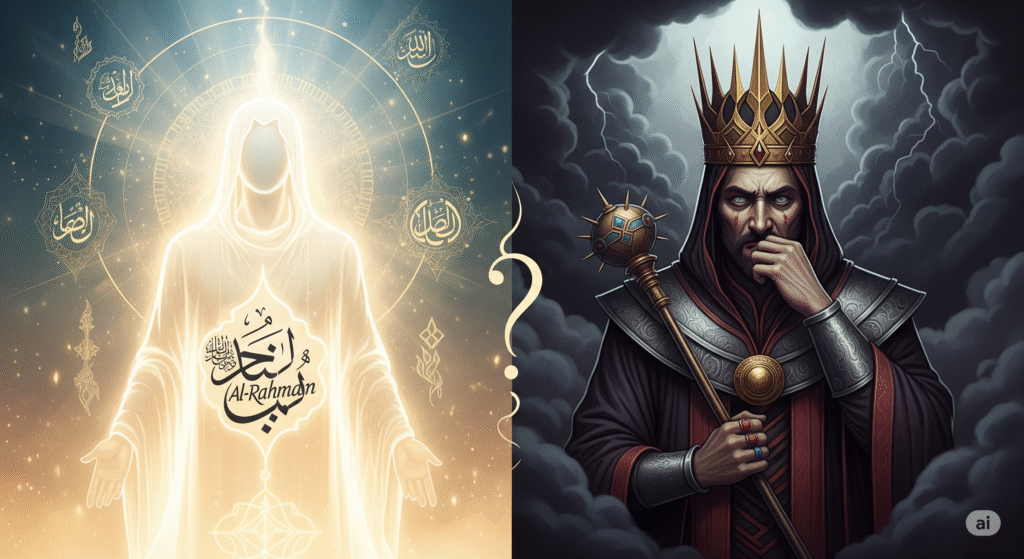
“The Nature and Attributes of the Islamic God (Allah) in the Light of the Quran and Hadith“
Introduction
In earlier essays, we observed how the Qur’an and Hadith have undergone changes over time.
This raises an important question:
If these changes exist, is our God truly what we imagine Him to be — Rahman (the Most Merciful), Rahim (the Most Compassionate), Adil (the Just), the Guide to the Right Path, Ahad (the One), and Samad (the Eternal)?
In this comparative study, we will draw references from the Qur’an, the Hadith, and their Tafsirs (commentaries).
Note: If you feel this content might offend your sentiments, please first read the [Disclaimer].
The Core Issue
Justice, Mercy, or a Conspiracy of Control? — An Inquiry
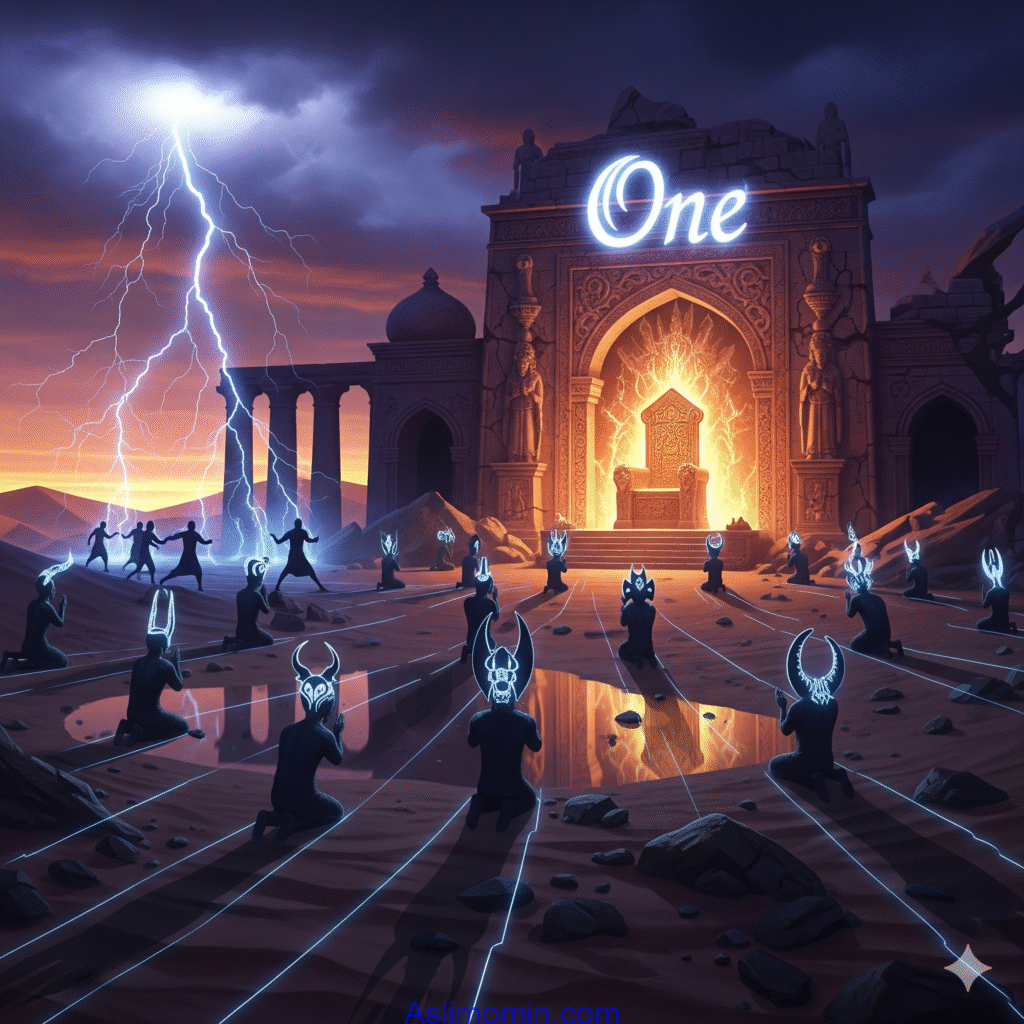
The First Declaration of Islam
“There is no deity except Allah.”
The very first proclamation of Islam lays the foundation of intolerance. It not only rejects all other faiths but also divides the entire human society into two categories:
- Momins (Muslims)
- Kafirs (Non-Muslims)
In this essay, we will confront the portrait of Allah as the “embodiment of mercy,” a portrait constructed not by critics but by Islam’s own canonical texts.
1. Allah: The Narcissistic and One-Sided Sovereign?
Qur’an 51:56 states:
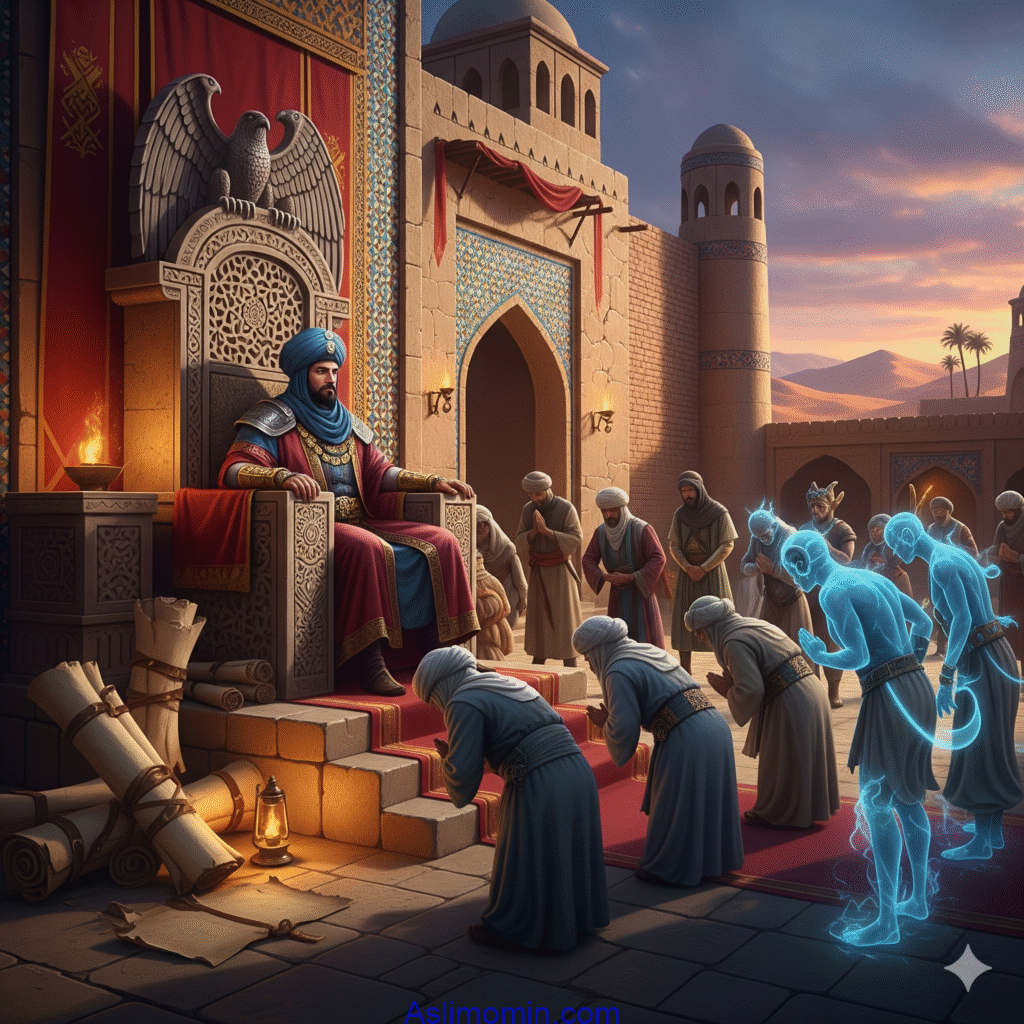
“I created jinn and mankind only to worship Me.”
Consider this:
Can the greatest purpose of an omnipotent God be merely to demand worship for Himself?
Is such a purpose compatible with an all-knowing, compassionate, and just Being?
Or does it resemble the conduct of a tyrannical ruler, who in every circumstance seeks only the gratification of his own ego?
2. A Religion of Fear and Control
The primary language of Islam’s Allah is fear.
- “If you do not pray, you will burn in the fire of Hell!”
- “If you are a disbeliever, you will face punishment in this world and the Hereafter!”
Across the Qur’an, words like ‘azab (torment), fire, Hell, beheading, and slaughter occur nearly 500 times.
The Question:
Would a truly merciful God constantly threaten His own creation with torture and annihilation?
3. Morality: Killing, Rape, Plunder, and Slavery?
Plunder and War
Qur’an 8:1 declares:
“The spoils of war belong to Allah and His Messenger…”
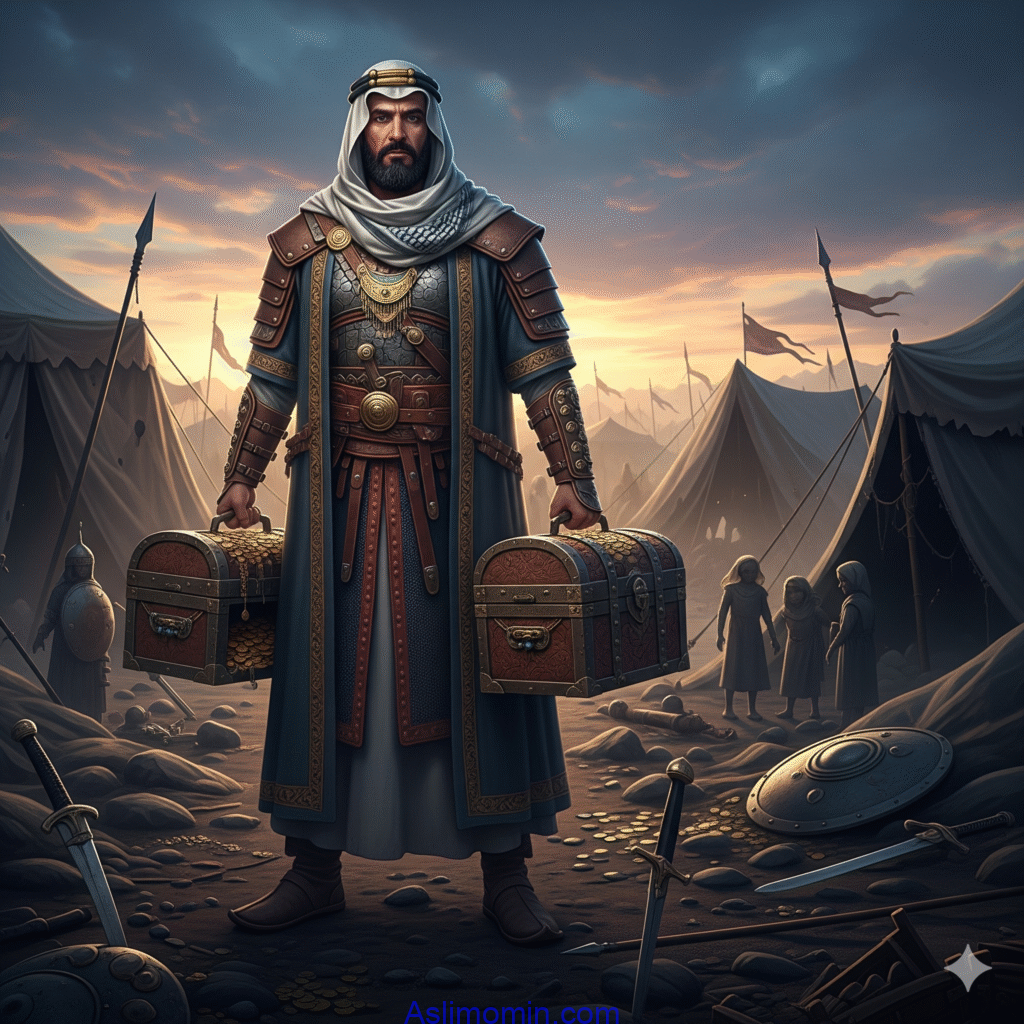
Meaning: whatever wealth and goods are seized after battle belong to the Messenger.
In Sahih Muslim 1745B, it is recorded that the Prophet justified the killing of children during war. When asked if the killing of children was permissible, he replied:
Muslim 1745B“They are from among them (the disbelievers).”
The Question:
Can an omnipotent God truly sanction plunder and the killing of children in war?
Slavery and Concubinage
Qur’an 4:24 states:
“…those whom your right hand possesses (slave women) are lawful for you.”
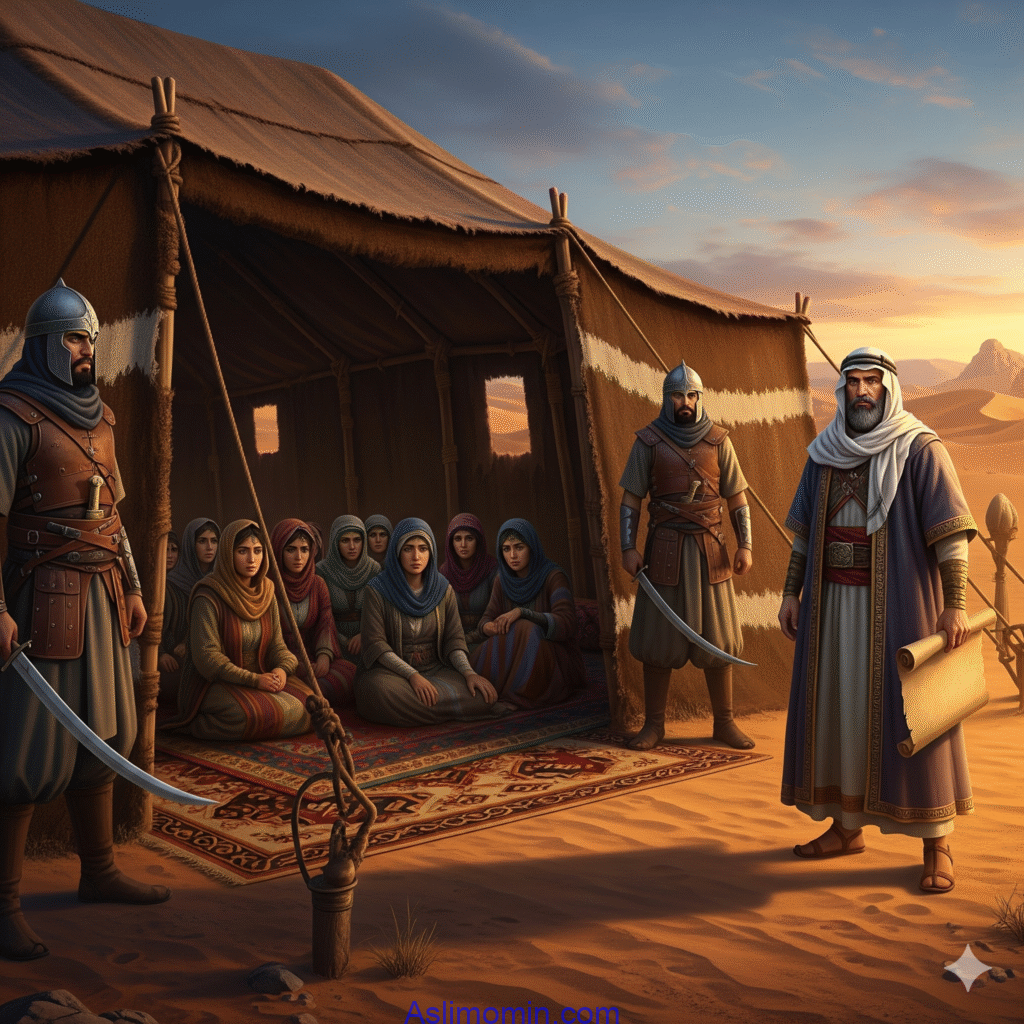
Here, “what the right hand possesses” (malikat al-yameen) refers to women captured in war — who could be sexually exploited or sold as property.
The Prophet himself kept multiple women as concubines seized in battle — Safiyya, Rayhana, Juwayriya, among others.
Historical records note that over a hundred male and female slaves belonged to the Prophet alone.
4. Justice in Tatters: The Muslim’s Crime Forgiven, the Infidel’s Virtue Nullified
Allah is often praised as the Just (al-‘Adil).
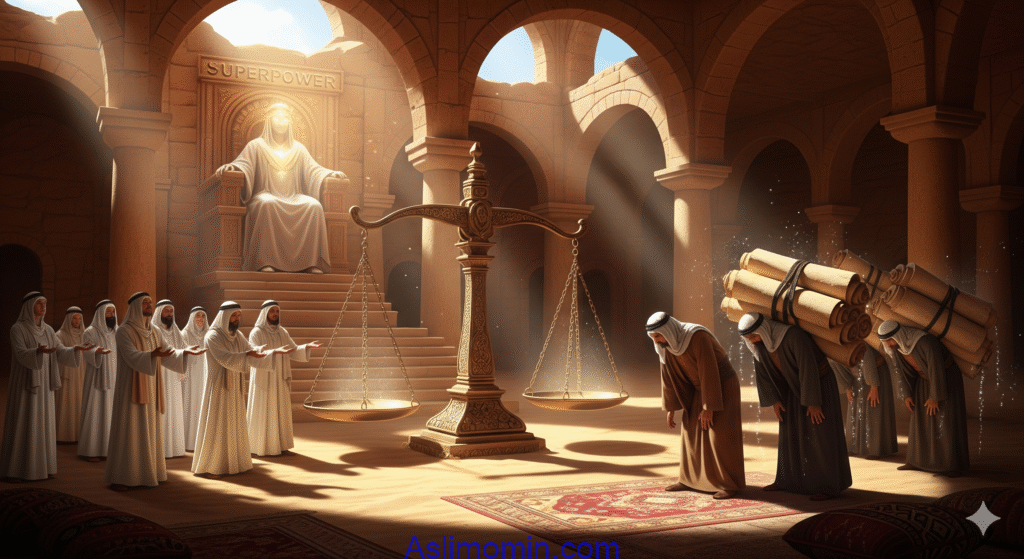
But the question arises: Can a true judge shift the crimes of his favorite offender onto an innocent person?
Examples from Hadith
Sahih Muslim 2767A & B:
Muslim 2767a“On the Day of Judgment, the sins of Muslims will be placed upon some innocent Jews and Christians.”
Sahih Muslim 2767D:
“Allah will forgive even the mountain-sized sins of believers. If a Muslim commits sins all his life, but repents before death, he will enter Paradise.”
The Qur’an’s Command
Qur’an 9:73:
“O Prophet! Strive hard against the disbelievers and the hypocrites. Their abode is Hell.”
The Question:
Is this justice?
Is it justice that a Muslim may spend his entire life committing murder, rape, and oppression, yet if he repents at the last moment he is guaranteed Paradise — while a compassionate, honest Hindu or Christian is condemned to eternal fire simply for not believing?
5. Guidance and Misguidance — In Allah’s Hands Alone
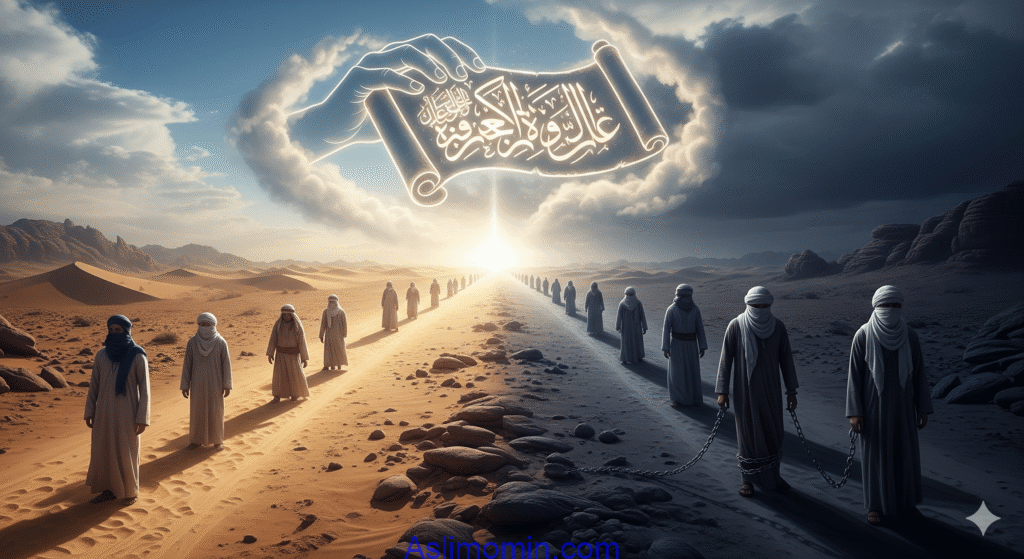
The Qur’an repeatedly asserts that guidance and misguidance are exclusively in Allah’s control.
Qur’an 14:4:
“Allah guides whom He wills, and misleads whom He wills.”
Qur’an 2:7:
“Allah has sealed their hearts and their ears, and a veil is over their eyes.”
Satan vs. Allah — Who Is the Real Misleader?
The Qur’an acknowledges that Satan whispers and misleads mankind (Qur’an 7:16–17).
But ultimately, it is Allah Himself who decrees misguidance.
The Question:
- If Satan misleads and Allah cannot prevent it, does that not make Satan more powerful than Allah?
- If Satan merely carries out what Allah has already decreed, then Satan is nothing more than a subordinate worker. The true “misleader” is Allah Himself.
Predestination and the Scripted Life
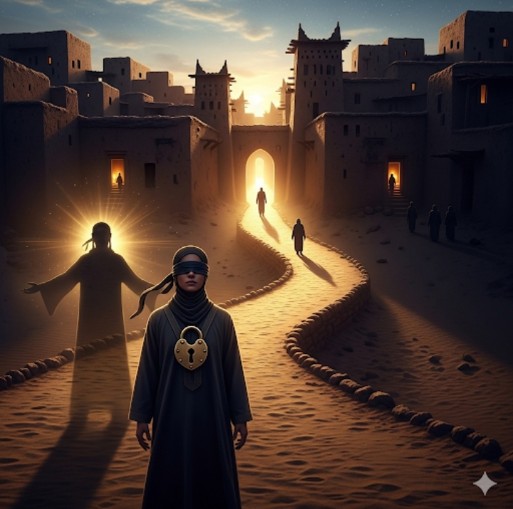
The Qur’an and Hadith are explicit about absolute predestination:
Qur’an 57:22:
“No calamity befalls on earth or within yourselves without it being written in the Preserved Tablet before We bring it into existence.”
Jami‘ al-Tirmidhi 2155 & 3319:
Tirmidhi 3319“Allah commanded the Pen to write everything until the Day of Judgment.”
The Inevitable Conclusion
If a person goes astray, it is not due to his free will but because Allah Himself sealed his fate and decreed it long ago.
6. Breaking Oaths and the Convenient Kaffara
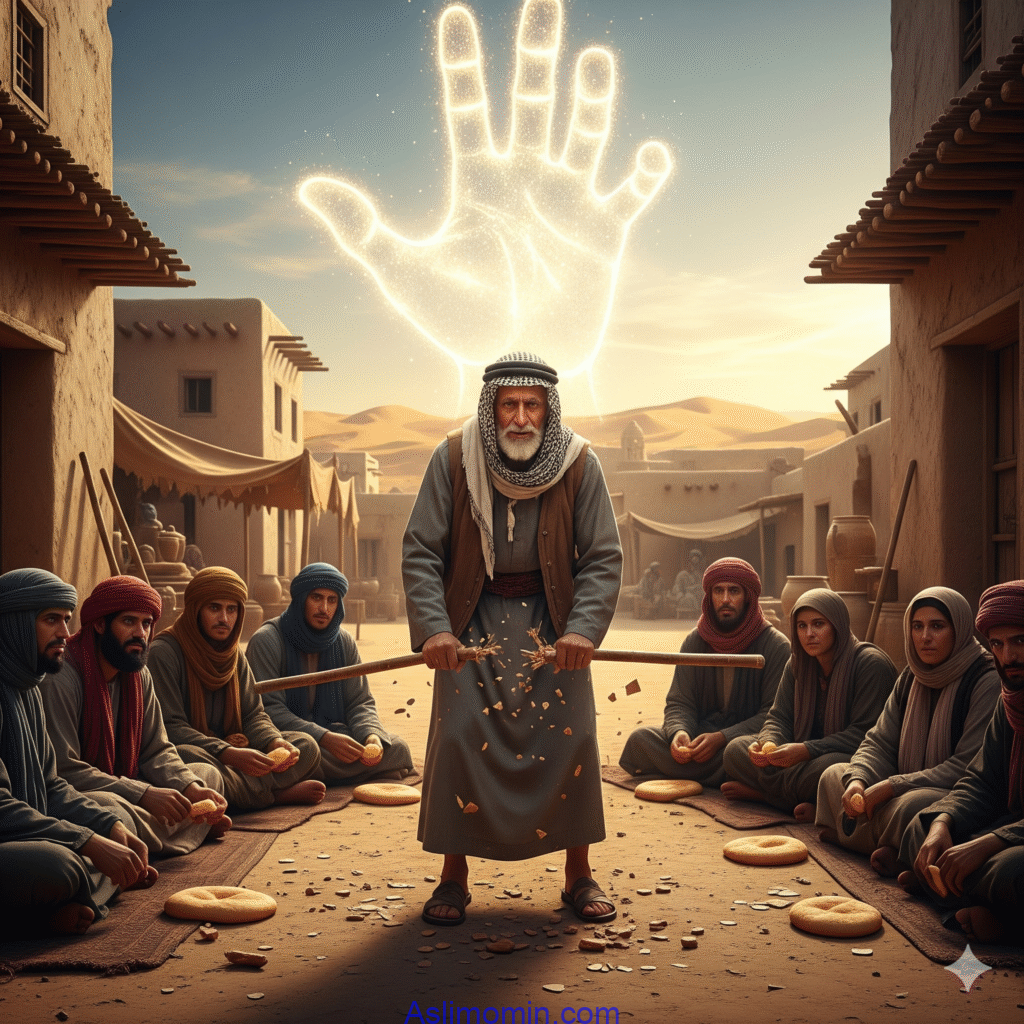
Qur’an 5:89 declares:
“Allah permits you to break your oaths, provided you offer expiation — such as feeding ten poor people.”
Analysis:
If Allah grants people the freedom to break solemn oaths simply by paying a penalty, then how can such individuals ever be trusted?
This undermines both the judicial seriousness of an oath and the moral character of the God who endorses such flexibility.
7. Shirk — The Unpardonable Crime
The Qur’an explicitly declares associating partners with Allah (shirk) to be the gravest sin.
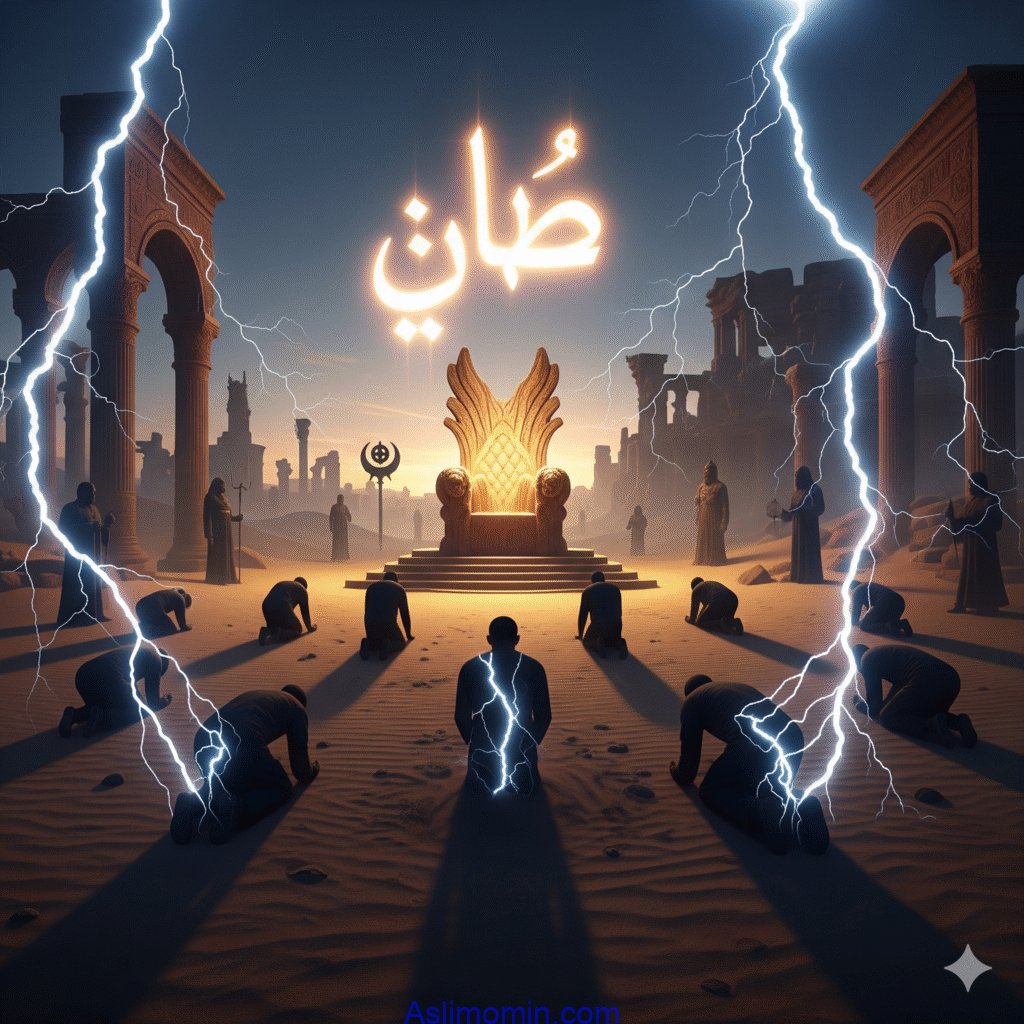
Qur’an 4:48, 4:116:
“Allah does not forgive association with Him. Whoever commits shirk has committed a tremendous sin.”
Analysis:
Anyone who does not worship Allah, but instead turns to another deity, is threatened with Hellfire.
This reveals Allah’s fragile ego and vindictive justice:
- A believer guilty of murder, rape, or oppression can still be forgiven through repentance.
- But a peaceful, compassionate non-believer is condemned eternally simply for not acknowledging Allah.
The Question:
Can a true God be so narcissistic that He overlooks horrific crimes of His followers but punishes others solely for not worshiping Him?
8. God or Dictator?
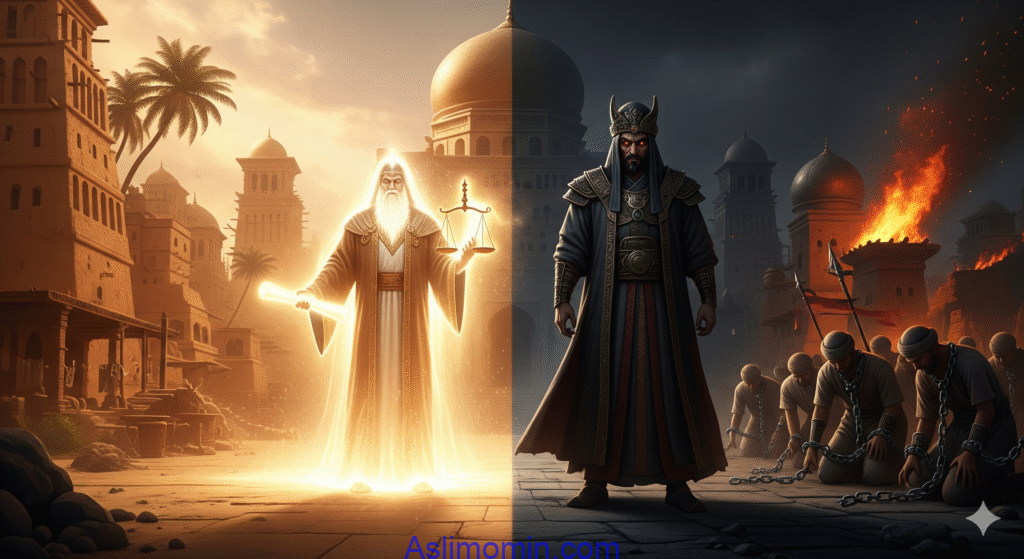
The portrait of Allah in Islam is unmistakably authoritarian:
- In Islam, believers are commanded to bow in prayer five times a day, and those who neglect it are warned with the fear of Hell
- He regulates every action of a Muslim — eating, sleeping, sexual relations, even private thoughts.
- Any criticism of Him or His Messenger invites death in this world or damnation in the next. (5.33)
- All other faiths are dismissed as falsehood (shirk), while only His own religion is declared the absolute truth.
The Question:
Is this freedom, or is it mental enslavement?
Is this the character of a benevolent God, or the portrait of a tyrannical despot?
9. Religion or a Machinery of Narcissism and Control?
The Allah described in Islamic scripture appears as a figure who:
- Does Allah, as described in Islamic texts, appear to be —
- One who seeks only the satisfaction of His own ego?
- One who does not teach love, but spreads fear?
- One who does not deliver justice, but shows favoritism?
- One who does not seek peace, but demands jihad?
The Messenger of Allah
Was he truly a revolutionary or a reformer?
Or rather a man seeking dominance among his tribes and authority over women?
(These are questions that naturally arise upon reading the Islamic texts, not conclusions drawn out of prejudice.)
This critique is not directed against individual believers of any religion.
But when an ideology stands against humanity, freedom, and reason, then critiquing it becomes a moral duty.
10. Can Such a God Truly Be God?
After reading the Qur’an, one cannot escape a troubling question:
Can God truly be so merciless, harsh, and cruel?
From God, we expect compassion, justice, and love.
Yet, page after page of the Qur’an reveals an Allah who threatens, terrifies, and promises eternal torment to those who simply refuse to worship Him.
Example Verses
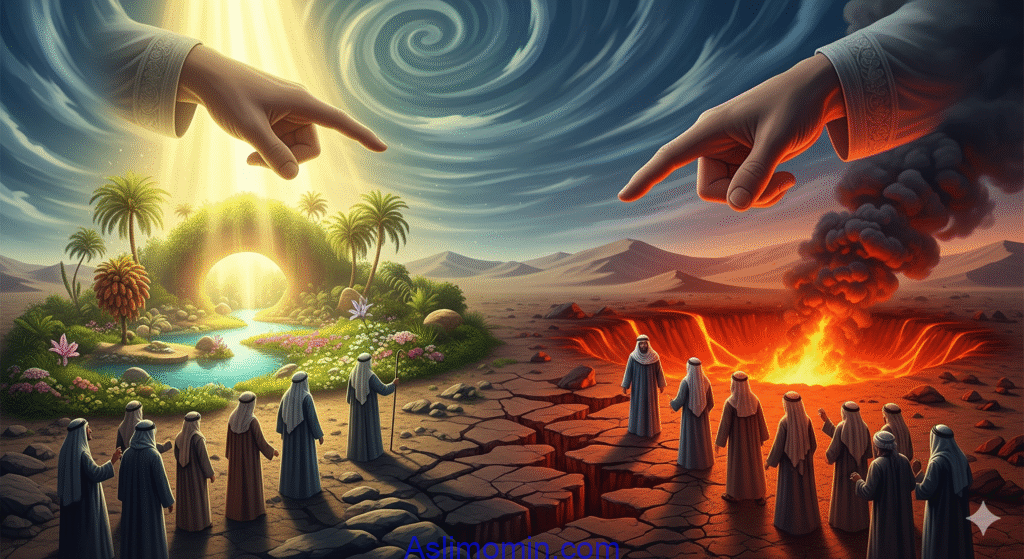
Surah 7:179:
“Many of the jinn and mankind We have created for Hell.”
The Question: If they were created for Hell from the beginning, what is their fault? Is this justice, or sheer cruelty?
Surah 2:191–193 & 9:5:
“Kill the polytheists wherever you find them.”
Surah 5:33:
“The punishment of those who wage war against Allah and His Messenger is execution, crucifixion, cutting off hands and feet on opposite sides, or exile from the land.”
The Questions That Must Be Asked
Is this justice, or barbaric cruelty?
A God who strips humans of freedom, silences those who question Him, and condemns people to “eternal burning” simply for not obeying His commands — is this truly God, or a despot?
If any earthly ruler were to speak such words, we would call him a tyrant.
But when the Qur’an ascribes these words to Allah, believers are compelled to call Him divine.
Is this genuine faith — or mental enslavement?
Can a deity who rests on fear, threats, and violence truly be called al-Rahman (the Merciful)?
Time to Reflect
The true God would be one who looks upon all with equality, who grants freedom of thought and conscience, and who seeks to win hearts with love — not with the sword or with threats of fire.
If the Allah of the Qur’an is as cruel and tyrannical as the texts portray Him, then the question must be asked:
Is this truly God, or a man-made image of authoritarian power?
Final Verdict
A religion that defines justice by identity, and limits mercy only to its own followers, cannot be a guide for humanity.
📢 Did you find this article useful?
🙏 Support our work by clicking here.