
The World of Hadith: Faith or Deception?
I am often asked, “Why do you write so much about Islam?”
My answer can be summed up in just two words: my questions.
These are the questions that arise within me as I read Islamic religious texts. And as I search for their answers, a stark reality becomes apparent:
Many teachings of Islam pose a direct threat to modern civilized society and to humanity itself.
Upon reaching this conclusion, an even deeper question emerges in my mind:
“Can any teaching given by an all-powerful God ever be a danger to humanity?”
Are the controversial aspects of Islam—such as slavery, the marriage of young girls, or the killing of non-believers—truly commands from Allah and His Messenger
Or were these constructs created by humans for power, politics, and personal gain, sanctified under the guise of divine authority?
My understanding is clear: no true God could ever issue such commands.
This is precisely why it is essential to critically examine how authentic these teachings really are.
The Two Pillars of Understanding Islam
- Hadith (Traditions)
Hadith refers to the actions and sayings of Muhammad.
The religious life of Muslims revolves almost entirely around the Hadith—guiding:
- The correct method of prayer (Salah)
- The rules of fasting (Sawm)
- What is Sunnah and what is Haram
Without Hadith, such guidance would be incomplete.
In the Quran, many references are vague, or the verses do not always convey the full message.
Thus, Hadith essentially forms the backbone of Islam.
2. The Quran (Scripture)
Muslims believe that the Quran has never been altered.
But history bears witness that it, too, has undergone editing and changes.
(I will discuss this in detail in the next installment.) [Link]
Hadith – The Core of This Essay
In this article, however, I will focus on the Hadith—because without Hadith, Islam is incomplete.
Categories of Hadith
In Islamic tradition, Hadith are classified into three main categories:

- Sahih (Authentic): Narrated by transmitters considered trustworthy, with strong memory and an unbroken chain.
- Hasan (Good): Relatively weaker but still regarded as acceptable.
- Da‘if (Weak): Narrations with inconsistencies or doubts in the chain or content.
The problem lies in the fact that this entire system was based on human judgment, politics, and evolving traditions.
The phrase “fabricated stories” may sound harsh, but by the end of this essay, you will see how deeply grounded that conclusion actually is.
The Early Ban on Hadith Writing: History and Questions
In Islamic tradition, the Qur’an is regarded as the primary source, with Hadith as the second most authoritative. Yet a crucial historical fact is often overlooked—in the earliest period of Islam, the writing of Hadith was explicitly banned.
- Prophet Muhammad ﷺ reportedly said:
“Do not write anything from me except the Qur’an. Whoever has written anything else should erase it.” (Sahih Muslim 3004) - Abu Bakr, the first Caliph, burned his collection of Hadith, fearing errors and confusion (Tabaqat of Ibn Saʿd).
- Umar ibn al-Khattab forbade the recording of Hadith altogether, declaring:
“The Qur’an is sufficient for us.” - Nearly a century later, Umar ibn ʿAbd al-ʿAziz (Umayyad Caliph) gave the first official order to compile Hadith.
- Only under the Abbasids (8th–9th centuries CE) did major compilations like Sahih al-Bukhari, Sahih Muslim, and Muwatta appear—almost 200 years after the Prophet’s death.
Critical Question
If the Prophet and the early Caliphs prohibited Hadith writing, how did thousands of narrations compiled much later come to form the backbone of Sharia law today?
Does this not reveal a deep historical contradiction within Islamic tradition itself?
The Example of Bukhari: Selection or Miracle?
After the Quran, the most authoritative book for Muslims is Sahih al-Bukhari.
Its compiler, Imam al-Bukhari (810–870 CE), is said to have heard around 500,000 to 600,000 Hadith, from which he included about 8,000 in his collection.
- Tadhkirat al-Huffaz (al-Dhahabi):
Bukhari himself is quoted as saying: “I have memorized 100,000 authentic Hadith and 200,000 unauthentic ones.” - Encyclopaedia of Islam (Brill):
Notes that he examined approximately 600,000 Hadith.
Studies in Mecca and Medina –
At the age of sixteen, Imam Bukhari performed his first pilgrimage to Mecca.
Afterward, he spent a few years in Mecca and Medina studying Hadith.
But these were temporary stays, not permanent residence—he traveled primarily for study and collection.
This means that the actual time he spent directly learning from Hadith scholars was no more than 4–6 years.
The Mathematics of 500,000 Hadith
Bukhari’s claim:
He examined 600,000 Hadith and selected about 8,000 (including repetitions).
When repetitions are removed, only 2,600–2,700 distinct Hadith remain.
A Realistic Analysis
Suppose Bukhari began examining Hadith at the age of 16 and continued until the age of 60—a span of 44 years.

- Total Hadith examined: 500,000
- Average per year: 11,364
- Average per day: 31 Hadith — every single day, without pause, for 44 years!
Now consider this:
If the examination of just one Hadith—verifying the narrator’s character, their meetings, and the chain of transmission—took even one hour, then:
- Total time = 500,000 hours
- That equals 57 years of nonstop work, 24 hours a day.
- If a human worked only 8 hours a day, it would take 171 years.
Clearly, this claim exceeds human capacity and borders on the impossible.
Criteria for Declaring a Hadith “Sahih”
Imam Bukhari laid down these conditions for labeling a Hadith as Sahih:

- ʿAdālat (Character): The narrator had to be upright and honest.
- Ḍabt (Memory): The narrator had to possess strong recollection.
- Muʿāsarah (Contemporaneity): The narrator and teacher had to live in the same era and meet in person.
- Muttasil Isnad (Unbroken Chain): The chain of transmission had to be uninterrupted.
But the crucial question is:
In that era, could the birth dates, travels, and meetings of every narrator really be verified with certainty?
Critical Perspectives
Renowned scholars have raised serious doubts:

- Ignaz Goldziher
- Joseph Schacht
- Patricia Crone
Their conclusion:
- The Hadith corpus was largely the product of religious and political movements.
- Most Hadith were fabricated 200–300 years after Muhammad’s death.
- The real purpose was to legitimize caliphs, juristic schools, or political ideologies under the cloak of divine sanction.
Contradictions within “Sahih” Hadith
Even after such strict filtration, the so-called Sahih Hadith include reports that:
- Contradict science: e.g., the sun sets in a pool of muddy water (Hadith 3199).
- Contradict morality: e.g., Aisha’s marriage at the age of six (Hadith 5133).
- Contradict the Quran itself: with numerous internal inconsistencies.
If, after this rigorous selection, even Sahih Hadith contain such contradictions, then the integrity of the entire system stands on shaky ground.
[hadith name=”Bukhari 3199″ url=”http://aslimomin.com/wp-content/uploads/2025/09/Screenshot-2025-09-06-203012.png” caption=”Scan from sunna.com”] [hadith name=”Bukhari 5133″ url=”http://aslimomin.com/wp-content/uploads/2025/09/Screenshot-2025-09-06-204955.png” caption=”Scan from sunna.com”]Conclusion

The claim of filtering and examining half a million Hadith is humanly impossible.
Without written records or verifiable evidence, this assertion appears to be religious propaganda rather than historical reality.
Even within the Sahih collections, we find inhumane stories, contradictions, and clear political motives.
This strongly suggests that Hadith were fabricated and legitimized to suit the rulings, fatwas, and political needs of the time.
The Next Question
So the most pressing question is this:
Do we have evidence that Hadith were deliberately fabricated?
Abu Huraira: A Hadith Factory?
Abu Huraira (أبو هريرة), whose real name was ʿAbd al-Rahman ibn Sakhr al-Dawsi, is the most prolific—and perhaps the most controversial—figure in Hadith tradition.

His time with Muhammad:
- Accepted Islam: 7 AH (629 CE)
- Death of Muhammad: 11 AH (632 CE)
In other words, he spent only three years in the Prophet’s company.
Yet the Hadith attributed to him are astonishingly high:
- Abu Huraira → 5,374
- Ali ibn Abi Talib → ~586 (companioned Muhammad for 23 years)
- Aisha bint Abu Bakr → ~2,210 (lived with him for 9 years)
- Abdullah ibn Umar → ~2,630 (companioned him for more than 10 years)
- Abdullah ibn Masʿud → ~848 (virtually his entire prophetic career)
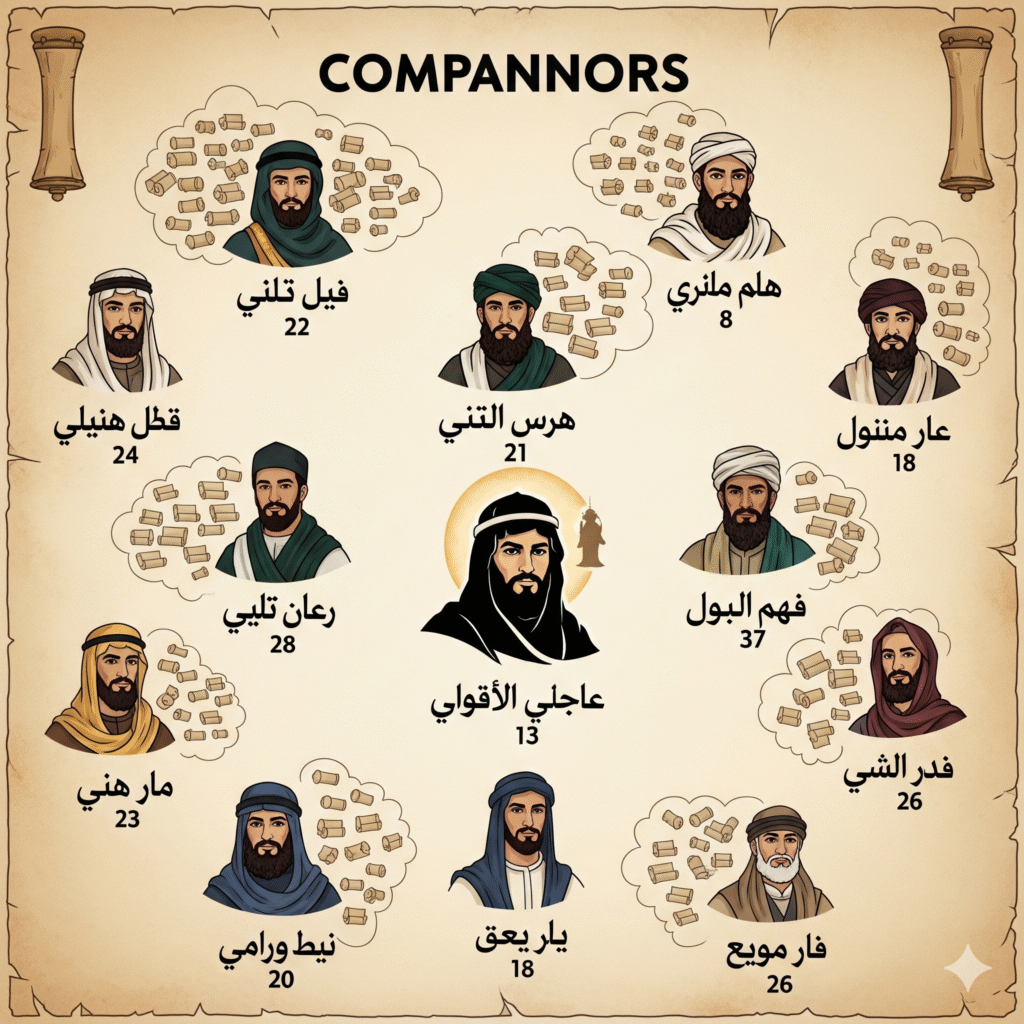
Source: Sahih al-Bukhari Index, Sahih Muslim, Musnad Ahmad
The question is obvious:
How could Abu Huraira narrate 5,374 Hadith in just 2–3 years, while the closest companions—Ali, Aisha, and Ibn Masʿud—narrated far fewer despite spending decades with Muhammad?
Criticism from the Companions Themselves
Doubts about Abu Huraira’s narrations were not limited to modern critics—even the Companions (Sahaba) themselves objected.
Aisha’s Objection:
- Abu Huraira’s Hadith: The prayer is severed by a woman, a dog and a donkey.” (Sunan Ibn Majah)
- Aisha’s Testimony: “I used to lie on the bed, and the Messenger of Allah ﷺ would pray with me between him and the Qibla.” (Bukhari)
Here lies a clear contradiction:
- Abu Huraira’s report suggests that a woman’s presence or passing nullifies prayer.
- Aisha’s direct testimony says she herself lay in front of the Prophet while he prayed—and he continued undisturbed.
Criticism and Defense
- Shia scholars and modern Orientalists (Goldziher, Schacht, etc.) often highlight that Aisha accused Abu Huraira of misreporting or forgetfulness.
- Sunni scholars, however, classify this as taʿāruḍ (apparent contradiction), arguing that such differences were due to juristic reasoning (ijtihad) or varying circumstances.
A Realistic Conclusion
The claim of thousands of Hadith from just two or three years of companionship is, by itself, implausible.
The fact that even among the Companions there were disputes over his narrations further underscores the doubt.
- Abu Huraira’s Hadith were controversial from the very beginning.
- Blindly accepting his narrations as “Sahih” is weak both historically and logically.
This is why many modern researchers label him “a Hadith factory”—a prolific source of reports, whose authenticity has always remained in question.

Shia and Critical Scholars’ Perspective
1. Criticism from ʿUmar and ʿAlī
al-Iskāfī (via Ibn Abī al-Ḥadīd, Sharḥ Nahj al-Balāgha, vol. 1, p. 360)
قال الجاحظ: قال جعفر بن محمد الإسكافي: إن عمر وعلياً كانا يضعفان أحاديث أبي هريرة، ويقولان: أكثر على رسول الله.
Translation:
“ʿUmar and ʿAlī both considered Abū Hurayra’s ḥadīth weak and used to say: He has narrated too much from the Messenger of Allah ﷺ.”
Ibn Abī al-Ḥadīd, Sharḥ Nahj al-Balāgha, vol. 4, p. 68
وقال علي (ع): ألا إن أكذب الناس ـ أو قال: أكذب الأحياء ـ على رسول الله أبو هريرة الدوسي.
Translation:
ʿAlī (ʿa) said: “Indeed, the greatest liar—or he said: the greatest among the living liars—against the Messenger of Allah ﷺ is Abū Hurayra al-Dawsī.”
(This appears in Shia and Muʿtazilī sources, not in Sunni ḥadīth compilations.)

2. Connection with Banū Umayya
Rijāl al-Kashshī, p. 49
كان أبو هريرة من الموالين لبني أمية، وكان يروي لهم ما يحبّون.
Translation:
“Abū Hurayra was among the supporters of Banū Umayya, and he would narrate to them what they liked.”
3. Accusation of Tadlīs (concealing sources)
Shuʿba (Ibn ʿAdī, al-Kāmil; Tārīkh Dimashq, vol. 67, p. 359)
It is reported that Abū Hurayra used to practice tadlīs (يُدَلِّسُ) — meaning he would not always clarify whether a report came from Kaʿb al-Aḥbār or directly from the Prophet ﷺ.
Defense by Sunni Scholars
1. Ibn Ḥajar (Tahdhīb al-Tahdhīb, vol. 12, p. 281)
أبو هريرة حافظ الصحابة، وأكثرهم حديثاً على الإطلاق، واتفق الأئمة على ثقته وعدالته.
Translation:
“Abū Hurayra was the ḥāfiẓ among the Companions and the most prolific narrator of ḥadīth without exception. The imams unanimously agreed on his trustworthiness and uprightness.”
2. al-Dhahabī (Siyar Aʿlām al-Nubalāʾ, vol. 2, p. 578)
كان أبو هريرة حافظاً، ثبتاً، كثير الحديث، صادقاً في نقله.
Translation:
“Abū Hurayra was a ḥāfiẓ, firm in memory, prolific in ḥadīth transmission, and truthful in his narrations.”
In short, Sunni scholarship holds a consensus that his narrations are reliable, and criticism against him is unwarranted.
Modern Critics and Orientalists
1. Ignác Goldziher
Muslim Studies (vol. 2, p. 138)
“Even ʿAlī and ʿĀʾisha expressed doubts about Abū Hurayra’s narrations.”
Example:
It is reported that Ibn ʿUmar (r.a.) criticized Abū Hurayra for adding a clause in the ḥadīth about dogs—namely, that “farm dogs” were exempt—because Abū Hurayra himself owned farmland.
(Jami` at-Tirmidhi, Book of Hunting (Kitab al-Sayd), Hadith 1488)

A Balanced Picture
- Shia and Muʿtazilī sources: Accuse Abū Hurayra of fabricating narrations and aligning with the political interests of Banū Umayya.
- Sunni scholars: Defend him as the most trustworthy, prolific, and reliable transmitter of ḥadīth.
- Orientalists and modern critics: Emphasize the political rivalries among the Companions and argue that such conflicts influenced ḥadīth transmission.
This debate makes it clear that Abū Hurayra remains one of the most disputed personalities in the science of ḥadīth. Evaluations of him vary drastically depending on the school of thought:
- For Sunnis, he is a ḥāfiẓ and a pillar of ḥadīth transmission.
- For Shias and critical scholars, he is seen as a “factory of ḥadīth.”
ʿUmar’s Warning and the Question of Abu Hurayra’s Integrity
2. Caliph ʿUmar’s Stern Warning
Al-Milal wa al-Niḥal (al-Shahrastānī); Tārīkh al-Madīna (Ibn Shabba)
ʿUmar reportedly said to Abū Hurayra:
“Either you stop narrating ḥadīth, or I will exile you.”
Wealth and Power: Accusations of Greed
Critics have also accused Abū Hurayra of opportunism and corruption.
- ʿUmar appointed him governor of Bahrayn.
- During his tenure, his wealth suddenly increased.
- Upon his return, ʿUmar questioned him:
“When you first came, you had nothing. Where did all this wealth come from?” - Result: He was dismissed from office, and part of his property was confiscated.
Ṭabarī, Tārīkh al-Ṭabarī, vol. 4
Ibn Kathīr, al-Bidāya wa al-Nihāya
Sunni Sources on the Incident
According to Sunni reports:
- ʿUmar removed Abū Hurayra from the governorship of Bahrayn.
- He suspected that Abū Hurayra’s wealth exceeded his salary.
- Salary: only 2,000 dirhams.
- ʿUmar confronted him:
“How did you accumulate over 10,000 dirhams when your salary was only 2,000?” - Abū Hurayra replied: “These came from gifts and business.”
- ʿUmar rebuked him: “You are working against Allah and against the leader of the Muslims.”
- Ordered: the money be deposited into the Bayt al-Māl (public treasury), and Abū Hurayra was removed.
Sources:
- Ansāb al-Ashrāf (Balādhurī, vol. 1) → Explicitly records that ʿUmar dismissed Abū Hurayra and investigated his property.
- Musannaf Ibn Abī Shayba (vol. 7, ḥadīth 33984) → Mentions the accountability between ʿUmar and Abū Hurayra.
- al-ʿIqd al-Farīd (Ibn ʿAbd Rabbih, vol. 4, p. 51) → Also refers to ʿUmar’s confiscation of his wealth.
Shia Sources on the Incident
For Shia critics, this episode is taken as evidence that Abū Hurayra lacked ʿadāla (integrity) and could not be trusted.
- ʿUmar’s confiscation of his wealth is seen as proof of misappropriation.
- Shia scholars also accuse him of importing stories from Kaʿb al-Aḥbār (a Jewish convert) and mixing them with prophetic ḥadīth.
References:
- al-Najāshī, Rijāl al-Najāshī → Offers critical evaluations of Abū Hurayra, citing the incident with ʿUmar.
- al-Majlisī, Biḥār al-Anwār (vol. 33, pp. 111–113) → Uses the story to question Abū Hurayra’s reliability.
- al-ʿĀmilī, Wasāʾil al-Shīʿa → Also cites the episode as evidence of his compromised integrity.
Abu Hurayra’s Dubious Narrations
1. The Sun Setting in Mud
Ṣaḥīḥ al-Bukhārī 3199
Claim: “Every day, the sun seeks permission from Allah before setting, and it goes to rest beneath a muddy spring.”
- This contradicts the Qurʾān (36:38) and scientific reality.
2. Satan Teaching the Qurʾān
Ṣaḥīḥ al-Bukhārī 2311
Claim: “Satan came to me at night and taught me verses of the Qurʾān.”
- This reads more like folklore than a matter of divine religion.
Conclusion: Human Fabrications, Not Divine Guidance
Both history and sources indicate that:

- Many ḥadīth were fabricated for political or sectarian purposes.
- Even so-called “Ṣaḥīḥ” collections contain contradictions, superstitions, and pro-establishment messages.
- To call such human-made reports “Allah’s dīn” is misleading.
- Several ḥadīth openly contradict human dignity and morality.
Power-Supporting Narrations
Examples of politically motivated ḥadīth include:
- “Obey the ruler, even if he is oppressive.”
- “Avoid fitna, remain patient.”
Such reports were used to strengthen authority and suppress rebellion—not to serve humanity or justice.
This paints Abū Hurayra not only as a controversial transmitter but also as a figure whose narrations reflect the politics, power struggles, and human weaknesses of his time.
The Role of Abu Huraira
If in that era Hadiths were fabricated for power and profit, it was no different from how today an official might take bribes to issue fake caste certificates or medical documents.
Even the seal of religion was for sale.
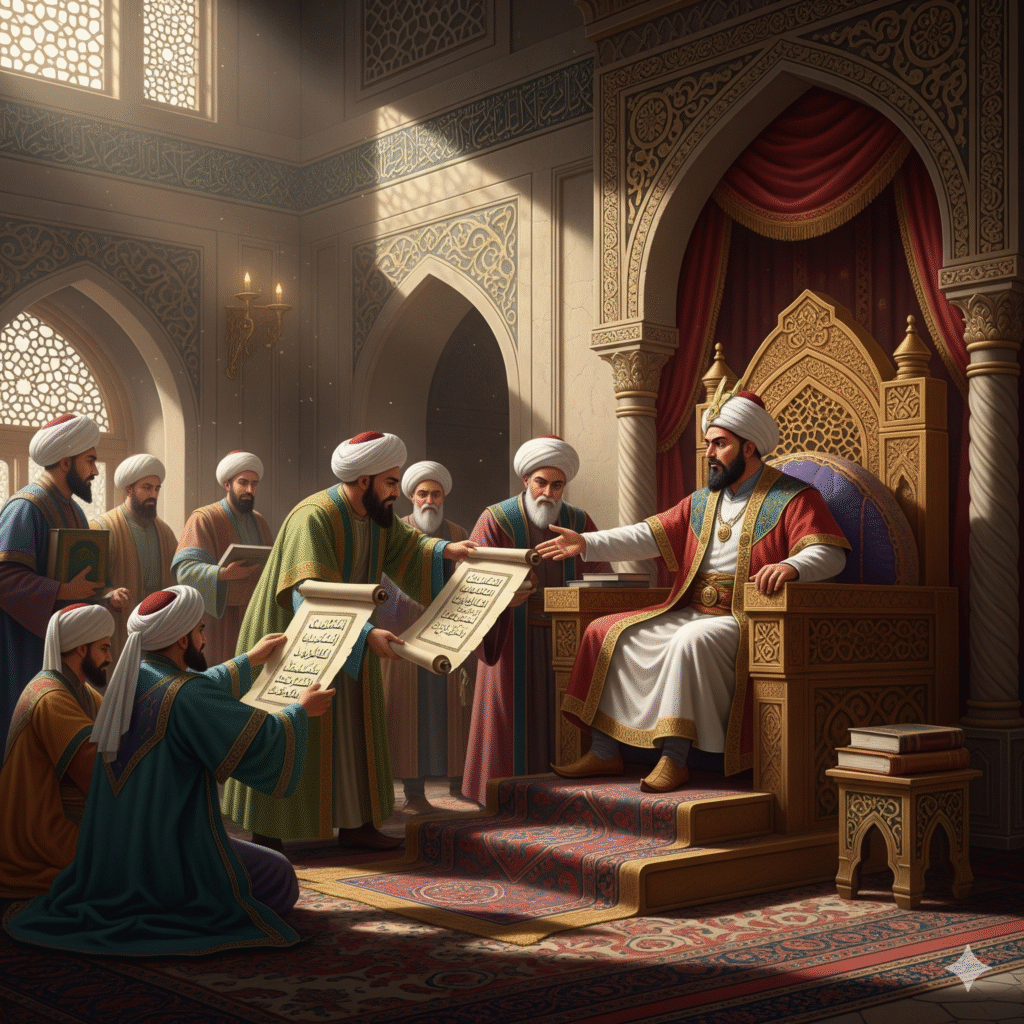
Seen in this light, Abu Huraira appears to be the first “religious broker” of Islamic history — a man whose Hadiths went on to form the backbone of Islam’s structure.
Why I Write
I do not harbor hatred toward any Muslim individual.
My problem lies with that rigid and fanatical mindset which:
- Labels inhumane teachings as “commands of Allah.”
- Declares anyone who questions them a kafir.
- Becomes a threat to humanity, India, and the world at large.
India has already endured a thousand years of subjugation and one bloody Partition.
I do not want my country to become the 58th nation whose freedom is crushed under the weight of Sharia.
Abu Huraira: The Contractor of Power
Just as Mughal courts hired poets and historians to compose false praises…
Just as the Church once sold indulgences (certificates of sin-forgiveness)…
So too did Abu Huraira secure patronage and benefits by taking the “contract” of fabricating Hadiths for power.
This clearly shows that human interference and manipulation found their way into Hadith literature.
Evidence of Fabricated Hadiths
From Islamic sources
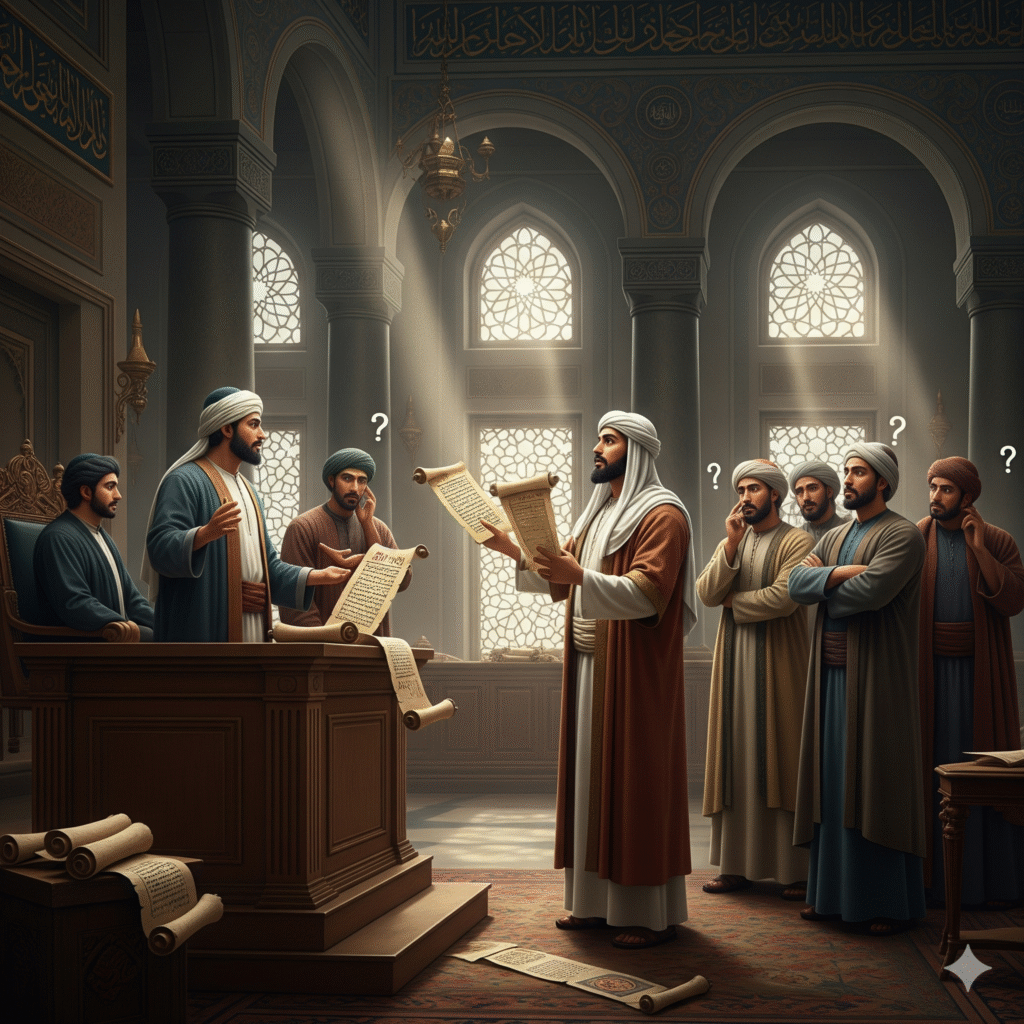
- Ibn Sirin (d. 110 AH): “After the fitna, people began asking about the names of narrators, in order to avoid fabricated Hadiths.” (Muqaddimah Sahih Muslim)
- Ibn Mubarak (118–181 AH): “Liars have fabricated Hadiths in the name of the Prophet ﷺ.”
- Imam Malik (93–179 AH): “Many people are introducing fabricated Hadiths into religion.”
Motives behind fabrication
- Political: Hadiths forged in favor of ruling caliphs.
- Jurisprudential: Different sects inventing Hadiths to support their legal schools.
- Preachers (Qassas): Storytellers fabricating Hadiths to impress and control crowds.
Modern scholarship
- Ignaz Goldziher: Most Hadiths originated nearly two centuries after the Prophet’s death.
- Joseph Schacht: Hadiths are essentially products of 8th–9th century political needs.
- Patricia Crone, Michael Cook: A large part of Islamic law was later backdated and presented in the form of “Hadiths.”
A Point to Ponder
Teachings that endanger humanity — can they truly be the words of Allah?
If Muslims could realize that:
- God is not dependent on any book or fatwa.
- Our own conscience enables us to distinguish right from wrong.
- Crimes like rape, murder, and theft need no divine decree to be condemned.
Then all disputes would naturally dissolve.
❝ A true God is not bound by time or circumstance. His message must be just and compassionate for every age and every human being. ❞

My Appeal
Believe in your Allah, or Ishwar, or Khuda.
But:
- Reject whatever goes against humanity.
- Say: “My God cannot be like this.”
- Accept that both Quran and Hadith have human interference, and embrace only those values that align with justice and humanity.
Final Thought
My struggle is not against Muslims, but against that rigid Islam which seeks to crush freedom, humanity, and the right to question.
Many Muslims themselves have understood this. From this awareness emerged the Quranist movement — those who accept only the Quran while rejecting Hadiths.
In the next article, I will discuss the authenticity of the Quran and the possible alterations within it. [LINK]
📢 Did you find this article useful?
🙏 Support our work by clicking here.