

1) Introduction
It is often claimed that “where Sharia is absent, Muslims are unsafe.” Yet, ground realities tell a different story. In Europe, America, and India, Muslims enjoy constitutional rights, education, voting power, and freedom of employment. Still, many communities form self-contained ghettos and demand Sharia above civil law.
The questions arise:
- Does this show that Muslims are not satisfied with constitutional protections, but are inherently drawn toward Sharia?
- And when Sharia is not implemented, does it create conflict and crime?
2) Europe & Britain — Before and After the Refugee Crisis
Before (1980s–1990s):
- In England, some Muslim communities formed Sharia Councils, mainly to deal with marriage, divorce, halala, and family disputes under Islamic law.
- These were not formal courts but arbitration bodies allowed under the Arbitration Act 1996, which permitted religious bodies to resolve private disputes if both parties consented.
- Muslims used these councils for divorce, inheritance, and family matters to be settled according to Sharia norms.
After the refugee influx (2000s–2015 onwards):

- With the Syrian refugee crisis, the Muslim population grew, and Sharia councils expanded in number and influence.
- Today, the UK is reported to have over 80 Sharia councils.
- Critics argue that they frequently discriminate against women — pressuring them in divorce, unfair rulings in child custody, etc.
- In 2018, the UK Government commissioned an Independent Review into Sharia Councils, which found that their functioning often clashed with British equality laws.(Link)
The grooming gang scandal (2000–2015):
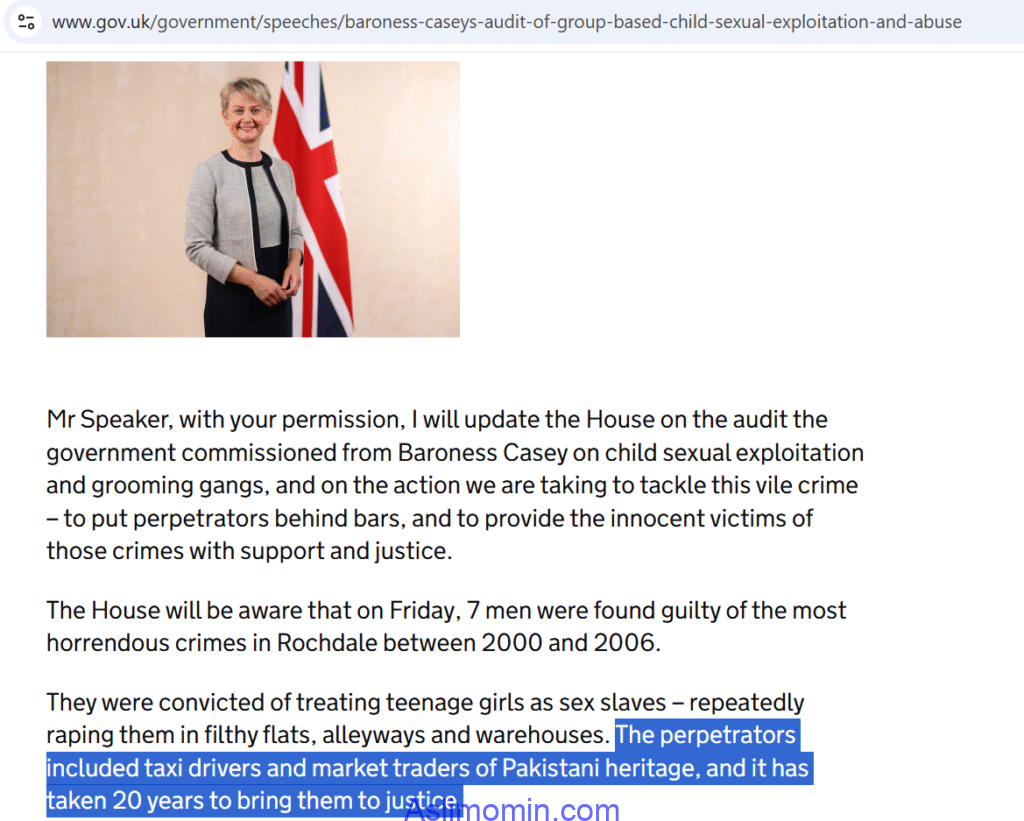
- Cities like Rotherham, Rochdale, and Oxford witnessed the mass sexual exploitation of thousands of British girls.
- Most perpetrators were Pakistani-origin Muslim men.
- The official Jay Report (2014) admitted that local authorities delayed action, fearing accusations of “Islamophobia.”
Questions:
- Is it ethical to demand separate religious laws for personal matters but reject equal criminal accountability under the same constitution?
- Does this not prove that when civil law differs from Sharia, some Muslim groups attempt to impose their cultural rules above national law?
- And is it not Kitman (concealment) to claim Islam prescribes harsh punishment for rape, while Muslim gangs in the West are repeatedly implicated in mass exploitation?
3) France, Germany, and Sweden — Riots and Conflicts
Germany:
- After 2015, the Syrian refugee crisis increased Muslim numbers significantly.
- Sharia-based arbitration emerged in many communities, especially among Turks and Arabs.
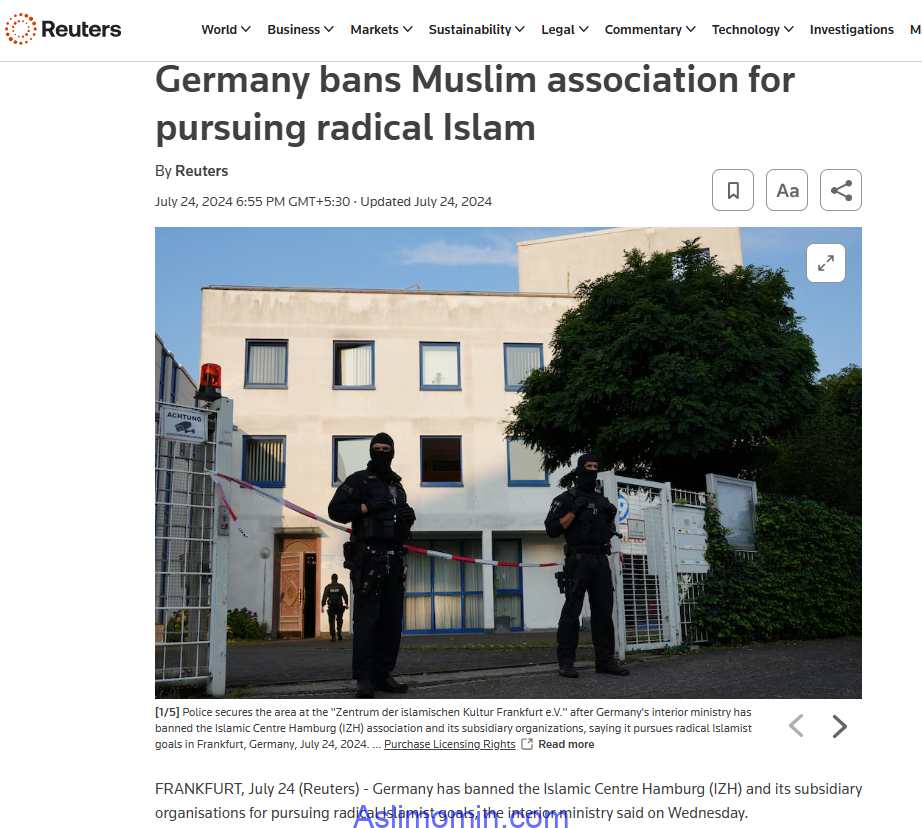
- In Berlin and North Rhine-Westphalia, Friedensrichter (“peace judges”) acted as parallel Islamic courts.
- They handled family disputes, marital issues, honor killings, and clan violence outside German law.
- German media and government condemned this as “parallel justice.”
France:
- 2020 — Teacher Samuel Paty was beheaded for showing Charlie Hebdo cartoons in class.
Sweden:
- 2022 — Violent Muslim riots erupted after Qur’an-burning protests.
Germany again (Cologne 2016):
- On New Year’s Eve, Muslim refugees carried out mass assaults and harassment of women.
Questions:
- If a country gives you refuge, is creating parallel courts and separate justice loyalty or betrayal?
- Is this not a direct clash with freedom of expression?
- Does this not show that even where Sharia is not enforced, the Sharia mindset seeks to rise above civil law?
4) America — Muslim Communities and Radicalization
- New York (2001): 9/11 terror attacks by Al-Qaeda, motivated by the belief that America is “the enemy of Islam.”
- Boston (2013): Tsarnaev brothers bombed the marathon — an act of “Islamic revenge.”
- FBI reports: Many U.S.-born Muslim youth are radicalized online by calls for a Sharia-based Caliphate.

Questions:
- Does this not mean that even in a land of maximum constitutional freedom, a section of Muslims still places Sharia above democracy?
5) India — “Love Jihad,” Riots, and Personal Law
Indian Muslims constitutionally enjoy:
- Full voting rights,
- Separate personal law (Sharia-based),
- Waqf Boards,
- Hajj subsidies (till 2018),
- Freedom for madarsa education.
Yet:
- Love Jihad: Courts in Kerala, Uttar Pradesh, and Haryana have recognized cases of deception-based conversions and marriages.
- Riots: Bhagalpur (1989), Gujarat (2002), Muzaffarnagar (2013), Delhi (2020).
- Hijab row (2022): School-uniform disputes escalated into a constitutional versus Sharia battle.

Questions:
- If Muslims in India enjoy so many rights, why does the demand for Sharia persist?
- Is it not clear that every controversy (temple-mosque, hijab, personal law) ultimately becomes Sharia vs Constitution?
6) Contradictions and Hypocrisy
- In Europe, Muslims say: “We are unsafe because we are minorities.”
- In India, they say: “The Hindu-majority government oppresses us.”
- But the real question is:
- If these same Muslims lived in Sharia-ruled countries like Iran, Saudi Arabia, or Pakistan and dared to dissent — would they even be alive?
- Is it not Kitman that Muslims demand rights in secular nations but remain silent about oppression in Islamic nations?
7) Conclusion
Where Sharia is not enforced, Muslims still demand it above civil law, despite enjoying full constitutional protection.
- Europe: Riots, gangs, parallel courts.
- America: Radicalization and terror.
- India: Love Jihad, riots, personal law conflicts.
Final questions:
- If Sharia is truly just, why do Muslims who enjoy equality and security under constitutional law still return to Sharia demands?
- Does this not prove that Sharia is not just a set of religious rules but a demand for political dominance?
📢 Did you find this article useful?
🙏 Support our work by clicking here.