
Introduction
Let us begin with a question:
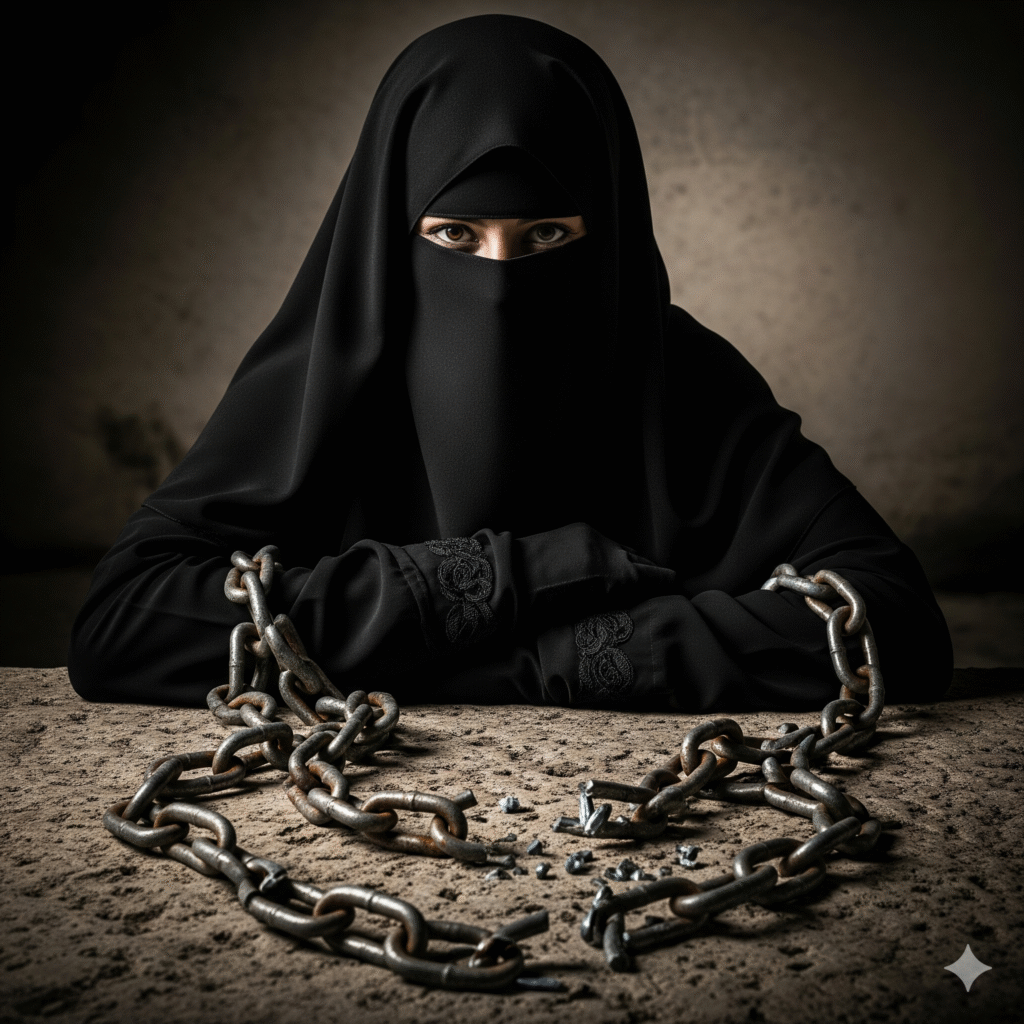
If your husband divorces you and you have neither parents nor brothers—then, while living under veils, how will you feed yourself? In Islam, a man can divorce whenever he wants, but if a woman wants freedom, she must seek khula—and that too with her husband’s permission. After divorce, there is neither proper maintenance nor permanent support. So, should this be called respect, or slavery?
Clerics and madrasas often repeat the claim that “Islam gave women rights and honor.” But when the Qur’an and Hadith are examined closely, this claim proves hollow.
In Islamic texts, the image of women appears as “a field to be ploughed” (Qur’an 2:223), as “a snare of Satan” (Sunan Abu Dawood 2151), as “half a witness” (Qur’an 2:282), and as “the majority of Hell’s inhabitants” (Sahih Bukhari 304). This very image has continued to determine the real condition of women in Muslim society.
Sunan Abu Dawood 2151In this article, we will dive deep—from Qur’an to Hadith and Fiqh—and see what the actual status of women in Islam is.
Part 1: Rape and Four Witnesses — A Mockery of Justice

1.1 Qur’anic Rule
The Qur’an clearly says:
“And those who launch a charge against chaste women, and produce not four witnesses, flog them with eighty stripes.”
— (Qur’an 24:4)
This rule means that to prove rape or adultery, four male witnesses are required.
In Sahih Bukhari (Hadith 6827) and Sahih Muslim (Hadith 1691), the distinction between zina (adultery) and rape is almost erased.
Sahih Bukhari 6827The Hadith collections and books of Fiqh also say the same. In Hanafi Fiqh (Hidaya, Book IX) it is written:
If a woman cannot provide evidence of rape, she herself will be accused of zina (adultery) and punished—either flogging, or death by stoning.
1.2 The Inverted Face of Justice
Think—when a woman is being attacked by force, from where will she bring four male witnesses? If witnesses are not found, the victim herself is declared guilty.
Ibn Kathir’s Tafsir (24:4) advocates for the strict application of this law.
The result is that:
- Proving rape becomes nearly impossible.
- If a woman complains but lacks witnesses, she herself can be prosecuted for zina.
- Sahih Bukhari (Hadith 4747) provides an example—where a woman, for not having witnesses, was herself accused of adultery.
In other words, under Islamic law, the rape victim becomes the criminal.
Part 2: Divorce, Khula, and Halala — The False Promise of Freedom
2.1 Divorce and Khula — Unequal Rules
In Islam, the right to divorce is entirely male-dominated.
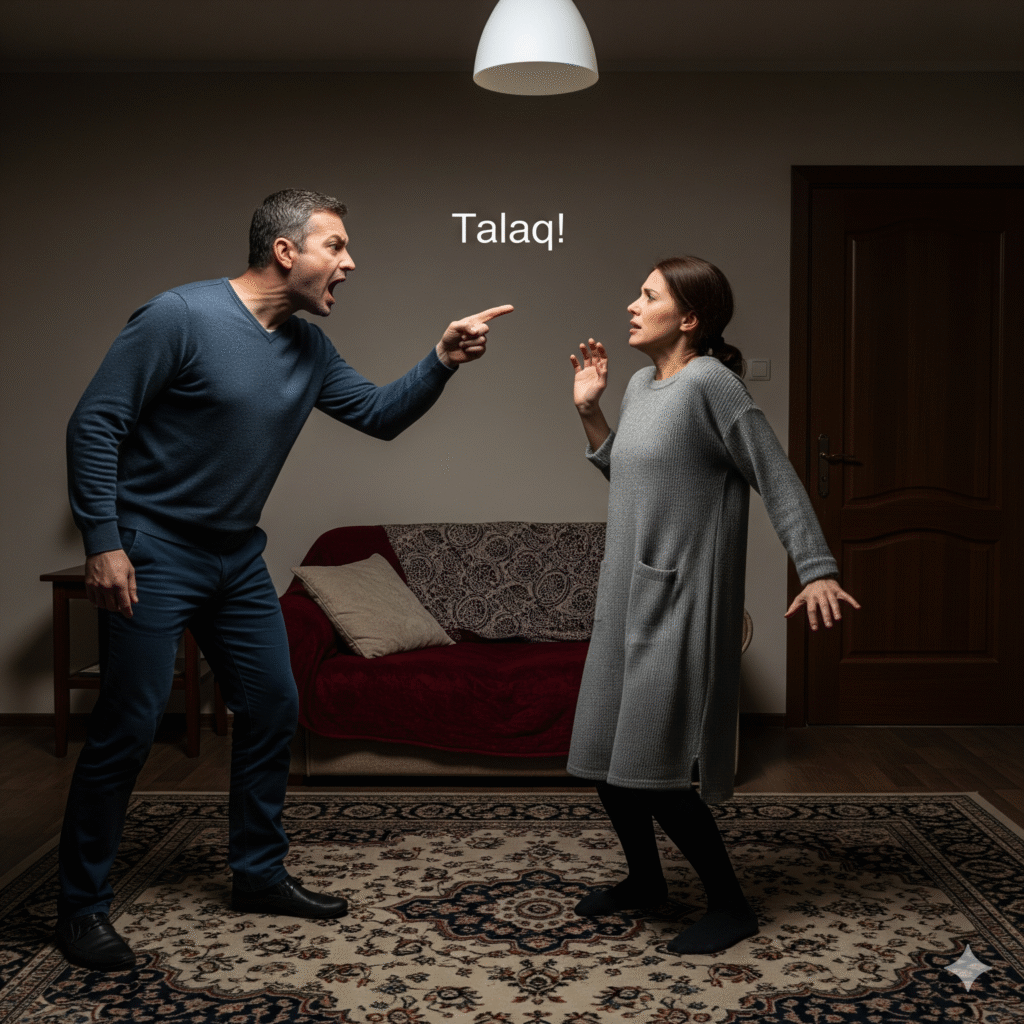
- Man: He simply has to say “talaq” three times, and the marriage is over (Qur’an 2:229–230; Sahih Muslim 1472C).
- Woman: She can get divorce only through khula, in which the husband’s consent is necessary. The woman has to return her dowry (mehr), and many times even pay extra compensation to the husband. Yet, the final decision still remains in the man’s hands (Sahih Bukhari 5273).
In short, for a man, divorce is just a word; for a woman, divorce is like begging.
2.2 Islamic Strategy: Fear of Divorce – A Tool for Control
In Indian Muslim society, literacy among women is very low. As a result, many women live under the constant fear of divorce. In the Islamic patriarchal system, men often use this fear as a tool to control their wives.
Hadith example:
Prophet Muhammad ﷺ said to his wives:
Sahih Bukhari 4483“If you do not obey me, I will divorce you, and Allah will give me better wives than you.”
(Sahih Bukhari 4483)
This event led to the revelation of Quran 66:5.
From this Hadith and verse, three points are clear:
- Men have the right to pressure wives through the threat of divorce.
- Allah promises that “better wives” will come after divorce.
- Women are expected to remain silent, obey, and not question.
Thus, religious instructions became a means of controlling women.
2.3 The Humiliation of Halala
The Qur’an 2:230 says:
Sahih Bukhari 2639“…And if he divorces her [for the third time], then she is not lawful for him afterward until she marries another husband, and he has consummated the marriage with her.”
— (Qur’an 2:230; Tafsir Ibn Kathir; Sahih Bukhari 2639)
From this comes the rule of Halala:
- If a man divorces his wife by saying talaq three times, the woman can only return to him if she first marries another man.
- It is compulsory that she have sexual relations with this second husband.
- If that husband does not agree to divorce her, the woman is forced to remain his wife—returning to her first husband becomes impossible.
Sahih Muslim 1433 records the Prophet ﷺ saying:
Sahih Muslim 1433“Do you wish to go back to Rifa‘a? That is not possible, until Abdur-Rahman has tasted your sweetness (i.e., had sexual intercourse with you).”
This means that a woman’s life is treated like a toy which men throw around as they wish.
2.4 The Atrocity of Halala
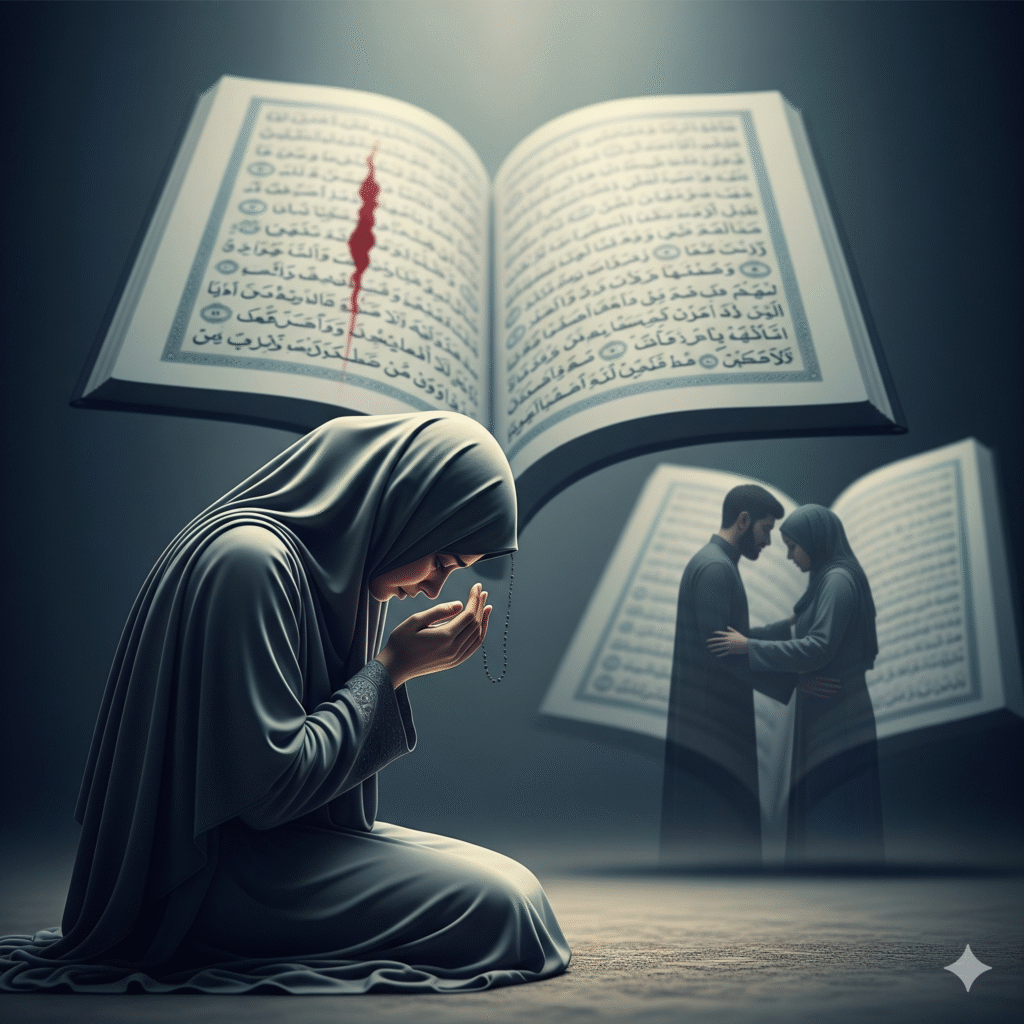
This practice completely crushes the dignity of women.
- After three divorces, for a woman to return to her own husband, she must first undergo “marriage + intercourse” with another man.
- In India, Pakistan, and Bangladesh, several cases of “Halala mafias” have surfaced, where clerics themselves perform Halala in exchange for money.
Imam Malik’s Muwatta (Book 29, Kitab al-Talaq, Hadith 29.28) legitimizes this practice.
The question arises:
Is it “honor” for a woman to buy her freedom by paying money (khula) and by selling her body through Halala?
Part 3: Marriage and Consent — The Price of Childhood
3.1 Marriage of Little Girls
The Qur’an (4:6) says to take care of orphan girls and wait until they reach maturity. But no clear age of “maturity” is fixed. As a result, the Prophet’s personal practice became the standard.
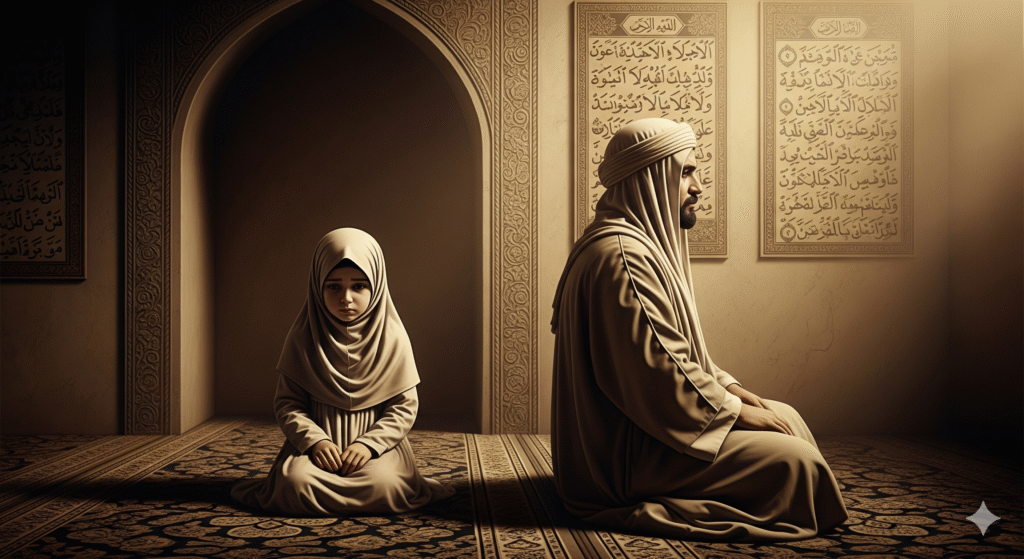
Sahih Bukhari (5133) and Sahih Muslim (1422) record that Prophet Muhammad married Aisha when she was 6 years old, and consummated the marriage (rukhsati) when she was 9.
Muslim 1422This event did not remain merely personal—it became sunnah, and later provided the religious justification for legitimizing child marriages.
The question arises: can the words “I accept” (Qubool hai) from a 6–7-year-old girl be considered proof of her understanding and consent?
3.2 Qur’an 65:4 — Marriage of Underage Girls
The Qur’an, Surah At-Talaq (65:4) says:
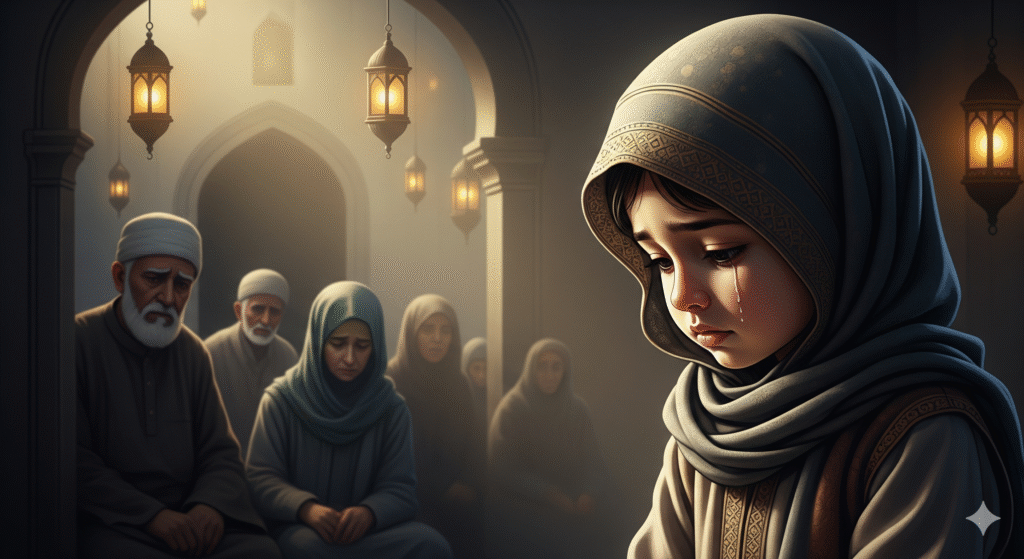
“And those of your women who no longer expect menstruation—their waiting period is three months, and the same applies to those who have not yet menstruated…”
Here, “those who have not yet menstruated” clearly refers to underage girls.
- Tafsir Ibn Kathir: “This refers to those girls who are so young that they have not yet begun menstruation.”
- Tafsir al-Jalalayn: “And those who have not menstruated—because they are too young.”
The rules of divorce and iddah can apply only to those who have already been married. Which means this verse directly validates marriage with underage girls. It abolishes any minimum age for marriage.
3.3 Coercion in Marriage
Islam claims that a woman has the right to choose her husband. But Hadiths say the opposite.
Sahih Muslim (1421): “There is no valid marriage without a guardian (wali) and witnesses.”
Muslim 1421This means that the real consent is not the girl’s, but that of her guardian (father, brother, uncle).
Now the question is: can a 4, 5, or 6-year-old child make such a decision? Her “choice” is nothing but an illusion.
3.4 Is Permission Required from Women for Marriage in Islam?
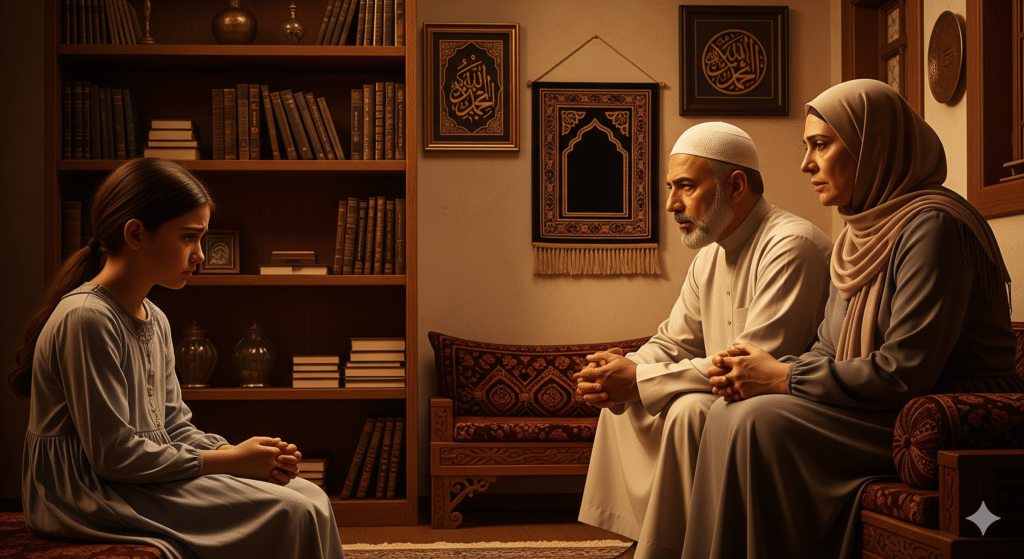
According to Islamic Shariah, based on multiple evidences, it is clear that the silence of a virgin girl is considered her permission for marriage, and her explicit consent is not necessary.
Sahih Bukhari 3894
Hazrat Aisha (رضي الله عنها) herself was not even aware that her marriage was taking place. Sahih Bukhari 3894 describes her marriage as follows:
Sahi Bukhari 3894“The Prophet ﷺ engaged me when I was six years old. We came to Medina and stayed at the house of Bani Harith bin Khazraj. Then I got a fever and my hair fell out. Later, my hair grew back, and one day my mother Umm Ruman called me to play and had me stand at the doorway. Then she brought me inside, dressed me up, and the Prophet ﷺ received me in the morning. At that time, I was nine years old.”
Hazrat Aisha was so young at that time that she could not fully comprehend the meaning or the events of her marriage. This indicates that during that period, there was no formal requirement for a girl’s personal consent.
Sahih Bukhari 5137
This hadith states that the silence of a virgin girl is equivalent to her permission. In other words, if the girl does not object, her marriage is valid according to Shariah.
Sunan Ibn Majah 1870 and Jami’ at-Tirmidhi 1107
These hadiths also establish the principle that a girl’s silence is considered her consent.
Shariah Manuals
Shariah books also record that for a virgin girl, active consent is not mandatory; her silent approval is sufficient.
Hadith Related to Fatima (رضي الله عنها) – Marriage Proposals from Abu Bakr and Umar
Hazrat Abu Bakr and Umar (رضي الله عنهما) proposed marriage to Hazrat Fatima (رضي الله عنها), but the Prophet ﷺ rejected these proposals, saying:
Sunan an-Nasa’i 3221“إنها صغيرة” – “She is young.”
(Sunan an-Nasa’i 3221)
This shows that decisions could be made based on personal interest and maturity, even if the girl herself or her father had a different opinion.
Critical Observation
Here arises a question: Prophet Muhammad ﷺ knew that Fatima was young and that marrying her to someone older would not be appropriate or suitable, yet why did he not consider this issue when marrying Aisha, who was also very young?
3.5 Nikah: Love or Transaction?
The Qur’an (4:24) defines marriage directly in terms of transaction:
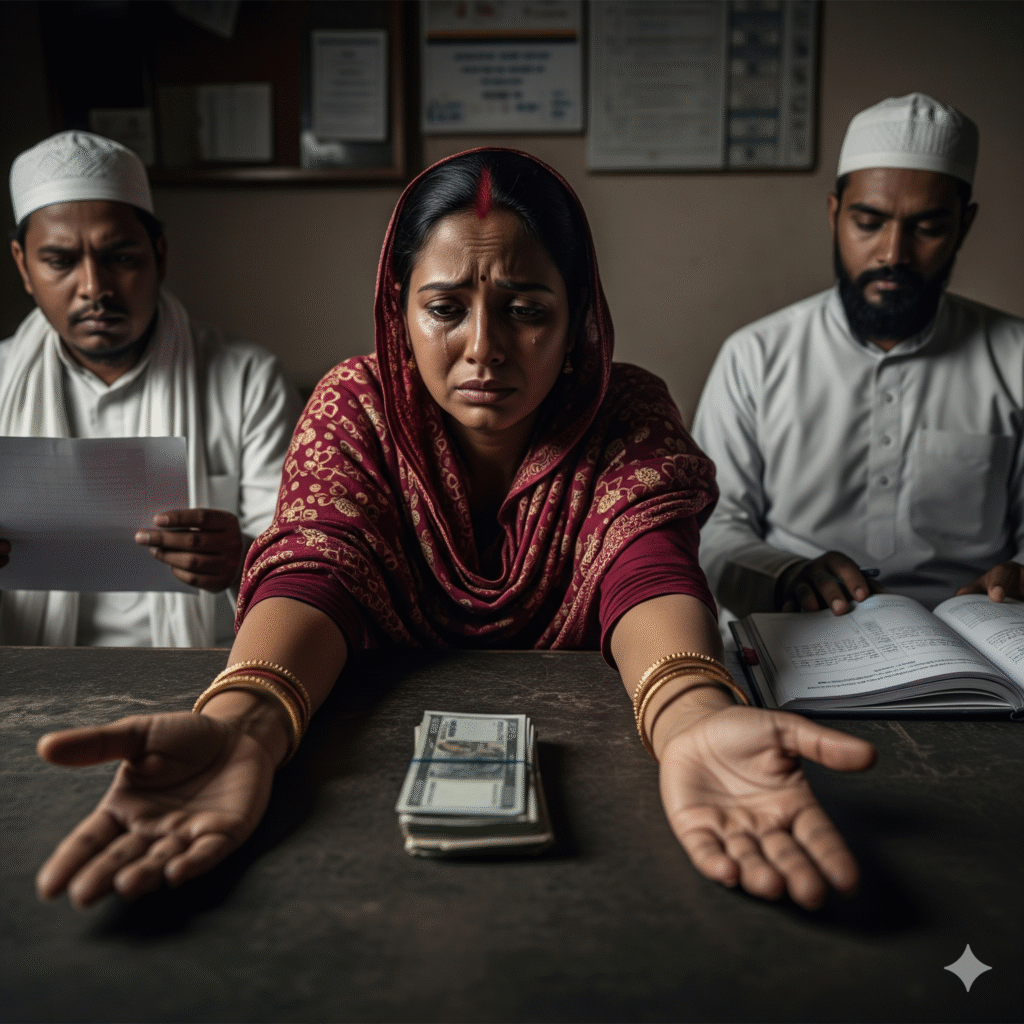
“…And those women with whom you have enjoyed relations, give them their due compensation (ujurahunna)…”
Here, the word ujr/ujur is used, which means wages or payment. This shows that nikah is a contract where the woman’s consent, emotions, or wishes are secondary—the main aspect is her “use” and the payment in return.
3.6 The Question of Truth
Would you marry off your 6-year-old daughter?
Is Nikah—which in Arabic is defined as a sex contract—a sacred bond, or merely a deal?
Is a woman here given the status of a human being, or just an object who receives wages?
Thus, in Islam, the rules of marriage and consent strip away a woman’s freedom from childhood itself.
Part 4: Obedience and Sexual Slavery — Where Is Your Choice?
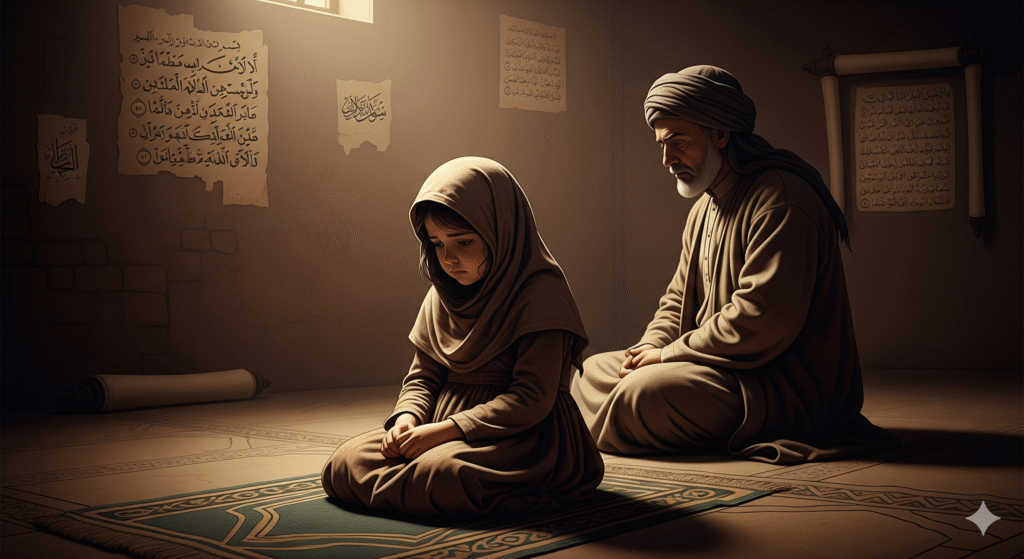
4.1 Husband’s Command
The Qur’an and Hadith clearly state that a wife’s life depends on obedience to her husband.
Qur’an (4:34): “Men are protectors and maintainers of women…”
Meaning the wife is subordinate to the husband in all circumstances.
Sahih Muslim (1436d):
“If a woman refuses her husband’s call to bed, and he goes to sleep angry with her, the angels continue to curse her until morning.”
Sahih Bukhari (3237):
The Prophet said: “If a wife refuses her husband’s call to bed and he sleeps angry, the angels curse her until morning.”
In other words, a woman has no right over her own body—her body is the “property” (possession) of her husband.
4.2 Calling Women ‘Fields’
Qur’an (2:223):
“Your wives are your fields; go to your field as you wish.”
The background (asbab al-nuzul) of this verse is recorded in the Tafsirs:
- Tafsir al-Tabari (Jami’ al-Bayan, vol. 2, pp. 471–472): This verse was revealed when Umar ibn al-Khattab had intercourse with his wife from behind and, worried, asked the Prophet about it.
- Tafsir Ibn Kathir (2:223): Here, “coming from behind” was made permissible, provided penetration was into the vagina.
- Sahih Bukhari (4528, Kitab al-Tafsir): Ibn Umar said, “This verse was revealed concerning a man who had intercourse with his wife from behind.”
- Sahih Muslim (1435a, Kitab al-Nikah): “From behind or from the front, as long as it is in the vagina.”
This means that a wife is identified merely as “a field”—to be used as the husband desires. Her existence is reduced to sexual satisfaction and reproduction.
4.3 Women as “Child-Bearing Machines”
In early Islamic society, a woman’s value was tied to her ability to bear children.
Hadith:
“Marry women who are prolific, for I will boast of my nation on the Day of Judgment by their numbers.”
(Sunan Abu Dawud 2050; confirmed: Sunan an-Nasa’i 3227)
Implications:
- Even if a woman was beautiful and from a respectable family, marriage was denied if she could not bear children.
- The purpose of marriage was reduced to producing offspring and increasing numbers.
- Prophet Muhammad presented this as a matter of pride.
Why This Is Inhumane

- Disrespect to women – valued only as a “mothering machine.”
- Insult to infertile women – women unable to bear children were demeaned.
- Purpose of marriage distorted – love, trust, and companionship were ignored in favor of procreation.
- Number-based pride – societal worth measured by population, not ethical or moral values.
4.3 Result: Wife = Sexual and Reproductive Object
This Hadith and Quranic perspective judge women not by their humanity or dignity, but by their ability to produce children. Such an approach is contrary to modern human values and undermines the dignity of women. These verses and Hadiths clearly show that:
- A wife’s body is not her own property, but the husband’s possession.
- A wife’s “no” has no value; she must always say “yes.”
- Even the method of sex is specified in the scriptures—as if the woman is nothing more than an object for consumption.
4.4 The Question of Truth
Is this “love” and “equality,” or merely sexual slavery?
If the wife’s consent has no importance, is she considered a human being or merely the husband’s field?
Is this the “honor” that is claimed?
Thus, Islam completely crushes a woman’s sexual freedom.
Part 5: Veil and Inequality — The Burden Only on You

5.1 Mandatory Veil
Qur’an 24:31: “Women should lower their gaze, guard their modesty, and cover their bosoms with their veils.”
Qur’an 33:59: “O Prophet, tell your wives and the believing women to draw their cloaks (jalabib) over themselves when they go out.”
The result is that women are labeled as fitna (temptation), and the burden of covering completely is placed entirely upon them.
Sahih Bukhari (146): This verse was revealed at the insistence of Umar, who demanded that women remain fully covered.
Sahih Bukhari 146Question: If a woman’s body is “fitna,” then why is there no restriction placed on men’s eyes and desires?
5.2 Restrictions on Travel
Sahih Bukhari (1088):
The Prophet said: “No woman should travel without a mahram (male guardian).”
Meaning, a woman loses her freedom of life. She cannot travel alone, and even her ability to work or study depends on the permission of a “male relative.”
5.3 The Question of Truth
Men roam freely, while women suffocate under veils.
Is this equality, or just a burden imposed only on women?
Part 6: Violence and Authority — What Is Your Worth?
6.1 The Husband’s Right to Beat His Wife
Qur’an 4:34:
“…As for those women whose disobedience (نُشُوزَ / nushūz) you fear, admonish them, leave them alone in the bed, and beat them (وَاضْرِبُوهُنَّ / wa-ḍribūhunna).”
Here, the Arabic word wa-ḍribūhunna literally means “beat them.”
Double Standards:
- If a man shows nushūz (rebellion), Qur’an 4:128 instructs: “Make reconciliation.”
- If a woman shows nushūz, Qur’an 4:34 commands: “Beat them.”
Most translations soften this by putting “(lightly)” in brackets, but when you look directly at the Arabic wording, the reality is clear.
Sahih Muslim (974b), Sunan an-Nasa’i (3963): Aisha said: “The Prophet struck me on my chest, which caused me much pain.”
Sunan an-Nasa’i 3963Meaning, even suspicion allows a man to strike a woman, but the woman has only the option of reconciliation.
6.2 Male Authority (Qawwam)
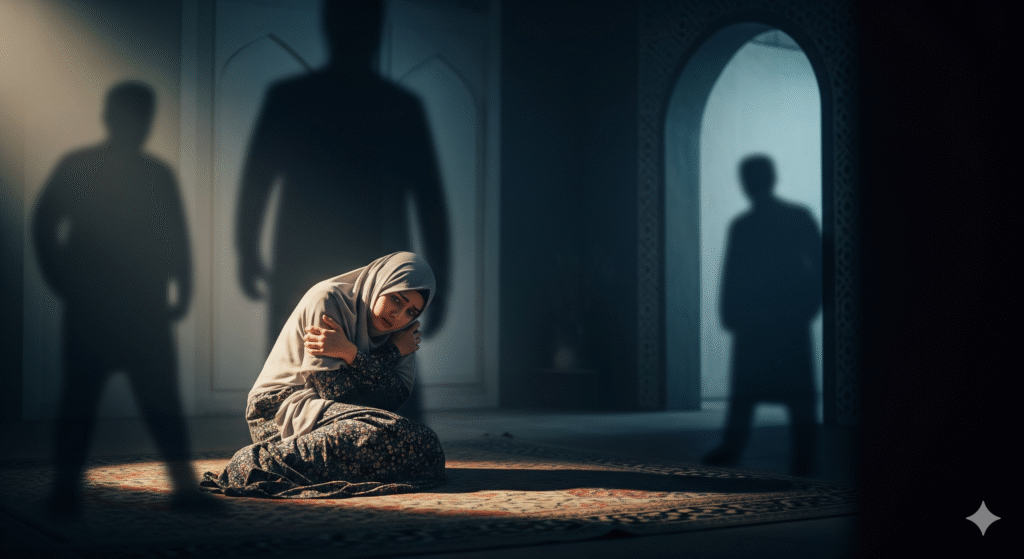
Qur’an 4:34:
“الرِّجَالُ قَوَّامُونَ عَلَى النِّسَاءِ…”
“Men are qawwam over women.”
Qawwam (قَوَّام) = ruler / governor / authority
- Ibn Kathir (Tafsir 4:34):
“Men are rulers and governors over women because Allah has made men superior to women.” - Al-Jalalayn:
“Qawwam means ownership and governance over them.” - Al-Tabari:
“Men are qawwam over women in order to discipline them, and if necessary, to beat them.”
So “qawwam” doesn’t mean just “responsible” but rather “master, ruler, owner.”
6.3 The Result
- The husband can beat his wife even on suspicion.
- The wife has no right—only “reconciliation” or “endurance.”
- Woman is treated like a subordinate subject, while man is the ruler.
6.4 The Question of Truth
If it were true equality, then—
- A woman could also strike her husband on suspicion, or divorce him freely.
- Men too would have veils and restrictions.
But the reality is: Islam made man the ruler, and woman the slave.
Part 7: Woman = Satan?
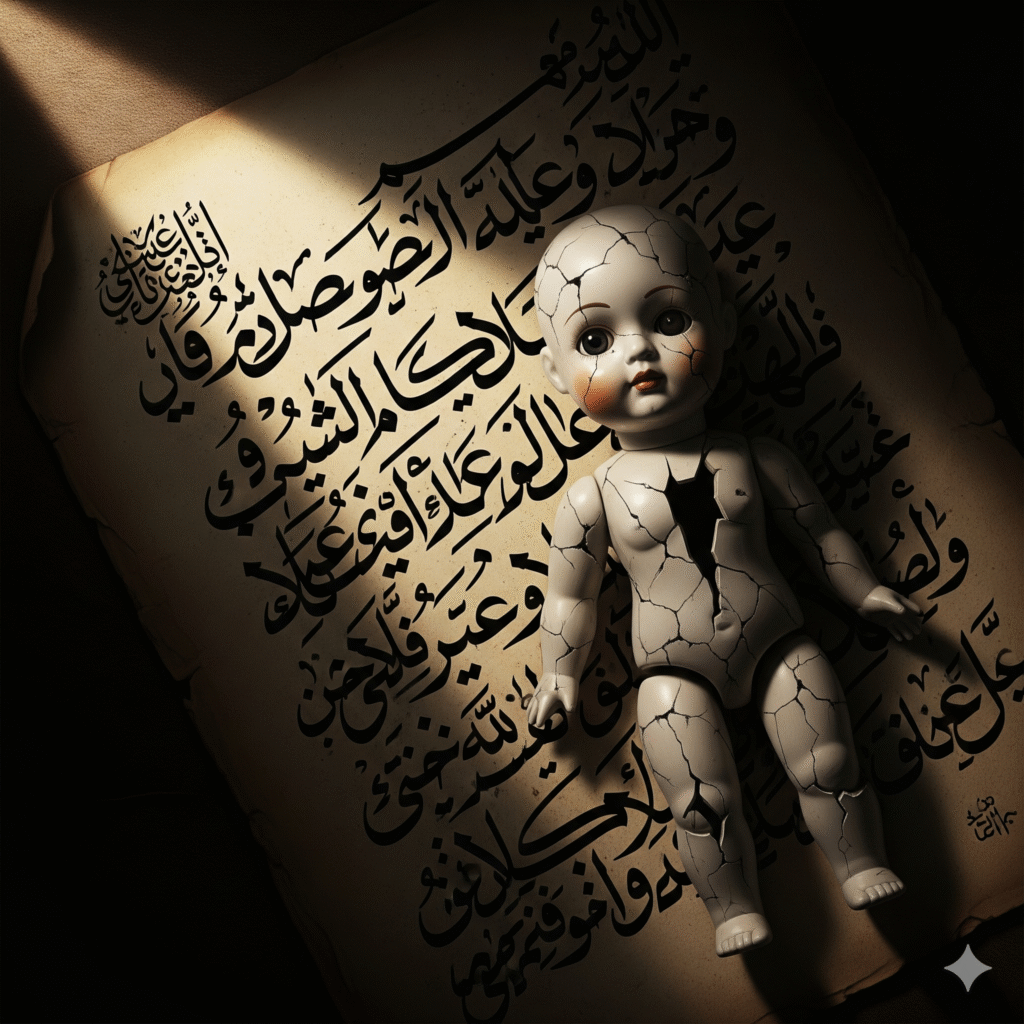
7.1 Qur’an’s Statement (4:117–119)
Qur’an 4:117:
إِن يَدْعُونَ مِن دُونِهِ إِلَّا إِنَاثًا ۚ وَإِن يَدْعُونَ إِلَّا شَيْطَانًا مَّرِيدًا
In yadʿūna min dūnihi illā ināthan, wa in yadʿūna illā shayṭānan marīdā
Translation:
“They call upon nothing but females (إِنَاثًا / ināthan), and indeed they call upon none but Satan the rebellious.”
The Arabic word ināthan = females/women
Direct meaning: Calling upon women = Calling upon Satan.
7.2 The Tafsir Evasion
- Ibn Kathir, Tabari, and others: claim ināthan here means “goddesses/idols (al-Lat, al-‘Uzza, Manat).”
But the question is:
- If it meant idols, why didn’t the Qur’an explicitly name them here, like in Qur’an 53:19–20?
- Why use the word ināthan (“females”)?
The unavoidable result: The image of woman is directly tied to Satan.
7.3 Hadith: Woman = Satan / Fitna
- Sahih Muslim (1403a):
“Woman comes like Satan and goes like Satan.” - Sahih Bukhari (5096):
“After me, no trial (fitna) has been left for men greater than women.” - Sahih Muslim (2740):
“In this world, no trial (fitna) is greater than women.”
Clearly, women are portrayed as the face of Satan and the greatest threat to men.
7.4 The Problem with Matronymics
Before Islam, in Arabia, people were sometimes identified by their mother’s name:
- Jesus son of Mary (Isa ibn Maryam)
- Umm Jameel (Abu Lahab’s wife, Qur’an 111:4–5)
- Hind bint Utbah (Abu Sufyan’s wife)
So matronymics were not unusual. Islam, preferring a patriarchal mindset, eliminated them. Therefore, Qur’an 33:5 commands:
Qur’an 33:5:
“Call them by their fathers’ names; that is more just in the sight of Allah.”
Order: Identity through the father, not the mother.
7.5 Result
- Woman = Satan and Fitna
- Matronymics erased → Patriarchy enforced
- Female identity, respect, and independent role completely erased
7.6 The Question of Truth
If women are not Satan or Fitna, then:
- Why was the status of the mother erased?
- Why was no restriction imposed on men’s gaze or lust?
Reality: The entire Islamic system is designed to treat women as a threat and men as rulers.
Part 8: Polygamy — Man’s Right, Woman’s Sin?
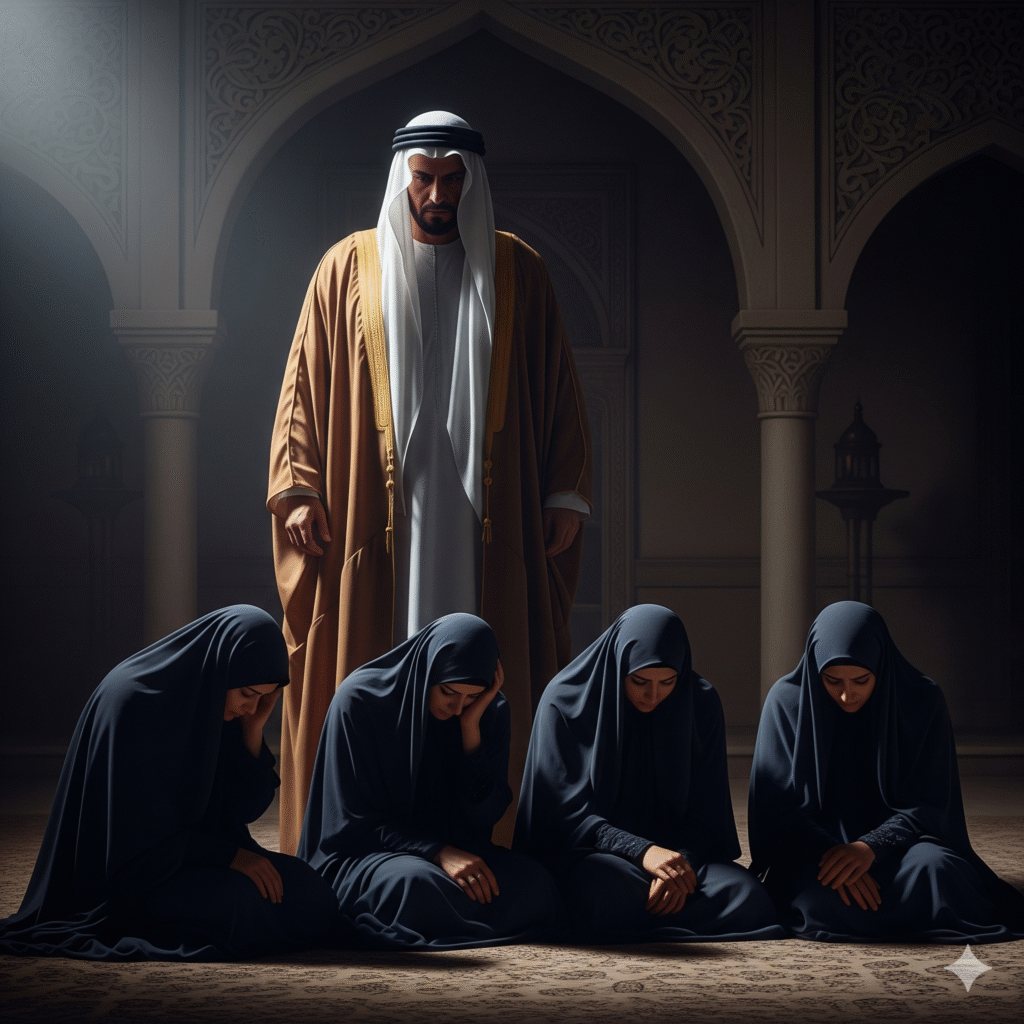
8.1 Qur’an Rules (4:3, 4:24, 23:5–6)
Qur’an 4:3:
“Marry those women who please you — two, three, or four. If you cannot do justice, then one, or your slave-girls.”
Meaning:
- Men have full liberty to keep four wives
- Along with concubines / sexual slaves
- No strict limit, since divorcing one allows a fifth, sixth…
Qur’an 4:24, 23:5–6:
Men may have sexual relations with their wives and with those “over whom they have ownership” (concubines).
8.2 The Reality of “Justice”
The verse commands justice among four wives.
But this “justice” is limited to expenses, clothing, food, and accommodation.
In public interpretation, “justice” is exaggerated, but emotional preferences are not restricted.
So a man can favor one wife emotionally, while the others are kept merely for survival.
Result: A man can freely love one wife and keep another just for maintenance.
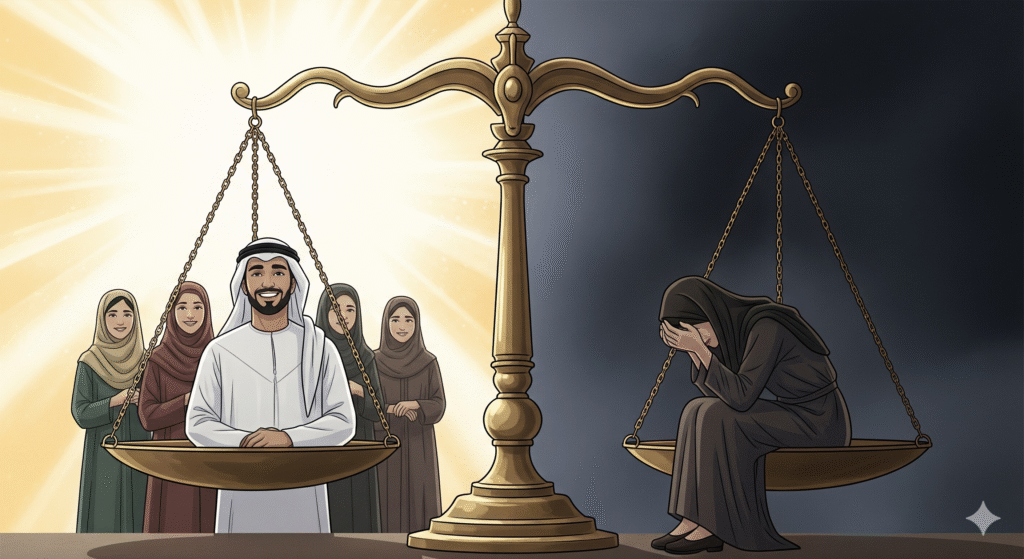
8.3 Condition of Women
- If a wife cannot bear children → the husband may marry another.
- If the man is incapable → the woman has no rights.
- Her life is suppressed as “incomplete.”
Islamic law treats a woman as a machine for producing offspring.
8.4 The Question
- Men get: four wives + concubines + Houris in Paradise…
- Women get?
- No equality
- No reward in Paradise
Question: Why is the woman alone deemed sinful, guilty, and inferior?
Part 9: The Fire of Hell — Women’s Destination?

9.1 Statements from Hadith
- Sahih Bukhari 1052; Sahih Muslim 907:
“I saw in Hell that most of its inhabitants were women.” - Sahih Muslim 79:
Most women will go to Hell because they are weak in practicing religion and disobedient to their husbands. - Sahih Bukhari 304:
“Women are deficient in intellect and religion.”
Reasons given:
- Disobedience to their husbands
- Failure to show gratitude
- Deficiency in religious duties
9.2 Result
Women are declared a source of sin, deficient in intellect, and permanent residents of Hell.
Meaning: Slavery in this world + punishment in the Hereafter.
Even “Hell” is justified by portraying women’s freedom or questioning as the ultimate crime.
9.3 The Question of Truth
- Men enjoy four wives, concubines, and Houris → no issue.
- Woman disobeys slightly → straight to Hell?
This is not equality; it is a system designed to always consider women sinful and inferior.
Part 10: Woman — Ruler? Never!

10.1 Hadith: Women as Rulers
- Sahih Bukhari 4425; 7099:
“A people who make a woman their ruler will never succeed.”
Meaning: If a woman rules, the entire nation will be destroyed.
On this basis, women are permanently excluded from political leadership.
10.2 Leadership in Prayer (Imamat)
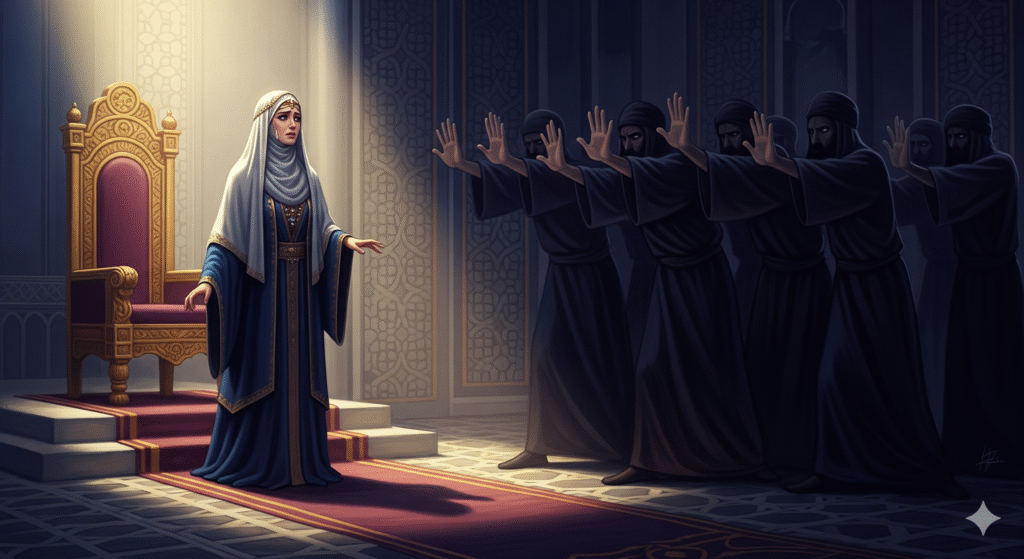
- Sahih Muslim 511; Sahih Bukhari 514:
“If a dog, donkey, or woman passes in front, the prayer is invalidated.”
Women are equated with dogs and donkeys, and this rule prohibits women from leading men in prayer.
10.3 Result
Women can neither:
- Become rulers
- Hold religious leadership (Imam, Mufti, Caliph)
Conclusion: The entire power structure in Muslim society is male-dominated and patriarchal.
Part 11: Women’s Testimony — Half a Human

Quran 2:282:
“If there are not two men, then one man and two women, so that if one forgets, the other reminds her.”
Sahih Bukhari 304:
“Women are deficient in intellect and religion.”
- In testimony, a woman = half a human.
- Permanent doubt is placed on women’s intellect and memory.
Part 12: Inheritance — Also Half

Quran 4:11:
“The share of a son is equal to that of two daughters.”
- Son = double
- Daughter = half
Summary:
- Governance? Forbidden.
- Imamat (religious leadership)? Haram.
- Testimony? Half.
- Inheritance? Half.
- Hell? Most women.
The Islamic system considers women inferior, incomplete, and sinful on every front.
Part 13: Paradise — Houris for Men (Quran 44:54; 52:20; 56:22)
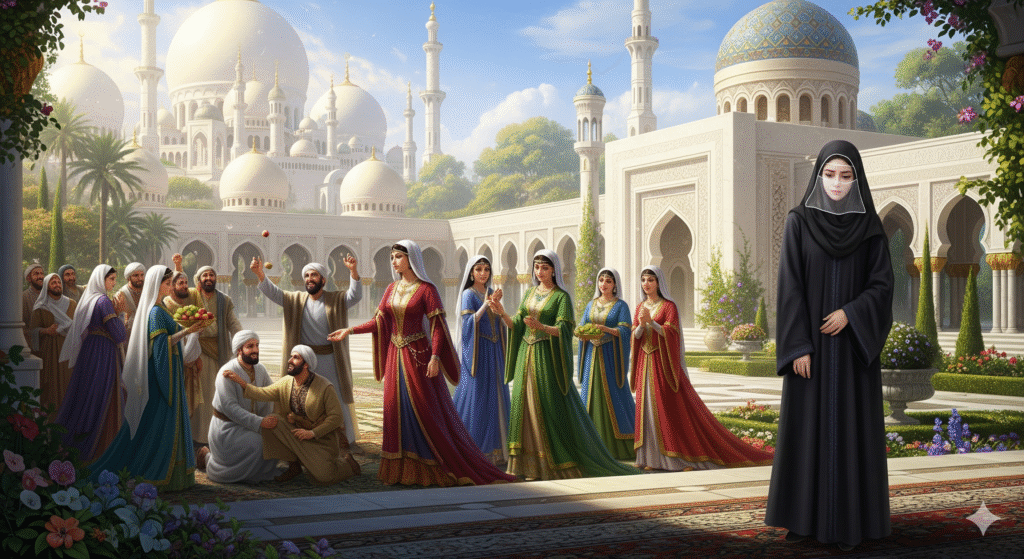
“For them will be fair-eyed Houris.” — Quran 56:22
- The description of Paradise in the Quran and Hadith is centered on men’s desires.
- Paradise is adorned as sexual pleasure and Houris for men.
- Men are promised fair-eyed, eternally virgin, and obedient women.
- Women are given no equivalent reward in Paradise.
Implication: Paradise, too, is male-centered, where a woman’s role is only as an object for male satisfaction.
Conclusion — The Hidden Truth
Mullahs and scholars often try to escape criticism by saying, “These were just the practices of that time.”
But the Quran itself declares that it is eternal and unchangeable (Quran 33:40, 15:9).
So the question arises—if it is meant to be eternal, then why use the excuse of “old times”?
It is clear that:
- A rape victim is considered guilty if she cannot produce four male witnesses,
- Women have to pay money to obtain a divorce (Khula),
- Halala imposes humiliation and compulsion,
- Girls as young as six were married,
- Husbands have the right to beat wives for disobedience,
- Veiling and subjugation are imposed entirely on women…
All of this comes directly from the Quran and Hadith, and this is the real truth.
Claims of women’s “honor” and “rights” within Islam are mere propaganda.
Any freedom or rights Muslim women appear to have today come not from Islam but from secular law and modern constitutions.
Questions that strike at the conscience
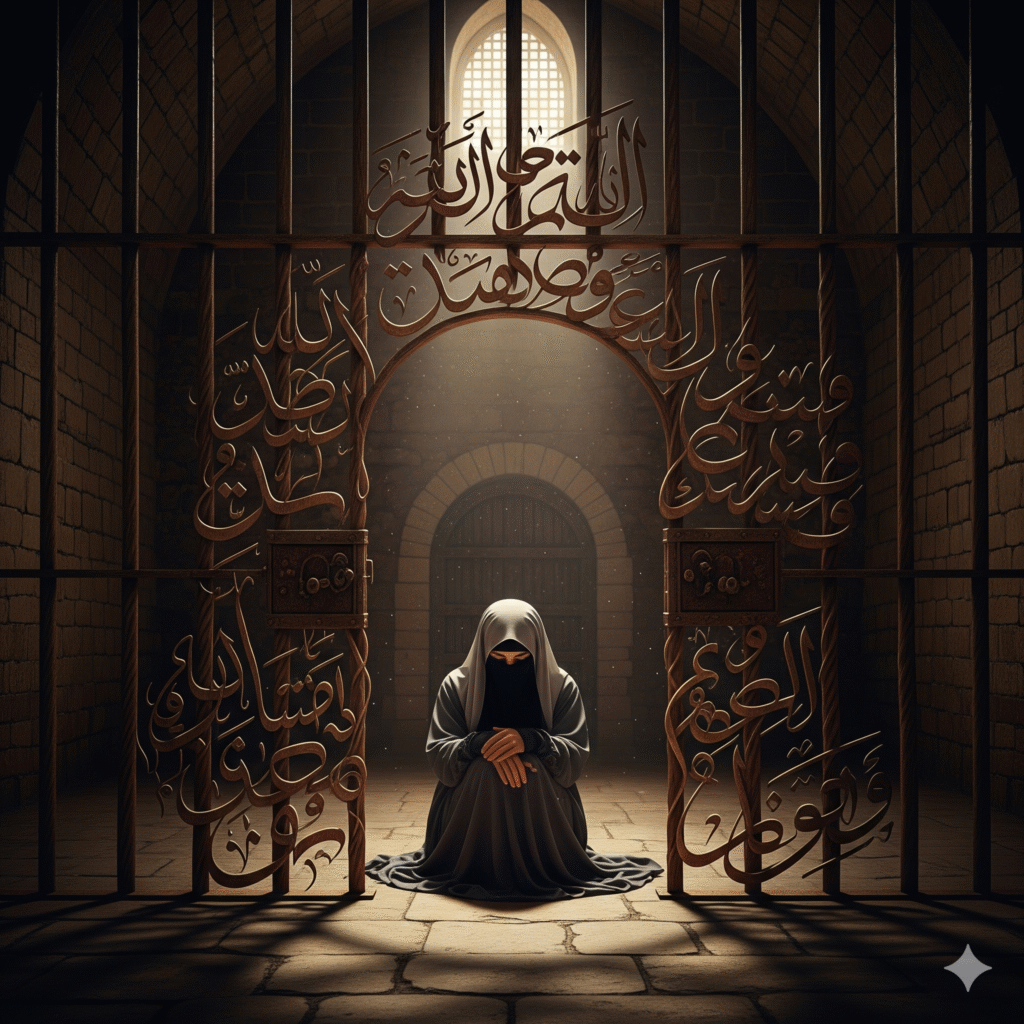
- If you cannot bring four witnesses, how is rape your fault?
- Why must you buy your freedom through Khula?
- How is your honor protected if Halala forces you to marry another man first?
- A six-year-old’s marriage—where is her consent?
- Obey every command of your husband, get beaten—aren’t you human?
- The Quran is eternal—then why the excuse of “old times”?
- Men get four wives, slaves, and Houris—while you get neither equality in this world nor reward in Paradise—is this justice?
Women’s Status in Islam (based on scriptures)
- Beaten even on suspicion (Quran 4:34)
- Depicted as Satanic (Quran 4:117)
- Considered a “field,” i.e., object for use (Quran 2:223)
- Bought and sold in divorce and Halala
- Half in testimony and inheritance (Quran 2:282, 4:11)
- Excluded from governance and religious leadership
- Declared primary occupants of Hell (Bukhari 1052, Muslim 79)
It is evident that both the Quran and Hadith deny women dignity, equality, and freedom.
Claims of women’s rights in Islam are not derived from the scriptures but from the modern world.
“If a woman is made half a human, inferior in testimony, condemned to the fire of Hell, and treated as a man’s property, this is not honor—it is systematic slavery.”
“This article is not written to defame any faith or community. The questions raised here are my own reflections. I only wish to understand: why is Sharia considered above the Constitution and modern values? Is this truly justified? These are not accusations but an attempt to seek clarity and truth. If you disagree, I invite you to answer these questions and help me understand. My aim is not conflict but the search for truth.”
📢 Did you find this article useful?
🙏 Support our work by clicking here.
References
Quran: 2:223, 2:229–230, 2:282, 4:11, 4:34, 4:117–119, 24:4, 65:1
Tafsir: al-Tabari, Ibn Kathir, Jami al-Tirmidhi
Sahih al-Bukhari: Hadith 1052, 4425, Book 65, Hadith 89
Sahih Muslim: Hadith 79, 907, 1492, 3491