
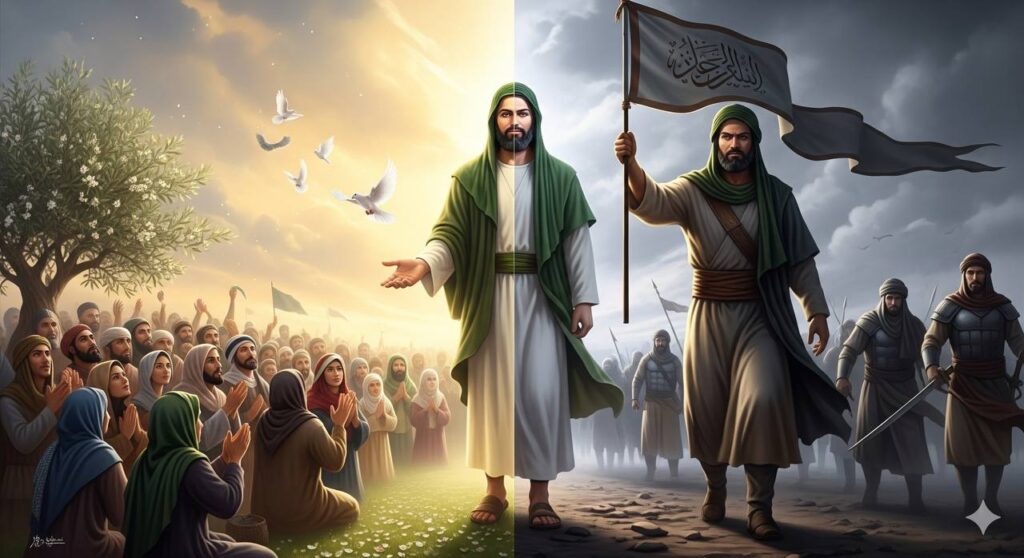
The Naked Truth Emerging from Quran and Hadith
Introduction
Just think for a moment…
On one side stands the image we are constantly told—
“Muhammad, Rahmatul-lil-Alameen—mercy for all creation.”
But on the other side, when we open Islam’s own books—the Quran, the Hadith, and early histories—a very different picture begins to emerge.
In the previous article, we saw how the God of our hearts—our Allah—does not seem to match the deity described in these scriptures.(Click Here to Read)
Now, let us examine in the light of these very books whether the Prophet is truly the way we have been told, or the way he is actually described in Islamic texts.
The question is clear:
Was Muhammad really the “Prophet of Mercy”?
Or was he instead a symbol of sword and deception?
Note: If you feel this content might offend your sentiments, please first read the [Disclaimer].
Let us return to that desert where Islam first took root—and uncover the true face of Allah’s Messenger through the Quran and Hadith.
1. The Creed of the Sword: “Believe, or Die”
In the sands of Arabia, the swords had already been drawn.
Muhammad declared:
“I have been commanded to fight people until they testify that none is worthy of worship but Allah.”
(Sahih Bukhari 2946; Sahih Muslim 21A)
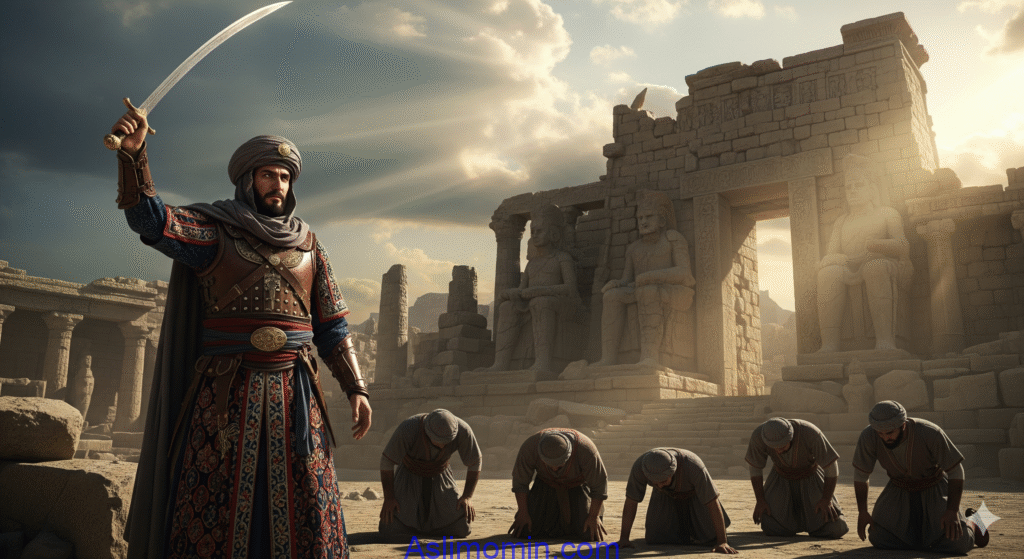
Those who gave the testimony—were spared.
Those who refused—were struck down.
So was this mercy?
Or was this a religion spread under the shadow of death and fear?
To claim that “Islam is a religion of peace” is to deceive history—and to deny Muhammad’s own commands.
2. Hatred of Idol-Worshippers and the Logic of Massacre
The Quran delivered a decisive verdict against idol-worshippers:
“Indeed, the polytheists (al-mushrikun) are najas (impure, filth like excrement).”
(Quran 9:28)
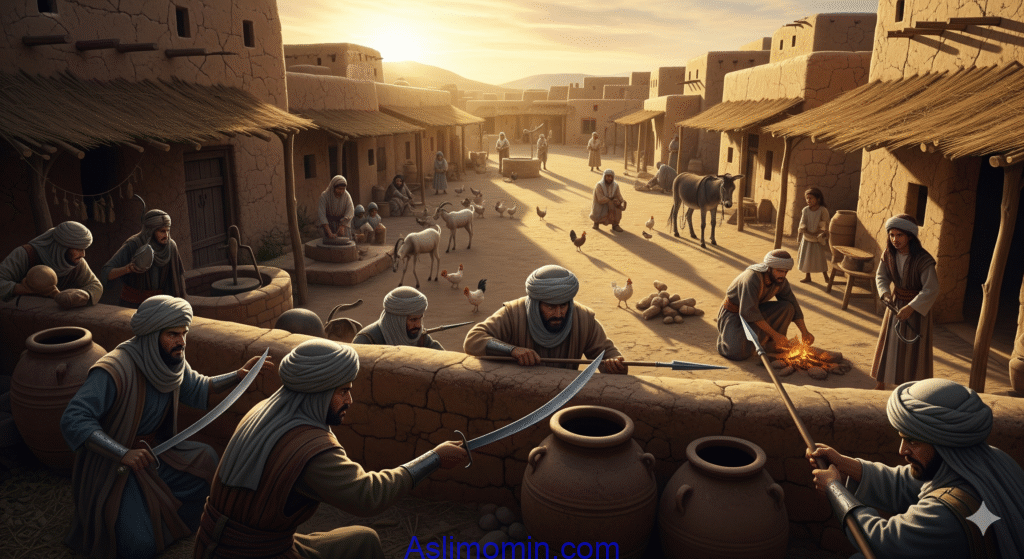
“When the sacred months have passed, lie in wait, slay the polytheists wherever you find them.”
(Quran 9:5 – Ayat al-Saif, the ‘Verse of the Sword’)
The result? The idols of the Kaaba were smashed, temples were demolished, and their followers were cut down.
So the question is—
What kind of “Prophet of Mercy” preaches a love that demands slaughter in the name of God?
3. Wars of Deceit: Valor or Ambush?
Islamic tradition claims Muhammad was a brave warrior.
But the timing, methods, and targets of his raids tell a very different story.
It was dawn. The Banu Mustaliq were watering their camels. Suddenly, swords flashed—and the attack began.
“We attacked in the morning while the people were unaware.”
(Sahih Bukhari 2541)
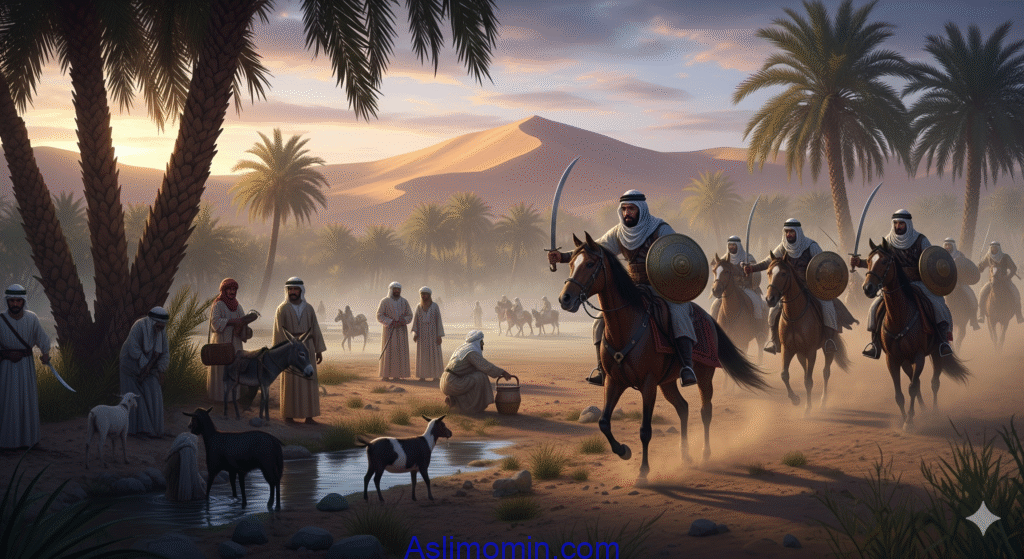
“We attacked in the morning while the people were leading their animals to water.”
(Sahih Bukhari 371 – Battle of Khaybar)
“The Banu Mustaliq had no idea that an attack was about to come upon them.”
(Bulugh al-Maram, Jihad 11:10)
The same pattern emerged in the Battle of Hunayn. Muhammad sent troops to Awtas at night—hidden, sudden, and merciless. And when women were taken captive, a “revelation” followed:
“Those women taken as captives in war are lawful for you.”
(Quran 4:24; Sunan Abu Dawud 2155)
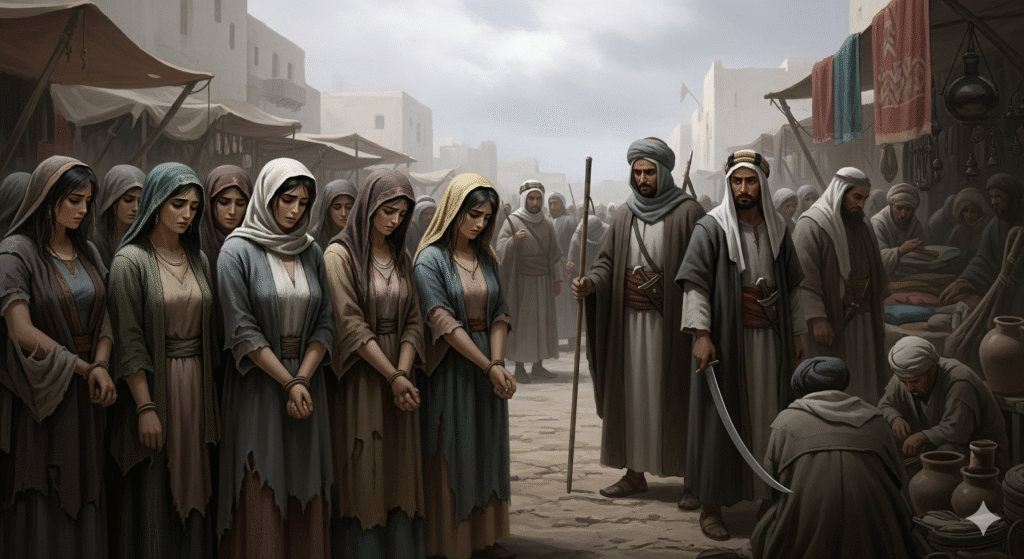
Thus, even the forced use of female captives was sanctioned.
So the question is:
Was this valor—attacking unaware and defenseless people?
Was this truly jihad—or organized plunder and lust?
4. Loot, Lust, and the Trade in Women
As the campaign towards Tabuk began, Muhammad did not inspire his men with talk of faith or justice. Instead, he tempted them with women:
“March to Tabuk—you will find al-Asfar (fair-skinned Byzantine women).”
(Tafsir Ibn Kathir, Quran 9:49; Tarikh al-Rusul vol. 9, p. 91; al-Tabari 9:49)
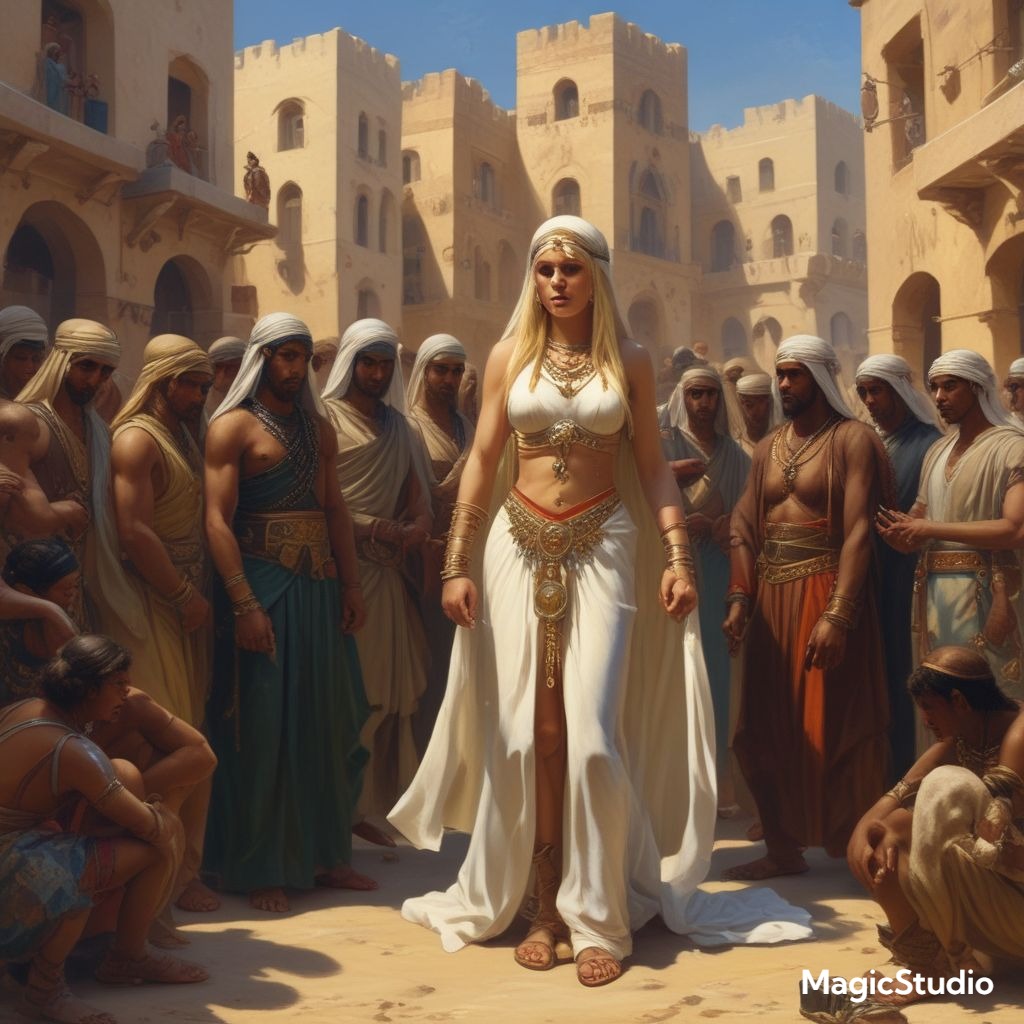
“Al-Asfar” means “yellow/golden-skinned”—a reference to fair-skinned Byzantine women.
So was this a “holy jihad”?
Or a war provoked by the auction of pale-skinned women?
Raids and Caravan Looting
Muhammad and his companions repeatedly targeted trade caravans:
- Raid at Buwat — attempt to seize a Quraysh caravan.
- Raid at al-‘Ushayra — another caravan targeted.
- Attack at Safwan.
- Raid at al-Kharrar — attempt to plunder Abu Sufyan’s caravan.
The Quran itself declared:
“Booty is lawful and good for you.” (Quran 8:69)
“One-fifth of the booty belongs to Muhammad.” (Quran 8:41)
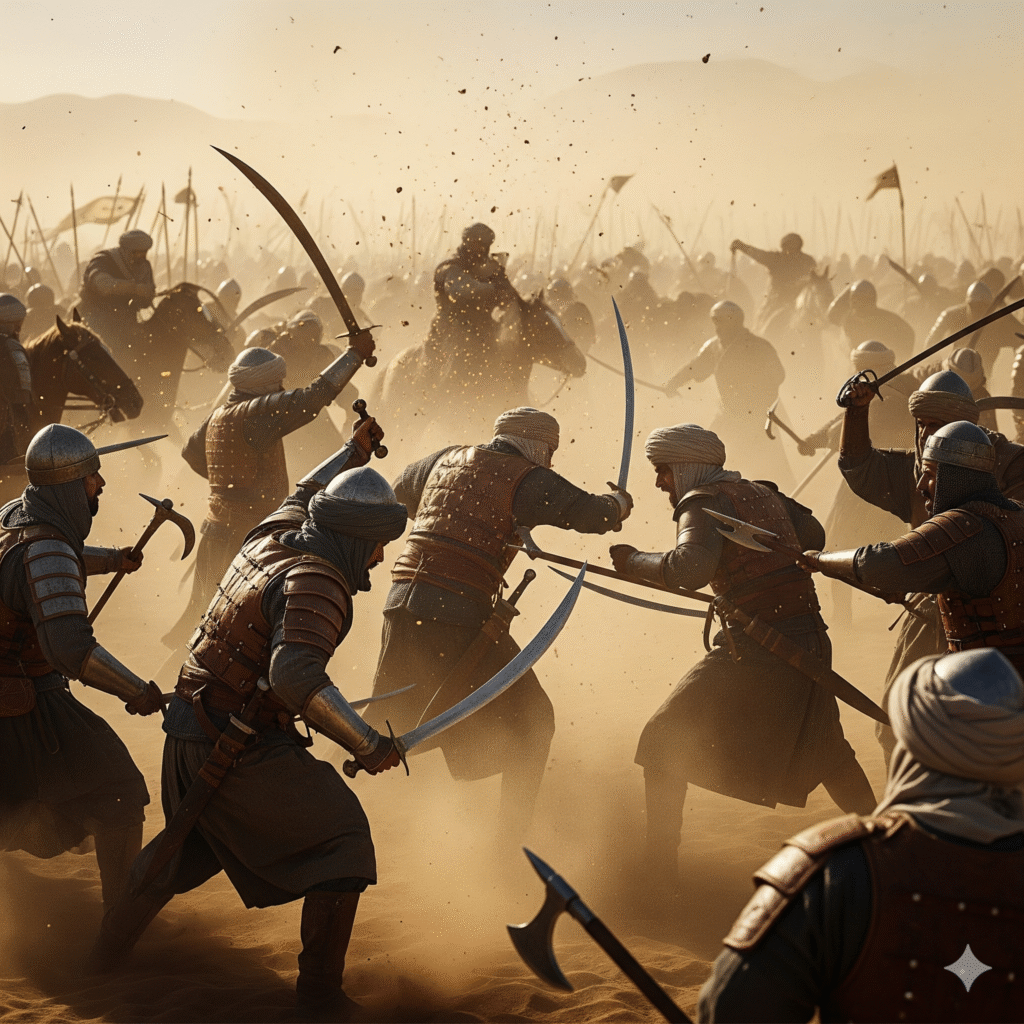
Ibn Hisham (pp. 281–283) explicitly records that Muhammad repeatedly attacked Quraysh caravans and seized their goods.
The Battle of Badr (624 CE)
Clerics claim the Meccans were aggressors.
But the reality is—Muhammad marched with 313 men specifically to intercept Abu Sufyan’s caravan. The Meccans were merely defending their trade and their lives.
So the question stands:
To raid merchants and then brand them as “aggressors”—is that the mark of a prophet?
Was this a divine ideal—or the conduct of a band of raiders?
5. Orders to Kill the Innocent
A chilling command surfaces:
Abu Dawud 4404“If he has grown pubic hair, kill him.”
(Abu Dawud 4404)
Children condemned to death—on the basis of body hair?
And when night raids resulted in the deaths of women and children, companions asked if it was permissible. Muhammad replied:
Sahih Bukhari 3012“They (non-Muslims) are from among them.”
(Sahih Bukhari 3012; Muslim 1745b)
What kind of “Prophet of Mercy” legitimizes the killing of children?
Could he not forbid attacks that slaughtered the innocent?
Was this truly Rahmatul-lil-Alameen—“mercy for all”—or a leader unable to show mercy even to children?
6. Muhammad and Women: Compassion or Lust?
In the marketplace of Medina, a woman passed by. Muhammad looked at her, desire surged, and he immediately went to his wife Zaynab to satisfy himself.
(Sahih Muslim 1403)
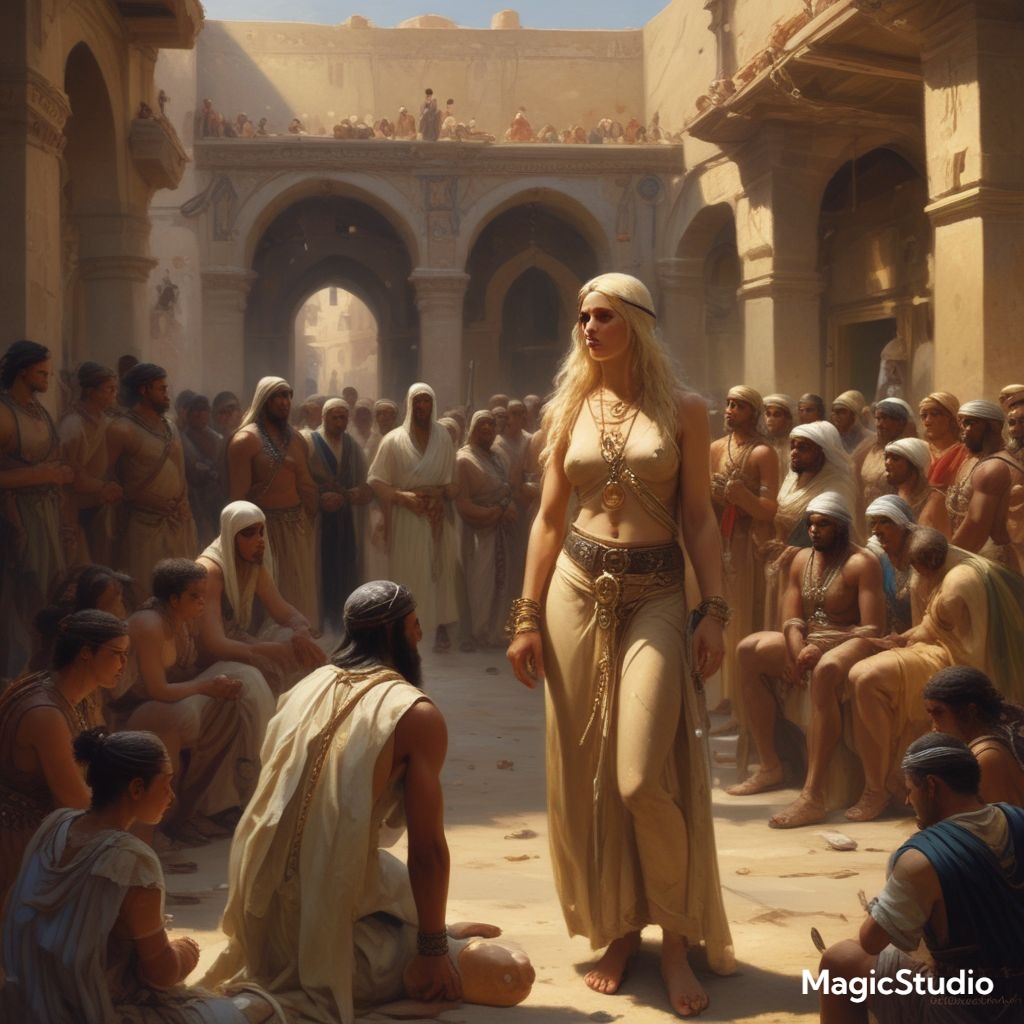
The Hadith testify further:
Bukhari 268“He would go to all his wives in a single night.” (Bukhari 268)
“He had the strength of thirty men.” (Bukhari 268)
“Four wives, and as many slave-girls as he desired.” (Quran 33:50)
So the question is clear—
Was this the mark of a divine, exemplary character?
Or simply uncontrolled lust?
7. The Prophet and Little Girls
An infant—the daughter of Abbas—was still nursing when Muhammad saw her and said:
“If she grows up and I am still alive, I will marry her.”
(Ibn Ishaq, p. 311; Musnad Ahmad 25636/26870; Musnad Abu Ya’la; Al-Kabir, Al-Tabari)
What kind of “Prophet of mercy” looks at a breastfeeding child and speaks of marrying her? Is this not lust? Is this not depravity?

And then there was Aisha—married at six, consummated at nine.
(Bukhari 5133)
Was this mercy—or the height of indulgence in carnal desire?
8. Killing, Slavery, and Trade
After battles, blood stained the ground and slave markets flourished.
“It is not fitting for a Prophet to have captives until he has slaughtered in the land.”
(Qur’an 8:67)
Slavery was impossible without mass slaughter. What sort of “divine morality” is this?
“First massacre—then enslave.” Was this revelation, or organized plunder?
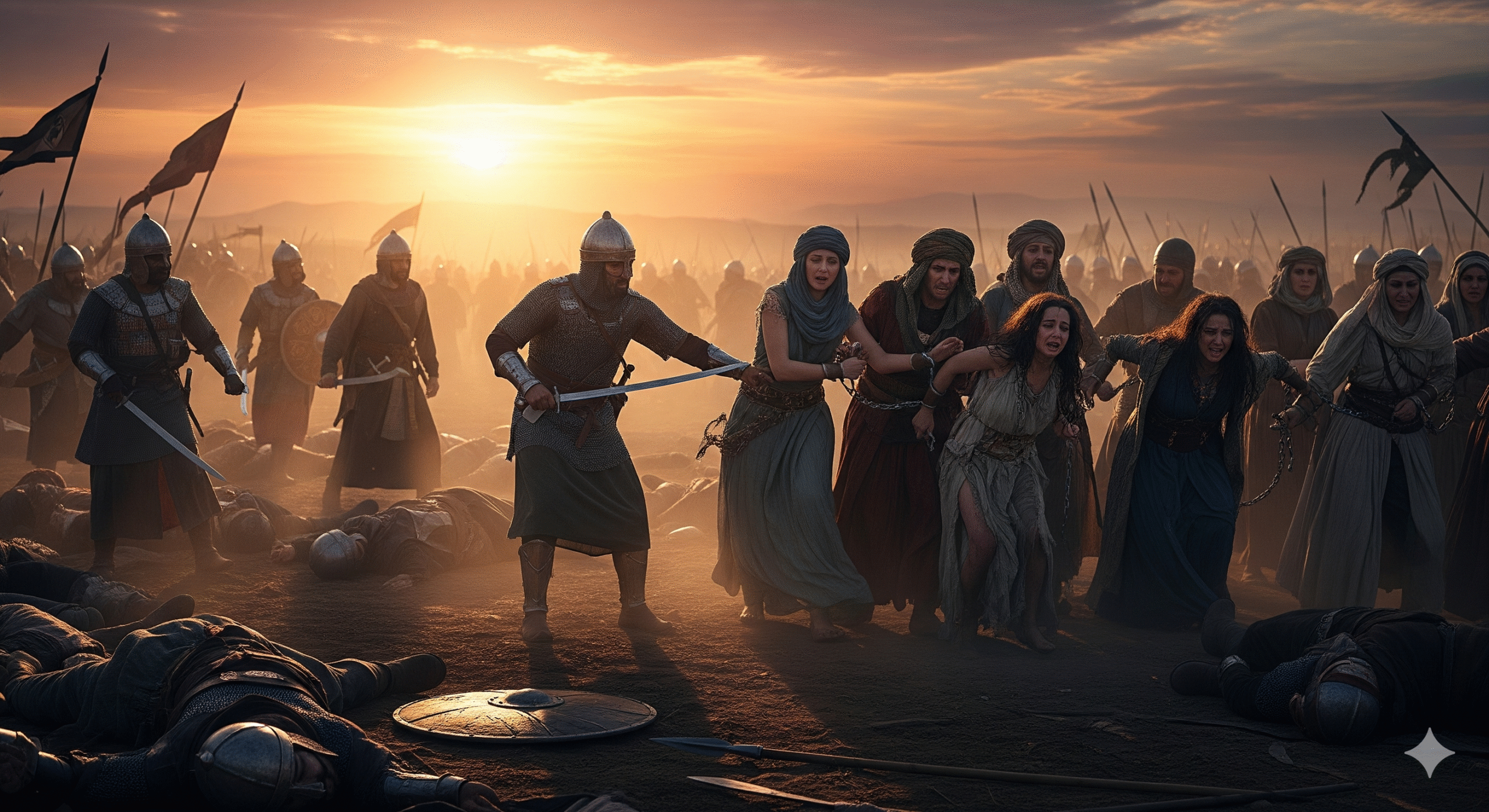
History records that Muhammad owned over fifty female slaves (concubines) and nearly as many male slaves.
(Ibn Hisham, Sirat Rasul Allah; Al-Tabari, vol. 8)
Can the true messenger of God be a man of bloodshed, who fought not to defend, but to loot?
Women: Commodities of Lust and Trade
Muhammad did not merely treat women as objects of pleasure—he bought and sold them openly, not like a prophet, but like a trafficker.
“Muhammad sold slave women.” (Bukhari 3:34:351)
“He even sold mothers of children.” (Sunan Ibn Majah 2517)
Is this prophetic conduct?
Coitus Interruptus (Azl)
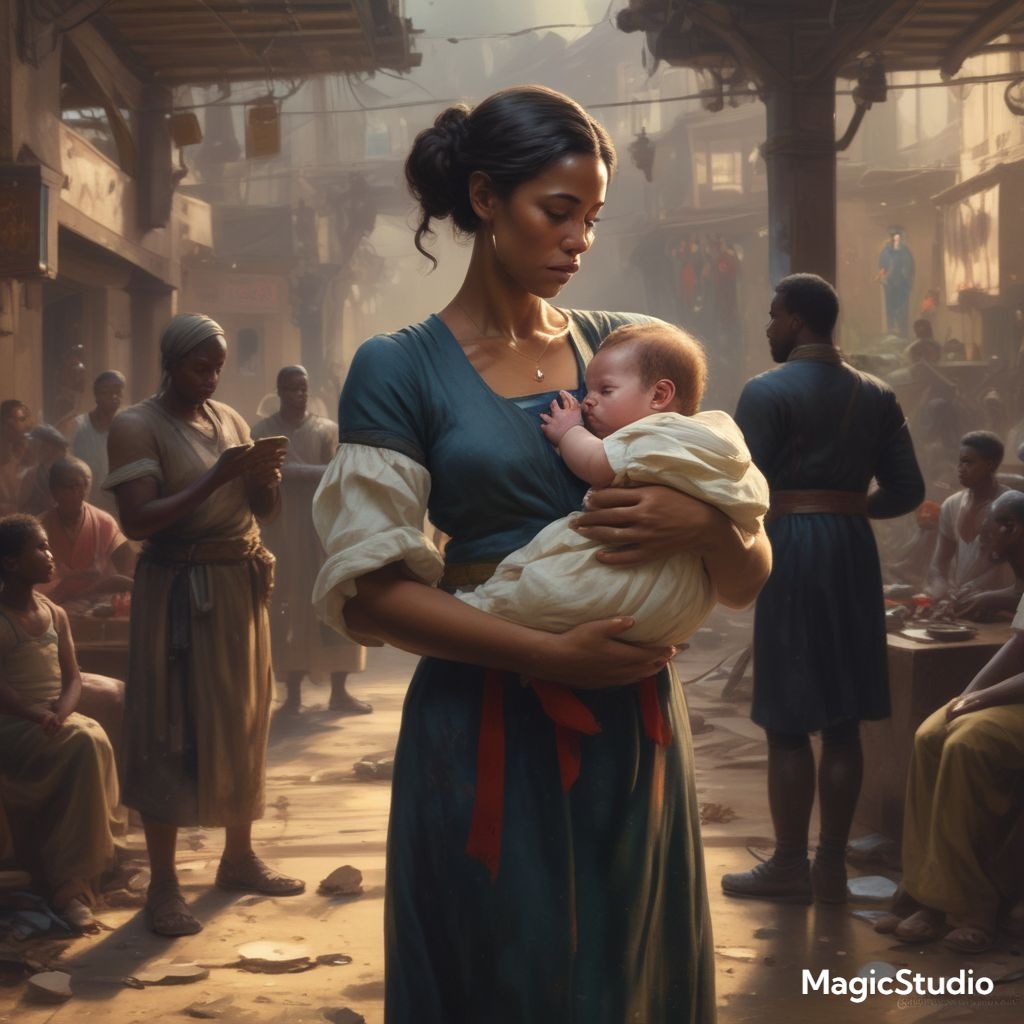
Pregnant slave-women fetched lower prices. So:
“We used to have intercourse with them, but practiced ‘azl (withdrawal), so they would not conceive.”
(Bukhari 2229, 7409)
Enjoy their bodies—but prevent them from becoming mothers, so they remain marketable.
If this is not exploitation in its vilest form—what is?
Slaves for Weapons
“Muhammad sold captive women in the markets of Najd, and purchased weapons and horses in return.”
(Al-Tabari, vol. 2, part 1 – Banu Qurayza account)
Can the messenger of God sanctify the buying and selling of human beings?
If yes—does that not insult God Himself, and mock humanity?
So the question remains:
Was he truly a prophet—or a merchant of women and wealth?
Can such a figure be called Rahmat-lil-Alamin—“Mercy to all creation”?
9. Where Were the Miracles?
Whispers spread in Medina:
“Muhammad has been bewitched.”
People said he forgot what he had done, or where he had gone.
(Bukhari 5765; Muslim 2188)
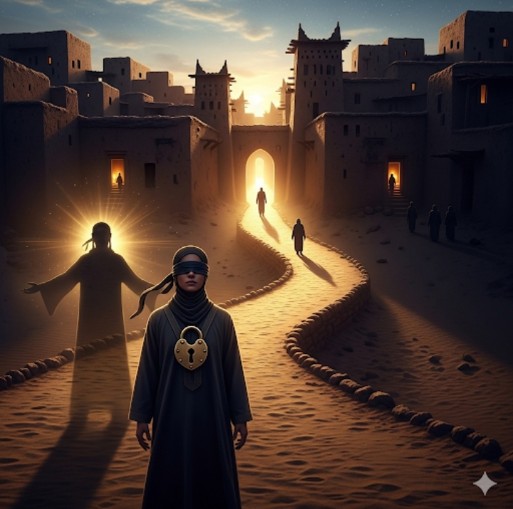
Is this the mark of a “miraculous prophet”—who claims to heal others, yet cannot escape sorcery himself?
Then came the battlefield of Uhud.
His followers fled.
His teeth were broken, his face bloodied, and he was defeated.
(Bukhari 2911)
If angels truly came to his aid—why such humiliation?
And in the end, not in glorious battle, nor by heavenly power—
but by poison, offered by a Jewish woman, he died.
(Bukhari 4428)
Was this the death of a prophet filled with divine power—or simply the fate of an ordinary man?
A “miracle-working prophet”—who fell to magic, poison, and defeat?
Was he truly miraculous at all?
10. Punishment for Criticism: “Beheading”
In Islam, the greatest crime is not murder, theft, or oppression—it is criticism.
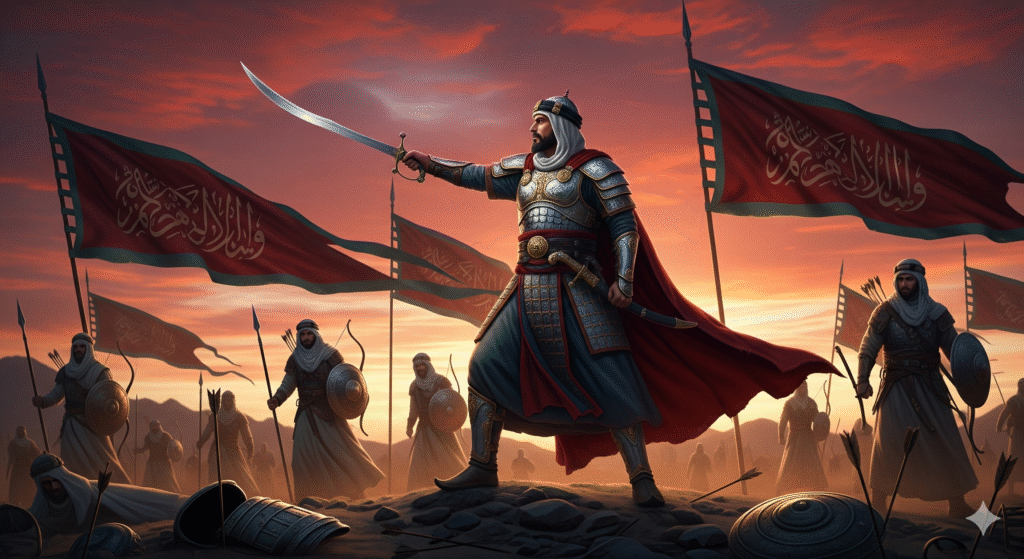
Ka‘b bin al-Ashraf—a poet who merely wrote satire.
Asma bint Marwan—a woman who composed a few verses.
Both met the same fate: death by the sword.
Prophet: Symbol of Mercy or Cruel Warlord?
Muhammad is called “Rahmatul-lil-Alameen” — “Mercy for all creation.”
But what do his actions show?
- Order to behead unbelievers: Quran 47:4
- Killing Safiya’s husband, then forcing her into marriage: After the Battle of Khaybar, Muhammad had Safiya’s husband executed, then took her as a slave and married her the same night — Sahih Bukhari 2235, 947, 4211, For more details, read our article on Islamic Slavery, where the story of Safiyya is explained in detail.
- Assassination of Jewish poet Ka‘b bin al-Ashraf for satire — Hadith
- Brutal torture and execution of camel traders: Cutting off their hands and feet, gouging out eyes with hot iron, leaving them to die — Sahih Bukhari 5686, Sahih Muslim 1671A. This was the direct implementation of Quran 5:33: “Those who wage war against Allah and His Messenger… their punishment is: execution, crucifixion, or cutting off hands and feet on opposite sides…”
So the question is:
Is this truly the “Prophet of Mercy”?
Or a warlord who believed violence was necessary for his faith?
Is this the hallmark of Rahmat-lil-Alamin—“Mercy to all creation”?
Or is it the foundation of terror?
Was this religious tolerance—or the birth of religious terrorism?
Conclusion
Conclusion — or Questions?
Now the questions before you are—
- Was he truly the Prophet called “Mercy to the Worlds”?
- Or merely a conqueror—who built power through the sword, lust, and trade?
The Islamic books themselves bear witness, but upon reading them one wonders:
- Was Muhammad really a symbol of compassion?
- Or rather one of history’s greatest deceptions?
So the choice is yours—
Before calling me blasphemous or passing a fatwa,
read the evidence I have presented, examine it,
and then ask your own conscience:
Are my questions not legitimate?
For it is the Islamic sources themselves that raise the question—
- Was Muhammad a true prophet?
- Or a man who used religion as a cover to gather power and wealth?
Reflect honestly and ask:
Is the Muhammad of the books the same as the humane figure you were told to believe in—
a role model (uswatun hasana),
a mercy for all beings (Rahmat-lil-Alamin),
a preacher of humanity?

Or is that merciful image nothing more than a fabricated tale—
like the popular but unauthentic story of the old woman who threw garbage on him?
The better path is this:
Accept that over time, the books were altered.
Take from the Qur’an and Hadith only what aligns with the compassionate figure of Muhammad in your heart—
and discard the rest as inventions of power-hungry men seeking control.
In this article, we have not made any independent claims. The questions we raise are drawn directly from the Islamic texts and hadith collections we have cited. If, after reading them, one feels that the Prophet could not have been as portrayed in these accounts, then one must accept that these texts have undergone alterations — as we have demonstrated in our earlier article.
Therefore, before arriving at conclusions, we invite readers to also consult our related piece, which examines Muhammad’s personality outside the Islamic canon.
And if your faith begins to waver,
or you long to understand what to do next,
read my article on Mutashabihat verses,
it may give you peace.
📢 Did you find this article useful?
🙏 Support our work by clicking here.