
“If alcohol could be declared haram, why not the selling of human beings?”
Introduction:
When it comes to the topic of slavery and concubinage in Islam, followers typically offer two common responses:
- “That was the norm of the time.”
- “Islam reformed slavery.”
But the real question is—could a divine religion, one that claims to be the final and complete guidance, not abolish a practice as inhumane as slavery? Especially when it managed to outlaw alcohol, pork, idol worship, and interest (riba) at the same time?
The Quran and the System of Concubines (Mā Malakat Aymānukum – ما ملكت أيمانكم)
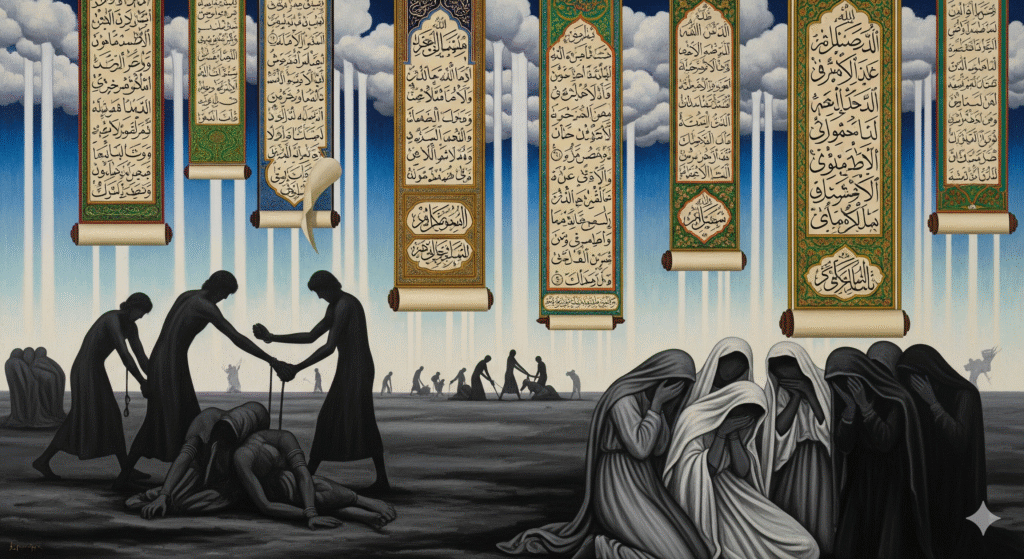
In Islamic terminology, the word used for concubine is “Mā Malakat Aymānukum”, meaning “what your right hand possesses”—that is, complete ownership.
Quranic Verses:
- Surah Al-Mu’minun 23:5-6
“Who guard their private parts – except with their wives and those whom their right hands possess, for then they are not to be blamed.” - Surah An-Nisa 4:24
“And [forbidden to you are] married women—except those whom your right hands possess.” - Surah Al-Ahzab 33:50
“O Prophet! We have made lawful to you your wives to whom you have given their dowries… and those (slave girls) whom your right hand possesses from what Allah has given you of war booty…”
Meaning: No marriage, permission, or consent was required for sex with slave women. They were considered property. This is reinforced in Surah Al-Ma’arij (70:29-30) as well.
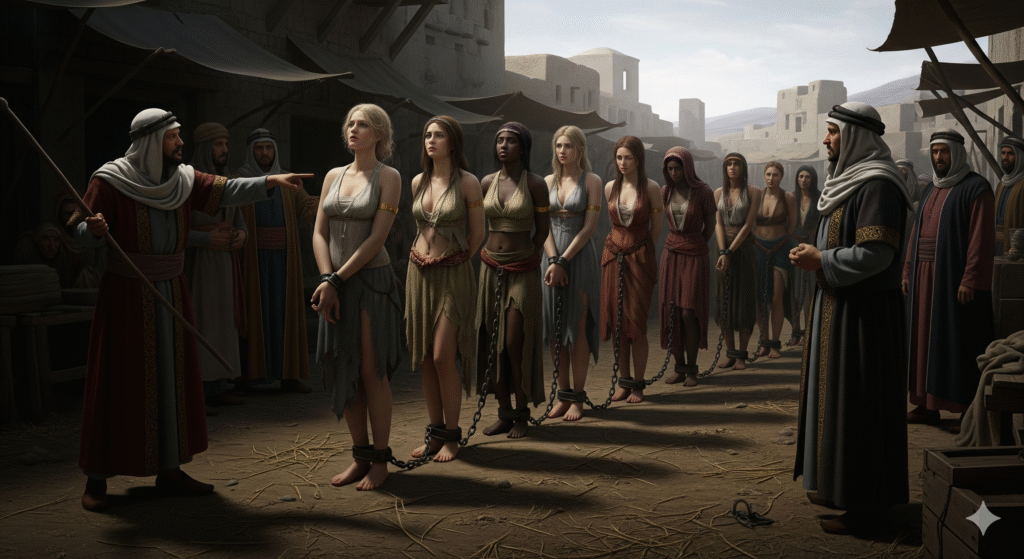
Tafsir Ibn Kathir
Reference: Surah Al-Mu’minun (23:6)
“This verse clarifies that men are permitted to have sexual relations with two types of women: (1) wives, and (2) slave women they own.”
Tafsir al-Qurtubi
Reference: Surah 23:6 and 4:24
Qurtubi writes:
“‘Mā Malakat Aymānuhum’ refers to women held as slaves.”
“It follows that the master has full rights to have intercourse with his slave girl without marriage, and it is lawful.”
He further states that if the concubine bore a child, she would be called “Umm al-Walad”, and relations could continue with her.
Tafsir al-Tabari
Reference: Surah An-Nisa (4:24)
“This verse means that if a married woman is captured in war and becomes a slave, the owner is permitted to have relations with her, even if she had a husband previously, because her marriage is annulled upon capture.”
In Sunan Abu Dawud 2155, it is mentioned that some soldiers hesitated to have relations with slave women whose husbands were still alive. Allah then sent down Quran 4:24 to declare it “lawful.”
Sunan Abu Dawood 2155Slavery – Islam’s Dark Reality
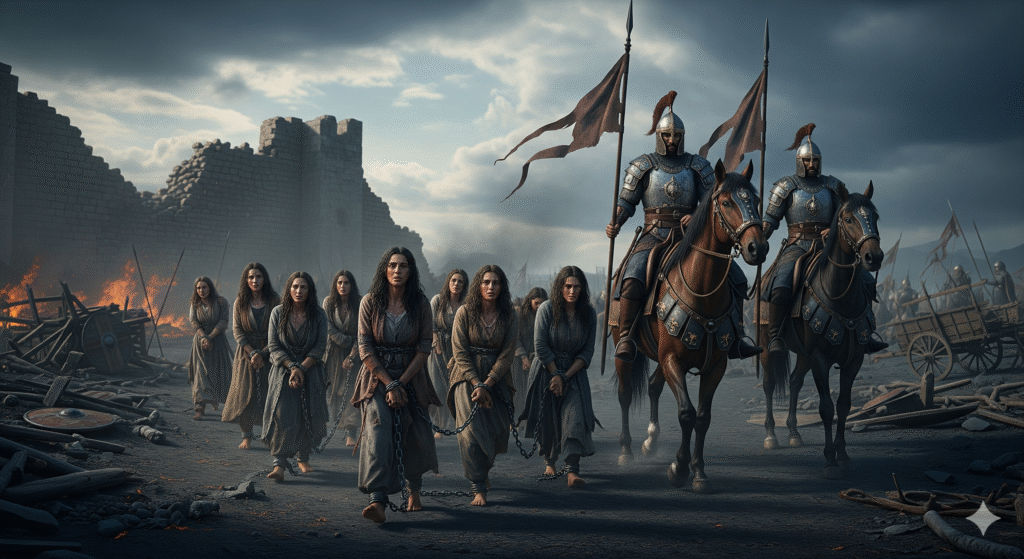
4.1 Spoils of War (Māl-e-Ghanimat)
Surah Al-Anfal (Arabic: ٱلأنفال), meaning “Spoils of War”, contains 75 verses entirely focused on the distribution of war booty—wealth, land, and women taken from non-Muslim enemies.
The term غَنِيمَة (Ghanimah) includes women taken in battle.
Muhammad’s Share = 20% — (Surah Al-Anfal 8:40)
Was this a prophet—or a plunderer?
Muhammad and Slaves/Concubines
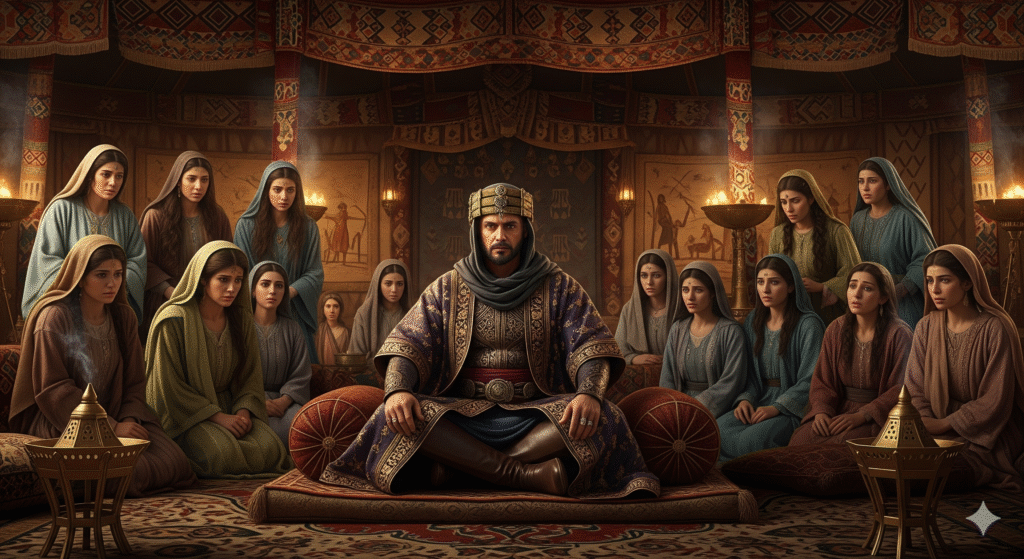
Male Slaves (Some Names):
Zayd bin Haritha, Ansa, Muirit, Mabur, Abu Rafi, Abdul Rahman, Salim, Abu Kubsha, Thauban, Kurkir, Rafi, Abu Hafs, Madh’am, Fatah, Shukran, Salim Mawla Abu Hudayfah, Kirikira, Wahshi (killer of Hamza, later enslaved), Arbad, Abu Makhtuf
(Sources: Ibn Sa’d’s Tabaqat, Al-Tabari)
Female Slaves/Concubines (Some Names):
Maria al-Qibtiyya, Rayhana bint Zayd, Juwayriya bint Harith, Safiyyah bint Huyayy, Umm Ayman, Umm Waqid, Maymuna, Mimuna, Khadira, Salma, Naseeba, Hafsa (not a slave but served by them), Shirin (Maria’s sister), Taqiyya, Al-Anbar, Fatima (captured in war), Zaynab, Safa, Umm al-Ala, Khira
Historical mentions found in:
Al-Tabari, Sahih Muslim, Sahih Bukhari, Ibn Sa’d’s Tabaqat, Ibn Hisham’s Sirat Rasul Allah, and others.
These sources loudly proclaim that Muhammad had numerous sex slaves.
The Story of Maria al-Qibtiyya
She was a gift from the Egyptian ruler (Muqawqis) as part of a group of slave girls.
Safiyyah bint Huyayy

Initially given to the companion Al-Kalbi as war booty.
When Muhammad saw her beauty, he kept her for himself and compensated Al-Kalbi with other slave women.
Hadiths mention that her father and husband were killed the same day, and that night Muhammad slept with her.
Ibn Ishaq, Sirat Rasul Allah (translated by A. Guillaume), p. 511-515:
“Muhammad took Safiyya bint Huyayy, whose husband had just been killed, and spent the night with her on the way back to Medina.”
Ibn Sa’d, Tabaqat al-Kabir, Vol 8, p. 121:
“When the Prophet married Safiyya, she was 17 and very beautiful. Her husband was tortured and killed for hiding treasure.”
Her husband Kinanah bin Rabi was tortured with fire and killed — (Ibn Ishaq, p. 515)
References: Sahih Bukhari 371, 947, 2235, 4211
Sahih Bukhari 371Juwayriya bint Harith
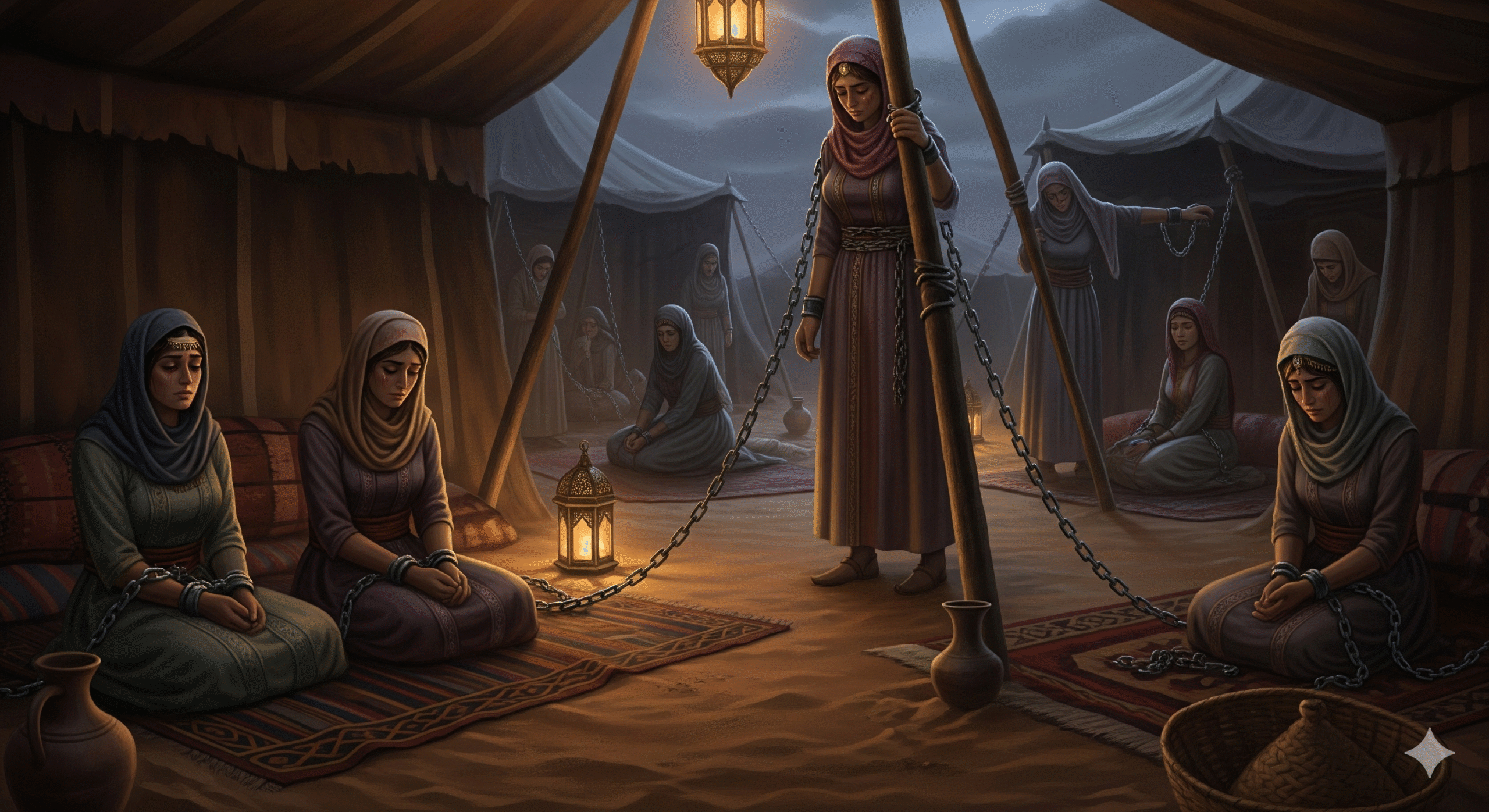
Daughter of a tribal chief. Captured by Muhammad’s companion Thabit and became a slave.
Muhammad “noticed her” and bought her. Aisha remarked:
“She is so pretty; if the Prophet sees her, he’ll surely take her.”
(Tarikh al-Tabari Vol. 8, p. 57; Sirat Ibn Kathir pp. 227, 450)
Ali’s Hadith – The Sahaba Mentality
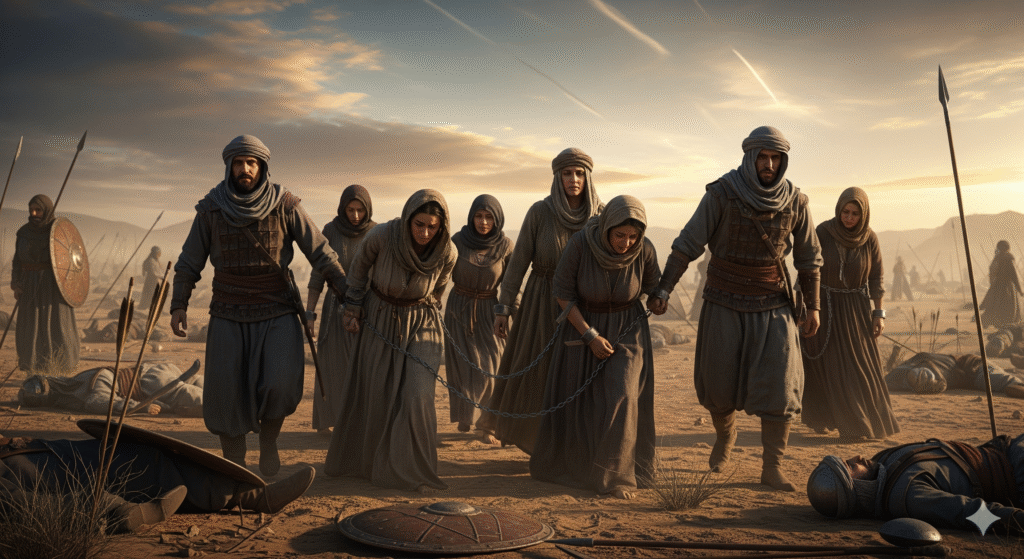
Sahih Bukhari 4350
“I asked: O Allah’s Messenger! Can I have intercourse with the women who came to us as slaves?”
Muhammad replied: “Yes, because they are your property.”
Buying and Selling Slaves
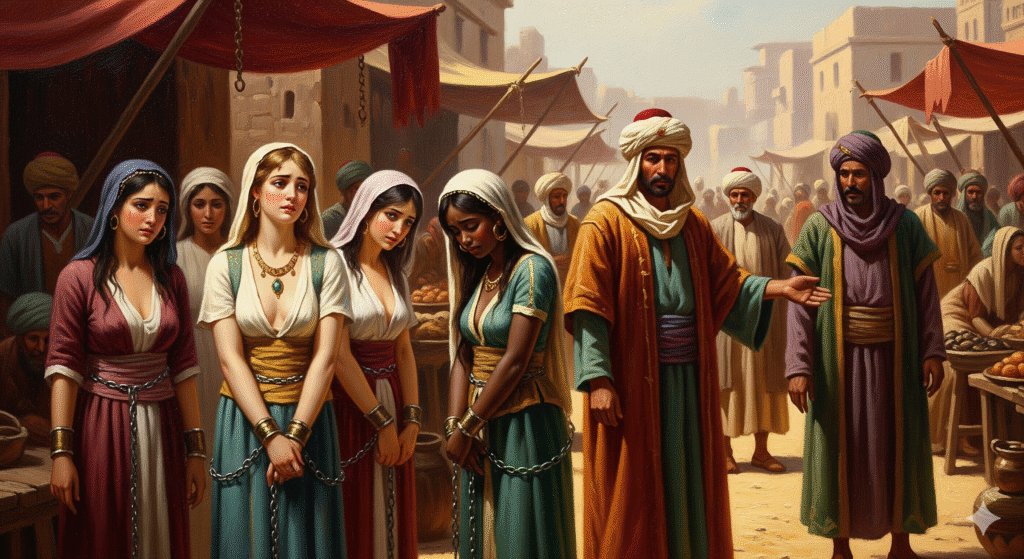
Muhammad sold a slave named Mu’abbad and took two slaves in exchange.
According to Ibn Sa’d, he often sold slaves in exchange for camels or weapons.
He even had slaves sold at the Najd market to purchase arms and horses.
(Tarikh al-Tabari Vol 2, Part 1, Story of Banu Qurayza)
Was this a prophet—or a human trafficker?
References:
Sunan Abu Dawud 3358, Jami’ Tirmidhi 1239, Sahih Bukhari 6716
Motherhood Changed Nothing
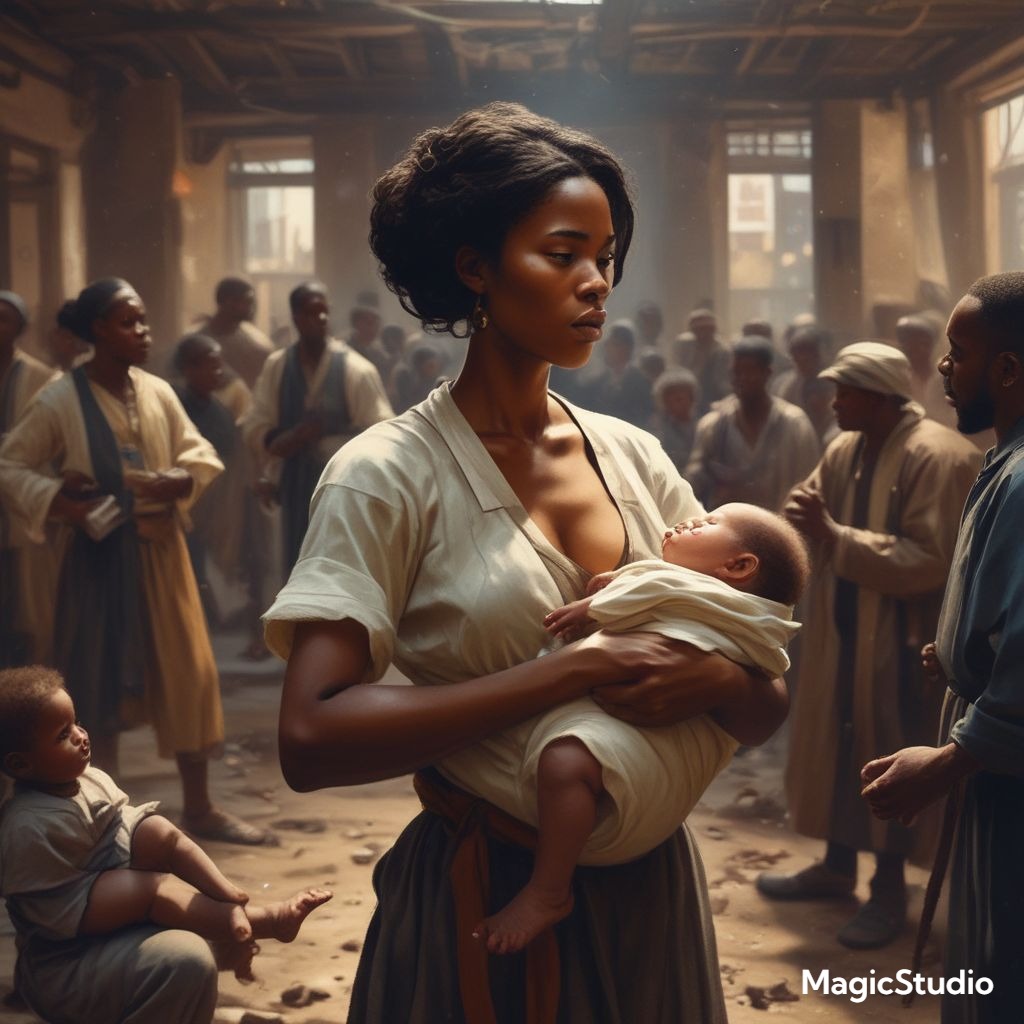
Even if a slave bore her master’s child, she could still be sold.
(Tabari, Ibn Kathir)
Sunan Ibn Majah (2517): Slave mothers were sold even after childbirth.
Sahih Bukhari (2229, 7409): “Azl” (coitus interruptus) was practiced to prevent pregnancy and retain resale value.
Slaves Not Allowed to Dress Modestly
A slave woman could only cover from navel to knee.

Hadith: “To dress a slave like a chaste woman is wasteful.”
1. Imam Shaybani — al-Masʾūl (Fiqh Book)
“She may expose her head, arms, chest, legs—everything except the part from navel to knee.”
2. Imam Malik — Al-Sharh al-Saghir:
“The private part (awrah) of a slave woman is only between the navel and knees.”
3. Imam Ahmad ibn Hanbal — Kitab al-Kafi:
“During the time of the Sahaba, it was normal to see slave women’s heads, arms, and legs. Umar forbade them from dressing like free women.”
Castration of Male Slaves
Although Muhammad disallowed it, during the Umayyad and Abbasid Caliphates, millions of male slaves were castrated to serve in harems.
(Reference: Bernard Lewis – Race and Slavery in the Middle East)
Hypocrisy vs. Reality
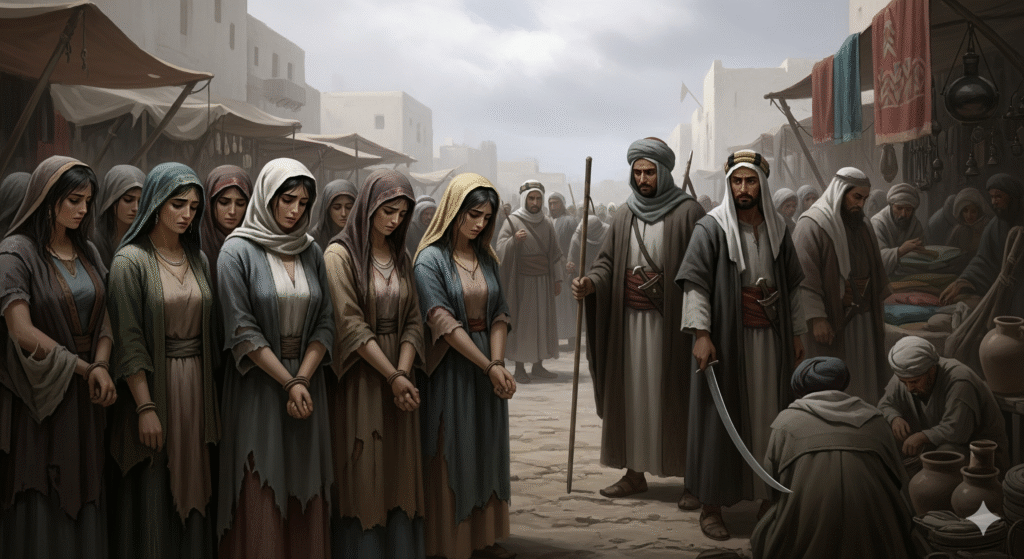
6.1 Lies and Truths:
- Lie: “Islam abolished slavery.”
Truth: Not a single verse in the Quran or Hadith prohibits slavery. - Lie: “Women were captured during battle.”
Truth:
- Sahih Bukhari 2541 — Banu Mustaliq attacked at dawn while people slept.
- Sahih Bukhari 371 — Khaybar attacked in the morning.
- Sunan Abu Dawud 2155 — women captured from unaware tribes.
- Sahih Bukhari 2541 — Banu Mustaliq attacked at dawn while people slept.
- Lie: “Freeing a slave is a great virtue.”
Truth:
- Sahih Bukhari 2594 — Muhammad preferred giving a slave to his uncle over freeing her.
- Maria, who bore his child, was never freed.
- Sahih Bukhari 2594 — Muhammad preferred giving a slave to his uncle over freeing her.
- Lie: “Sex is halal only after marriage.”
Truth: Quran 33:50 — allows it without marriage. - Lie: “Slaves were given food and clothing like their owners.”
Truth: A golden cage is still a cage. They were still sold in markets. - Lie: “Slavery met physical needs after a woman lost her husband.”
Truth: Quran 4:24 shows even if her husband was alive, if enslaved, her marriage was void. - Lie: “Slaves could buy their freedom.”
Truth: How could a slave maid earn money to buy her freedom?
Today’s Radicals Still Enforce Sharia Like This
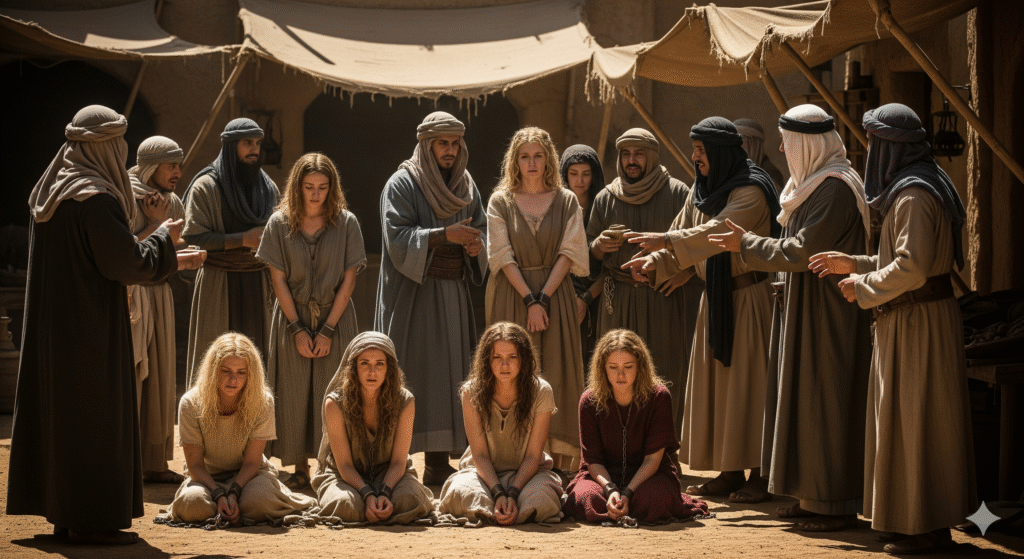
- Boko Haram: Christian girls enslaved and “married” forcibly.
- ISIS: Publicly raped Yazidi girls, calling them “Mā Malakat Aymānukum”.
- Taliban: Did the same with Hazara women.
What About India?
If Sharia is implemented:
- Non-Muslim women could be deemed “spoils of war.”
- The concept of Mā Malakat Aymānukum will be justified as “religious freedom.”
- A silent majority will again say: “That was from another era.”
Conclusion:

“The prophet who outlawed alcohol, pork, idol worship, and music—why did he stay silent on slavery and rape?”
Only one answer remains:
Because he was part of that system—and a beneficiary of it.
📢 Did you find this article useful?
🙏 Support our work by clicking here.
References:
- Sahih Bukhari (2224, 4350, 3894, 4104)
- Sahih Muslim (Kitab al-Nikah)
- Tafsir al-Tabari
- Ibn Sa’d – Tabaqat
- Bernard Lewis – Race and Slavery in the Middle East
- M.A.S. Abdel Haleem – The Quran (Oxford Translation)
- Patricia Crone – Slaves on Horses
- Kecia Ali – Sexual Ethics and Islam
- ISIS Fatwa Document on Sabaya (UN archives)