

(A Critical Essay on the Inhumane Verses of the Quran)
Introduction:
It is often claimed that “Islam is a religion of peace” and that “the Quran is the greatest message of humanity.” Yet, when we examine the Quran’s own verses, these very claims collapse from within. Many verses in the Quran promote hatred, violence, discrimination, religious bigotry, subjugation of women, slavery, and inhumane treatment of non-Muslims.
Whenever one points to these harsh verses, Islamic scholars and clerics quickly devise excuses. They twist the meanings of words like kafir (disbeliever), kufr (disbelief), and shirk (polytheism) to soften their impact. They argue — “Not all disbelievers are meant here,” or “This only applied during wartime,” or “Kufr refers only to atheism.”
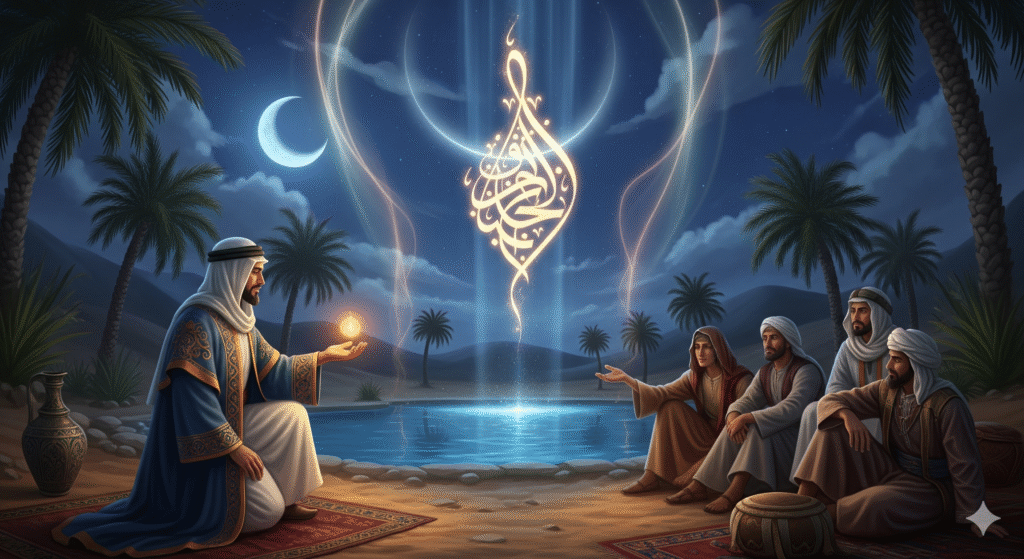
But what is the truth? When we examine the Arabic language itself and consult the classical tafsir (exegesis), it becomes clear that these terms apply to every non-Muslim.
- Kafir (كافر) = One who commits kufr, i.e., denies Allah and His Messenger.
- Kufr (كفر) = Rejection, i.e., refusing to accept the fundamental claims of Islam.
- Shirk (شرك) = Associating partners with Allah, i.e., worshipping any other deity.
By this definition, the terms cover every Jew, Christian, Hindu, Buddhist, and atheist alike.
Part 1: The Verses of the Quran — Peace or Conflict?
8:39 – “Fight them until there is no more fitnah and [until] the religion is entirely for Allah.” (Sahih International)
Tafsir Ibn Kathir: Here, fitnah means shirk (polytheism) and kufr (disbelief). In other words, fight every non-Muslim who does not believe in Allah until they either accept Islam or are eliminated. Is this humanity — or coercion?

22:30 – “Avoid shirk, for indeed it is filth.”
Tafsir Mazhari: By calling shirk filth, the Quran demeans non-Muslims and those who worship other gods. Does Islam really teach equality?
33:61 – “They are cursed; wherever they are found, they should be seized and killed outright.”
Tafsir Ibn Kathir: This refers to hypocrites and opponents. But is this human compassion? Can a supposedly all-powerful God act out of vengeance instead of mercy?
3:62 – “Whoever turns away from the truth after me — he is defiantly disobedient (fasiq).”
Tafsir Mazhari: Here, Christians and Jews are targeted simply for not abandoning their own religion and worshipping Allah. Where is tolerance? Can Muslims never coexist with other faiths?
21:98 – “You and your deities will be fuel for Hell.”
Tafsir Tabari: Not only are non-Muslim gods insulted here, but their worshippers are threatened with hellfire. Is this respectful to others’ faiths?
9:05 — The “Sword Verse” (Ayat as-Saif):
“And when the sacred months have passed, then kill the polytheists wherever you find them…”
This verse, known as Ayat al-Saif, has inspired countless jihads and massacres. In the name of tawhid (monotheism), it legitimizes religious cleansing. It is an open command for killing — and the words “wherever you find them” give direct legitimacy to extremist terrorism.

2:191 – “And kill them wherever you overtake them…”
This verse is used by Islamic extremists to argue that wiping out non-Muslims is a divine command.
9:28 – “The polytheists are indeed najas (impure), so let them not approach al-Masjid al-Haram…”
Tafsir Ibn Kathir: Here najas is likened to filth, like excrement. To call non-Muslims filth — is that humanity?
9:29 – “Fight those among the People of the Book who do not believe in Allah or the Last Day, until they pay the jizyah in humiliation.”
Tafsir Tabari: Forcing non-Muslims to pay a humiliating tax merely because they worship differently — is that equality or justice?
4:101 – “The disbelievers are your enemies.”
Tafsir Mazhari: Every non-Muslim is labeled as an enemy. Where is peace? If every non-Muslim is declared an enemy, how can peace exist?

9:123 – “O believers! Fight those disbelievers who are nearest to you, and let them find harshness in you.”
Tafsir Ibn Kathir: Beginning with the closest enemies reflects Islam’s aggressive and expansionist approach.
66:9 – “O Prophet! Strive hard against the disbelievers and hypocrites and be harsh with them.”
Tafsir Tabari: A command to show no mercy. Where, then, are human values in such a God?
4:56 – “Indeed, those who disbelieve in Our verses — We will burn them in fire…”
Tafsir Mazhari: A cruel punishment for those who merely refuse to believe. Where is God’s compassion here?
9:14 – “Fight them; Allah will punish them by your hands…”
Tafsir Ibn Kathir: A God who orders violence — is this divinity or cruelty?
8:57 – “If you gain mastery over them in battle, make them an example for those who follow.”
Tafsir Tabari: Capturing, enslaving, and torturing people simply to spread fear — does God truly endorse terrorism?

32:22 – “And who is more unjust than one who is reminded of the verses of his Lord, then turns away from them? Indeed, We will take retribution.”
Tafsir Mazhari: Punishment for mere disagreement. Can a deity be so insecure and egotistical that He threatens dissenters? Where is free will then? Why create humans with independent thought if disagreement itself is punishable?
Part 2: The Truth of Humanity and Equality Towards Non-Muslims in the Quran
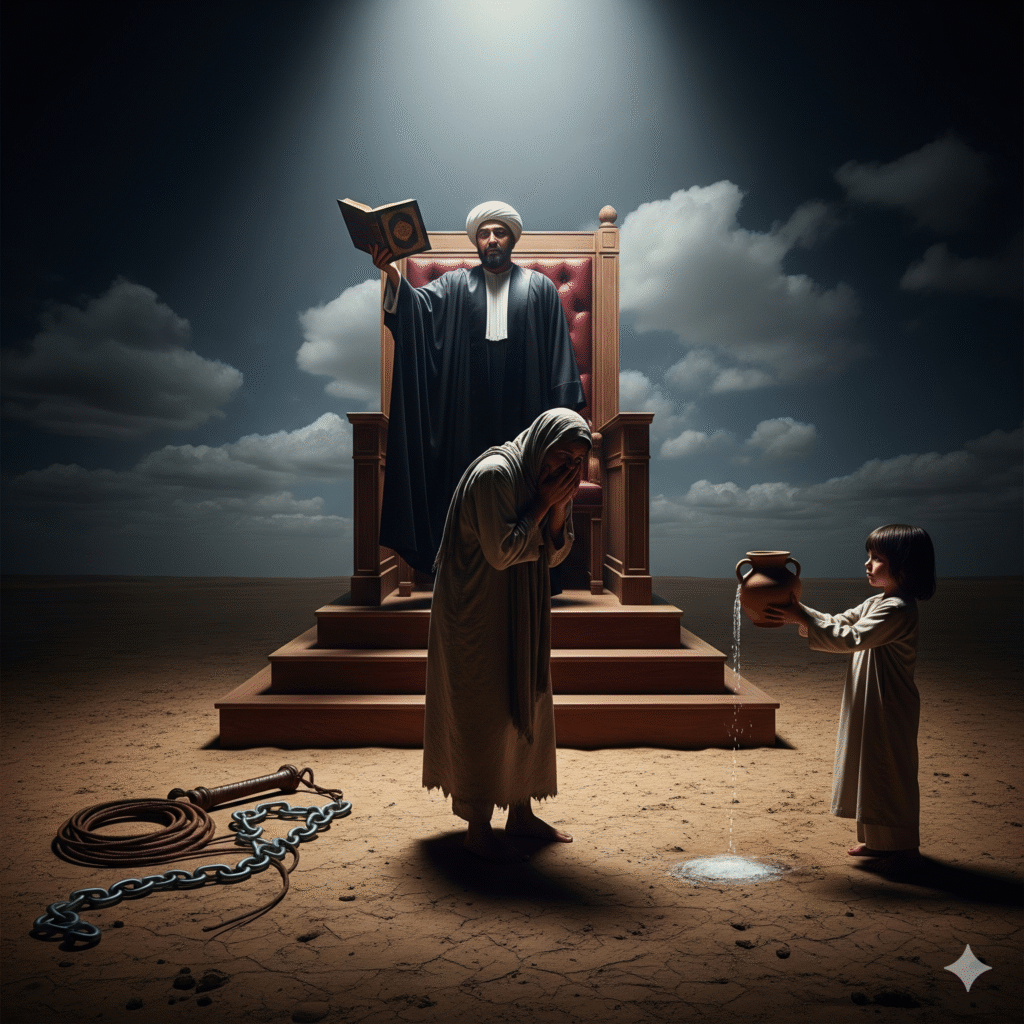
1. Abandoning Parents and Family (Quran 9:23)
“O you who have believed, do not take your fathers or your brothers as allies if they have preferred disbelief over belief. And whoever does so among you — then it is those who are the wrongdoers.”
Critique: This verse openly commands believers to abandon their family if their parents or brothers are non-Muslim. It strikes at the very foundation of humanity, where love and family bonds are considered supreme.
2. Prohibition of Friendship with Non-Muslims (Quran 3:28)
“Let not believers take disbelievers as allies rather than believers. And whoever does that has nothing with Allah…”
Critique: This verse explicitly forbids friendship with non-Muslims. It promotes religious segregation and social division, planting the seeds of communal hatred and directly opposing universal human values.
3. Enslaved Women as Sexual Property (Quran 4:24)
“…And [also prohibited to you are all] married women except those your right hands possess (slave women).”
Critique: This verse allows sexual relations with enslaved women captured in war, without marriage. Essentially, it legitimizes the rape of female captives under religious sanction.
4. Jews and Christians Deemed Inferior (Quran 5:51)
“O you who have believed, do not take the Jews and the Christians as allies. They are allies of one another…”
Critique: Even among the Abrahamic faiths, this verse sows hatred and hostility. Jews and Christians, who are predecessors of Islam, are deliberately targeted as enemies.
5. Women’s Testimony as Half (Quran 2:282)
“…And bring to witness two witnesses from among your men. And if there are not two men, then a man and two women…”
Critique: The testimony of a woman is valued at half that of a man. This is the pinnacle of gender inequality. In modern societies built on constitutional rights and human equality, this verse stands as outright injustice.
6. Non-Believers Compared to Animals and Donkeys (Quran 8:55, 7:179, 62:5)

“Indeed, the worst of living creatures in the sight of Allah are those who disbelieved…” (Quran 8:55)
“…They are like cattle. Rather, they are even more astray…” (Quran 7:179)
“…Like a donkey carrying volumes [of books]…” (Quran 62:5)
Critique: Comparing human beings to animals and donkeys is hateful and degrading. Such language fuels contempt and promotes dehumanization.
7. Eternal Condemnation of Non-Believers
Surah Al-Baqarah (2:6-7): “Indeed, those who disbelieve — it is all the same whether you warn them or not, they will not believe.”
➡ This outlook rejects rationality, scientific inquiry, and personal freedom. If one does not believe in “Allah,” their reasoning, thought, and experience are rendered meaningless.
Surah An-Nisa (4:56): “Indeed, those who disbelieve in Our verses — We will drive them into a fire. Every time their skins are roasted through, We will replace them with other skins so they may taste the punishment…”
➡ This is not the language of a merciful deity, but of a tribal, vengeful tyrant.
8. Oppression of Women
Surah An-Nisa (4:34): “Men are in charge of women… If they disobey you, admonish them, forsake them in bed, and strike them.”
➡ This verse gives men a divine license for domestic violence. To this day, it legitimizes abuse of women in many Muslim societies.
Surah Al-Baqarah (2:223): “Your wives are a tilth for you, so approach your tilth when and how you will…”
➡ Here women are reduced to fields for cultivation — mere instruments of pleasure and reproduction, stripped of equality and dignity.

9. Legitimizing Slavery and Concubinage (Quran 23:5-6)
“And they who guard their private parts — except from their wives or those their right hands possess…”
➡ Sexual relations with slaves are declared lawful. This is equivalent to legalizing rape, so long as the woman is enslaved.
10. Intolerance Towards Other Religions
Surah Al-Ma’idah (5:51): “O believers, do not take Jews and Christians as friends…”
➡ Where is universal harmony here? This is blatant religious separatism and an incitement to hatred.
Surah Al-Baqarah (2:120): “The Jews and Christians will never be pleased with you until you follow their way…”
➡ This is politics of fear and hatred, encouraging Muslims to remain cut off from the outside world.
11. Judgment Day — Salvation Reserved Only for Muslims

Surah Al-Bayyinah (98:6): “Indeed, they who disbelieved among the People of the Scripture and the polytheists will be in the fire of Hell, abiding eternally therein…”
➡ Heaven and Hell are decided not by deeds, morality, or intention — but purely on the basis of “faith.” This is not the justice of a fair God, but the bias of a sectarian deity.
Part 3: The Truth About “No Compulsion in Religion”
Quran 2:256 — “There is no compulsion in religion.”
Most of the time, when scholars want to portray Islam as tolerant, they cite this verse. But this is only half the truth. The Quran itself declares:
“We do not abrogate a verse or cause it to be forgotten except that We bring forth one better than it or similar to it.” (Quran 2:106)
This establishes the principle of naskh (abrogation) in the Quran. On this basis, scholars themselves acknowledge that 2:256 (“No compulsion in religion”) has been abrogated.
- “La ikraha fid-deen” (no compulsion in religion) was revealed in the early period when Muslims were weak (before the migration to Medina), and when the command for jihad had not yet been given.

Tafseer Evidence:
- Ibn Jarir al-Tabari: “This verse applied at a time when no one was forced to accept Islam. Later, the verse of the sword (Quran 9:5) abrogated it.” (Tafseer al-Tabari, Vol. 3, p.15)
- Qurtubi: “The majority of scholars agree that this verse was abrogated by the verses of jihad and qatiluhum (fight them).” (Tafseer Qurtubi 3/28)
- Ibn Kathir: “The verse about no compulsion in religion was abrogated by later verses on jihad.” (Tafseer Ibn Kathir 1/310)
- Al-Nahhas (An-Nasikh wal-Mansukh): “There is consensus in the Ummah that this verse is abrogated.”
Abrogating Verses (Nasikh):
- Quran 9:5: “Slay the polytheists wherever you find them.”
- Quran 9:29: “Fight the People of the Book until they pay jizyah with willing submission and feel themselves subdued.”
- Quran 2:193: “Fight them until religion is only for Allah.”
Thus, after these verses, 2:256 ceased to apply.
Conclusion:
Quran 2:106 itself admits that earlier commands are replaced with stricter or harsher ones. Therefore, “No compulsion in religion” is no longer valid — it was abrogated by the verse of the sword (9:5, 9:29). Today, when clerics present it as a universal law, they deliberately conceal the truth of tafseer and abrogation.
Quran 109:6 — “For you your religion, and for me mine.”
This was not an expression of tolerance, but a condition of rejection. Yet Islamic scholars and preachers often use it as a slogan of coexistence, because ordinary Muslims rarely read the background (Shan-e-Nuzul) of such verses.

Context of Surah Al-Kafirun
The full meaning of Surah Al-Kafirun (109) can only be understood when verses 1–6 are read together.
If one reads only the last verse — “To you your religion, and to me mine” (لَكُمْ دِينُكُمْ وَلِيَ دِينِ) — it may seem like a message of tolerance. But in reality, it was part of a dialogue with the Quraysh of Mecca.
This Surah was revealed when the disbelievers of Mecca (the Quraysh) said to Muhammad:
“Do not insult our gods. Let’s make a compromise — for one year we will worship your Allah, and for one year you will worship our gods.”
In response, the entire Surah Al-Kafirun was revealed:
- Say: O disbelievers!
- I do not worship what you worship.
- Nor do you worship what I worship.
- Nor will I ever worship what you worship.
- Nor will you ever worship what I worship.
- To you be your religion, and to me mine.
Conclusion:
The very name of the chapter is Al-Kafirun (The Disbelievers). The addressees are clear — the Quraysh of Mecca who proposed a compromise. The Surah rejects any form of religious compromise and insists on separation of faiths.
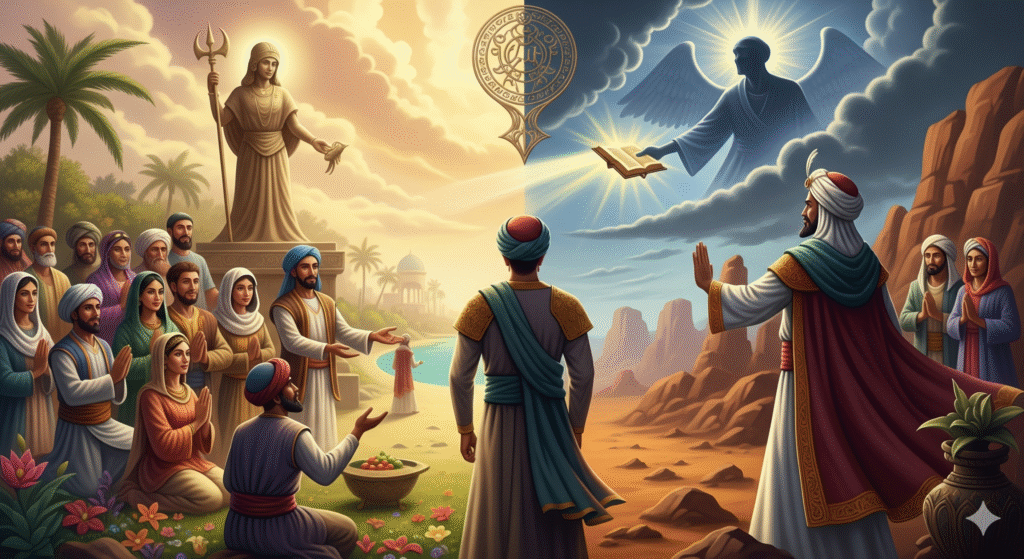
Surah Al-An‘am (6:108) and the Conflict
In reality, Muhammad and the Muslims frequently mocked the gods of the Meccans. When the Quraysh retaliated and threatened to insult Allah in return, verse 6:108 was revealed:
Verse (6:108, Arabic):
وَلَا تَسُبُّوا الَّذِينَ يَدْعُونَ مِن دُونِ اللَّهِ فَيَسُبُّوا اللَّهَ عَدْوًا بِغَيْرِ عِلْمٍ ۗ
Transliteration:
Wa lā tasubbū alladhīna yadʿūna min dūni llāhi fayasubbū llāha ʿaduwwan bighayri ʿilm.
English Translation:
“And do not insult those they invoke other than Allah, lest they insult Allah in enmity without knowledge.”

Tafsir Ibn Kathir (Arabic Quotation)
Arabic:
“إِنَّ الْمُسْلِمِينَ كَانُوا يَسُبُّونَ أَصْنَامَ الْكُفَّارِ فَيَسُبُّونَ اللَّهَ عَدْوًا بِغَيْرِ عِلْمٍ ، فَأَنْزَلَ اللَّهُ: ‘وَلَا تَسُبُّوا الَّذِينَ يَدْعُونَ مِن دُونِ اللَّهِ’…”
Translation:
“The Muslims used to insult the idols of the disbelievers, and so the disbelievers would insult Allah in enmity without knowledge. Therefore Allah revealed: ‘Do not insult those they invoke besides Allah.’”
Tafsir Maududi (Tafhim al-Qur’an)
“When the Quraysh found their gods mocked, they began to revile Allah in return. Hence the Qur’an warned the Muslims not to use such language, for the outcome would be that the disbelievers, out of enmity and ignorance, would blaspheme against Allah.”
Conclusion
It is clear that the context of Surah Al-Kafirun and Surah Al-An‘am (6:108) was not about “tolerance” but about confrontation.
Muhammad and his followers insulted the idols of the Meccans. When the Quraysh threatened to insult Allah in return, this verse was revealed.
Thus, the atmosphere was not one of mutual respect, but of mutual insult and religious conflict.
If one reads the five verses preceding 109:6, the context becomes clear — it was never about interfaith harmony, but about firm refusal and exclusivity.
Surah Al-Ma’idah 5:32 – “Killing one person is like killing all of humanity” – A Misused Verse
Muslim scholars often cite Qur’an (Surah Al-Ma’idah 5:32) to claim that Islam stands for universal humanity. But the truth is: this verse was never addressed to Muslims. It was spoken to Moses and the Children of Israel (Bani Israel).

The very next verse (5:33), addressed to Muslims, states that those who oppose Allah and His Messenger must be punished with execution, crucifixion, amputation of limbs, or exile.
This means the so-called “humanitarian” verse has nothing to do with Muslims themselves. Instead, for them, the rule denies religious freedom and prescribes violence. Scholars conceal this by quoting only 5:32 while hiding 5:33.
Final Exposure of the Truth
Compared with modern times, these verses are not “spiritual guidance” but rather a political manifesto. If today an ordinary person repeated such words, they could be jailed under laws related to:

- IPC 153A (promoting enmity),
- 295A (hurting religious sentiments),
- laws against domestic violence,
- child abuse, and
- incitement of religious hatred.
So the question remains: Is this really a “final divine scripture”? Or is it the manifesto of a tribal leader who cloaked political power, sexual dominance, and social supremacy with the seal of “Allah”?
A book that promises to burn non-believers in fire — how can it teach humanity? The truth is plain — history and tafseer both bear witness.
No matter how virtuous a non-Muslim may be, the Quran condemns them to eternal hellfire simply for not believing in Allah. Can a just God punish good people merely for lack of faith? Can a divine being be so desperate for worship and recognition that He damns the righteous who refuse to acknowledge Him?
Core Findings from a Critical Study of the Quranic Verses:
- A religion that commands believers to abandon family,
- forbid friendship with non-Muslims,
- sanction rape of war captives,
- humiliate others through jizyah, and
- reduce women to second-class beings —
such a system cannot claim to safeguard humanity.
📢 Did you find this article useful?
🙏 Support our work by clicking here.