
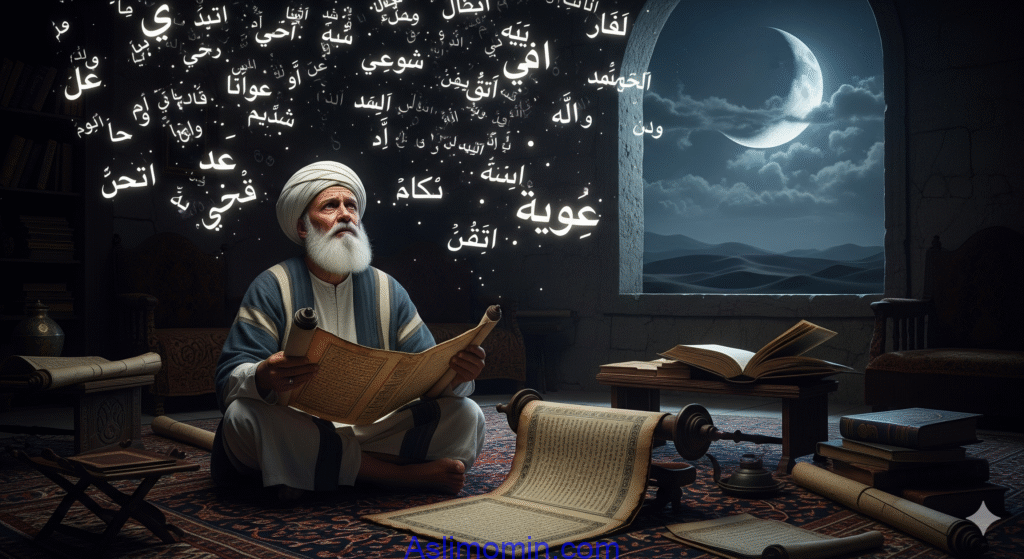
In our previous articles, we have seen that the Qur’an and Hadith have undergone changes over time, and the ‘Allah’ described in them appears entirely different from the God of our natural human understanding.
Thus, a believer in the Qur’an often finds himself standing at a crossroads—
Either he remains silent before every question and says: “Bila Kaif — accept it as it is, without asking how.”
Or he clings to the mutashabeh verses in order to preserve his faith.
The first path kills inquiry, while the second path provides a chance to preserve both faith and humanity.
So let us examine what this “best solution” to saving your faith really is.
The Qur’an’s Claim
The Qur’an itself acknowledges that it contains two types of verses:
- Muhkamat: Clear, explicit, foundational.
- Mutashabehat: Ambiguous, multi-layered, open to multiple meanings.

Surah Aal-e-Imran (3:7):
“It is He who sent down upon you the Book; in it are verses that are clear (muhkamat)… and others that are ambiguous (mutashabehat). As for those with perversity in their hearts, they follow the ambiguous ones, seeking discord and seeking their own interpretation. But no one knows their true meaning except Allah…”
And here begins the real controversy.
The Problem: Which verses are mutashabeh?
The Qur’an does not specify which verses belong to which category.
The result?
- A scholar who cannot explain a verse calls it mutashabeh and escapes.
- Another scholar interprets the same verse and declares: “This is crystal clear — this is muhkam.”
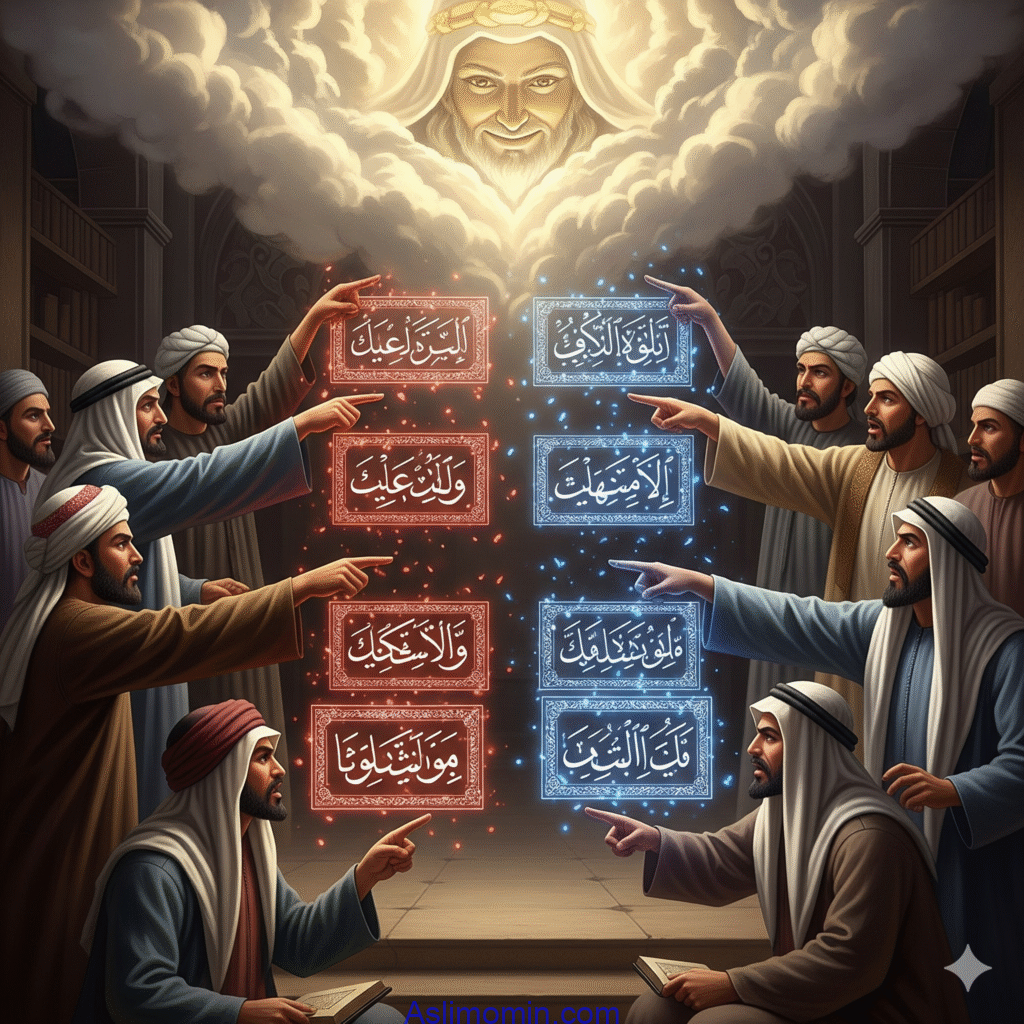
In other words, the label “mutashabeh” is not divinely fixed, but a subjective stamp based entirely on personal convenience.
Example 1: Allah’s “Hand” and “Face”
Many verses mention Allah’s hand, face, or eyes.
- Surah Al-Fath 48:10: “The Hand of Allah is over their hands.”
- Surah Ar-Rahman 55:27: “The Face of your Lord will remain forever.”
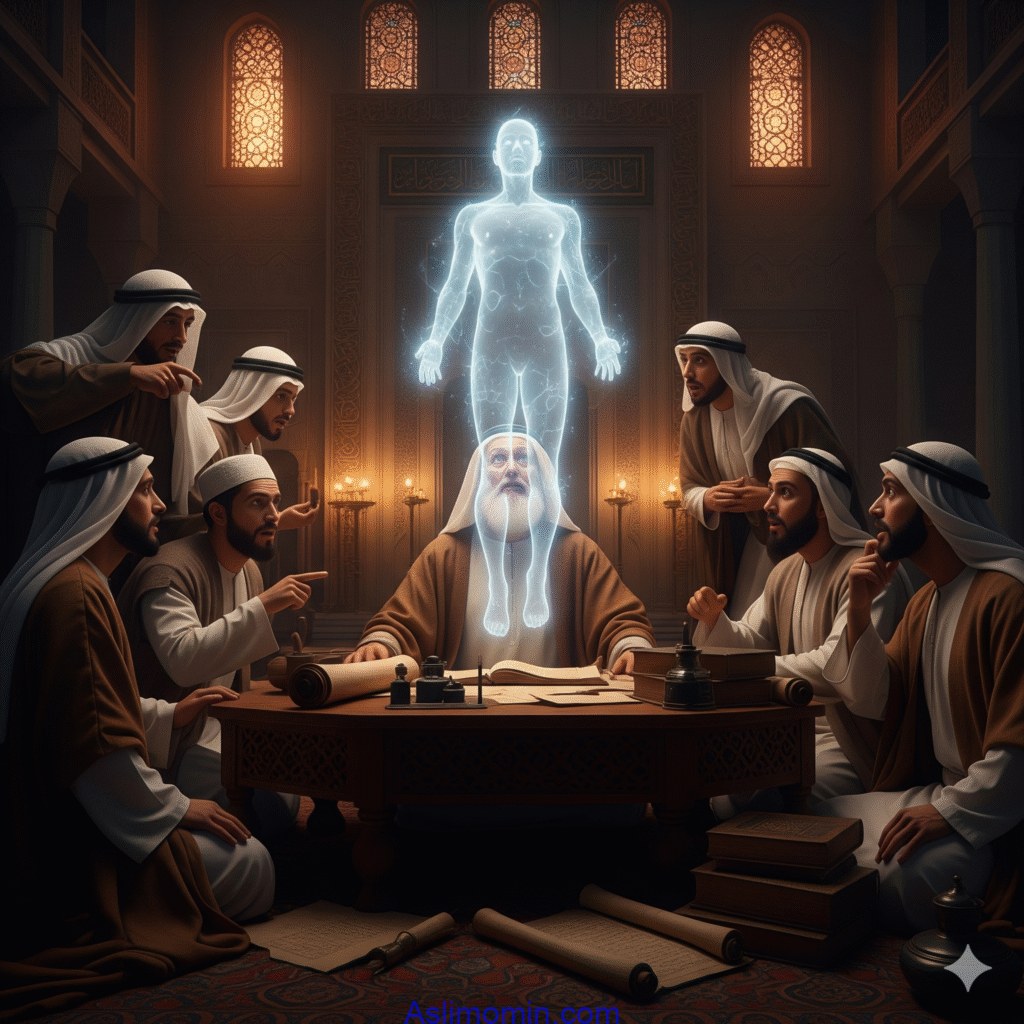
Disagreement:
- Imam Malik and Ahmad ibn Hanbal (early Salafi scholars): “This is bila kaif — accept without asking. Details are known only to Allah — hence, mutashabeh.”
- Fakhruddin Razi (Ash‘ari scholar): Explained metaphorically — “Hand means power, Face means existence.”
One calls it mutashabeh, another calls it clear through metaphor.
Example 2: The Seven Heavens
- Surah Al-Mulk 67:3: “He created seven heavens one above another.”
- Surah At-Talaq 65:12: “Allah created seven heavens and of the earth the like thereof.”
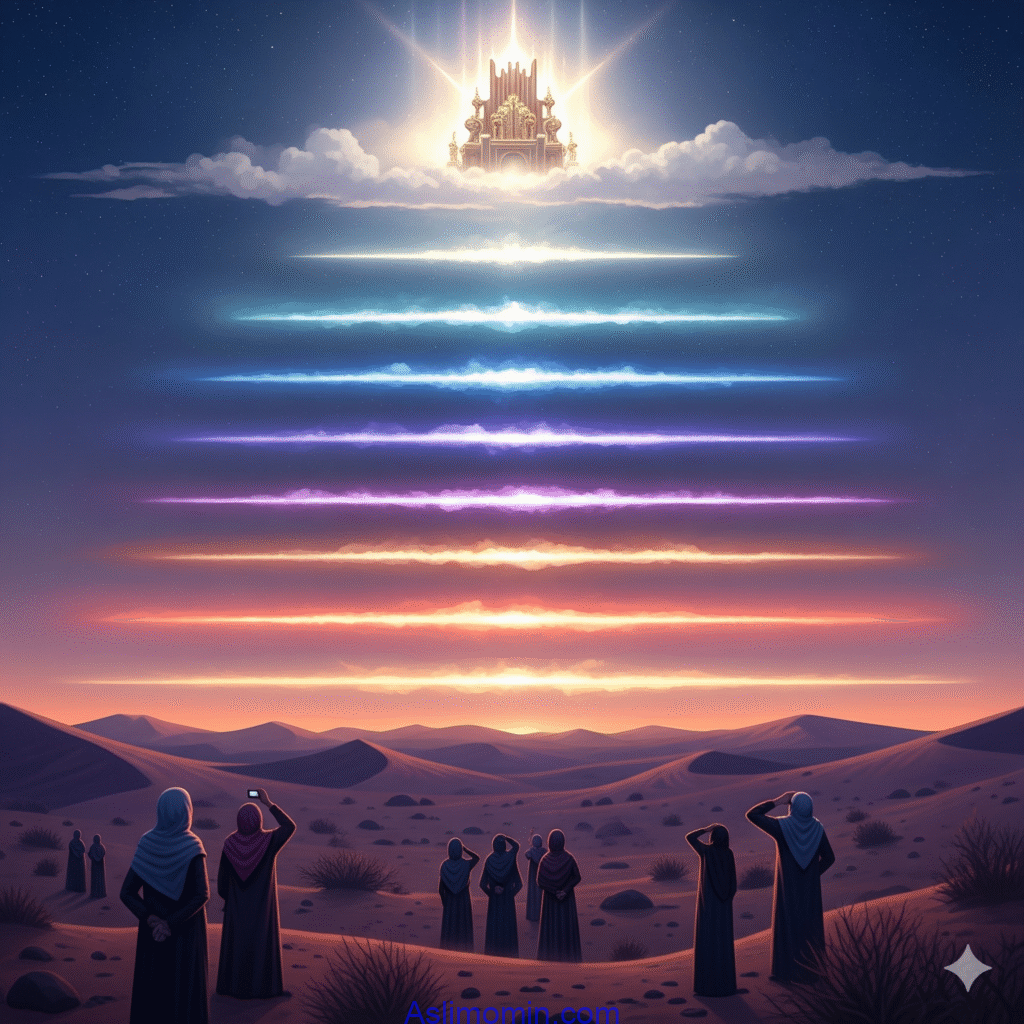
Disagreement:
- Early scholars (like Ibn Abbas): Literally believed in seven heavens, but declared their true form known only to Allah — mutashabeh.
- Later scholars (like Al-Baydawi, Ibn Kathir): Interpreted symbolically — “Seven does not mean number, but multiplicity or abundance.”
One calls it unknowable mystery, another interprets it logically.
Example 3: Naskh wa Mansukh (Abrogation of Verses)
- Surah Al-Baqara 2:106: “We do not abrogate a verse or cause it to be forgotten except that We bring forth one better or similar.”
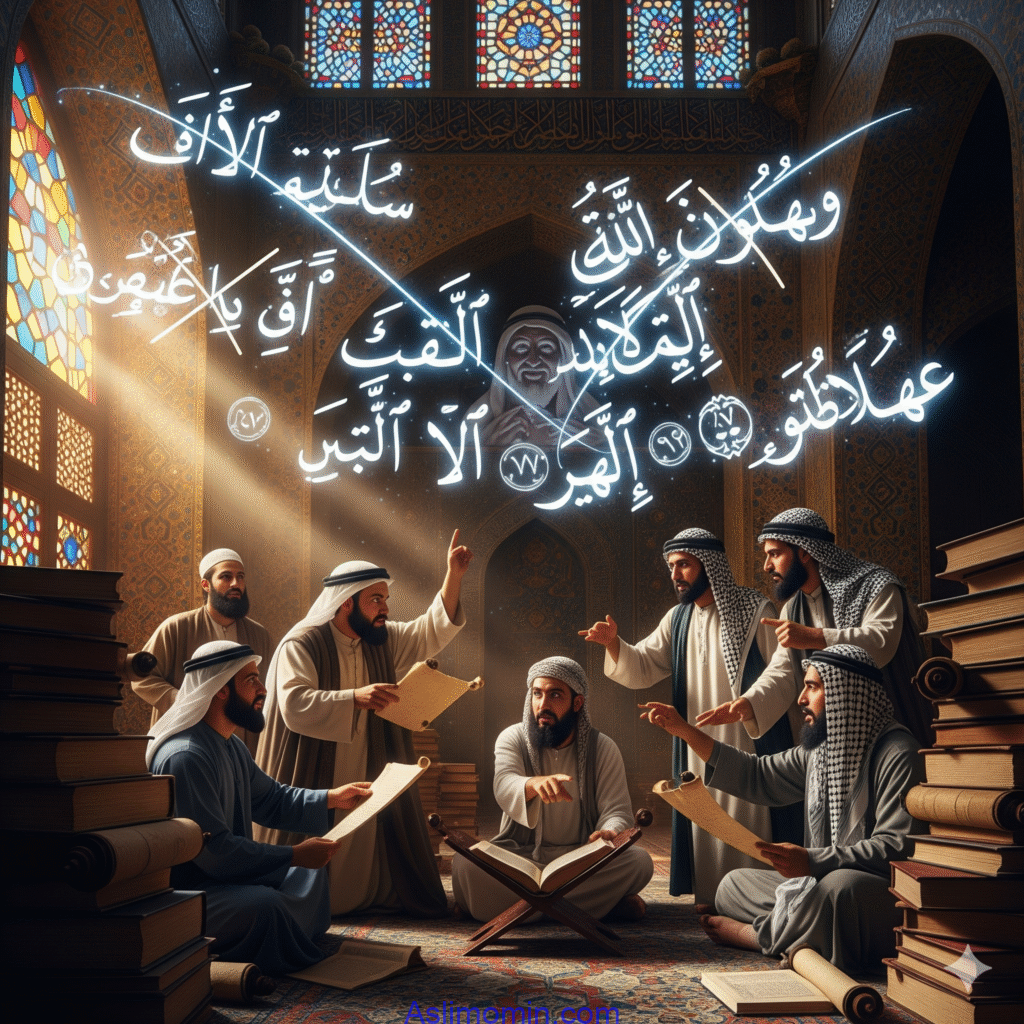
Disagreement:
- Ibn Abbas and Qatada: “This is mutashabeh — not everyone can know which verse abrogates which.”
- Imam Shafi‘i and Ibn Kathir: Created detailed lists of which verses abrogate others.
For some, a mystery; for others, a systematic science.
(For details, see our article: “The Deception of Qur’anic Context.”)
Example 4: “Ruh” (The Soul)
- Surah Al-Isra 17:85: “They ask you about the Ruh. Say: the Ruh is of the command of my Lord.”

Disagreement:
- Imam Tabari: “This is entirely mutashabeh — humans can never understand it.”
- Philosophers and Sufis like Ibn Sina and Ghazali: Produced elaborate definitions of the soul.
Critique
The Qur’an declares itself to be “clear explanation” and “guidance” (16:89, 2:2),
yet it admits that some verses are ambiguous, known only to Allah.
The scholars’ behavior is contradictory:

- When they lack answers → They label it mutashabeh and brush it aside.
- When they find a way to fit it with logic or science → They declare it “clear.”
It is evident: mutashabeh is not a divine category, but a convenient weapon.
Conclusion
The concept of mutashabeh verses is, in reality, a way of sanctifying vagueness.
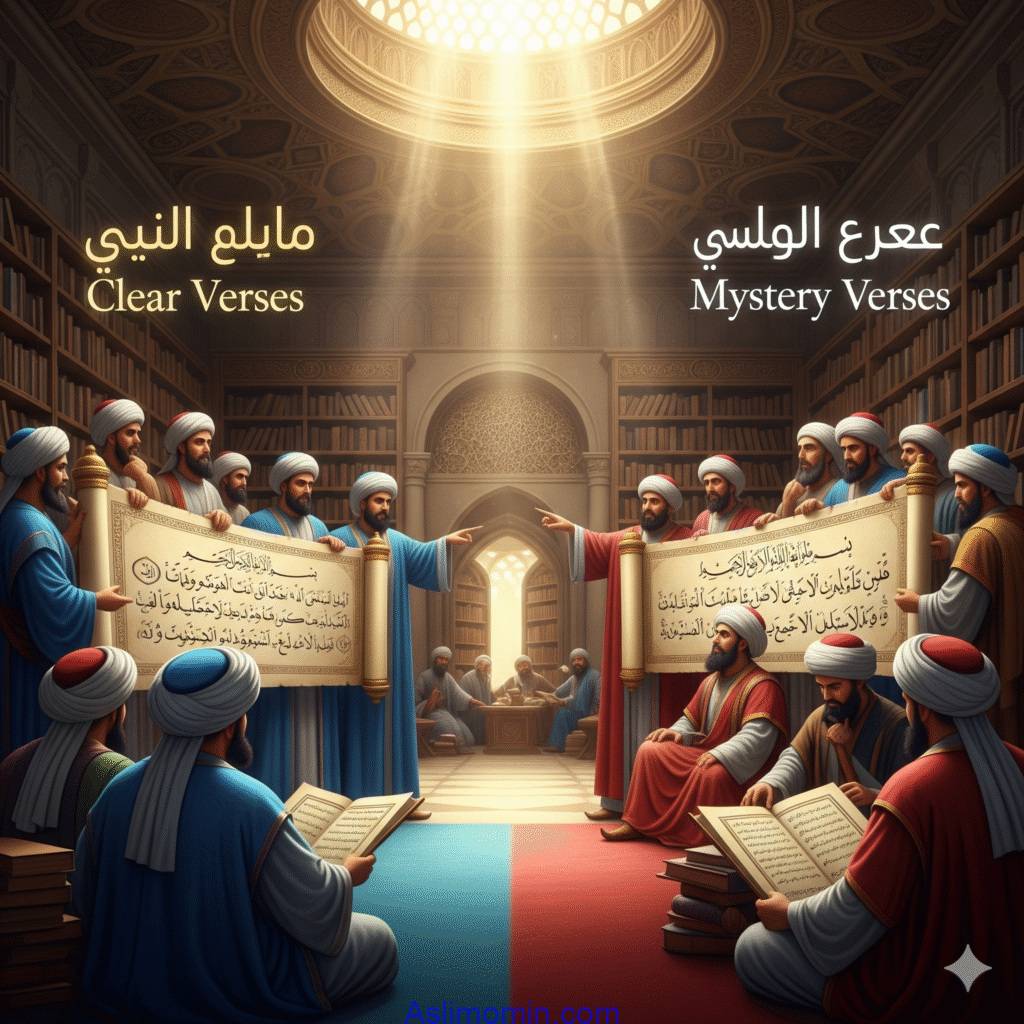
- One scholar, out of helplessness, declares a verse mutashabeh.
- Another scholar explains the very same verse in detail and calls it clear.
The Qur’an itself never specifies which verses are permanently mutashabeh.
Result: The doctrine of mutashabeh has become the most effective tool for avoiding criticism and suppressing questions.
Final Appeal: Questioning is True Faith
If the Qur’an itself admits that some verses are known only to Allah, then how authentic can human “definitive interpretations” really be?
Would it not be better that—
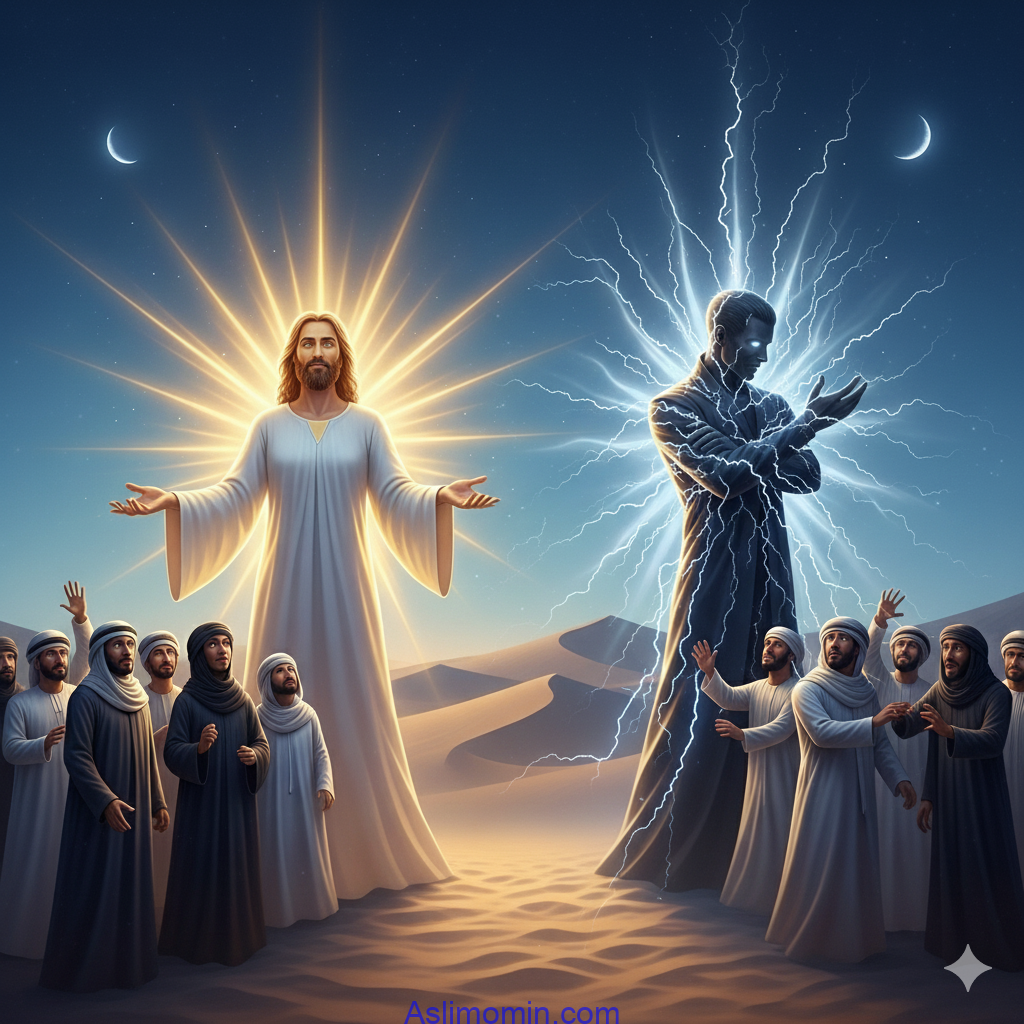
- The verses that touch your heart, you accept.
- The verses that confuse you, you leave as mutashabeh.
The real purpose of faith is not to forcibly solve every riddle,
but to advance in the pursuit of humanity, compassion, and truth.
So next time a Maulana dismisses a difficult verse as “mutashabeh” while imposing his own image of God upon you—
it is better that you decide for yourself: which verses align with your vision of God, and which do not.
In this way, neither will you lose your faith, nor the true God within your heart.
Remember:
Mystery is not to be feared — it is to be accepted.
And any “God” who leads you away from humanity cannot be the true God.
📢 Did you find this article useful?
🙏 Support our work by clicking here.