
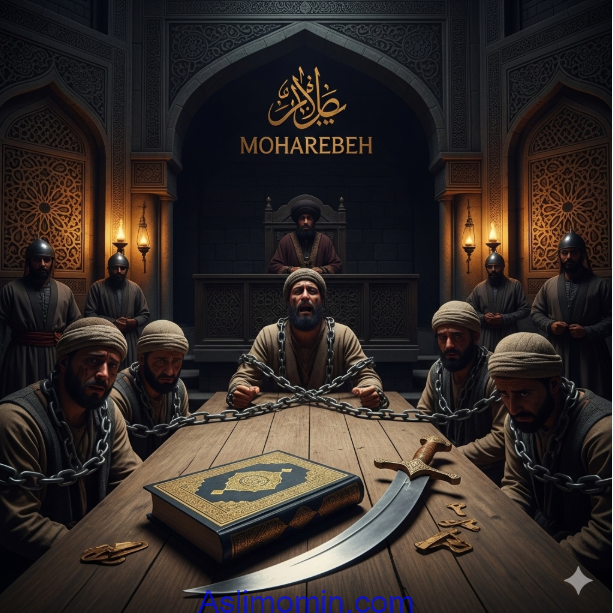
Punishment for Disobeying the Prophet and Its Modern Application
1) Introduction: The Verse and Its Context
The Qur’an in Surah al-Ma’idah (5:33) states:
إِنَّمَا جَزَاءُ ٱلَّذِينَ يُحَارِبُونَ ٱللَّهَ وَرَسُولَهُ وَيَسْعَوْنَ فِي ٱلۡأَرۡضِ فَسَادٗا أَن يُقَتَّلُوٓا أَوۡ يُصَلَّبُوٓا أَوۡ تُقَطَّعَ أَيۡدِيهِمۡ وَأَرۡجُلُهُم مِّنۡ خِلَٰفٍ أَوۡ يُنفَوۡا مِنَ ٱلۡأَرۡضِ…
Translation:
“Indeed, the recompense of those who wage war against Allah and His Messenger and strive to spread corruption on earth is only that they be killed, or crucified, or have their hands and feet cut off on opposite sides, or be exiled from the land…”
Arabic term: محاربة (muhāraba / moḥāraba / moharebeh) — literal meaning: to wage war, to fight.
But the real questions are:
- Who can possibly “wage war” against Allah?
- Through whom is Allah’s will or command expressed?
The answer is clear — through the Prophet. Which means: disobeying the Prophet = waging war against Allah.
The consequence: anyone who challenges the Prophet’s command can be branded as spreading fasād fil-arḍ (corruption on earth), and subjected to four punishments deemed legitimate — death, crucifixion, mutilation (cutting hands and feet crosswise), or exile.
2) Interpretation in Shariah and Fiqh
- Hanafi Fiqh: Moharebeh applies to cases of armed robbery, rebellion, and challenges to religious authority.
- Shafi’i and Hanbali Fiqh: Even broader — any serious crime against state security or the ruler can be labeled as Moharebeh.
- Power of the Qadi: Determining the crime and punishment lies entirely in the hands of the judge.
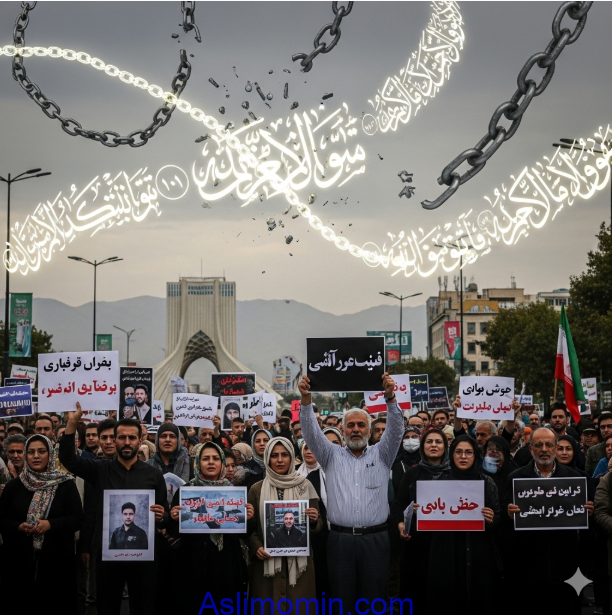
Critical Question:
Does this interpretation effectively equate “disobeying the Prophet” with “defying political authority”?
If yes, then isn’t every form of dissent or criticism vulnerable to being branded as Moharebeh, punishable by death or mutilation?
👉 Thus, even in its foundational form, the verse does not remain a mere historical instruction — it becomes a legal weapon capable of crushing opposition.
3) Legal Status in Modern Muslim States
Iran (Islamic Penal Code, 2013 amendment):
- Articles 279–284: Moharebeh = armed intimidation, murder, riots, or rebellion against the state.
- Punishments: execution, crucifixion, cross-amputation, or exile.
- Note: In practice, “Moharebeh” often becomes a tool for suppressing political dissent.
Saudi Arabia:
- Uses the term ḥirābah (حرابة); applied to terrorism, rebellion, and anti-state actions.
- 2016: Shia cleric Sheikh Nimr al-Nimr was executed under this law.
Sudan, Pakistan, Afghanistan (Taliban era):
- Laws explicitly include hirabah/moharebeh.
- Punishments: harsh, Shariah-based — execution, mutilation, exile.
- Taliban publicly carried out amputations for theft and robbery.
4) Case Histories (Verified Examples)
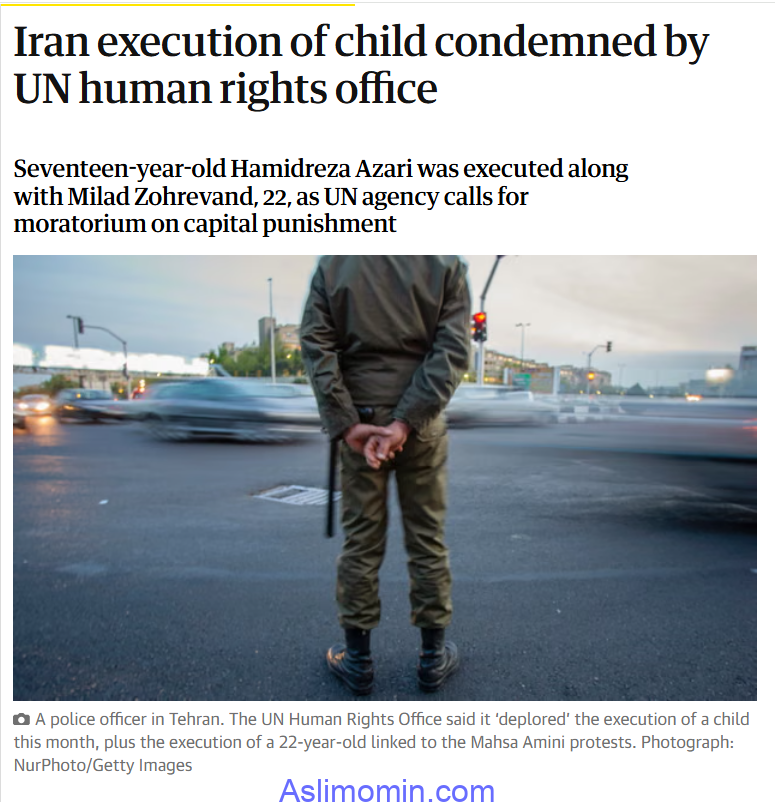
Iran:
- Mohsen Shekari (2022): Accused of attacking security forces → executed. Amnesty & UN: “sham trial.”
- Majidreza Rahnavard (2022): Accused of killing Basij militia members → public hanging after a rushed trial.
- Hamed Nour (2023): Participation in protests = “fasād fil-arḍ” → death penalty.
- Saeed Maleki (2019): “Economic corruption” framed as Moharebeh → executed.
- 2024–25 protests: Three young men sentenced to death for “Moharebeh” and “fasād fil-arḍ” (HRW report).
Saudi Arabia:
- Sheikh Nimr al-Nimr (2016): Anti-government sermons and alleged rebellion → executed.
- Ali Mohammed Baqir al-Nimr (2012–2020 case): Arrested as a minor during protests → death penalty, later commuted to life imprisonment.
Sudan:
- Abdul Karim Hussein (2014): Attacked government forces → executed under hirabah law.
Afghanistan (Taliban, 1990s):
- Theft/robbery → punishment: amputation of hands/feet.
Pakistan:
- Mohammad Ismail (1990s): Convicted of armed robbery → sentenced to cross-amputation; later overturned.
👉 These cases reveal how Moharebeh/hirabah has been used not only against violent criminals but also against protestors, dissidents, and even those accused of economic misconduct. It has become a blunt instrument to silence opposition.
5) Critical Perspective: Moharebeh as a Political Weapon Today?
Critics argue that the definition of Moharebeh is so broad that any dissent, slogan, or protest can be turned into “war against Allah and His Messenger.”
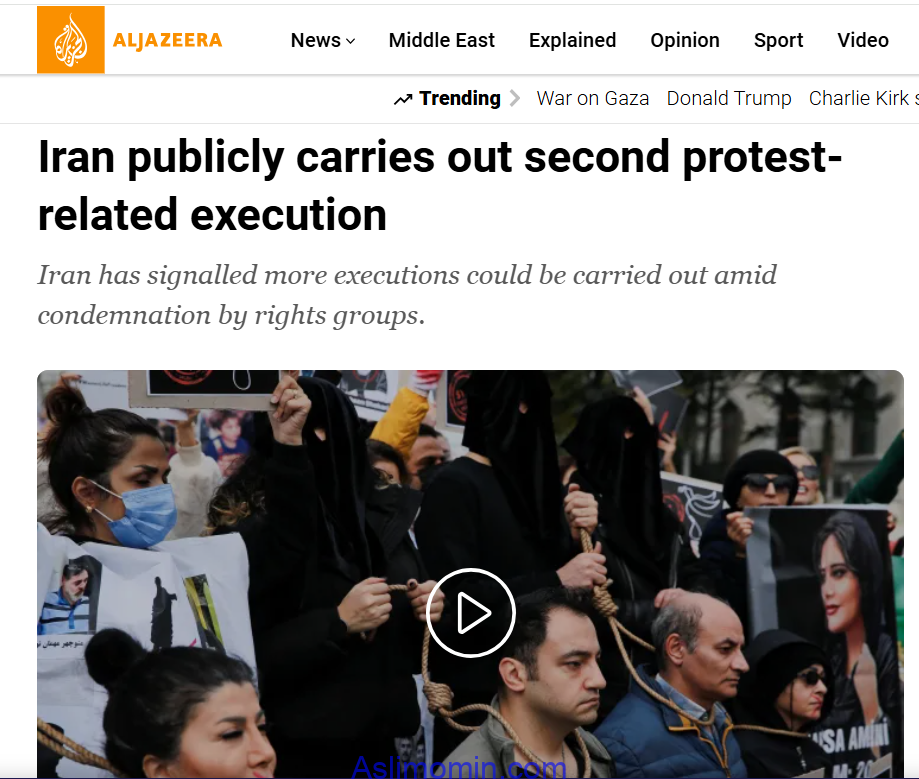
- Example: During the 2022–23 protests in Iran, hundreds were charged with Moharebeh.
- Result: International human rights bodies say the law has become a tool to criminalize political dissent.
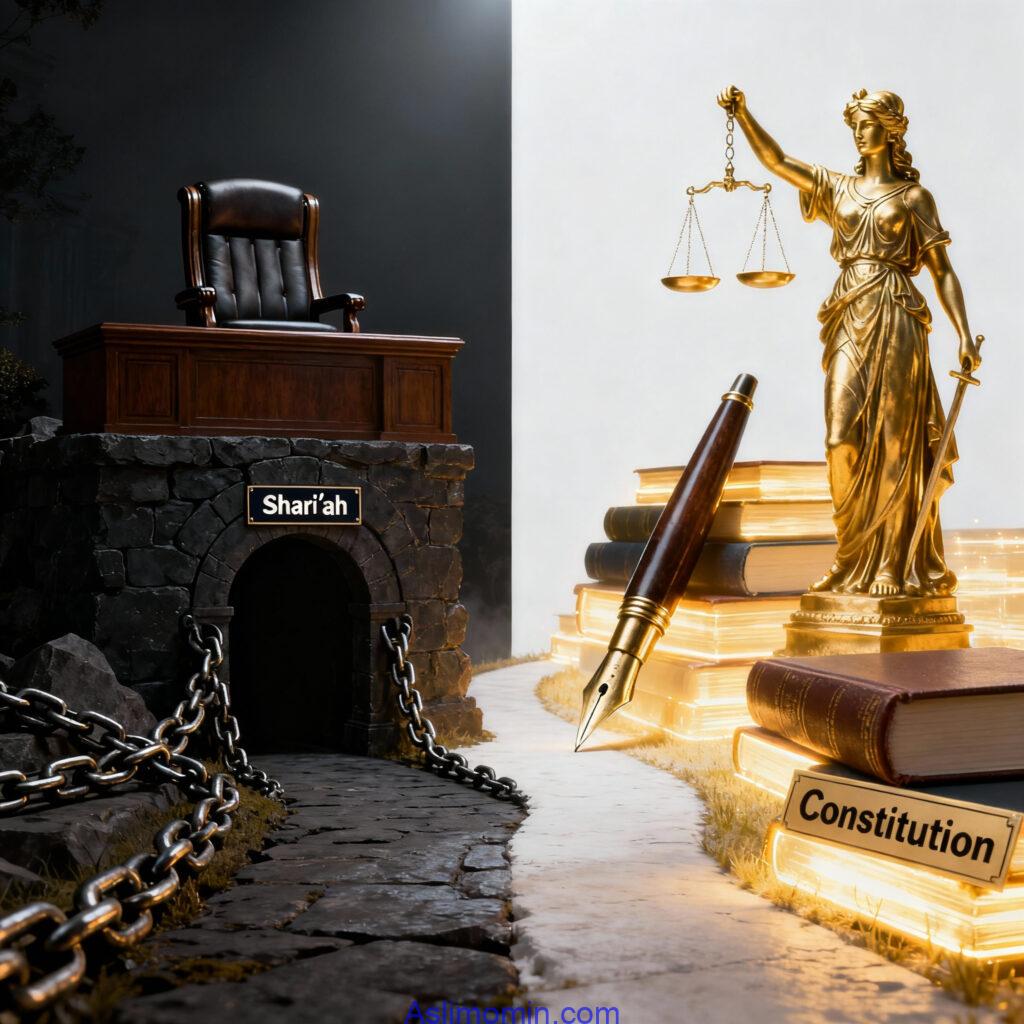
6) Comparison in the Indian Context
In countries where Muslims enjoy constitutional rights, they often allege injustice by the state. Yet in Shariah-ruled nations, one rarely hears such complaints — because raising a voice itself carries religious restrictions.
Examples from India:
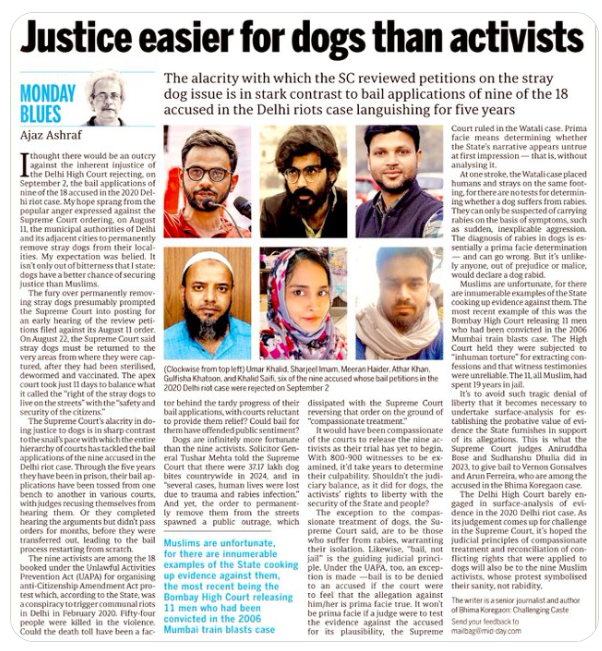
Several critics and political supporters argue that certain activists face punishment “because they are Muslims” or due to the government’s Hindutva stance. Cases often cited:
- Umar Khalid — arrested in 2020 (UAPA, etc.); remained a focal point in investigations (USCIRF / Guardian).
- Sharjeel Imam — accused in connection with Delhi 2020 incidents; prolonged custody, charge-framing delays (NDTV, India Today).
- Safoora Zargar — arrested during CAA–NRC protests under UAPA; even pregnancy did not prevent detention (Wikipedia / National Herald).
- Natasha Narwal — Pinjra Tod activist, charged under UAPA in 2020 (USCIRF / Indian Express).
- Devangana Kalita — another Pinjra Tod activist, also arrested in the same context (Frontline Defenders / NDTV).
Debate Point:
It is often claimed that they are punished only for being Muslims. But in reality:
- Chargesheets were filed as early as 2021.
- Trials have not advanced largely because defense lawyers have prioritized bail pleas over trial proceedings.
Key Question:
If these very individuals had opposed governments in Iran or Saudi Arabia, they would likely have been charged with Moharebeh or fasād fil-arḍ — leading straight to execution or mutilation.
In Shariah states, one cannot play the “victim card” of being punished simply for being Muslim.
7) Is This Not Kitman?
Today, some claim:
“These verses applied to that historical time, not today.”
But the question arises: could not the same logic be used tomorrow to justify child marriage or slavery once Shariah is enforced?
Questions:
- If 5:33 was only a “historical punishment,” why do Iran, Saudi Arabia, and other Shariah states still implement it?
- If slavery was only “history,” why does Shariah literature continue to preserve its justification?
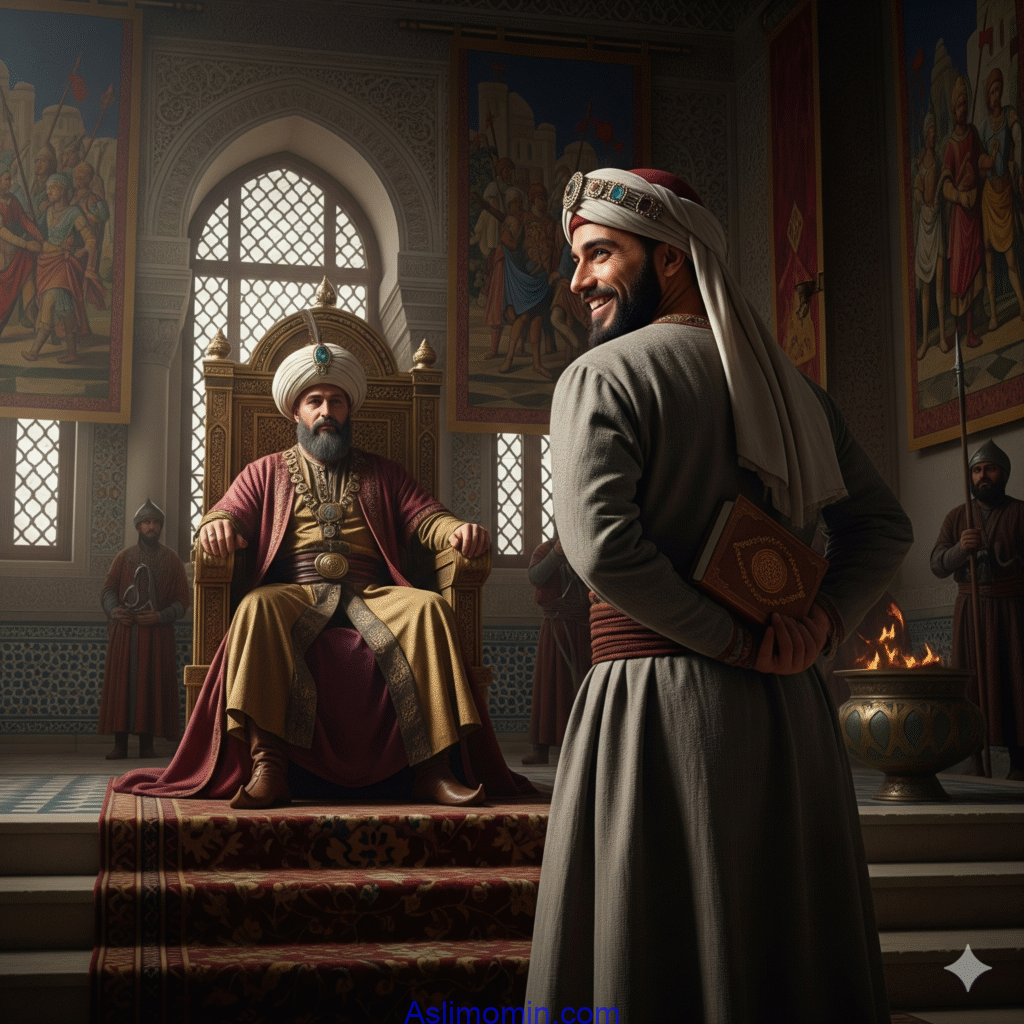
- Isn’t it true kitman (concealment) to dismiss harsh parts of Shariah as “time-bound,” yet revive the same laws whenever politically convenient?
8) Conclusion (in the Form of Questions)
- Do provisions like Moharebeh turn dissent into a religious crime?
- Is this Qur’anic verse still alive as a political weapon of repression?
- And in a constitutional democracy like India — aren’t Muslim activists in fact fortunate that they are dealt with under civil law, not Shariah?
Think:
Those who glorify Shariah today and dream of turning India into an Islamic state — do they even realize that the very freedom they now enjoy to protest or speak out would vanish under Shariah? In such a system, they would not even be allowed to describe the injustices done to them.
👉 Read more with us: Other Harsh Laws of Shariah → [LINK]
📢 Did you find this article useful?
🙏 Support our work by clicking here.