
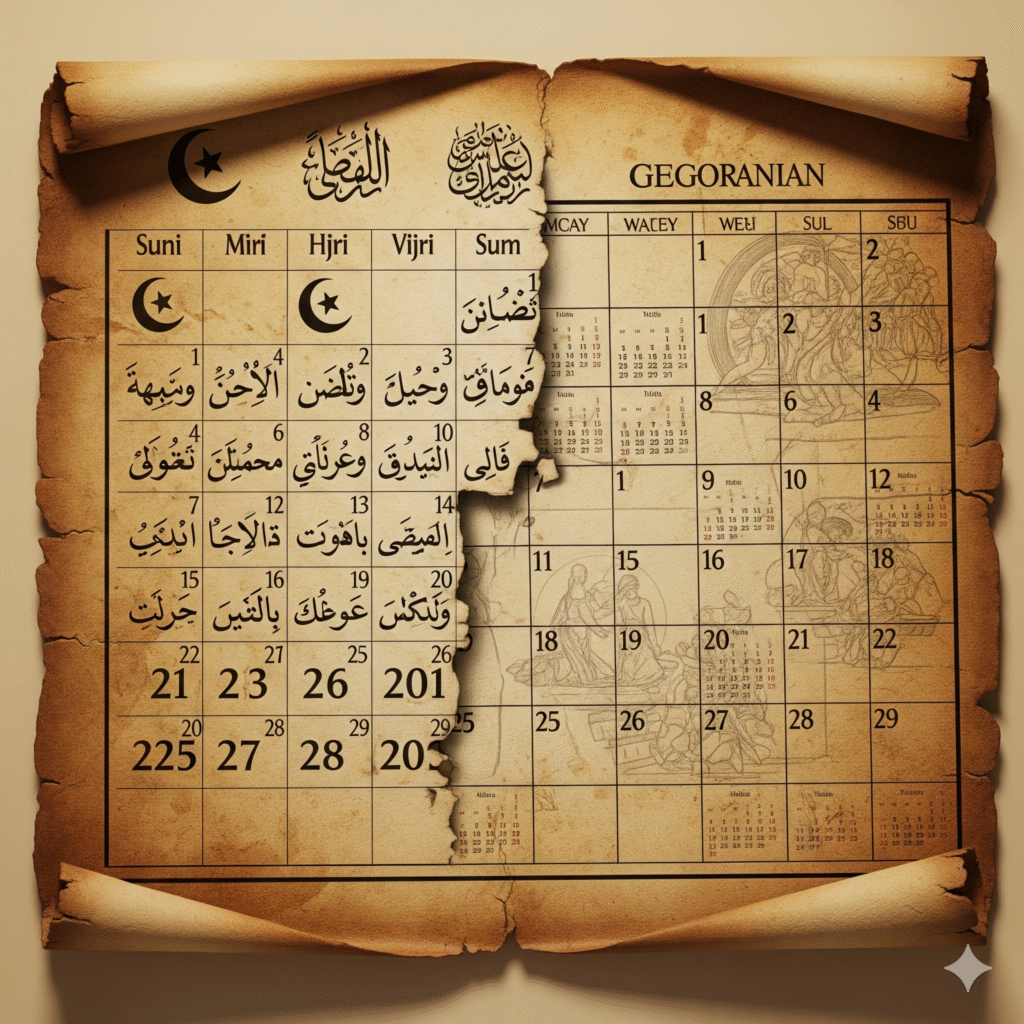
The Mathematics of Dates and the Confusion Around It
The Islamic calendar, also known as the Hijri calendar, officially began in 638 CE during the rule of Caliph Umar. However, the counting starts from the event of the Prophet Muhammad’s migration (Hijrah) from Makkah to Madinah (622 AD).
This means the calendar was established 16 years after the Hijrah, but its calculation was backdated to begin from the Hijrah itself.
The Special Nature of the Lunar Calendar
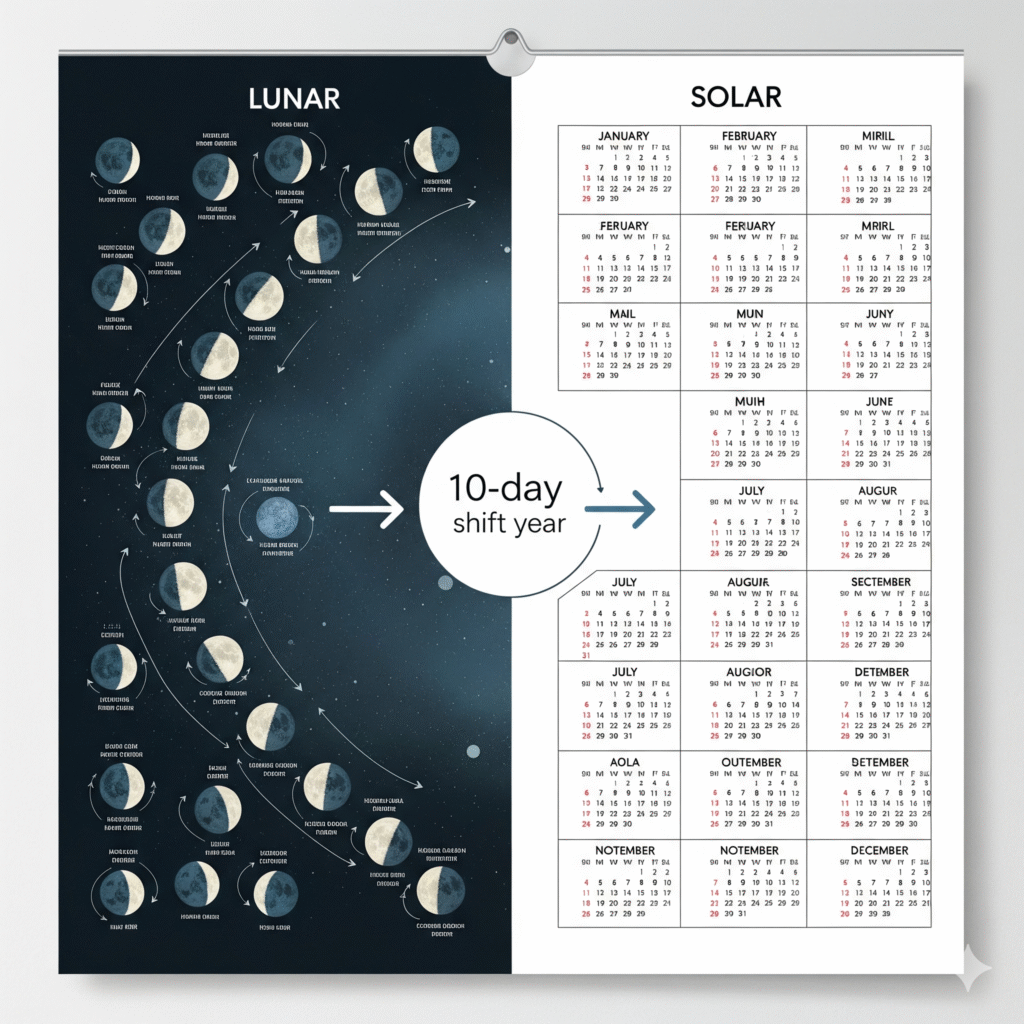
The Islamic calendar is based on the moon (lunar cycle), whereas most of today’s world follows the sun (solar cycle) based Gregorian calendar.
- Solar year ≈ 365 days
- Lunar year ≈ 354 days
That means the Islamic calendar is shorter by 10–11 days every year.
The Consequences
- In 3 years, it shifts back by almost 1 full month.
- Within 18 years, the month of Ramadan shifts by about 6 months, meaning it sometimes falls in cold winters and sometimes in scorching summers.
- In 33 years, the calendar completes a full cycle and returns to the same season.

Prophet Muhammad’s Birth, Prophethood, Hijrah, and the Calendar Gap
If we compare the Hijrah (622 CE) with the official introduction of the calendar (638 CE), we find an 16-year gap.
- Because each year loses about 10–11 days, this creates a difference of more than 6 months.
- As a result, the exact dates of historical Islamic events become uncertain.
- If calculated from the beginning of Prophethood (610 CE), there is a 28-year gap—almost 10-11 months missing from recorded history.
- If calculated from Prophet Muhammad’s birth (570 CE), there is a 68-year gap, meaning about 2 years disappear from the timeline.
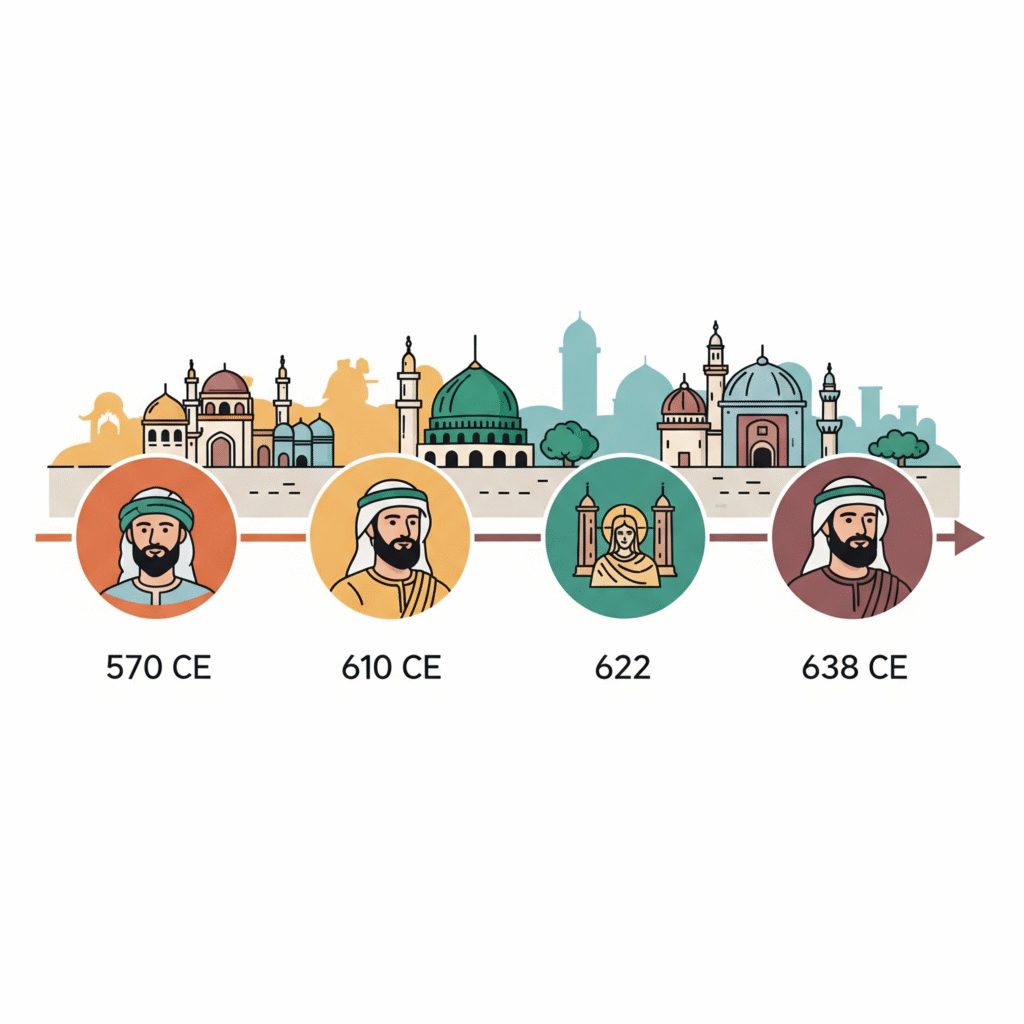
This is as if the Islamic calendar “erased” nearly two years from history.
Why Does This Cause Confusion?
- When the Islamic calendar is compared with the Gregorian calendar, the annual 10–11 day reduction makes it impossible to pinpoint exact dates of old events.
- That’s why in Islamic history books, the same event may be mentioned as occurring a year earlier in one source and a year later in another.
Explained in Simple Words
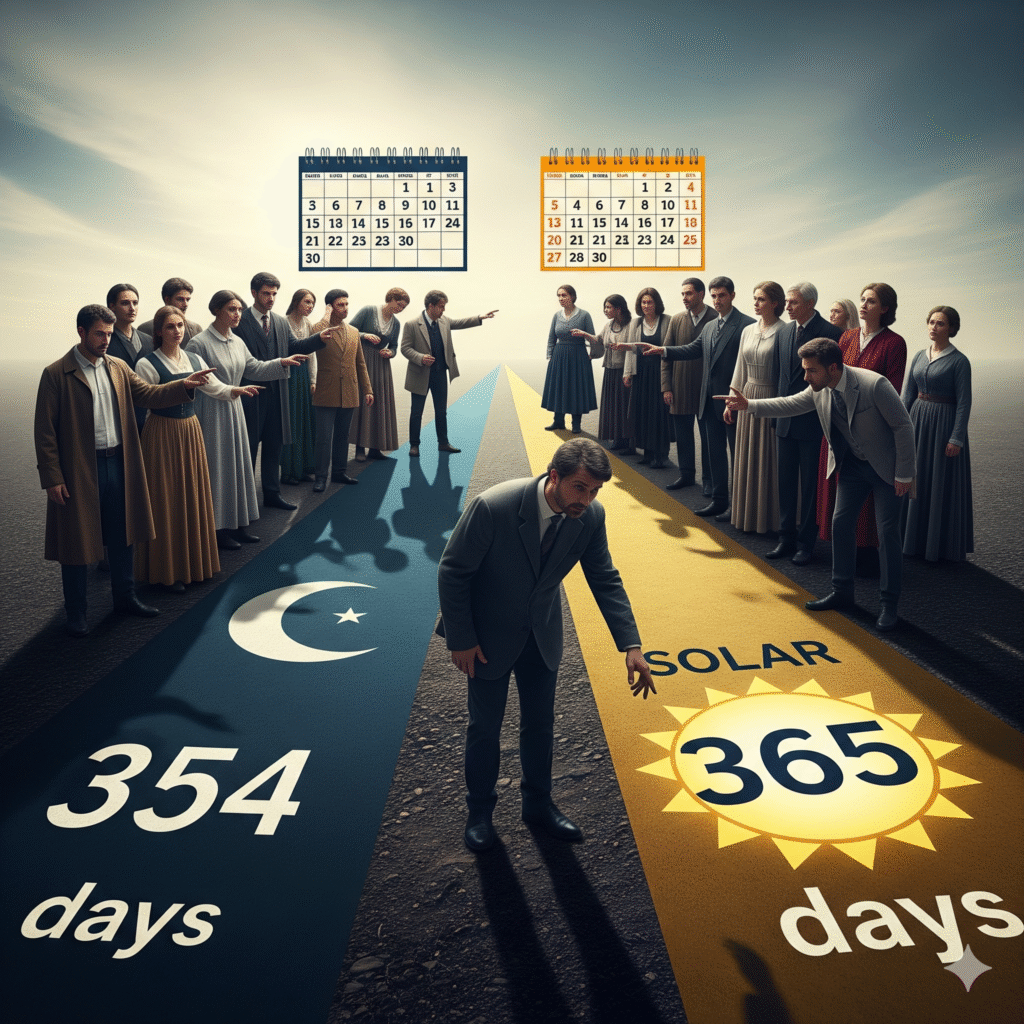
- The Islamic calendar is 10 days shorter every year.
- In 3 years = 1 month shift, in 33 years = full year shift.
- That’s why Ramadan and Eid sometimes fall in summer, sometimes in winter.
- From the start of Prophethood to the start of the calendar = 28-year gap (≈ 10 months missing).
- From birth to the calendar = 68-year gap (≈ 2 years missing).
 In short, the Islamic calendar works for marking religious events, but when it comes to calculating exact historical dates, it always creates confusion.
📢 Did you find this article useful?
🙏 Support our work by clicking here.