
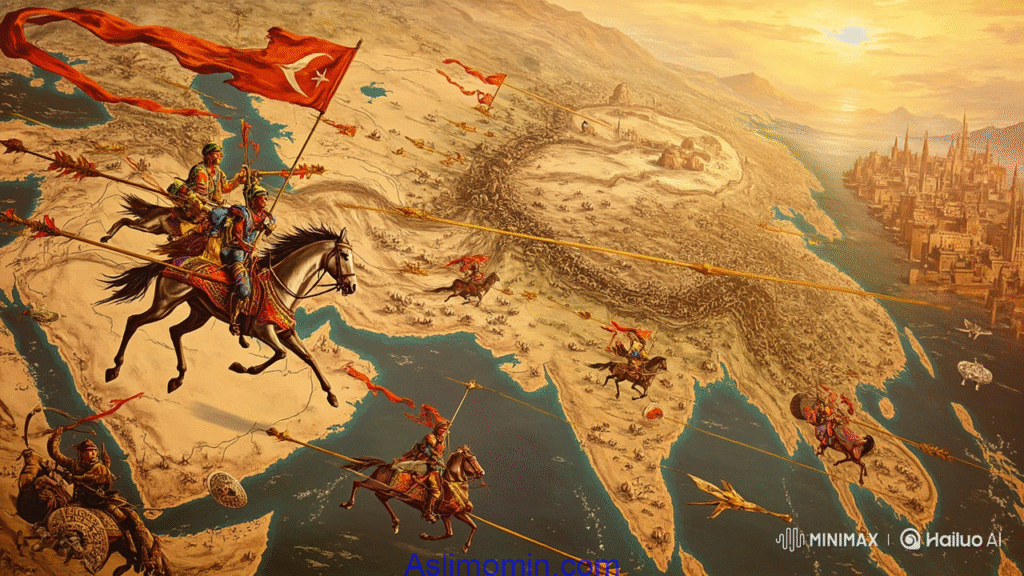
The Arrival and Its Contemporary Reality
1) Introduction
Islam did not arrive in India merely as a matter of personal belief or spirituality. From the beginning, it was linked with power, law, and governance. Arab traders reached the Malabar coast in the 7th–8th century. But from the 12th century onward, with the Delhi Sultanate and later the Mughal Empire, Islam became intertwined with political dominance and Sharia-based authority.
Today, Indian Muslims enjoy full constitutional protection. Yet, the clash between Sharia and constitutional law remains a recurring fault line in Indian society.
2) The Arrival of Islam and Political Power
- 712 CE: The invasion of Sindh by Muhammad bin Qasim — introduction of jizya and the beginnings of forced conversions.
- 1206 CE: Establishment of the Delhi Sultanate — Sharia-based laws institutionalized.
- 1526–1857 CE: The Mughal Empire — a complex blend of religious tolerance and episodes of persecution.
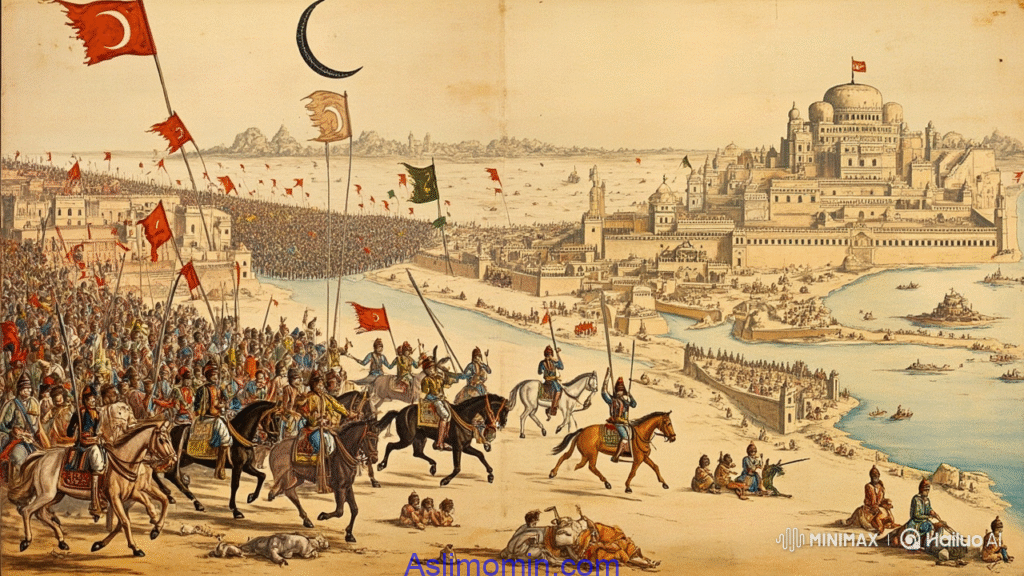
The Question: Was the spread of Islam in India only through trade and Sufi mysticism, or was the sword of Sharia-backed power equally central?
3) The Waqf Board — A Parallel System
The Indian Constitution guarantees equality to all religions, yet Muslims have a unique institutional arrangement:
- Waqf Boards: Managing religious properties under Sharia principles.
- Data: India has more than 810,000 acres of Waqf land (Ministry of Minority Affairs, 2016).
The Question: Does the Waqf system not resemble a “state within a state” operating under parallel norms?
4) Personal Law — Sharia vs. Constitution
- Hindus, Christians, Parsis — their marriage and inheritance laws are linked to the Constitution.
- Muslims, however, remain under Sharia-based personal law.
- Example: Triple Talaq (banned only in 2019).
The Question: If the Constitution guarantees equal rights, why should one religion retain exemptions rooted in medieval Sharia?
5) Temple–Mosque Disputes
- Ayodhya (Ram Janmabhoomi): In 2019, the Supreme Court confirmed the structure stood on temple remains.
- Kashi (Gyanvapi) and Mathura: Disputes still ongoing.
The Question: Are these conflicts merely about faith, or are they historical consequences of Islamic rule and Sharia-backed authority in India?
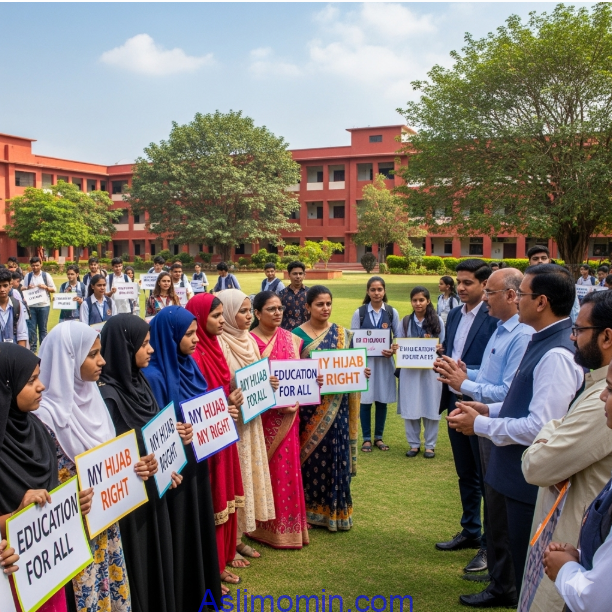
6) The Hijab Controversy (Karnataka, 2022)
- Conflict: College uniform code vs. hijab as religious identity.
- Karnataka High Court: Ruled hijab is not an essential Islamic practice.
- Muslim groups: Claimed it was an attack on religious freedom.
The Question: If hijab is indeed personal freedom, can it be placed above education, law, and civic equality?

7) Riots and Communal Tensions
- Bhagalpur (1989): Over 900 killed.
- Gujarat (2002): More than 1,000 dead after the Godhra train burning.
- Delhi (2020): Over 50 killed during anti-CAA protests.
The Question: Are these riots simply political, or do they reflect the deeper clash between Islam vs. Constitution, and Sharia vs. democracy?
8) Contemporary Context
Indian Muslims today receive:
- Voting rights,
- Access to education and jobs,
- Minority welfare schemes.
Yet, demands for Sharia-based exceptions continue.
Critique:
- In secular countries like India and the West, Muslims demand Sharia rights.
- But in Sharia states like Iran, Saudi Arabia, or Pakistan, Muslims rarely dare to demand democracy or equality — because accusations of moharebeh (enmity against God) or fasad fil-ardh (corruption on earth) carry death penalties.
9) Conclusion
The arrival of Islam is an undeniable part of India’s history. But the question today is:
- Will India’s future be guided by the constitutional principle of equality?
- Or will repeated demands for Sharia supremacy push the nation into recurring conflict?
This is the underlying tension visible in every dispute — from temples to mosques, from Waqf to personal law, from hijab to riots.
📢 Did you find this article useful?
🙏 Support our work by clicking here.