
Introduction
As we have seen in previous articles, there has been discussion regarding the possibility of alterations in the Quran and Hadith, as well as the interrelationships between various sources. By comparing different Tafsirs and Hadith collections, we have attempted to present a general picture. The purpose of this article is strictly to present facts and source-based citations — not to hurt anyone’s sentiments.
Note: If you feel this content might offend your sentiments, please first read the [Disclaimer].
After reading this article, if any statement affects you emotionally, please verify the references (Quran, Tafsir, Hadith books) rather than reacting personally — for example, using quran.com, authentic Tafsirs, and verified Hadith collections. The points mentioned here are taken as they appear in the original texts; if you disagree with any point, please bring your evidence and engage in reasoned discussion.
What the Scholars Say — Two Major Perspectives
First, it is important to clarify that Islamic scholars do not interpret this topic uniformly:

“Bila Kayf” (Without Asking How) Approach — Accepting Without Defining
Some traditional schools (e.g., Ahl al-Hadith) accept physical descriptions literally, but avoid questioning how — that is, the precise nature of these descriptions. This is known as Bila Kayf: the words are accepted, but their interpretation is not attempted.
Incorporealist / Transcendent God Approach
Theological schools (Mutazili, Ash‘ari, Maturidi) and some Shia traditions consider Allah entirely unseen and distinct from physical form. According to them, where the language is symbolic, it should be understood symbolically, not literally.
We will review the words used in the texts and the conceptual implications derived from them, acknowledging both perspectives.
Embodied Allah — The Image in the Quran and Hadith
In the following sections, we cite verses and Hadiths that mention physical attributes. This article presents these facts as they appear — showing that the supposedly “formless” nature of Allah may not be as commonly understood.
1. Allah’s Two Hands
Surah Sad 38:75
“I created him with My two hands.”
(بِيَدَيَّ – Bi-yadayya) – This is dual form, meaning “two hands.”
Surah Al-Ma’idah 5:64
“The Jews said, ‘Allah’s hand is chained…’ but rather, both His hands are open.”
Surah Az-Zumar 39:67
“…on the Day of Judgment, the entire earth will be in His fist.”
Sahih Muslim 2787
“In one hand of Allah is the earth, and in the other is the sky.”
Implication:
If these statements are taken literally, the use of “two hands” (Bi-yadayya) indicates direct physicality. Traditional exegetical interpretations, however, understand them metaphorically — as symbols of power, authority, or intimacy.
Yet the question arises: if “hands” are purely symbolic, why say “created with both hands”? Simply saying “with His hands” would suffice. Specifying “both hands” emphasizes number, leaning more toward literal physicality than symbolism.
2. Are Both Hands on the Same Side?
Sunan an-Nasa’i 5379, Mishkat al-Masabih 3690
“Kilta yaday Rabbi yaminun” (كِلْتَا يَدَيْ رَبِّي يَمِينٌ) — “Both of Allah’s hands are right.”
Implication:
Taken literally, this statement appears contradictory. Saying “both hands are right” is biologically inconsistent. Exegetes interpret “Yamin” (Arabic: يمين) symbolically — as representing power, blessings, or virtue. However, the literal text raises a significant question: are both hands literally on the same side?
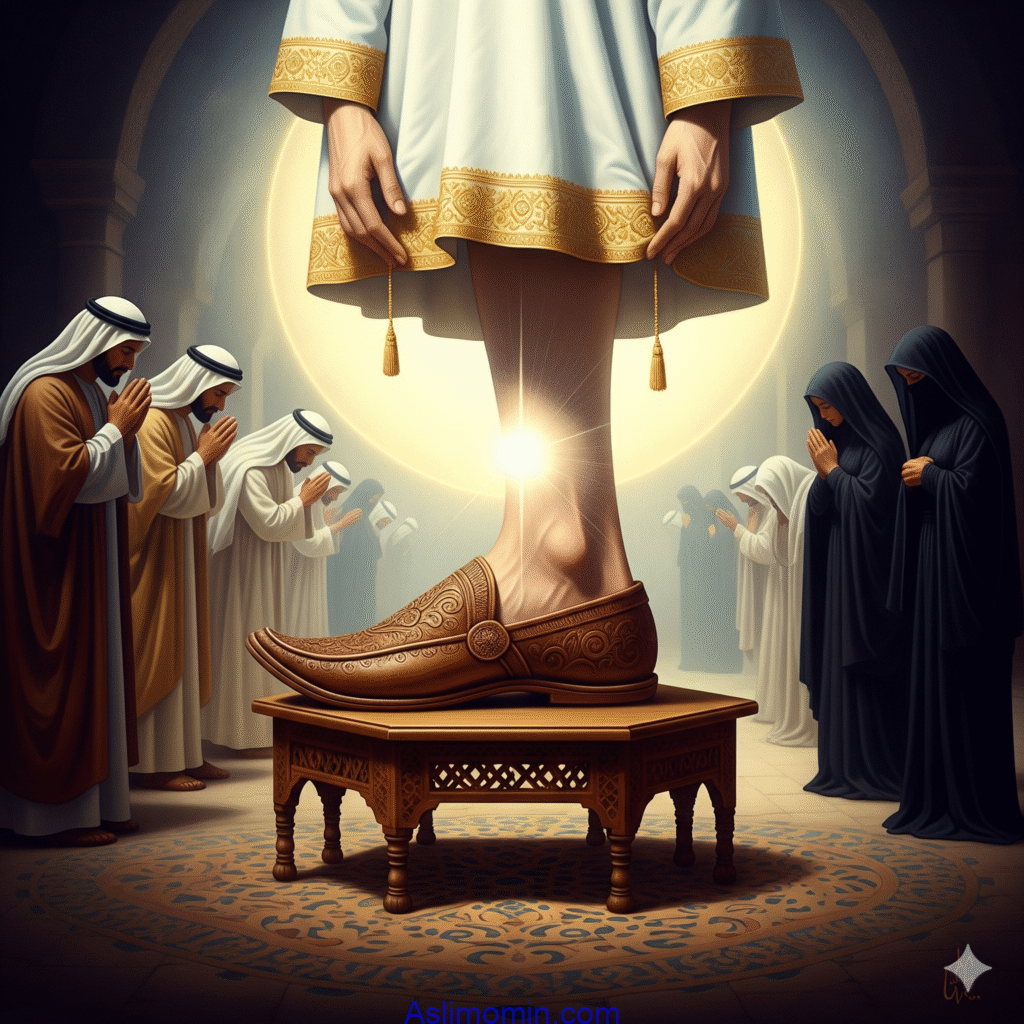
3. Showing the Calf (Saq) on the Day of Judgment
Surah Al-Qalam 68:42; Sahih Bukhari 7439
“On the Day Allah reveals His calf (سَاق – Saq)…”
Implication:
The Arabic word Saq denotes a physical limb — the lower part of the leg/shin. If taken literally, this points to clear physicality. The shin is not an abstract symbol; it is a tangible biological limb. A formless entity cannot “show” a shin.
4. Fingers and Digits
Sahih Muslim 2655
“Every heart is between two of Allah’s fingers…”
Sahih Bukhari 7513
“Allah will hold the sky on one finger, the earth on another, water and soil on another, and all creation on a fourth.”
Descriptions like these in Hadith mention holding the entire creation on fingers.
Here, four fingers are explicitly mentioned — just like a human hand. If this were purely symbolic, specifying the number (four) would be unnecessary; simply saying “on His finger” would suffice. This description suggests a human-like structure — “four fingers plus a thumb.”
Implication:
The numeric language (four fingers, etc.) conveys an image of a human-like physical structure — if read literally.
5. Allah’s Eyes – Acknowledgment of “Not One-Eyed”
Qur’an
Surah Taha 20:39 – “…was nurtured before My eyes.”
Surah Al-Qamar 54:14 – “…before Our eyes.”
Hadith
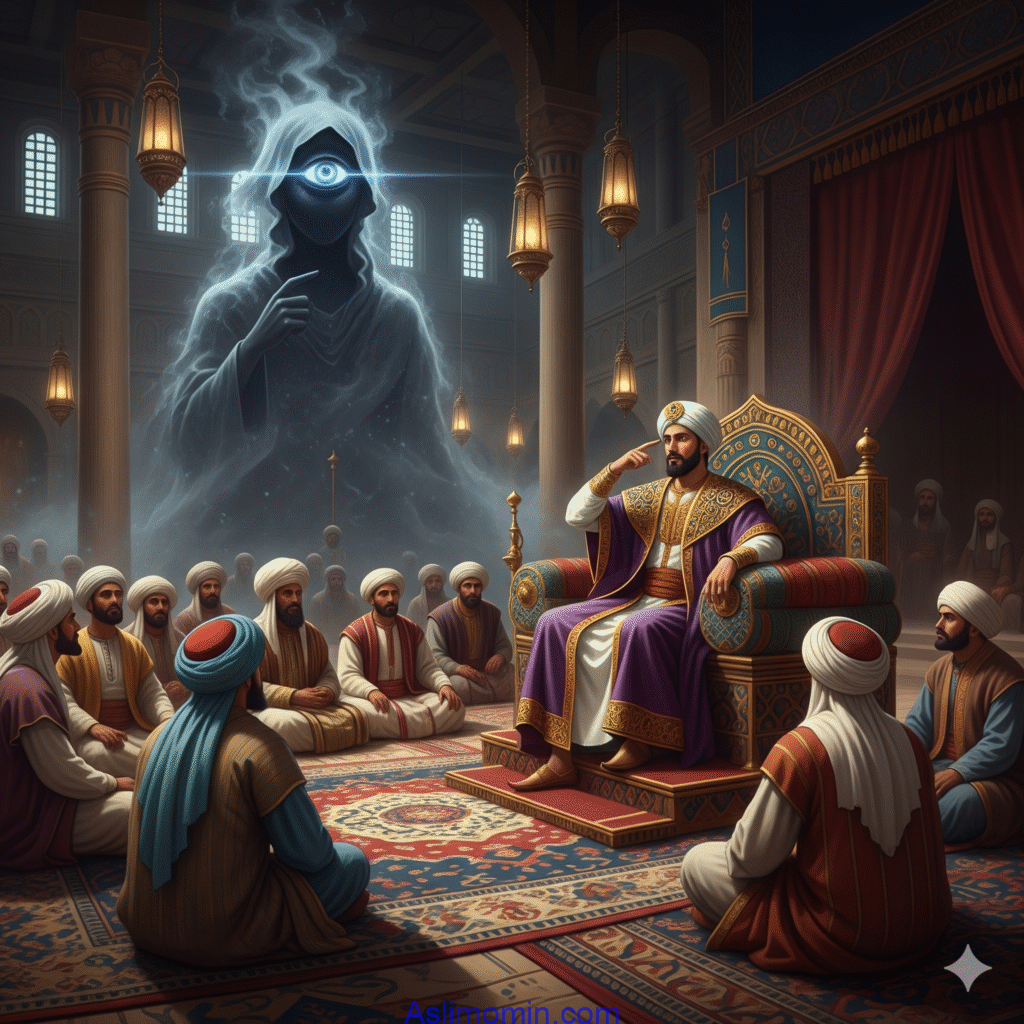
Sahih Bukhari 7407 – “The Dajjal has one eye, but your Lord is not one-eyed.”
(The Prophet even gestured toward his own eyes here.)
Implication:
The phrase “not one-eyed” inherently acknowledges that Allah has eyes — even if they are not like human eyes. If “eye” were purely symbolic, a comparison like “not one-eyed” would be meaningless. At the very least, these texts indicate that Allah possesses a tangible, organ-like attribute for seeing, not merely an abstract form of vision.
6. Face and Human Likeness
Qur’an
Surah Ar-Rahman 55:27 – “The face of your Lord will remain…”
Hadith
Sahih Muslim 2612a-d – “Adam was created in His form.”
“Do not distort people’s forms, for Allah created them in His form.”

Implication:
This statement raises profound questions. If “form” refers only to qualities or attributes, how should one interpret verses like “the face of your Lord will remain”? And if form truly denotes a shape or appearance, does Adam’s appearance reflect Allah’s? Here, the question of human-likeness cannot be dismissed; it becomes more direct and pressing.
7. Throne (Arsh) – Allah’s Seat
Qur’an
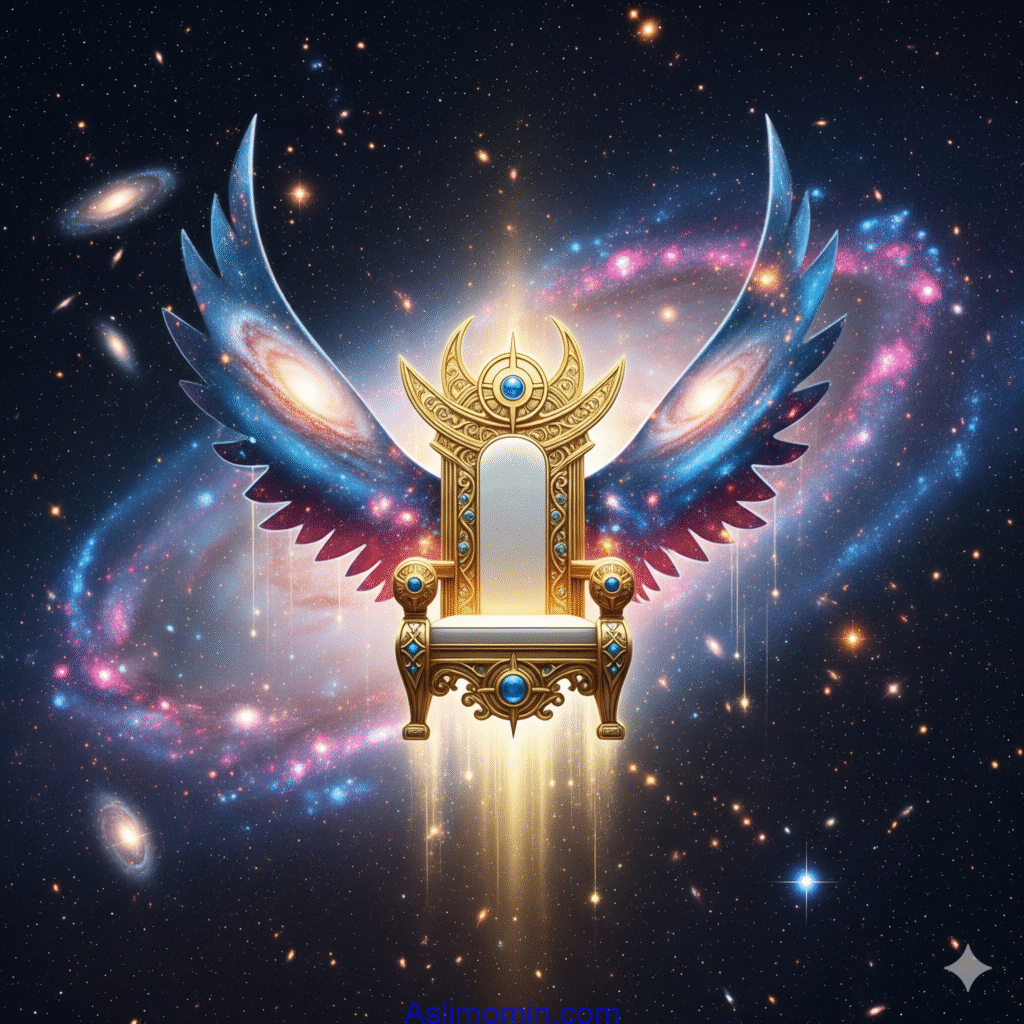
Surah Taha 20:5 – “The Most Merciful is established upon the Throne.”
Surah Al-Haqqa 69:17 – “On that day, eight angels will carry the Throne of your Lord.”
Implication:
The term “Istawā ‘alal-Arsh” is mostly interpreted in exegesis as “settled” or “established”/“seated.” If the Throne is a tangible seat that angels can carry, it implies the Throne has weight. And if Allah is seated on it, are the angels carrying it along with His weight? This directly portrays Allah as spatial and material-dependent. For a formless and omnipresent entity, “sitting on and being carried with the Throne” presents a notable contradiction.
8. Foot (Qadam) – Influence on Hell
Hadith
Sahih Bukhari 4849, Sahih Muslim 2846B – “Hell will not be filled until Allah places His foot (qadam) in it. Then Hell says: ‘Enough!’”
Implication:
The term “foot” here suggests a physical act. Hell filling up and then stopping because of a footstep depicts tangible intervention. If this were symbolic, why describe placing a foot? Simply commanding Hell would suffice. The act of putting a foot clearly implies a form of physical presence.
9. Voice, Speech, and Dialogue
Qur’an
Surah An-Nisa 4:164 – “Allah spoke directly to Moses.”
Hadith
Sahih Muslim 2968 – “On the Day of Judgment, Allah will speak to every individual without an intermediary.”
Sahih Muslim 1890 – “Allah laughs.”

Implication:
Speaking, laughing, and conversing are sensory actions that require sound, articulation, and voice. How could a formless entity perform these? Traditional exegetes often dismiss this as “examples for human understanding.” Yet the straightforward language — “Allah spoke directly to Moses” or “Allah laughs” — suggests not mere metaphor but attributes implying physicality and expressive behavior.
10. Descending and Ascending
Hadith
Sahih Bukhari 1145 – “Every night, Allah descends to the lowest heaven…”

Implication:
“Descending” implies the existence of place, direction, and distance. If Allah is omnipresent and formless, why would He need to move from above to below? This description portrays Allah as a spatially bound entity. If He is everywhere, what meaning does ascending or descending retain?
11. Nutfa (Sperm) / Resurrection
Hadith
Sahih Bukhari 4935 – “On the Day of Judgment, Allah will send rain from the sky, and people will grow like plants.”

Exegesis and Traditional Interpretation
Tafsir Ibn Kathir (Surah 79:46) – “Allah will send rain like sperm (nutfa), and the dead will grow like vegetation.”
Fath al-Bari (Ibn Hajar al-Asqalani) – “This water will be like nutfa, kept by Allah in a pouch for centuries, and it will be used for the final resurrection.”
Imam Nawawi & Hanbali scholars – “This water is kept by Allah in a pouch.”
Mushtaraq al-Sahihain – “Under the Throne, there is a pouch containing water like human sperm, from which life will be given on the Day of Judgment.”
Implication:
A formless entity possessing “sperm-like rain” and water stored in a pouch speaks directly in the language of biological processes. If taken literally, this depiction is undeniably filled with corporeal-human imagery.
Logical Conclusions:
- “He is formless, yet creates with both hands.”
- “He is omnipresent, yet descends at night.”
- “He is abstract, yet holds hearts between His fingers.”
- “He is transcendent, yet eight angels lift His Throne.”
- “And most astonishing — both His hands are right!”
Final Questions:
- If all this is symbolic, why are both hands right?
- If He is formless, why a heavy Throne?
- If He is all-knowing, why does He become angry?
- If He is abstract, why place His foot to fill Hell?
- If He is transcendent, why send rain from a sperm-like pouch?
This is neither Advaita philosophy nor abstract theology — rather, a semi-human and anthropomorphic reinterpretation of the tradition.
Scholarly Interpretation:
Kalam and Sufi-philosophical traditions defend these words as symbolic. According to them, the human language in the Qur’an and Hadith is merely for human comprehension; it is not necessary that every word be taken literally.
Hence, principles like “Mutashabih” and “Bila Kayf” are employed — meaning: “The meaning is known to Allah; we do not know.”
For further discussion, see our article on Mutashabih and Bila Kayf.
📢 Did you find this article useful?
🙏 Support our work by clicking here.