
Introduction
Let us begin with a fundamental and pragmatic question:
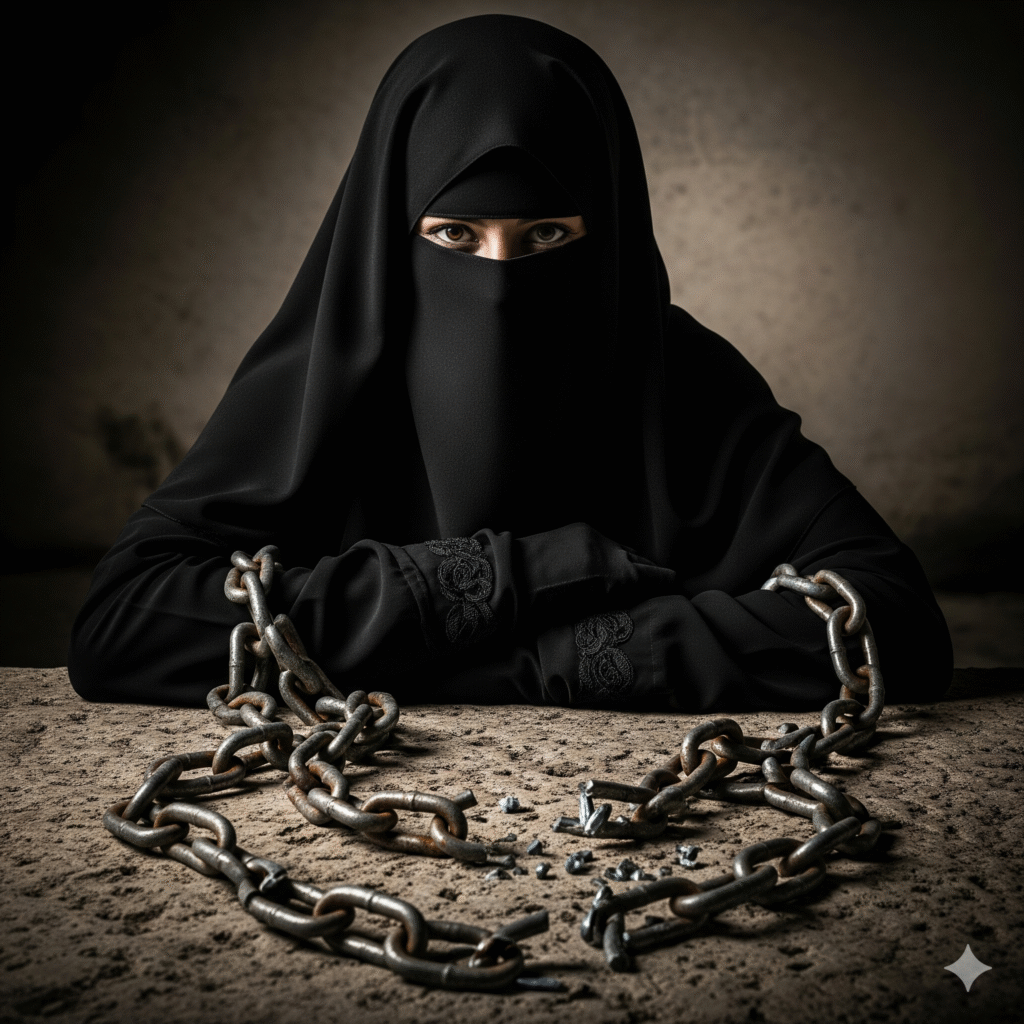
If a husband in any given society abruptly abandons his wife by pronouncing divorce, and that woman has neither parents nor brothers to turn to, how will she feed herself while confined to the rigid, claustrophobic structures of the veil (Hijab/Burqa)?
In Islam, a man possesses the absolute unilateral right to divorce his wife whenever and however he pleases. Conversely, if a woman wishes to break free from a suffocating marriage, she must navigate the complex and arduous legal process of Khula, a process entirely contingent upon the husband’s final consent, the forfeiture of her Mahr (dower), and in many instances, the payment of additional financial compensation. Post-divorce, Islamic law guarantees neither a dignified, long-term alimony nor any permanent socio-economic security. Can this systemic vulnerability be genuinely termed ‘honor’, or is it a form of institutionalized ‘servitude’ wrapped in a religious framework?
Clerics, muftis, and madrassas routinely repeat the hackneyed apologetic claim that “Islam was the first to grant women their comprehensive rights and dignity.” However, when these defensive assertions are stripped away to conduct a rigorous, objective, and textual scrutiny of the Quran, the Sahih (authentic) Hadiths, and classical Fiqh (Islamic jurisprudence), the claim is exposed as entirely hollow and completely detached from empirical reality.
The textual and legal status ordained for women within Islamic theology refuses to recognize them as independent, autonomous human beings. Throughout the foundational texts, her existence is reduced to “a tilth/cultivable land” (Quran 2:223), a “trap/temptation of the Devil” (Sunan Abu Dawud 2151), a “half-witness” in the legal arena (Quran 2:282), and the “overwhelming majority of the inhabitants of Hell” in eschatological justice (Sahih Bukhari 304). This textual dogmatism has fundamentally shaped and enforced the secondary, subjugated status of women within Muslim societies for centuries.
Sunan Abu Dawood 2151 (Scan from Quran.com)
Sahih Bukhari 304 (Scan from sunna.com)
In this comprehensive critique, we will delve deep into the primary layer of Islamic jurisprudence, examining the foundational verses of the Quran, the most authentic prophetic traditions, and classical legal manuals, to unveil the actual legal and social reality of women beneath the veneer of modern apologetics.
Part 1: Rape and the Four Witnesses – The Mockery of Justice
1.1 The Quranic Mandate and the Unjust Burden of Proof
Under Sharia law, the criminal justice system regarding sexual offenses functions as a legal nightmare for the victim. The Quranic mandate explicitly dictates:

“And those who accuse chaste women and then do not produce four witnesses – lash them with eighty lashes and do not accept their testimony ever after.”
– (Surah An-Nur, Quran 24:4)
When this rule is systematically applied to cases of Zina-bil-Jabr (rape), the entire framework of criminal justice collapses upon the victim. In the practical legal applications found across Sahih Bukhari (Hadith 6827) and Sahih Muslim (Hadith 1691), the statutory distinction between Zina (consensual fornication/adultery) and rape is virtually erased. In both instances, the legal system demands that the victim produce four primary, eye-witness, adult Muslim males who explicitly witnessed the act of penetration.
Sahih Bukhari 6827 (Scan from sunna.com)
Sahih Muslim 1691 (Scan from sunna.com)
The Inverted Face of Justice
Think – when a woman is being attacked by force, from where will she bring four male witnesses? If witnesses are not found, the victim herself is declared guilty.
1.2 The Crisis of Immediate Physical Evidence: The Rigid Stance of Al-Muwatta
Beyond the near-impossible requirement of four eye-witnesses, classical Islamic jurisprudence placed severe, highly problematic hurdles before a victim trying to establish her innocence.
The official legal verdict of Imam Malik, the founder of the Maliki school of jurisprudence, is recorded as follows:
Or she must have filed an immediate complaint right after the incident occurred (without waiting for the pregnancy to manifest).If none of these immediate physical indicators are present, then (treating the pregnancy itself as absolute proof of consensual intercourse) the Hadd (statutory punishment for fornication) shall be executed upon her.” – (Al-Muwatta Imam Malik, Book 41, Hadith 28)
التحقيق في الموطأ: “قَالَ مَالِكٌ فِي الْمَرْأَةِ الْبِكْرِ أَوِ الثَّيِّبِ إِذَا وُجِدَتْ حُبْلَى، فَقَالَتْ: اسْتُكْرِهْتُ. قَالَ: لَا يُقْبَلُ ذَلِكَ مِنْهَا إِلَّا أَنْ يَكُونَ لِذَلِكَ أَمَارَةٌ دَالَّةٌ؛ مِثْلُ أَنْ تَأْتِيَ صَارِخَةً، أَوْ تَسْتَغِيثَ، أَوْ تَكُونَ بِهَا آثَارٌ مِنَ الضَّرْبِ أَوِ الْخَنْقِ، أَوْ تَدَّعِيَ ذَلِكَ فَوْرَ وُقُوعِهِ. فَإِنْ لَمْ يَكُنْ لَهَا شَيْءٌ مِنْ ذَلِكَ، أُقِيمَ عَلَيْهَا الْحَدُّ.”
English Translation and Legal Purport:
“Imam Malik stated: When an unmarried or a previously married woman is found pregnant, and she claims in court, ‘I was forced (raped)’, her claim shall not be accepted from her unless there is a clear indicating sign or physical evidence (Amarah). Such as:
She must have emerged from the scene screaming/crying out (صَارِخَةً – Sārikhatan).
She must have actively called out to people for help (تَسْتَغِيثَ – Tastagheetha).
There must be visible physical marks of battery or strangulation (آثَارٌ مِنَ الضَّرْبِ – Āthārun min ad-darb) on her body.
1.3 Confirmation from Al-Mudawwana al-Kubra:
Compiled by Imam Sahnun, the prominent disciple of Imam Malik, the foundational manual Al-Mudawwana (under Kitab al-Hudud) explicitly reiterates that if a woman claims rape after her pregnancy becomes visible, the judiciary must rigorously investigate whether she ran out screaming (تصرخ) with torn clothes or blood on the exact day of the assault. If she remained silent out of trauma or social fear, her subsequent claim is legally voided.
1.4 Confirmation from Al-Kafi fi Fiqh Ahle Madina:
The eminent classical Maliki jurist Ibn Abd al-Barr explicitly states: “ولا يقبل قولها استكرهت إلا بأثر”, meaning a woman’s statement of ‘I was forced’ is legally inadmissible unless corroborated by a physical mark of struggle or direct witness testimony.
In the classical and medieval eras, courts lacked modern scientific tools such as DNA profiling or advanced forensic science to differentiate between consensual intercourse and forced assault. Consequently, if a victim was paralyzed by shock, fear, or tonic immobility (trauma response) and failed to scream immediately, or if the perpetrator left no external physical bruises, the foundational principle of justice was inverted. The rape victim was legally rebranded as a self-confessed adulteress, subjecting her to public flogging or Razm (death by stoning).
1.5 1.3 The Trap of Qazf (False Accusation): The Punishment for Seeking Justice
The most severe systematic contradiction within Sharia courts appears in the classical application of the law of Qazf (unproven accusation of sexual misconduct), as formalized in the Hanafi manual Al-Hidayah (Book IX) and other authoritative legal schools.
If a rape victim approached a Qazi (judge) to file a complaint against her rapist and was unable to produce the statutory four male witnesses:
- The accused male was granted the ‘benefit of the doubt’ and honorably acquitted due to a lack of legal evidence.
- Immediately following his acquittal, the court automatically triggered a counter-suit of Qazf (Quran 24:4) against the victim for making an unproven allegation of illicit sex against a Muslim.
Under this counter-suit, the victim herself was sentenced to 80 lashes. The legal logic used by classical jurists was chillingly bureaucratic: “Since you failed to conclusively satisfy the court’s evidentiary standard, the law must assume that you maliciously slandered the character of a chaste Muslim man.”
Indications of such legal anomalies are also found in Sahih Bukhari (Hadith 4747), where the absence of sufficient witnesses caused the legal situation to turn entirely against the victim.
Sahih Bukhari 4747 (Scan from sunna.com)
Consequently, this legal architecture effectively shuts all doors of justice for women: they must either suffer the trauma of sexual violence in absolute silence or risk public flogging and execution by choosing to report the crime.
Part 2: Divorce, Khula, and Halala – The Illusion of Liberation
2.1 The Inherent Power Imbalance in Talaq and Khula
The rules governing Islamic dissolution of marriage are fundamentally constructed upon a patriarchal distribution of power. The two parties do not stand on equal legal footing:
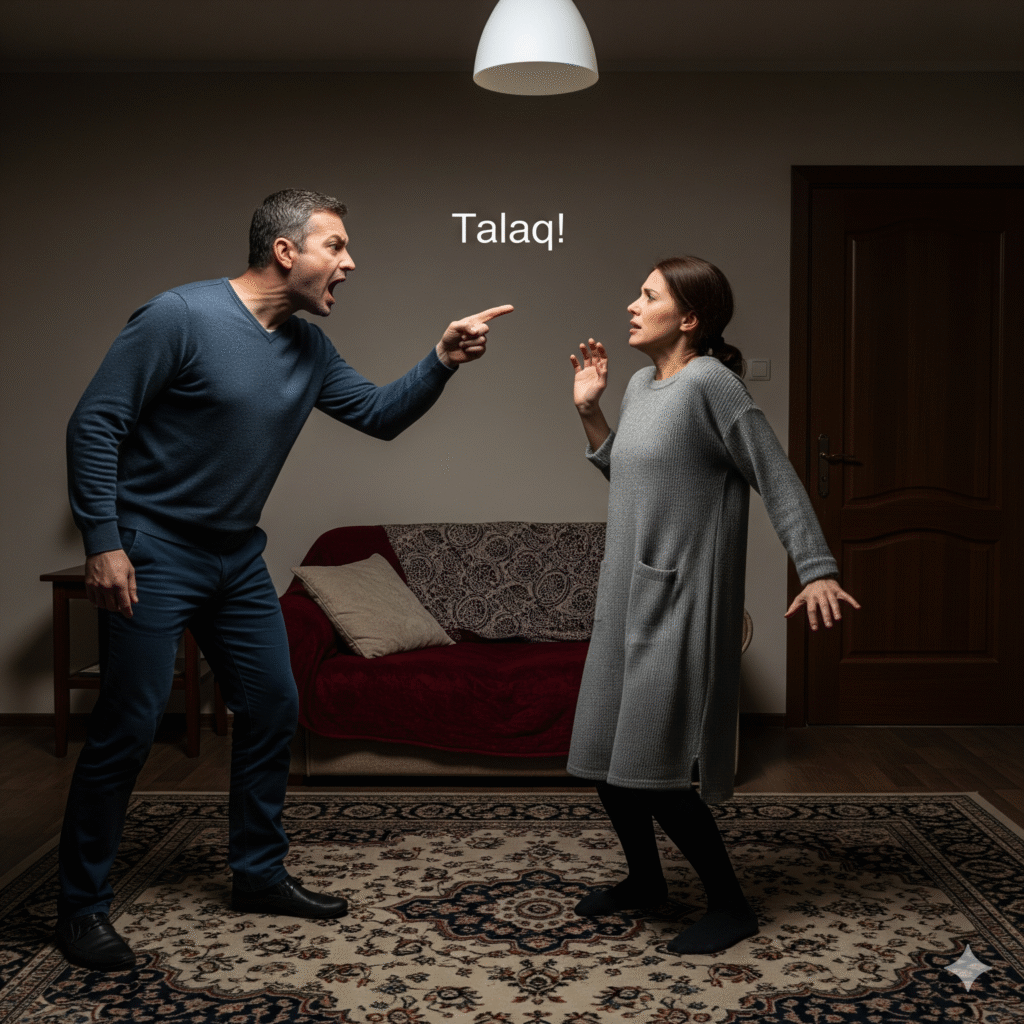
- The Male Monopoly: A husband holds the absolute, unrestricted right to unilaterally terminate the marriage instantly by merely pronouncing the word “Talaq” three times, irrespective of whether it is spoken, written, delivered in a state of anger, or enacted without any judicial oversight (Quran 2:229-230; Sahih Muslim 1472C).
- The Female Subjugation: A wife possesses no reciprocal right to issue a divorce. Her only recourse is to petition for Khula, a process requiring her to negotiate for her freedom. The primary caveat is that Khula is entirely dependent upon the husband’s ultimate consent. Furthermore, she is legally required to return her Mahr (dower) and, in many classical rulings, provide additional financial restitution to appease the husband. The final verdict and the keys to her liberation remain firmly in the hands of the male (Sahih Bukhari 5273).
Sahih Bukhari 5273 (Scan from sunna.com)
Sahih Muslim 1472C (Scan from sunna.com)
This legal dichotomy confirms that while divorce is an instantaneous command for a man, it remains an expensive, degrading plea for a woman.
In short, for a man, divorce is just a word; for a woman, divorce is like begging.
2.2 The Psychological Fear of Divorce as a Tool of Coercion
In societies characterized by low female literacy and a systemic lack of financial independence, the constant, hovering threat of sudden homelessness via Talaq functions as a potent psychological weapon to enforce female submission.
This mechanism of domestic control finds its supreme theological precedent within the prophetic traditions. When the wives of Prophet Muhammad ﷺ engaged in domestic protest or expressed dissatisfaction over material hardships, they were met with a divine warning:
“It may be if he divorced you (all) that his Lord will give him instead of you, wives better than you – Muslims (submitting to Allah), believers, obedient to Allah…”
-(Sahih Bukhari 4483; context: Surah At-Tahrim, Quran 66:5)
Sahih Bukhari 4483 (Scan from sunna.com)
This theological narrative firmly establishes three principles:
- A husband is permitted to weaponize the threat of divorce as an emotional and behavioral corrective tool against his wife.
- Women are viewed as entirely interchangeable and replaceable commodities, whose baseline value is measured by their silent, absolute obedience.
- The systemic message to the wife is clear: suppress your grievances, sacrifice your dignity, and remain entirely subservient.
2.3 The Institutional Degradation of Halala
If a man rashly pronounces triple divorce upon his wife in a fit of rage and both subsequently experience profound regret, they cannot simply remarry. The Quran imposes an exceptionally humiliating prerequisite:
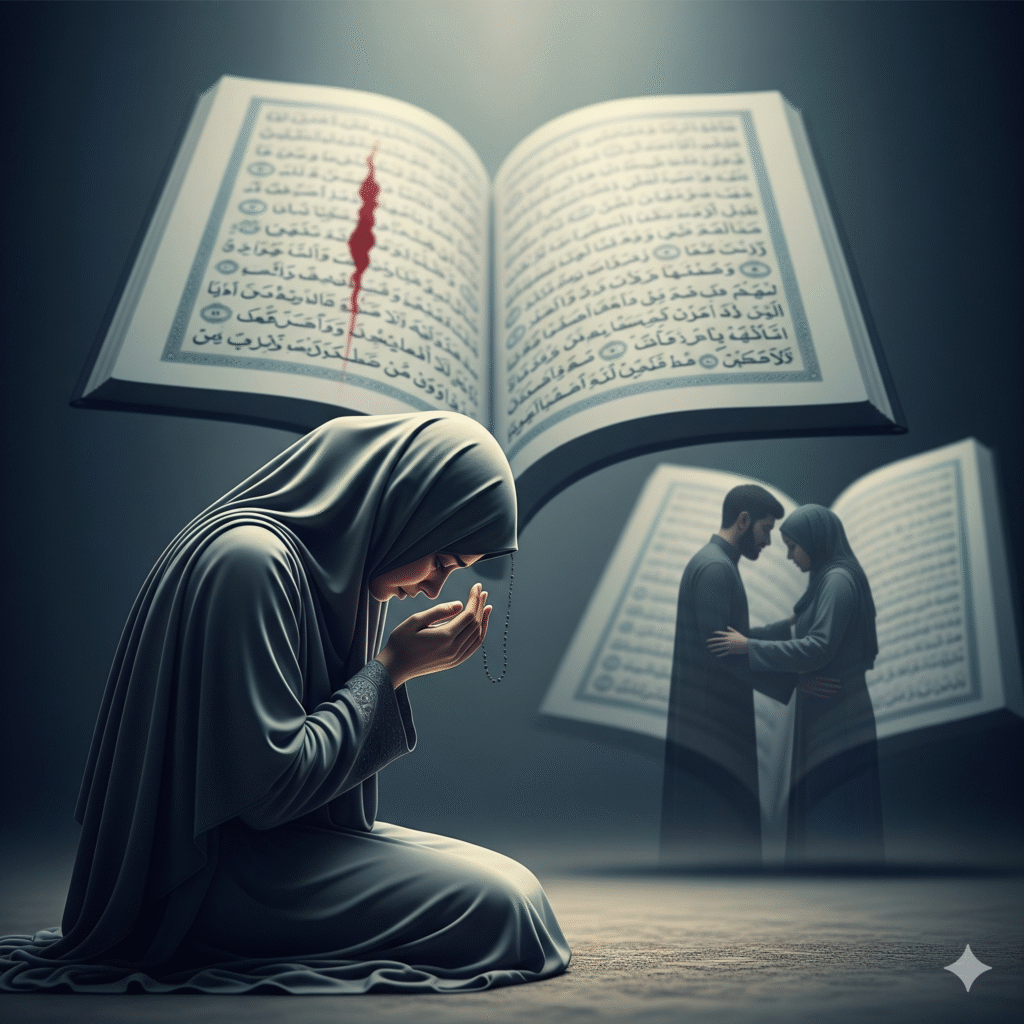
“And if he has divorced her (the third time), then she is not lawful to him afterward until she marries a husband other than him. Then if the latter divorces her, there is no blame upon the two of them if they return to each other…”
– (Surah Al-Baqarah, Quran 2:230)
Sahih Muslim (Hadith 1433) reinforces the absolute physical necessity of this condition, where the Prophet explicitly informed the divorced wife of Rifa’ah:
“Remarriage with your first husband is impossible until the second husband has tasted your sweetness, and you have tasted his sweetness (i.e., until full sexual consummation has occurred).”
Sahih Muslim 1433 (Scan from sunna.com)
Sahih Bukhari 2639 (Scan from sunna.com)
2.4 The Socio-Legal Horrors of Halala
This specific religious mandate has resulted in profound societal humiliation for women:
- The psychological consequences of a man’s impulsive anger are forcibly paid by the woman, who must subject her body to sexual consummation with an absolute stranger simply to return to her original family.
- If the second husband, post-consummation, exercises his legal right and refuses to issue a divorce, the woman remains legally trapped in his custody indefinitely.
- In contemporary contexts, massive syndicates of “Halala Mafias” and online clerics operate openly across South Asia, charging exorbitant sums of money from desperate women to engage in pre-planned, one-night stands under the guise of an interim marriage. Classical legal compendiums like Imam Malik’s Al-Muwatta (Book 29, Hadith 29.28) validate the procedural steps that make this institutionalized exploitation possible.
Can the systemic enforcement of such sexual degradation be labeled as “respect for women,” or is it the absolute exploitation of her vulnerability?
Part 3: Marriage and Consent – The Cost of Childhood
3.1 Theological Sanction for Child Marriage
While modern global human rights frameworks classify child marriage as a severe form of institutionalized child abuse, Islamic canonical texts and historical precedents provide explicit legal validation for the practice.
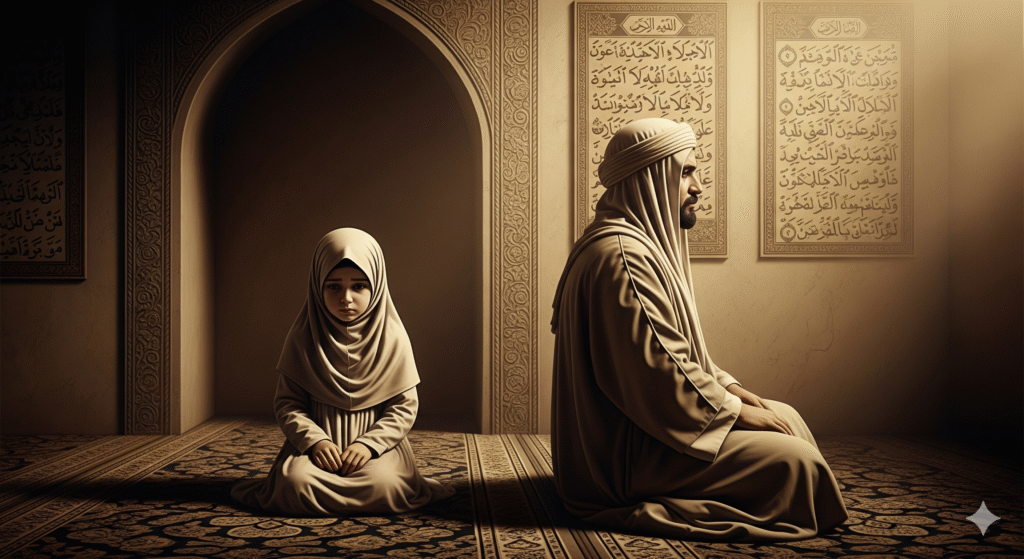
Sahih Bukhari (5133) and Sahih Muslim (1422) record with absolute clarity:
“The Prophet ﷺ married Aisha when she was six years old and he consummated his marriage (Rukhsati) with her when she was nine years old.”
Because the conduct of the Prophet (Sunnah) serves as a perpetual, infallible, and unalterable source of Islamic law, this historical event provided the foundational framework for validating the marriage of minor girls throughout Islamic history.
Muslim 1422 (Scan from sunna.com)
Bukhari 5133 (Scan from sunna.com)
This raises a fundamental question: can the verbal acceptance of a six- or seven-year-old child genuinely be regarded as informed consent?
3.2 Surah At-Talaq (65:4) – The Legal Edifice of Pre-Pubescent Divorce
The Quran does not merely provide silent assent to child marriage; it actively codifies the exact waiting period (Iddah) for the divorce of minor girls who have not even attained physiological maturity:
“And those who no longer expect menstruation among your women – if you doubt, then their period is three months, and also for those who have not menstruated yet…”
– (Surah At-Talaq, Quran 65:4)
- What do the Authoritative Classical Exegeses (Tafsir) state?
- Tafsir Ibn Kathir: “This verse encompasses those young girls who have not yet reached the age of puberty and menstruation.”
- Tafsir Al-Jalalain: “And as for those who have not menstruated yet due to their young age, their waiting period is likewise three months.”
Since the legal concepts of Iddah (waiting period) and Talaq (divorce) can only apply to a marriage that has been legally contracted and physically consummated, this verse stands as absolute textual proof that Sharia entirely legitimizes the marriage of, and sexual intercourse with, pre-pubescent minor girls, effectively dismantling any mandatory minimum age limit for marriage.
In such circumstances, the child has no meaningful legal capacity to challenge the guardian’s decision. Critics argue that this framework treats the minor girl not as an autonomous legal individual but as a person whose marital future is subject entirely to paternal authority.
3.3 The Illusion of Consent: ‘Silence Implies Confirmation’
According to standard Sharia manuals and authentic prophetic traditions, a virgin girl’s active, vocal, or enthusiastic consent is not a prerequisite for marriage. Her mere ‘silence’ is legally interpreted as absolute agreement:
Muslim 1421 (Scan from sunna.com)
- Sahih Bukhari (3894): The historical account of Aisha confirms that she possessed absolutely no cognitive comprehension of her marriage contract. She was actively playing with her dolls and toys when her mother, Umm Ruman, abruptly pulled her inside, washed her face, adorned her, and handed her over to the Prophet when she was nine years old. This narrative demonstrates that a young girl’s personal, informed consent was treated as entirely unnecessary.
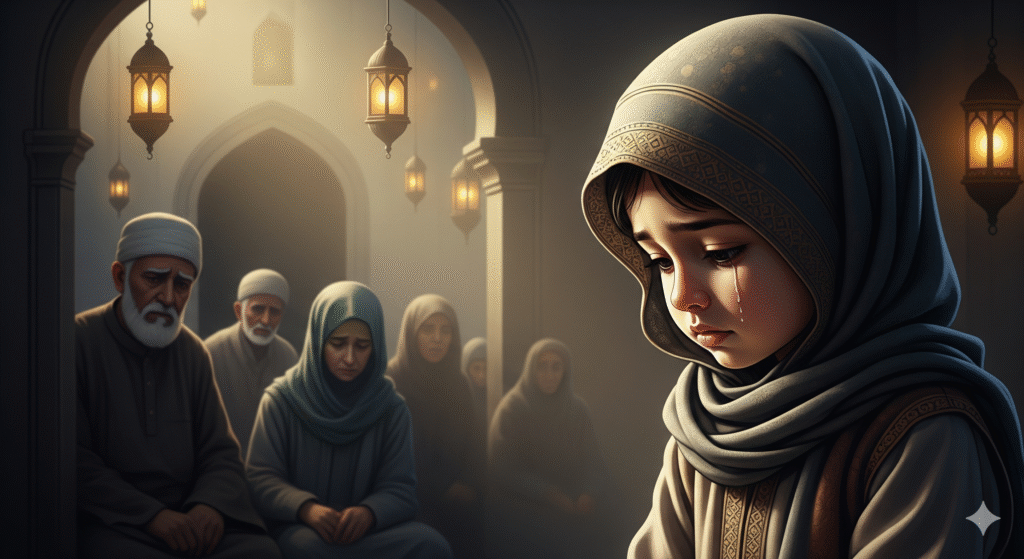
- Sahih Bukhari (5137), Sunan Ibn Majah (1870), and Jami` at-Tirmidhi (1107): These foundational sources uniformly codify the legal principle: “The virgin girl’s modesty is her silence, and her silence is her consent (Sukutuha Iznuha).”
Sahih Bukhari 3894 (Scan from sunna.com)
Sahih Bukhari 5137 (Scan from sunna.com)
Sunan Ibn Majah 1870 (Scan from sunna.com)
Jami’ at-Tirmidhi 1107 (Scan from sunna.com)
To legally interpret the terrified, pressured silence of a young girl as a binding ‘Yes’ completely undermines the concept of free will and personal autonomy.
3.4 Wilayat al-Ihbar (The Absolute Right of Coercion) & Khiyar al-Balugh (The Illusion of the Option of Puberty)
To understand how deeply entrenched child marriage is within Islamic law, one must analyze the dual doctrines of Wilayat al-Ihbar and Khiyar al-Balugh:
- Wilayat al-Ihbar: Under classical Fiqh, a Wali (male guardian, specifically the father or grandfather) possesses the absolute, unilateral right of matrimonial coercion. He can legally bind his minor, pre-pubescent daughter into a marriage contract without her knowledge, without her consent, and even over her explicit crying or physical resistance.
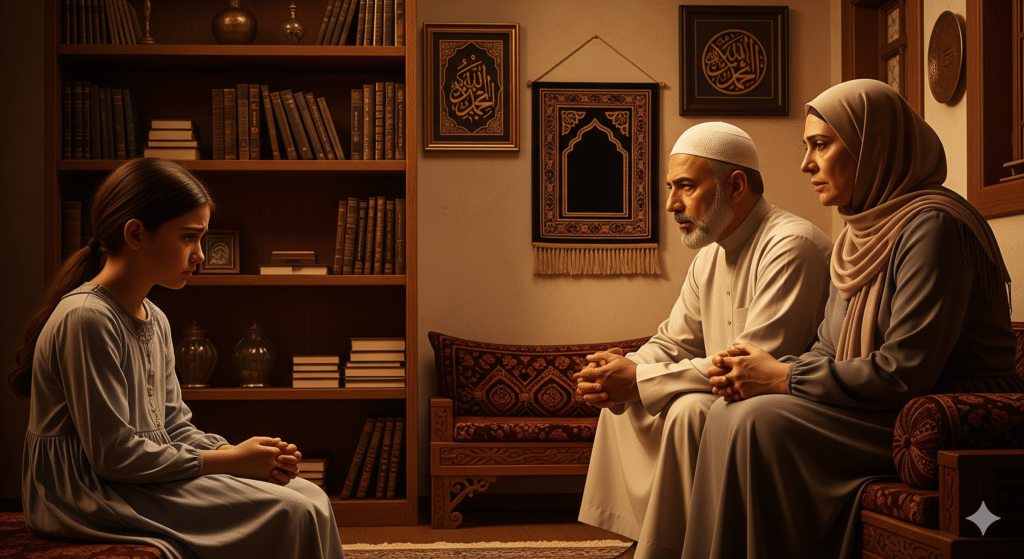
- Khiyar al-Balugh: Apologists frequently cite the doctrine of Khiyar al-Balugh (Option of Puberty) as a protective mechanism, claiming a girl can annul a forced childhood marriage upon reaching puberty. However, classical jurisprudence hedges this right with highly restrictive conditions:
- According to the dominant Hanafi and Shafi’i schools, if the childhood marriage was contracted by her biological father or paternal grandfather (which constitutes over 99% of historical cases), the girl is completely denied the right of Khiyar al-Balugh, unless it can be proven that the father was an open profligate or mentally incapacitated.
- Furthermore, this right had to be exercised at the exact, instantaneous second she witnessed her first menstrual blood. Any delay due to fear, confusion, or lack of legal awareness immediately nullified her right forever.
- The Necessity of Secular Intervention: The Dissolution of Muslim Marriages Act, 1939It is an axiom of legal history that protective statutes are enacted only when a social evil becomes widespread. The practice of marrying minor girls under fifteen was so rampant within Muslim communities that British India was forced to intervene via Section 2(vii) of The Dissolution of Muslim Marriages Act, 1939. This secular legislation directly overrode Sharia by declaring:”A woman married under Muslim Law shall be entitled to obtain a decree for the dissolution of her marriage if she was given in marriage by her father or other guardian before she attained the age of fifteen years, and she repudiated the marriage before attaining the age of eighteen years, provided that the marriage has not been consummated.”
This legislative intervention proves that the internal framework of Islamic Personal Law failed to protect minor girls, and that contemporary protections against child marriage are derived entirely from modern secular courts rather than classical Sharia.
- The Prophetic Contradiction (Sunan an-Nasa’i 3221):When the senior companions Abu Bakr and Umar approached the Prophet to seek his daughter Fatimah’s hand in marriage, the Prophet rejected their proposals, stating: “إنها صغيرة” (She is too young).
Sunan an-Nasa’i 3221 (Scan from sunna.com)
An inescapable logical contradiction emerges here: When dealing with his own biological daughter (Fatimah), the Prophet prioritized her age and physical maturity. Yet, when contracting his own marriage with the six-year-old Aisha, that very standard of physical maturity was entirely omitted. This demonstrates that historical decisions were guided by situational preferences rather than a consistent framework of child protection.
3.5 Nikah: A Financial and Physical Transaction
In Sharia, marriage is explicitly structured as a legal and commercial contract rather than a spiritual union. The Quran defines this transactional relationship clearly:
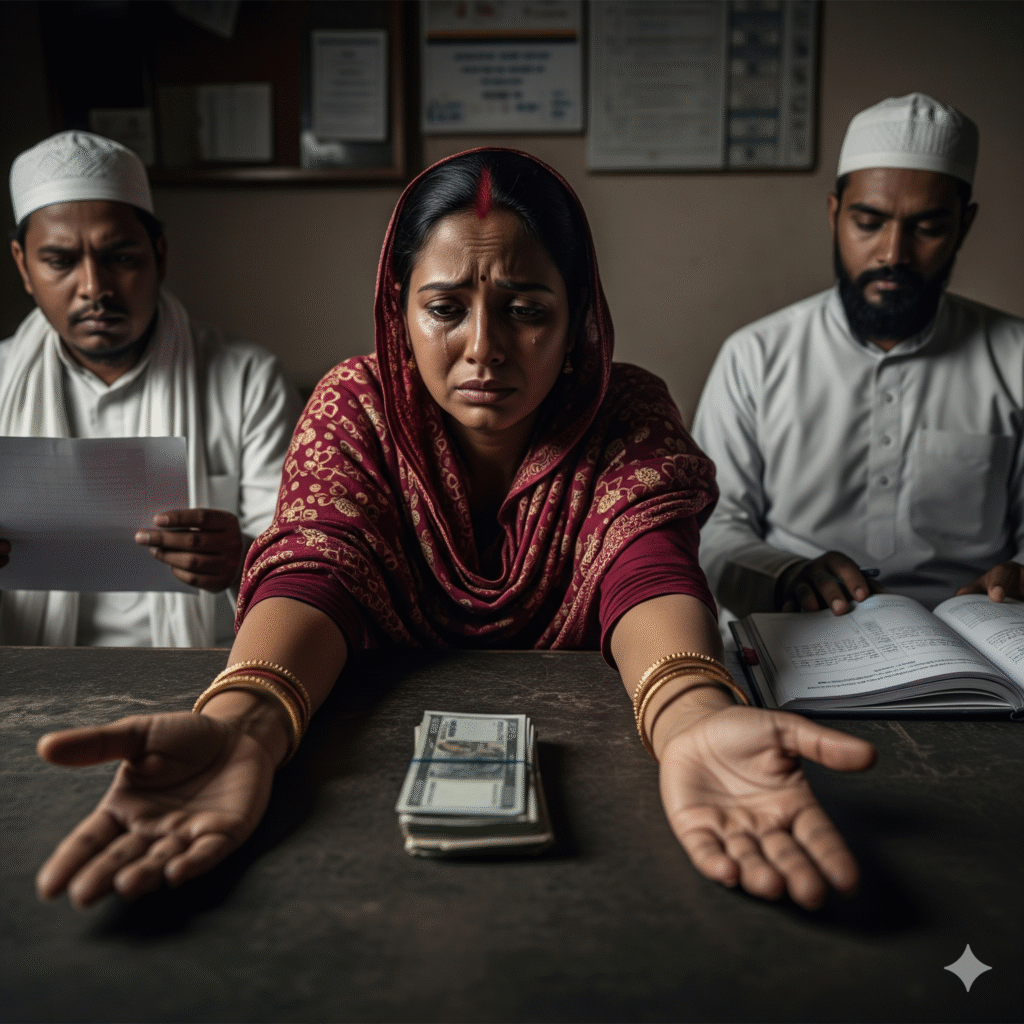
“…So for whatever you enjoy of them (physically), give them their due compensation/wages (Ujooruhunna) as an obligation…”
— (Surah An-Nisa, Quran 4:24)
The utilization of the precise Arabic term Ujr (Plural: Ujoor) is highly significant: it translates directly to ‘wages’, ‘hire-fee’, or ‘rental payment for services rendered’. In Islamic jurisprudence, Nikah is structured as a contract of exchange where the male delivers financial consideration (Mahr), and in return, acquires exclusive property rights over the sexual utility of the woman’s genitalia (Malk-e-Mut’ah). The woman’s emotional landscape is entirely secondary to this core commercial arrangement.
3.6 The Question of Truth
Would you marry off your 6-year-old daughter?
Is Nikah, which in Arabic is defined as a sex contract, a sacred bond, or merely a deal?
Is a woman here given the status of a human being, or just an object who receives wages?
Thus, in Islam, the rules of marriage and consent strip away a woman’s freedom from childhood itself.
Part 4: Obedience and Sexual Servitude — Where is Your Will?
4.1 Absolute Male Dominion Over the Matrimonial Bed
Under Sharia, a wife is denied bodily autonomy within her marriage. Fulfilling her husband’s sexual desires is codified as her supreme religious and legal obligation.
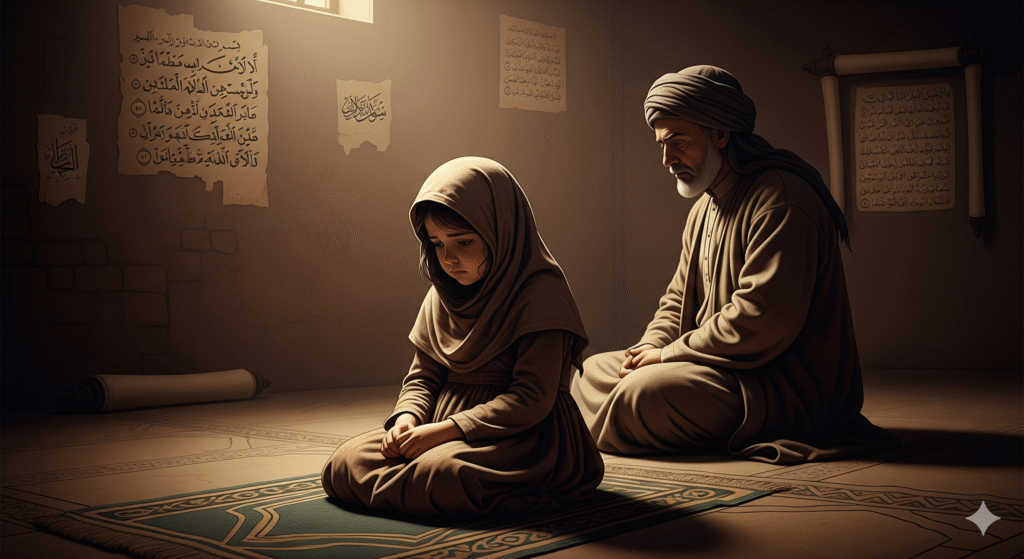
Sahih Bukhari (3237) and Sahih Muslim (1436d) record unequivocally:
“The Prophet ﷺ said: If a man invites his wife to his bed and she refuses to come, causing her husband to sleep in a state of anger, the angels of the heavens curse that woman until the morning.”
Sahih Bukhari 3237 (Scan from sunna.com)
Sahih Muslim 1436D (Scan from sunna.com)
This doctrinal mandate directly excludes the concept of marital rape or sexual consent within marriage. A wife’s internal state, physical fatigue, or mental reluctance are granted zero legal standing. Her physical form operates as the legal property (Malkiyat) of her husband.
4.2 The Reduction of Women to ‘Agricultural Tilth’
The Quran utilizes agricultural metaphors to establish a husband’s unrestricted physical access to his wife’s body:
“Your wives are a tilth for you, so go to your tilth however/whenever you will…”
– (Surah Al-Baqarah, Quran 2:223)

- The Context of Revelation (Asbab-e-Nuzul):Authoritative classical commentaries (Tafsir al-Tabari, Vol. 2, p. 471; Sahih Bukhari 4528; Sahih Muslim 1435a) explain that this verse descended to resolve a debate between the Jews of Medina and the Muslims regarding the permissible physical postures of intercourse. The Quran intervened to grant men absolute freedom to approach the vaginal tract from any physical angle or position, front or back.
Sahih Bukhari 4528 (Scan from sunna.com)
Sahih Muslim 1435A (Scan from sunna.com)
To categorize a woman’s body as ‘agricultural land’ reinforces the notion that just as a farmer owns his land and maintains the absolute right to cultivate it according to his personal discretion, a husband maintains an identical dominion over his wife’s body, independent of her reciprocal pleasure or comfort.
4.3 The Woman as a Demographic Tool
Within Islamic theology, a woman’s primary societal utility is directly tethered to her reproductive capacity rather than her intellect or humanity.
Sunan Abu Dawud (2050) and Sunan an-Nasa’i (3227) command:
“Marry those women who are fertile and very loving, for I will boast of your great numbers before the other nations on the Day of Resurrection.”
Sunan Abu Dawud 2050 (Scan from sunna.com)
Sunan an-Nasa’i 3227 (Scan from sunna.com)
This theological framework reduces female value to population output:
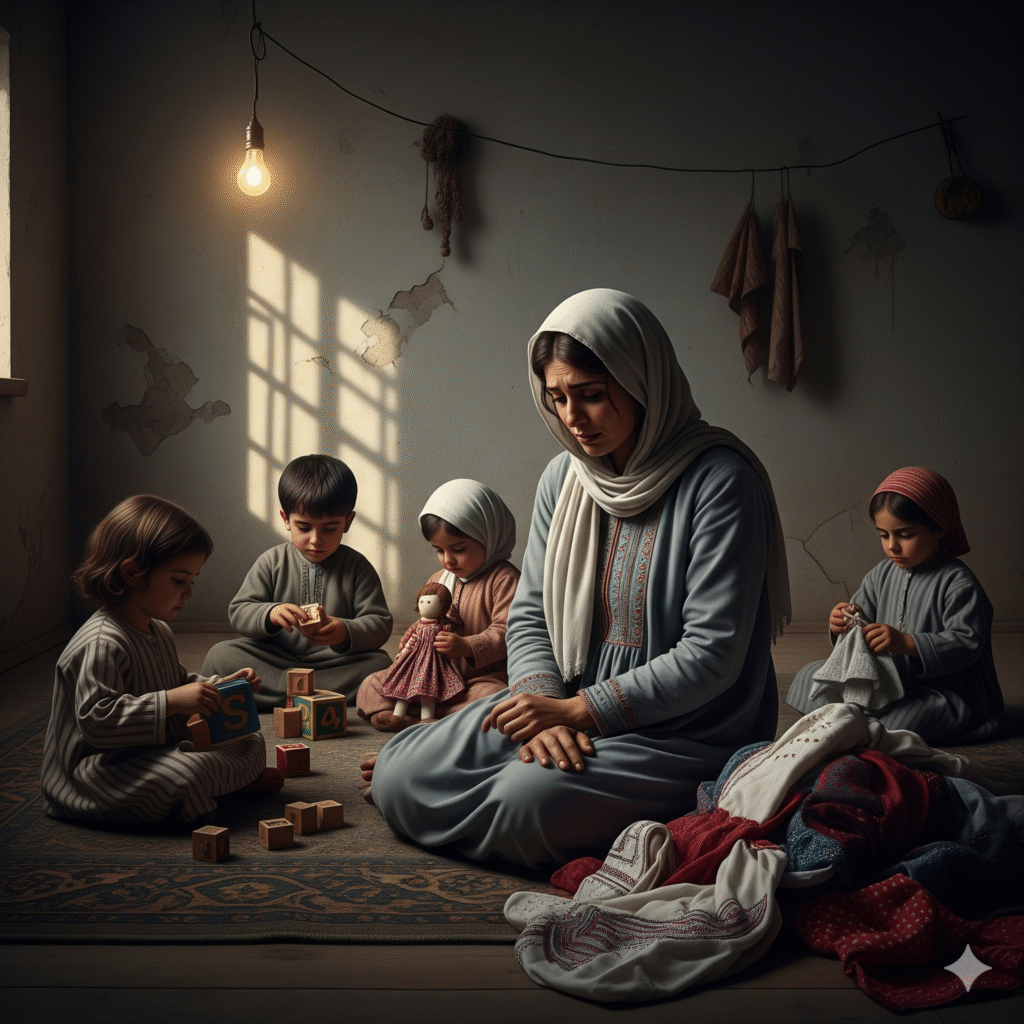
If a woman is diagnosed with medical infertility, she is systematically marginalized within the matrimonial economy.
The fundamental objective of marriage is transformed from mutual companionship into an aggressive demographic expansion tool.
4.4 The Central Question
These texts ultimately lead critics to a broader question:

If a wife’s refusal of intimacy is condemned, while the husband’s entitlement is repeatedly emphasized, can such a relationship genuinely be described as one of equality?
If marital discourse focuses on access, obedience, fertility, and reproduction while devoting comparatively little attention to female autonomy and reciprocal consent, does it affirm women as equal partners or primarily as instruments serving male and communal interests?
Critics argue that these questions strike at the heart of contemporary debates surrounding gender, consent, and human dignity within Islamic jurisprudence.
For them, the issue is not merely theological but ethical: whether a legal system that places extensive emphasis on obedience and sexual availability can be reconciled with modern understandings of personal freedom, bodily autonomy, and equal partnership within marriage.
Part 5: The Veil and Systematic Segregation — The Burden is Yours Alone
5.1 The Mandatory Veil: Shifting the Burden of Male Continence onto Women
Rather than enforcing internal discipline and moral accountability upon men, the Quran shifts the physical and financial burden of male sexual impulse onto women:

“And tell the believing women to lower their gaze and protect their private parts and not expose their adornment except that which necessarily appears thereof and to draw their veils over their bosoms…”
— (Surah An-Nûr, Quran 24:31)
“O Prophet, tell your wives and your daughters and the women of the believers to draw their cloaks close over themselves…”
— (Surah Al-Ahzab, Quran 33:59)
- The Historical Genesis (Sahih Bukhari 146):These decrees were heavily influenced by contemporary social pressures applied by Umar ibn al-Khattab. Prophetic traditions record that Umar repeatedly implored the Prophet to veil his wives because they were recognizable when going out to attend to the call of nature. When the Prophet’s wife, Sawdah, stepped out and Umar loudly called her out to enforce his point, the verses mandating containment were subsequently revealed.
Sahih Bukhari 146 (Scan from sunna.com)
To brand the female form as Fitnah (the source of moral chaos) and mandate her physical containment demonstrates a systemic view where the woman must be hidden to compensate for the unmanaged impulses of the male.
The Burden of Modesty
Critics further contend that the practical effect of these regulations is to place the responsibility for male sexual conduct upon women.
By treating women’s appearance as a potential source of temptation (fitnah), the legal and social burden shifts toward controlling female visibility rather than primarily addressing male behavior.
In this view, the implicit message is that if men are tempted, women must alter their clothing, restrict their movements, or reduce their public presence. The responsibility for preventing sexual misconduct thus becomes asymmetrical.
This leads critics to ask a fundamental question:
If female beauty is regarded as a source of temptation, why is the principal solution directed toward regulating women rather than imposing equivalent restrictions upon male desire and behavior?
For critics, the issue is not merely clothing but accountability. They argue that a system which places the primary burden of modesty upon women inevitably creates unequal expectations between the sexes.
5.2 Restrictions on Mobility and Independent Travel
Critics also argue that classical Islamic jurisprudence limits women’s freedom of movement by conditioning independent travel upon male supervision.
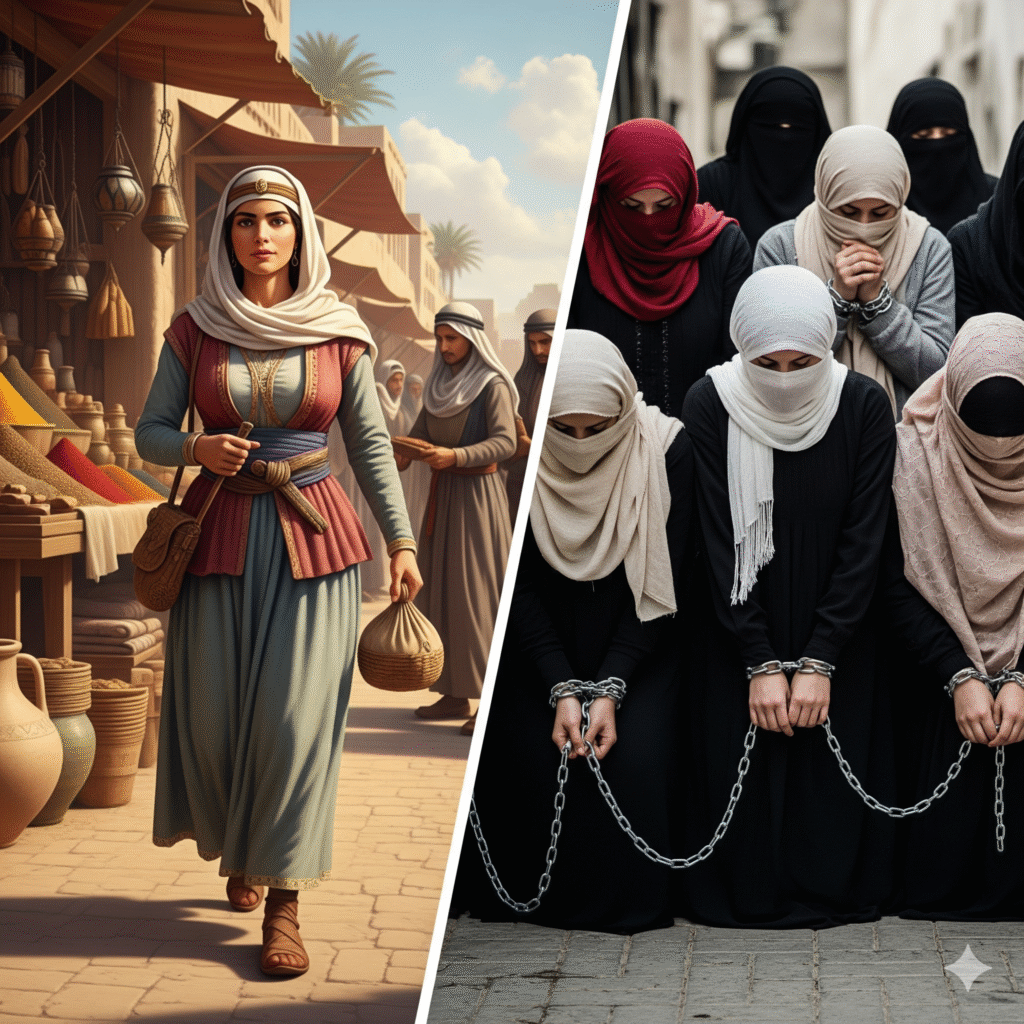
A frequently cited narration recorded in Sahih al-Bukhari (1088) states:
“A woman should not travel except with a mahram.”
(Sahih al-Bukhari 1088)
Sahih Bukhari 1088 (Scan from sunna.com)
A mahram refers to a husband or a male relative whom the woman is permanently forbidden to marry.
Historically, jurists justified this requirement on grounds of safety and protection. However, critics contend that the rule effectively treats women as legally dependent individuals rather than fully autonomous adults capable of making decisions regarding their own movement.
In the modern world, where transportation systems, communication networks, and legal protections differ dramatically from those of the medieval period, critics argue that such restrictions can have far-reaching consequences.
A woman seeking higher education, professional advancement, or employment opportunities in another city or country may find her choices constrained by the willingness, or unwillingness of a male guardian to accompany or approve her travel.
From this perspective, the requirement transforms personal freedom into a conditional privilege dependent upon male consent.
Critics therefore maintain that restrictions on mobility represent more than a matter of travel regulations; they reflect a broader legal philosophy in which women are viewed as subjects of guardianship rather than as fully independent citizens possessing equal freedom of movement.
The central question, they argue, is whether adult women should enjoy the same freedom to travel, study, work, and make personal decisions as adult men, or whether such freedoms should remain contingent upon the authorization of a male guardian.
Part 6: Domestic Violence and Total Subjugation
6.1 Theological Sanction for Wife-Beating
While modern human rights frameworks maintain zero tolerance for domestic abuse, the Quran explicitly codifies a husband’s right to inflict physical violence upon his wife:

“Men are in charge of women (Qawwamuna) because Allah has given one of them more strength than the other… And as for those women from whom you fear rebellion/arrogance (Nushuz), advise them, forsake them in bed, and beat them (Wa-dribuhunna)…”
— (Surah An-Nisa, Quran 4:34)
Modern apologists often insert bracketed qualifiers like “with a toothbrush/miswak” or “lightly,” but the root Arabic verb Wa-dribu means to strike or beat.
The systemic double standard is evident when comparing reciprocal situations within the Quran:
- If the husband exhibits Nushuz (rebellion/neglect) under Quran 4:128, the wife is instructed to compromise and forfeit her financial or marital rights to achieve ‘peace’.
- If the wife exhibits even the fear of Nushuz, the husband is granted a progressive disciplinary toolkit: verbal admonition, sexual boycott, and final physical chastisement.
The Narration of Aisha
A frequently cited report recorded in Sahih Muslim (974b) and Sunan al-Nasa’i (3963) describes an incident narrated by Aisha:
“He struck me on the chest, which caused me pain.”
(Sahih Muslim 974b; Sunan al-Nasa’i 3963)
Sunan an-Nasa’i 3963 (Scan from sunna.com)
Sahih Bukhari 6845 (Scan from sunna.com)
Modern scholars differ regarding the interpretation of this narration. Some argue that it describes a light push rather than a violent assault. Critics, however, point to Aisha’s explicit statement that she experienced pain as evidence that physical force was involved.
For critics, the broader concern is not merely the severity of the act but the principle itself: that a husband may be granted disciplinary authority over his wife, while the wife possesses no equivalent right in return.
From this perspective, even the suspicion of disobedience can trigger corrective measures by the husband, whereas the wife is directed toward reconciliation rather than reciprocal authority.
6.2 The Reality of Qawwam: Guardian or Ruler?
The term Qawwam is frequently translated into modern English as “protector” or “maintainer.” However, classical authoritative commentaries present a different textual reality:

- Tafsir Ibn Kathir (4:34): “The man is the ruler, master, and judge over the woman, and he is her disciplinarian because Allah made men superior to women.”
- Tafsir Al-Jalalain: “Qawwam signifies that men possess absolute authority and sovereign rule over women.”
- Tafsir al-Tabari: “Men are positioned over women to ensure their absolute containment, to discipline them, and to inflict physical punishment upon them in instances of disobedience.”
This framework strips the marital relationship of equality, re-engineering it into an explicit hierarchy of ruler and subject.
Part 7: The Reduction of Women to Negative Symbols
7.1 Surah An-Nisa (4:117) – Linguistic Misogyny and the Denial of Divine Feminine
Critics argue that certain Qur’anic passages associate feminine symbolism with negative spiritual imagery, thereby raising important questions about the place of female representation within Islamic theology.
Islamic theology utilizes gendered language to construct negative spiritual imagery:
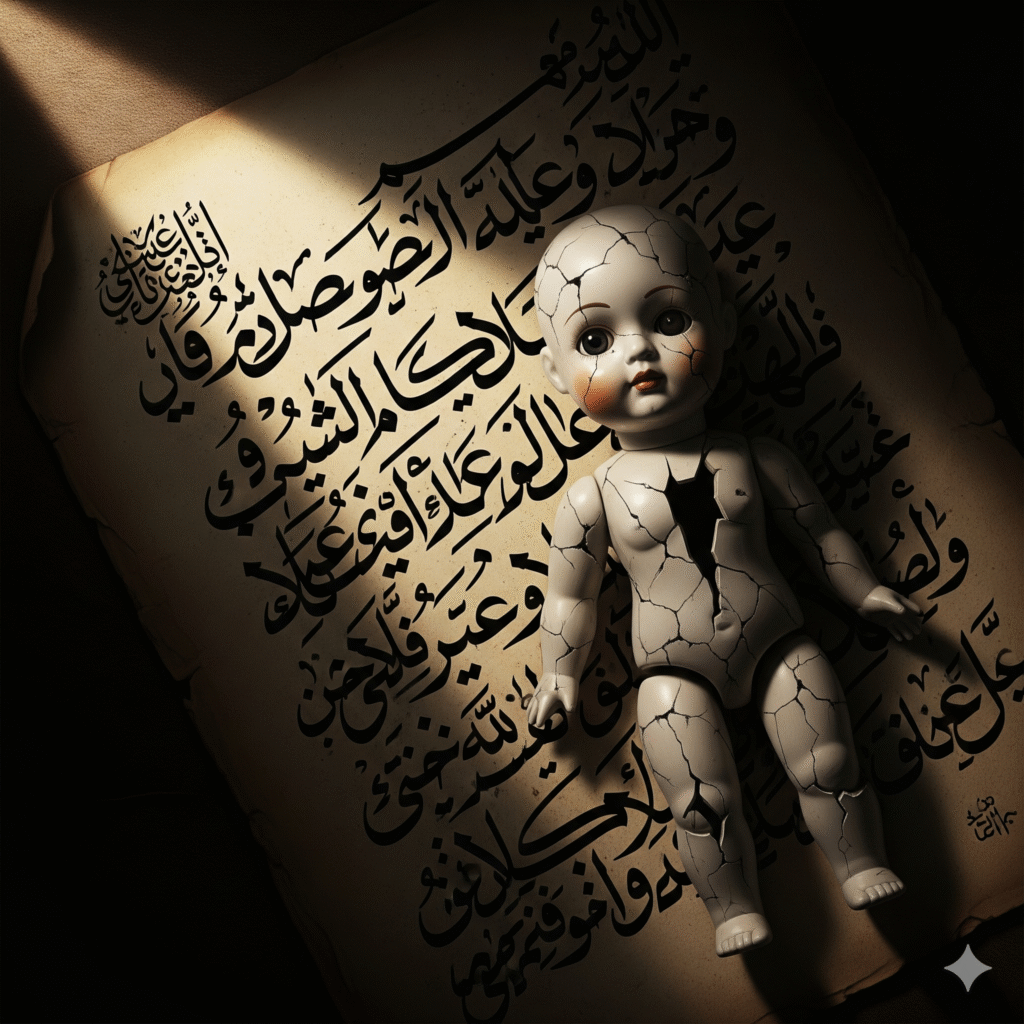
Qur’an 4:117: The Controversy of Ināth and the Rejection of the Divine Feminine
The verse states:
إِن يَدْعُونَ مِن دُونِهِ إِلَّا إِنَاثًا ۚ وَإِن يَدْعُونَ إِلَّا شَيْطَانًا مَّرِيدًا
In yadʿūna min dūnihi illā ināthan, wa in yadʿūna illā shayṭānan marīdā.
“They invoke besides Him nothing but female entities (ināth), and in fact they invoke none but a rebellious Satan.”
(Qur’an 4:117)
The root Arabic word utilized here is Inathan, which translates directly to ‘females’. Classical commentators (Tafsir al-Tabari, Ibn Kathir) argue that this text refers exclusively to the pagan Arab goddesses (Lat, Uzza, Manat). However, if the intent was merely to condemn specific stone idols, the text could have named them directly, as seen in Surah An-Najm (53:19-20). By structuring the sentence as “Females = Satan,” the text builds a linguistic bridge associating the feminine with rebellion and spiritual error.
Feminine Symbolism and Satanic Association
Critics argue that placing ināth and “rebellious Satan” within the same linguistic structure creates a form of negative symbolic association.
While classical commentators restrict the verse to the realm of idol worship, critics question why feminine imagery was chosen in the first place as the representative symbol of religious error and why it is immediately followed by a reference to Satan.
From this perspective, the issue extends beyond grammar and semantics. Critics contend that the verse contributes to a broader theological environment in which feminine religious symbolism is treated negatively rather than positively.
They further argue that many ancient civilizations and religious traditions preserved concepts of the Divine Feminine through goddess traditions and female sacred archetypes. In contrast, Islamic theology leaves little room for any legitimate expression of feminine divinity.
Conclusion
Two principal interpretations emerge from this discussion:
The Traditional Islamic View:
The term ināth refers to pagan goddesses and idols worshipped by pre-Islamic Arabs, not to ordinary women.
The Critical View:
The language of the verse associates feminine symbolism with satanic imagery, thereby reinforcing negative symbolic perceptions of female spiritual representation.
Consequently, it would be an oversimplification to claim that the Qur’an directly calls women “Satan.” However, critics maintain that it is entirely legitimate to ask why feminine symbols and Satan are placed together within the same rhetorical structure when criticizing alternative forms of worship.
An additional point frequently raised by critics is that later hadith literature appears to preserve similar symbolic associations between women and Satan. For example, Sahih Muslim (1403) records:
“A woman comes in the form of a devil and goes away in the form of a devil.”
(Sahih Muslim 1403)
Critics interpret such narrations as part of a broader theological pattern that they believe begins with the symbolic language of passages such as Qur’an 4:117.
7.2 Hadith Literature: Woman as Satan and Fitnah
The Negative Portrayal of Women in Hadith
Critics argue that a number of authentic hadith portray women as one of the greatest sources of temptation and moral danger for men.
Sahih Muslim (1403a) states:
“A woman comes in the form of a devil and goes away in the form of a devil.”
Likewise, Sahih al-Bukhari (5096) and Sahih Muslim (2740) record:
“I have not left behind me any trial (fitnah) more harmful to men than women.”
Another narration in Sahih Muslim (2740) similarly presents women as among the greatest temptations confronting mankind.
Critics contend that such reports construct a religious narrative in which women are repeatedly associated with temptation, moral vulnerability, and spiritual danger.
Sahih Muslim 1403 (Scan from sunna.com)
Sahih Bukhari 5096 (Scan from sunna.com)
Sahih Muslim 2740 (Scan from sunna.com)
From this perspective, women are not merely portrayed as fellow believers but as potential catalysts of male moral failure.
Critics therefore argue that these narrations contribute to a worldview in which female presence itself becomes suspect and in need of regulation.
7.3 Matronymics, Lineage, and Patriarchal Authority
From Maternal Identity to Patrilineal Exclusivity
Pre-Islamic Arabian society was not fully matriarchal, but maternal identification was neither unknown nor socially unacceptable.
Historical examples include:
- Jesus, commonly identified in the Qur’an as Isa ibn Maryam (“Jesus, son of Mary”).
- Umm Jamil, mentioned in connection with Surah al-Masad (111:4–5).
- Hind bint Utbah, one of the most prominent women of early Arabian history.
These examples demonstrate that maternal affiliation and female lineage markers were recognizable elements of Arabian social identity.
However, Islamic law ultimately established a strongly patrilineal model of lineage.
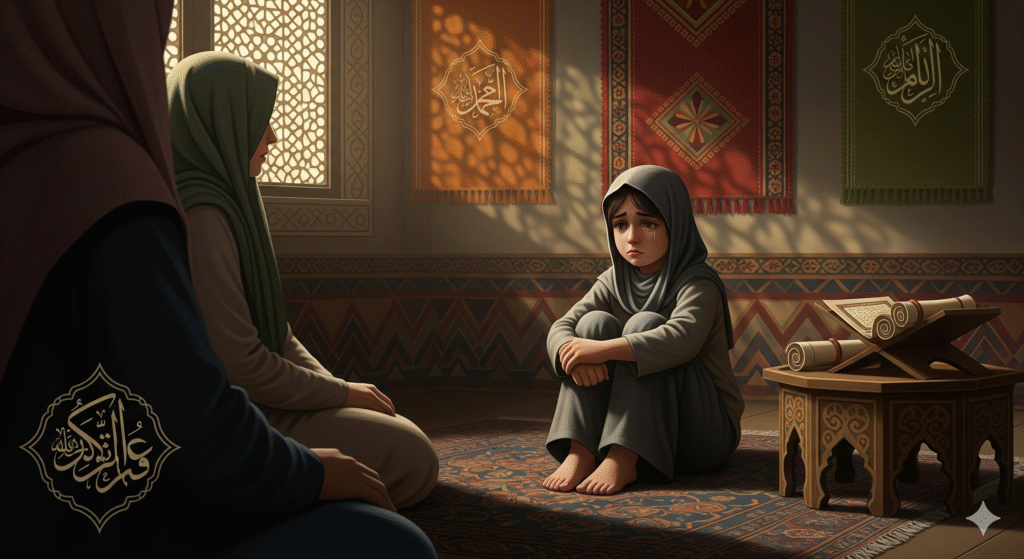
The Qur’an instructs:
“Call them by [the names of] their fathers; that is more just in the sight of Allah.”
(Qur’an 33:5)
Classical jurists treated this verse as a foundational principle governing lineage (nasab), inheritance, guardianship, and social identity.
The Critical Perspective
Critics argue that this legal transformation reinforced a patriarchal conception of society by making the father the primary source of legal and social identity.
Under the traditional framework, inheritance, family authority, guardianship, and lineage were overwhelmingly organized around the male line.
Consequently, critics contend that maternal identity gradually became secondary within the legal structure, even though mothers remained central to biological and familial life.
In their view, the verse institutionalized a system in which social legitimacy, ancestry, and authority flowed principally through men.
Conclusion
Defenders of the traditional position maintain that Qur’an 33:5 was intended primarily to preserve accurate lineage and prevent confusion regarding parentage.
Critics, however, argue that the long-term effect of the rule was the consolidation of a deeply patriarchal social order in which fathers became the primary bearers of lineage, authority, and legal identity, while maternal identity assumed a comparatively subordinate role.
For them, this development reflects a broader pattern within classical Islamic jurisprudence: the systematic concentration of authority, lineage, and social power in male hands.
Part 8: Polygamy – Male License and Female Emotional Trauma
8.1 The License for Four Wives and Boundless Concubinage
Sharia code permits men to maintain multiple simultaneous marriages while engaging in sexual relationships with captured women:
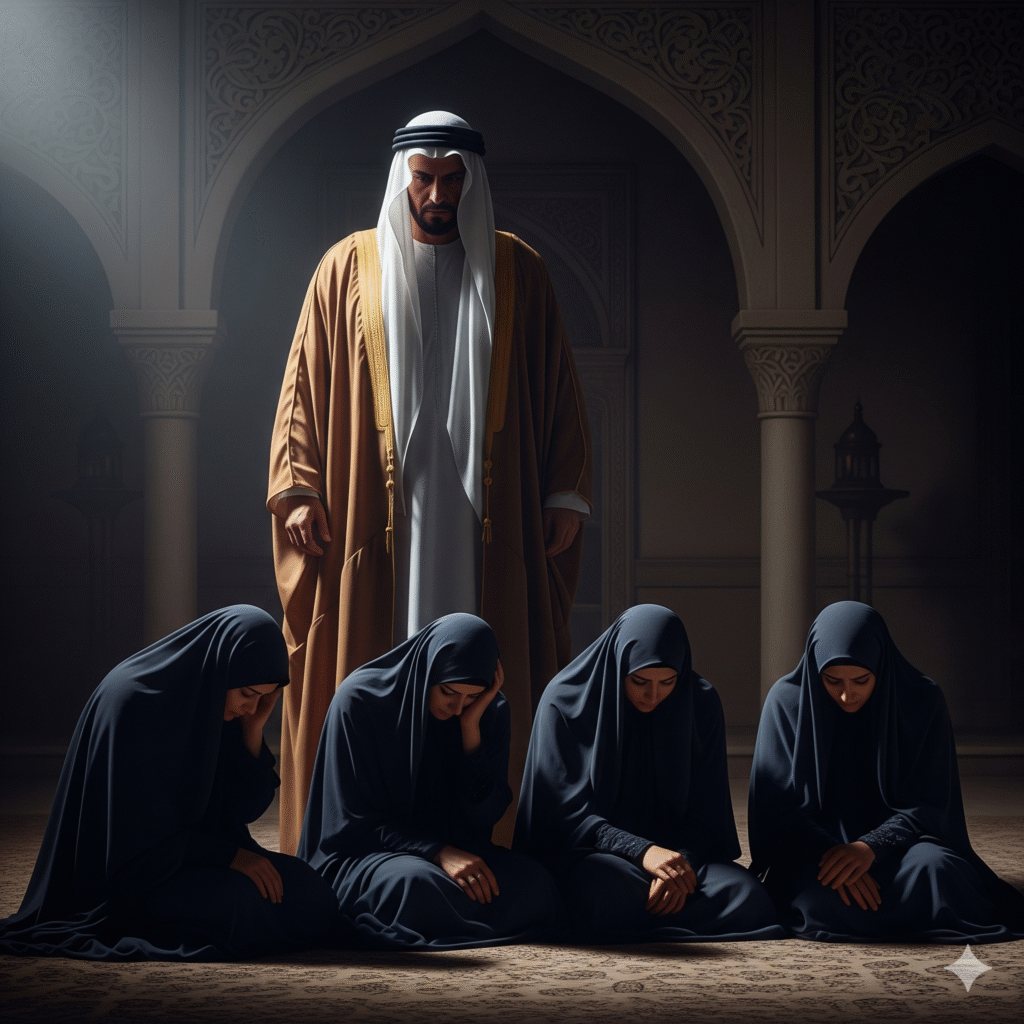
“…Marry those that please you of women, two or three or four. But if you fear that you will not be just, then marry only one or those your right hands possess (Ma malakat aymanukum – female sex slaves)…”
— (Surah An-Nisa, Quran 4:3)
Quran 4:24 and 23:5-6 confirm that a man has the unrestricted legal right to engage in sexual relations with his female war captives/slaves without a contract of marriage, completely independent of the numerical restriction of four wives.
8.2 The Illusion of Equitability
Muslim scholars often defend this verse by arguing that polygamy is permitted only on the condition that a man maintains complete justice among his wives. However, according to classical Islamic jurisprudence, this concept of “justice” is limited primarily to material provisions – such as food, clothing, housing, maintenance, and the equitable division of time.
The verse commands:
“Deal justly among your wives.”
Yet this “justice” is frequently presented to women in a far broader sense than the legal texts themselves indicate. In practice, the requirement refers to equality in financial support, living arrangements, time allocation, and outward treatment.
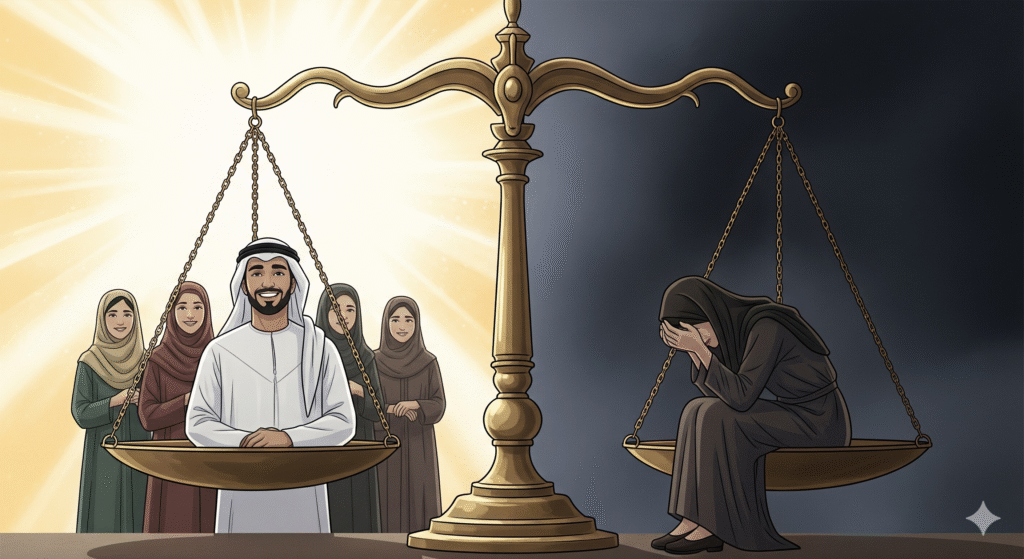
Consequently, even a man living below the poverty line may legally have four wives, provided he can offer each of them the same standard of maintenance. If he feeds one wife dry bread and is capable of providing the same dry bread to the others, he is still considered to be acting within the boundaries of “justice” as defined by the law. In other words, the standard is not the quality of life provided, but the equal distribution of whatever resources are available.
Emotional preference, however – whom a man loves more, desires more, or feels more attached to – is not subject to the same legal restriction. A husband may favor one wife emotionally over another.
The Qur’an itself acknowledges this practical and psychological reality:
“And you will never be able to be completely just between your wives, even if you strive to do so…”
(Surah al-Nisa 4:129)
The result is that a man may devote his affection, emotional attention, and love primarily to one wife, while another may receive little more than the minimum material support necessary for her maintenance.
Part 9: Eschatological Injustice – The Inhabitants of Hell
9.1 Intellectual and Religious Deficiency
Islamic theology codifies women as inherently deficient in cognitive and spiritual capacity relative to men.

Sahih Bukhari (Hadith 304) records this conversation on the day of Eid:
“The Prophet ﷺ addressed a group of women saying: ‘O assembly of women! Give charity, for I have seen that you form the dynamic majority of the inhabitants of Hellfire.’ The women asked, ‘Why is that, O Messenger of Allah?’ He replied, ‘You curse frequently and you are ungrateful/disobedient to your husbands. I have never seen anyone more deficient in intelligence (Aql) and religion (Deen) than you…‘”
The Prophet provided the legal definitions for these deficiencies:
- Deficiency in Intellect: Because the legal testimony of two women equals the testimony of one single man (Quran 2:282).
- Deficiency in Religion: Because during her menstrual cycle, a woman is categorized as ritually impure and barred from performing prayers and fasting.
9.2 The Contradiction of Divine Justice
Sahih Bukhari (1052) and Sahih Muslim (79, 907) reiterate that the majority of the population of Hell will consist of women.
Sahih Muslim 907 (Scan from sunna.com)
Sahih Bukhari 1052 (Scan from sunna.com)
Sahih Bukhari 304 (Scan from sunna.com)
Sahih Muslim 79 (Scan from sunna.com)
An inherent contradiction emerges within this framework: the biological process of menstruation, created by God, is weaponized within theology to label women as “spiritually deficient.” If a man maintains multiple wives and concubines, his path to paradise remains secure; yet if a woman expresses discontent regarding marital neglect, her behavior is branded as cosmic ingratitude, earning her a place in Hellfire.
Part 10: Political and Spiritual Exclusion
10.1 The Total Exclusion from State Leadership
Sharia bars women from attaining political leadership or holding head-of-state status.

Sahih Bukhari (4425, 7099) records this political directive:
“A nation/people will never succeed or prosper who appoint a woman to rule over their affairs.”
Sahih Bukhari 7099 (Scan from sunna.com)
Sahih Bukhari 4425 (Scan from sunna.com)
This tradition has historically restricted women’s access to governance and policymaking positions within traditional Islamic states.
10.2 Ritual Impurity and the Ban on Congregational Leadership
The physical presence of a woman is positioned alongside symbols of ritual disruption within prophetic traditions.

Women are equated with dogs and donkeys, and this rule prohibits women from leading men in prayer.
Sahih Bukhari (511) state:
“The prayer is severed/invalidated if there passes in front of the praying person a black dog, a donkey, or a woman.”
Sahih Bukhari 511 (Scan from sunna.com)
Though Aisha objected to this tradition – stating, “You have aligned us alongside dogs and donkeys” – this ruling remains preserved within classical compilations and reinforces the exclusion of women from leading mixed congregational prayers (Imamat).
Part 11: The Fractional Human – Law and Inheritance
11.1 The Half-Witness
In civil and financial courts, a woman’s testimony is valued at exactly half that of a man:

“And bring to witness two witnesses from your men. And if there are not two men, then a man and two women from those whom you accept as witnesses – so that if one of the women errs/forgets, the other can remind her…”
– (Surah Al-Baqarah, Quran 2:282)
This verse codifies an institutional distrust in female memory and analytical capacity.
11.2 The Fractional Inheritance
The economic rights of women are explicitly minimized during property distribution:

“Allah commands you regarding your children: for the male, what is equal to the share of two females…”
– (Surah An-Nisa, Quran 4:11)
To grant a daughter exactly half the inheritance of a son demonstrates a systemic view that treats women as economic dependents rather than autonomous financial actors.
The Islamic system considers women inferior, incomplete, and sinful on every front.
Part 12: Paradise – The Male Domain of Sexual Gratification
The theological framework extends this focus on male gratification into its descriptions of the afterlife:

- Quran (44:54, 52:20, 56:22): “And We will marry them to Houri with large, beautiful eyes…”
- Surah An-Naba (78:33): “And voluptuous, virgins with swelling breasts (Kawa’iba Atrabah)…”
The conceptualization of paradise focuses significantly on fulfilling male desire, detailing rivers of wine and virgins prepared for their pleasure. This emphasis leaves a glaring omission regarding corresponding rewards for pious women, suggesting that the celestial realm remains framed around a male perspective.
Conclusion – The Hidden Truth
Faced with these primary sources, contemporary apologists frequently rely on the defense that “these regulations were specific to the social context of 7th-century Arabia.”

This argument, however, creates a fundamental internal contradiction for Islamic theology. A core tenet of the faith holds that the Quran is unalterable, eternal, and universally applicable until the end of time (Quran 33:40, 15:9). If these laws are meant to be eternal, the defense of historical contextualization cannot be used to justify their application in the modern era.
The textual reality remains clear:
- Flogging a rape victim who cannot produce four male witnesses,
- Forcing a woman to purchase her divorce via Khula,
- Enforcing the requirements of Halala,
- Legitimatizing pre-pubescent child marriage,
- Sanctioning domestic violence for disobedience,
- And reducing her status to a fraction of a human being across legal and financial spheres.
These mandates are derived directly from the core texts of the Quran, the Sahih Hadiths, and classical Sharia manuals. The assertion of progressive female empowerment within this framework is contradicted by the texts themselves.
The liberties and protections enjoyed by Muslim women today are the product of modern secular legal codes, democratic constitutions, and universal human rights frameworks rather than classical Sharia. To assert the supremacy of Sharia over modern constitutional law is to advocate for a return to a medieval framework of gender hierarchy.
Critical Questions for Reflection
- How is it just to prosecute a rape victim under the laws of Qazf if she fails to meet the court’s requirement of four male witnesses?
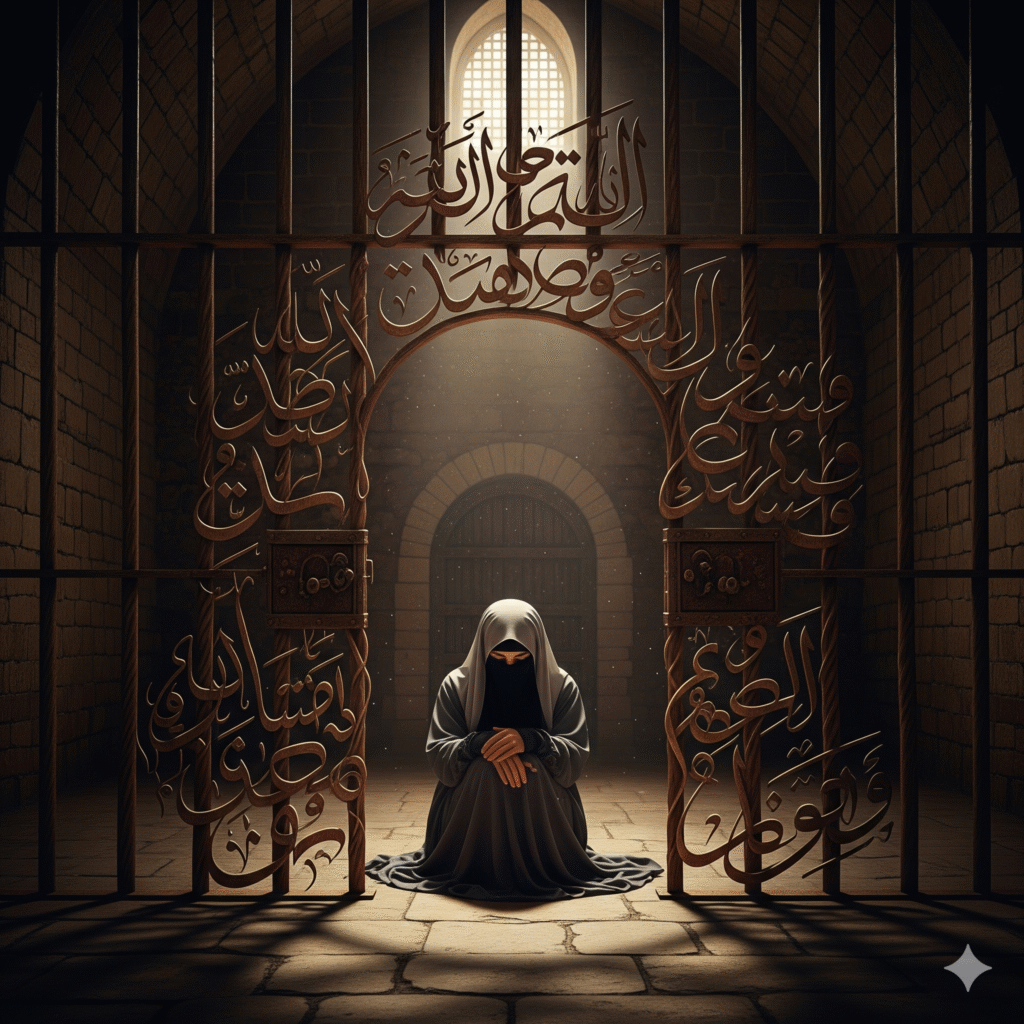
- Why does a man retain the right to dissolve a marriage instantly while a woman must forfeit her financial rights to seek Khula?
- Why must a woman undergo the process of Halala to rectify her former husband’s impulsive actions?
- How can the marriage and consummation of a relationship with a nine-year-old child be reconciled with modern frameworks of child protection?
- If a system permits a man multiple wives and concubines on earth alongside rewards in the afterlife, while requiring submission from the woman under the threat of punishment, can it be described as a framework of equality?
“To define a system that classifies women as intellectually deficient, legally fractional, and subject to physical correction as an institution of ‘honor’ is a profound linguistic contradiction. It represents an institutionalized system of subjugation codified under a religious framework.”
Author’s Disclaimer
“This critique is not authored out of malice or generalized prejudice toward any community. The analysis presented is built entirely upon an independent, systematic reading of primary theological and legal texts. The objective is to analyze why medieval legal frameworks like Sharia are asserted as superior to universal human rights and modern secular constitutions. Addressing the systemic marginalization of women within these texts is an essential step toward upholding human dignity. Those who disagree with these findings are invited to provide reasoned, textual counter-arguments utilizing these same primary sources rather than relying on dogmatic declarations, as the goal of this work is the objective pursuit of truth.”
📢 Did you find this article useful?
🙏 Support our work by clicking here.
References / Primary Sources:
- Holy Qur’an:
- 2:223 (Woman as a tilth/agricultural land)
- 2:230 (The mandatory rule of Halala)
- 2:282 (The framework of fractional legal testimony)
- 4:3 (The sanction for polygamy and female concubinage)
- 4:11 (The rule of fractional/half inheritance)
- 4:24 (The commercial nature of Nikah and Ujr / matrimonial wages)
- 4:34 (The absolute authority of Qawwam and the husband’s disciplinary right to inflict battery)
- 4:117 (The linguistic and theological equation linking the feminine to Satanic symbols)
- 24:4 (The requirement of four eye-witnesses and the statutory punishment for Qazf)
- 24:31, 33:59 (The mandatory enforcement of the physical veil/containment)
- 33:5 (The absolute eradication of maternal lineages / matronymics)
- 65:4 (The explicit codification of the Iddah waiting period for pre-pubescent/minor girls)
- 78:33 (The physical and sexual descriptions of the Houri in paradise)
- Sahih al-Bukhari:
- Hadith 146 (The social pressures and historical context behind the veiling verses)
- Hadith 304 (The explicit codification of women being inherently deficient in intellect and religion)
- Hadith 1052 (The eschatological declaration of women forming the dynamic majority in Hellfire)
- Hadith 1088 (The prohibition of a woman’s basic mobility without a male Mahram)
- Hadith 2639 (The statutory physical conditions making Halala mandatory)
- Hadith 3237 (The systemic loss of bodily autonomy and cosmic curses upon refusing the matrimonial bed)
- Hadith 3894 (The foundational legal narrative detailing the marriage of Aisha at age six)
- Hadith 4425, 7099 (The absolute theological ban on women attaining state or political leadership)
- Hadith 4483 (The weaponization of the threat of unilateral divorce to enforce female compliance)
- Hadith 4528 (The sexual context and Asbab-e-Nuzul behind the ‘agricultural tilth’ verse)
- Hadith 5096 (The identification of women as the supreme destruction and Fitnah for men)
- Hadith 5133 (The authoritative age details of the marriage at 6 and consummation at 9)
- Hadith 5137 (The codification that a virgin girl’s terrified or pressured silence constitutes legal consent)
- Hadith 511, 514 (The direct ritual alignment of a woman alongside dogs and donkeys in severing prayers)
- Sahih Muslim:
- Hadith 79, 907 (The reinforcement of a woman’s biological condition leading to her deficit in faith and majority in Hell)
- Hadith 511 (The ritual pollution/severing of congregational prayer by dogs, donkeys, and women)
- Hadith 974b (Aisha’s explicit testimony regarding being struck on the chest by the Prophet, causing physical pain)
- Hadith 1403a (The explicit theological declaration that a woman advances and retires in the physical form of a Devil)
- Hadith 1421 (The codification of a minor/virgin’s silence as absolute विधिक approval)
- Hadith 1422 (The canonical confirmation of the physical consummation of a marriage at nine years of age)
- Hadith 1433 (The explicit prophetic directive that a divorced woman must taste the sexual sweetness of another man before returning)
- Hadith 1435a (The permission granted to men to approach the female body from any angle)
- Hadith 1436d (The institutionalized cursing of the angels upon a wife who exercises bodily autonomy)
- Hadith 1691 (The systemic erasure of statutory lines between consensual sex and rape under Sharia evidentiary standards)
- Hadith 2740 (The classification of the feminine form as the absolute threat to male morality)
- Al-Muwatta Imam Malik:
- Book 41, Hadith 28 (The brutal legal mandate enforcing Hadd upon a pregnant unmarried woman unless immediate visible bruises or screaming are proven)
- Book 29, Hadith 29.28 (The absolute procedural legal enforcement of the Halala mechanism)
- Sunan an-Nasa’i:
- Hadith 3221 (The historical contradiction where the Prophet utilized the argument of ‘too young’ for his own daughter Fatimah while bypassing it for Aisha)
- Hadith 3227 (The direct command to prioritize women solely as demographic instruments of high reproduction)
- Hadith 3963 (The documented recording of domestic physical impact and internal trauma)
- Sunan Abu Dawud:
- Hadith 2050 (The restriction of matrimonial choices based strictly on a woman’s biological fertility)
- Hadith 2151 (The theological reduction of a woman’s social presence to a dangerous snare of the Devil)
- Classical Tafsir Texts:
- Tafsir Ibn Kathir (Exegesis on Surah 4:34 clarifying the husband as a literal sovereign ruler, 4:24 on sexual utilities, 65:4 validating pre-pubescent intercourse, and 2:230 on Halala)
- Tafsir al-Tabari (Volume 2, Exegesis on Surah 2:223 authorizing total male possession, and 4:34 authorizing corporal punishment to keep women contained)
- Tafsir al-Jalalain (Exegesis on Surah 4:34 defining Qawwam as absolute sovereign authority, and 65:4 explicitly identifying child brides without menstruation)
- Classical Jurisprudence (Fiqh Manuals):
- Al-Hidayah (Authoritative Hanafi Law Compendium, Kitab al-Jina’at / Kitab al-Hudud – detailing the systemic traps where an unproven rape accusation automatically triggers the public flogging of the victim under the laws of Qazf)
- Al-Mudawwana al-Kubra (The premier Maliki legal compendium by Imam Sahnun – detailing how a rape victim’s silence out of trauma completely invalidates her subsequent plea, rendering her a criminal)
- Al-Kafi fi Fiqh Ahle Madina (The Maliki manual by Ibn Abd al-Barr – codifying the absolute requirement of immediate physical lacerations or witnesses for a woman’s rape plea to be legally admissible)