

If Islam came with a message of peace and dignity, then why are the roots of 700 million Muslims of the Indian subcontinent entwined with those countless Hindu women who were turned into sexual slaves at sword point?
Those who beat the drum of Islam claim it to be a religion of peace that did not spread by the sword — then why did Aurangzeb feel the need to compile the Fatawa-e-Alamgiri in three volumes to legitimize the exploitation of enslaved women?
Introduction
“Historical records and the tradition of Shariah indicate that the majority of today’s Muslims are descendants of forcibly converted and enslaved women.”
This is not an emotional allegation but a bitter historical truth — based on Islamic military campaigns, laws of slavery in Shariah, and the social structures of Muslim sultanates.
In India, Islam is often portrayed as a symbol of cultural harmony and syncretism. Some intellectuals even go so far as to claim, “Indian Islam is different from Arab Islam — it is more peaceful and more Indian.”
But does this claim stand up to historical scrutiny?
The fundamental question is simple:
How did Islam come to India — through love or through invasion? Through preaching or through the power of the sword? Through equality or through the womb of slavery?
This article seeks to trace the roots of “Indian Islam” — those seeds that came through the blood-soaked paths of Arab, Turkic, Mongol, and Afghan invaders, and the population that now calls itself “Indian Muslims” — are they truly converts by choice or the offspring of defeated Hindu women?
“This entire article is not based on imagination or prejudice. The facts presented here are drawn directly from Islamic historians (such as al-Tabari, Ziauddin Barani, Minhaj-i-Siraj, Abul Fazl, and others), from Shariah texts (the Qur’an, Hadith, Fatawa-i-Alamgiri), and from the autobiographies and records of Muslim rulers themselves. We are merely quoting what they themselves have written.”
Part 1: The Truth of Demographics or a Game of Numbers?
1.1 The Illusion of Hindu-Muslim Population Balance
“If Islam had spread by the sword, then how are Hindus still 80% in India?” — This is not a logical argument, but a deceptive fallacy that conceals the truth.
In fact, it is not an argument at all but a deliberate distortion. During the Mughal era, India, Pakistan, Bangladesh, and Afghanistan were one unified cultural and political space. If we assess the population in today’s terms:
- Pakistan: 240 million Muslims
- Bangladesh: 180 million Muslims
- India: 250 million Muslims
Total: 700 million Muslims versus 970 million Hindus (950 million in India, 15 million in Bangladesh, and 3.5 million in Pakistan).
Today, Muslims form 43% of the total population across this subcontinental region. And in a few decades, this number could equal or even surpass that of Hindus.
Thus, the illusion of a permanent Hindu majority no longer holds.
1.2 The Burning Question
The Arab army numbered only about 20,000 to 50,000. Even today, the total population of 10 Arab countries is just 330 million — less than half of India’s. So how did the Indian subcontinent end up with 700 million Muslims?
Did all these people embrace Islam voluntarily by reading the Quran? Or were their identities forged through the sword, slavery, and oppression?
Part 2: The History of the Sword — The Illusion of Peace
2.1 The Arrival of Islam
This religion, born in 7th-century Arabia, entered India through Iran and Central Asia, riding on the power of the sword. Tales of Sufis are often narrated, but the truth is of military plunder and massacres.
2.2 The Real Weapon — The Sword
Hindu and Buddhist kings also fought wars, but Islam introduced a new dimension — forced conversion. Threats of death, the burden of jizya, and chains of slavery were its primary tools. Remove the mask of peace, and what lies beneath is blood and loot.
Part 3: Forced Conversions — A Web of Coercion
3.1 At Sword’s Edge
Muslim rulers used doctrines like Hudna (strategic truce) and Kitman (concealment) to deceive Hindu kings and, upon victory, gave the people three choices:
- Fear of death: Accept Islam or be beheaded
- Oppression of Jizya: Such crushing taxes that people broke under the weight
- Hell of Slavery: Women became concubines, children were converted to Islam
The tradition of Jauhar (mass self-immolation by Hindu women) arose from this terror.
3.2 Quranic Command
Surah 9:29 —
“Fight those who do not believe in Allah and the Last Day… until they pay the jizya with willing submission.”
This was not a message of peace, but a command of coercion. Hindus who could not pay jizya were forced to convert.
Part 4: Islamic Invasions and Women — The Womb of War
According to Shariah, non-Muslims captured in war were divided as spoils — the men were killed or enslaved, while the women became concubines. Sexual slavery was considered a “divine reward.”
4.1 The Game of Ghanimah (War Booty)
Surah Al-Anfal — Contains 75 verses on war booty.
The word Ghanimah (غَنِيمۃ) refers to property seized from non-Muslims — including wealth, land, and women.
4.2 Exploitation under Malik-ul-Yameen
Quranic verses 33:50, 23:5–6, 4:3, 4:24 legitimize sexual relations with slave women without marriage.
4.3 Testimonies of Islamic Historians
Historians like Ibn Saeed, Tabari, Waqidi, Ibn Kathir, and Ibn Hisham all document the plundering and sexual use of women in battles.
To learn more about the Islamic system of slavery, click here for reference articles.
Part 5: The Scars of Slavery in India
Muhammad bin Qasim (711 CE) — Invasion of Sindh
Sources: Chachnama, Tarikh-e-Hind, Tarikh al-Tabari
Raja Dahir’s daughters, Surya and Parmal, were gifted to Caliph Walid. Thousands of Hindu girls were enslaved and distributed among the soldiers.
“He (Qasim) captured many noble and beautiful young girls, sent them as gifts to the Caliph, and himself engaged in sensual pleasures with many concubines.”
— Chachnama (Translated by Mirza Kalich Beg)
Mahmud of Ghazni (11th Century) — 17 Invasions
Source: Tarikh-e-Yamini
Seventeen invasions of India, each marked by looting and the enslavement of thousands of women who were taken to Ghazni.
“Women and children were enslaved, and only the screams of the people echoed in the towns.”
— Tarikh-e-Yamini (History of Mahmud of Ghazni)
Muhammad Ghori (1192) — Battle of Tarain
Sources: Taj-ul-Masir, Tabaqat-i-Nasiri
After the defeat of Prithviraj Chauhan, Hindu princesses and women were enslaved. Slave markets were established in Delhi and Ajmer.
“Countless Hindu women were taken captive, and their cries echoed in the markets of Ghazni.”
— Tabaqat-i-Nasiri (by Minhaj-us-Siraj)
Alauddin Khilji (1296–1316)
Sources: Tarikh-i-Firuzshahi (Ziauddin Barani), Amir Khusro
The 1303 episode of Rani Padmini — though considered mythical by some — is seen as a catalyst for the Rajput practice of jauhar. Thousands of women from South India were enslaved and brought to Delhi.
“The beautiful daughters of kings were turned into slave-girls.”
— Barani, Tarikh-i-Firuzshahi
Tamerlane (1398) — Invasion of Delhi
Source: Tuzk-i-Taimuri (Autobiography of Tamerlane)
He wrote himself:
“The sword of Islam was wielded. Hindus were slaughtered, their wives and daughters were distributed among my soldiers as spoils.”
— Tuzk-i-Taimuri
More than 100,000 Hindu women were raped and enslaved in Delhi.
“Every soldier captured 20 to 100 Hindu slaves. Women were raped, sold, or kept.”
— Tuzk-i-Taimuri (Translation: Elliot & Dowson)
Babur (1526)
Source: Baburnama
Babur openly praised “youth and beauty” and described the distribution of enemy women as spoils of war.
Akbar (1556–1605)
Sources: Ain-i-Akbari, Akbarnama (by Abul Fazl)
Often described as “tolerant,” but:
During the Rajasthan campaigns, Hindu princesses were brought into the harem.
The harem had over 5,000 women — most of them captured as war booty.
Aurangzeb (1658–1707)
Sources: Maasir-i-Alamgiri (Saqi Mustaid Khan), Fatawa-i-Alamgiri
During wars in Warangal, Ahmednagar, and Bijapur, women were enslaved.
Aurangzeb’s rule was based on Shariah, under which infidel women were considered maal-e-ghaneemat (war booty).
“Captured Hindu women were distributed among Muslim soldiers.”
— Maasir-i-Alamgiri
Rape and sexual enslavement of women during Islamic invasions of India were not exceptions, but systematic strategies with religious sanction.
This history is recorded by Muslim historians themselves — it is not a part of any “Hindu fabrication.”
Part 6: Religious Genocide and Forced Conversions
Qur’an 9:5 — “Kill the idolaters wherever you find them.”
Qur’an 8:12 — “I will instill terror in the hearts of the unbelievers… strike off their heads.”
These verses were not messages of peace, but clear directives for religious violence.
Historical Examples
Qasim (711):
Chachnama: “Thousands of Brahmins were massacred in Debal, Sindh.”
Tarikh al-Tabari: “40,000 captives were converted to Islam.”
“He slaughtered thousands of infidels and forcibly converted the rest to Islam under the threat of the sword.”
— Chachnama
Ghaznavi (1000–1025)
Tarikh-i-Yamini (by Al-Utbi):
More than 50,000 Hindus were slaughtered in Mathura.
During the attack on Somnath (1025), thousands were killed and 20,000 were taken as slaves.
“The blood of idol-worshippers flowed like streams… 50,000 were killed in a single day.”
— Tarikh-i-Yamini
Muhammad Ghori (1192)
Massacre in Delhi-Ajmer.
Tabaqat-i-Nasiri: “Thousands of kafirs were killed… those who survived were converted to Islam.”
“Those who resisted were killed; the rest were enslaved and forcibly converted.”
— Minhaj-i-Siraj
Qutbuddin Aibak (13th century)
Taj-ul-Maasir:
30,000 Hindus were killed in Meerut.
“Hindu blood flowed like water… their temples were converted into mosques.”
— Taj-ul-Maasir
Alauddin Khilji (1296–1316)
“In Chittor, 30,000 Hindus were put to death by the sword for refusing to accept Islam.”
— Ziauddin Barani, Tarikh-i-Firozshahi
Timur (1398 AD)
Attack on Delhi:
1 lakh (100,000) Hindus massacred
“I ordered that all Hindus held by my army be killed before battle… 100,000 were slaughtered.”
— Tuzk-e-Taimuri (Autobiography of Timur)
Sher Shah Suri (1540–45)
Events: Forced conversions in Bengal and Bihar
Local records and Ain-i-Akbari mention that under Sher Shah’s rule, thousands of Hindus were coerced into Islam through jizya tax and oppression.
Akbar (1556–1605)
Chittorgarh (1568): Over 30,000 Hindu civilians killed
“The number of dead exceeded 30,000… their skulls were collected and used to build skull towers.”
— Akbarnama
Aurangzeb (1658–1707)
- Demolition of temples in Varanasi, Mathura, Ujjain
- Encouraged conversions: Rewards, land, and positions were offered for converting to Islam
- Forced conversions in Kashi, Punjab, Maharashtra
“Thousands were forcibly converted… temples were razed to the ground.”
— Maasir-i-Alamgiri
Part 7: Sikh Resistance Against Aurangzeb
Guru Tegh Bahadur (1675): Martyred while protecting Kashmiri Brahmins.
His companions were tortured brutally:
- Bhai Mati Das was sawn in half.
- Bhai Dayal Das was boiled alive.
- Bhai Sati Das was burned alive.
Sources:
- Bachitra Natak (by Guru Gobind Singh)
- Twarikh-i-Firishta
- Sikh History by Khushwant Singh
Sons of Guru Gobind Singh (1705):
Two died in battle; two were bricked alive.
Assassination plot: Guruji was attacked in Nanded; he later succumbed to the wounds.
“Aurangzeb’s governors conspired to assassinate the Guru.”
— Gur Bilas Patshahi 10, Sikh history (Author: Dr. Trilochan Singh)
Jihad declared against Sikhs:
“These kafirs worship their Guru, not Allah. They must be killed.”
— Letters by Aurangzeb to his governors (preserved in Persian archives)
Part 8: Tipu Sultan’s Jihad
Malabar (Kerala):
“Thousands of Nairs were forcibly converted. Temples were destroyed, priests killed.”
“Not a single Brahmin or Hindu priest survived in Calicut against the Islamic sword.”
— British Officer Col. Wilks, Mysore Gazetteer
Kodagu (Coorg):
“In April 1788, 70,000 Kodavas were captured and brought to Srirangapatna, forcibly converted to Islam.”
“More than 70,000 were circumcised and Islamized.”
— History of Coorg, Col. Wilks
Mangalorean Catholics:
In 1784, Tipu captured 60,000 Christians and sent them to Srirangapatna. Thousands were killed and churches destroyed if they refused to convert.
“He demolished churches and circumcised Christian boys forcibly.”
— Rev. Gopal Chetty (Madras)
Dharwad, Srirangapatna, and Other Parts of Karnataka
“Thousands of Hindus were forcibly converted to Islam, renamed, and made to follow Arab customs.”
Letters of Tipu (translated from original Persian):
“By Allah’s grace, we captured many Hindus and converted them to Islam. Praise be to Allah who made me an instrument of His faith.”
— Selected Letters of Tipu Sultan to Sayyid Abdul Dulai, January 1790
Note:
Still, he is called a “freedom fighter” because he fought the British.
Leftist historians (Irfan Habib, Romila Thapar, etc.) have concealed his Islamic fanaticism.
Yet Tipu himself claimed the title:
“Ghazi” — one who wages jihad against kafirs
“A true patriot fights foreign invaders, not his own countrymen — forcing conversions is not rebellion but religious tyranny.”
Conclusion:
The history of Islamic rule in India is not just about battles, but about cultural, religious, and human destruction.
This is not a “Hindutva fantasy”, but is written by Muslim chroniclers themselves.
Part 9: A Muslim Society Born from the Wombs of Slave Women
“Fatwa-e-Alamgiri” — The Sharia-based legal code declares:
“A non-Muslim must either accept Islam, be killed, or be enslaved.”
Aurangzeb had to summon 400 scholars from Egypt and Arabia to draft three books (Volumes 4, 5, 6, totaling 76 pages) just to regulate the exploitation of slave women. These laws detailed how to divide shared concubines (mushterka bandi), how to sell them, and how to dispose of their children. Was this the “justice” of Islam?
9.1 The Sacrifice of Hindu Women
Among today’s 700 million Muslims in the Indian subcontinent, a significant portion are descended from Hindu women who had no choice but to endure rape as slaves. The tradition of jauhar stands as a burning testimony to this horror, where women chose to burn alive rather than live in sexual bondage.
9.2 The Irony
Today, many descendants of those women worship the very invaders who raped their grandmothers — is this not mental slavery?
— Is this not a classic case of Stockholm Syndrome?
Part 10: Final Thoughts — Bitter but Necessary Truth
“Indian Islam” was not born of love or choice, but from the edge of a sword and the wombs of enslaved women.
Temples were razed, families shattered, identities forcibly altered.
Today’s Muslims must understand this truth:
Their Islamic identity did not arise from faith — it arose from the helplessness of their grandmothers.
Islamic expansion was not just military — it was a demographic, sexual, and cultural strategy.
The Final Question:
Can a religion…
- Enslave women?
- Sanction sexual relations without marriage?
- Consider a child born of rape a member of a “religious family”?
Is this not a rape of the soul?
Those who proudly call themselves “Muslim by birth” today —
They must ask:
Is their faith truly theirs, or is it built on the forced submission of their foremothers?
And if someone still takes pride in such a legacy —
Are they not, morally and intellectually, still enslaved?
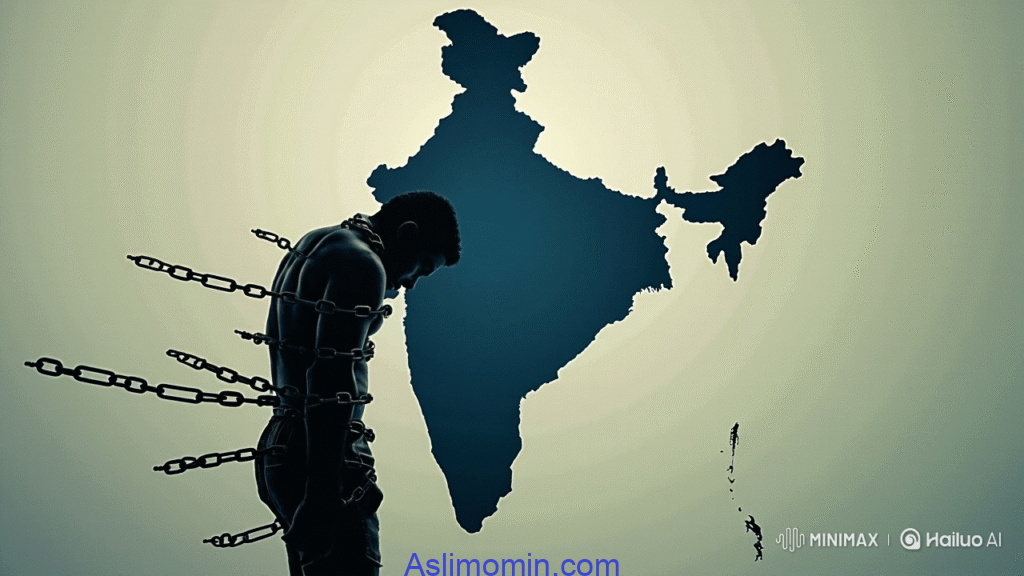
“History is not merely about the past. If we fail to understand it, the same slavery will continue today in a mental form. Muslims will dismiss the helplessness of their ancestors as ‘the will of God,’ while Hindus will overlook the bitter truth that the sacrifices of their mothers and sisters formed the very foundation of Islamic expansion.”
“The real question is not how Islam came to India. The real question is whether today’s Muslims will have the courage to acknowledge their true roots, or whether they will continue to take pride in a mental slavery born of the sword and the womb of the harem.”
📢 Did you find this article useful?
🙏 Support our work by clicking here.
References:
Sahih Muslim 3432
Quran 4:24, 23:6, 33:50
Tafsir al-Tabari, Ibn Kathir, Qurtubi
Tarikh al-Tabari, Ibn Ishaq’s Sirat Rasul Allah
Baburnama, Ain-i-Akbari, Tarikh-i-Firishta
William Dalrymple: The Anarchy
K.S. Lal: Growth of Muslim Population in Medieval India
Chachnama – ट्रांस. Mirza Kalich Beg
Tarikh-i-Yamini – Al-Utbi
Tabaqat-i-Nasiri – Minhaj Siraj
Tarikh-i-Firozshahi – Ziauddin Barani
Tuzk-i-Taimuri – Memoirs of Tamerlane
Baburnama, Akbarnama, Ain-i-Akbari – Abul Fazl
Maasir-i-Alamgiri – Saki Mustaid Khan
Fatawa-i-Alamgiri – Compiled under Aurangzeb
Travels of François Bernier, Niccolao Manucci – Mughal India accounts
Elliot and Dowson, The History of India as Told by Its Own Historians — 8 Volumes (Gold standard)
Select Letters of Tipu Sultan
Mysore Gazetteer – Lewis Rice
History of Coorg – Col. Wilks
Travels of Buchanan – Francis Buchanan (visited shortly after Tipu’s death)
Tipu Sultan: The Tyrant of Mysore – Sandeep Balakrishna
British archives (India Office Library)