

“If alcohol could be declared forbidden, why could the sale of human beings not be forbidden as well?”
Introduction
Whenever the subject of slavery and concubinage (sexual servitude) in Islam is raised, Muslim apologists generally resort to two familiar justifications:
“It was merely a product of its historical circumstances.”
“Islam did not create slavery; rather, it reformed and humanised an already existing institution.”
Yet a fundamental question remains unavoidable: if Islam truly represents a divine faith that proclaims itself to be the final, eternal, and universally applicable guidance for humanity until the Day of Judgment, why was it incapable of abolishing an institution as inherently dehumanising and morally abhorrent as slavery?
During the very same period, intoxicants, pork, idolatry, and ribā (usury) were unequivocally prohibited and declared ḥarām. Why, then, did this supposedly perfect and comprehensive guidance fail to impose an equally categorical prohibition upon the buying and selling of human beings and the sexual exploitation of women?
The Qur’an and the Institution of Concubinage (Mā Malakat Aymānukum – ما ملكت أيمانكم)
In Islamic jurisprudence (Fiqh), female slaves or concubines are commonly referred to as Mā Malakat Aymānukum (“those whom your right hands possess”). Literally translated, the phrase means “that which your right hand owns or possesses.” In its legal and juristic usage, however, the term denotes a woman who is regarded as the lawful property of her male owner, over whom he exercises proprietary rights recognized by classical Islamic law.
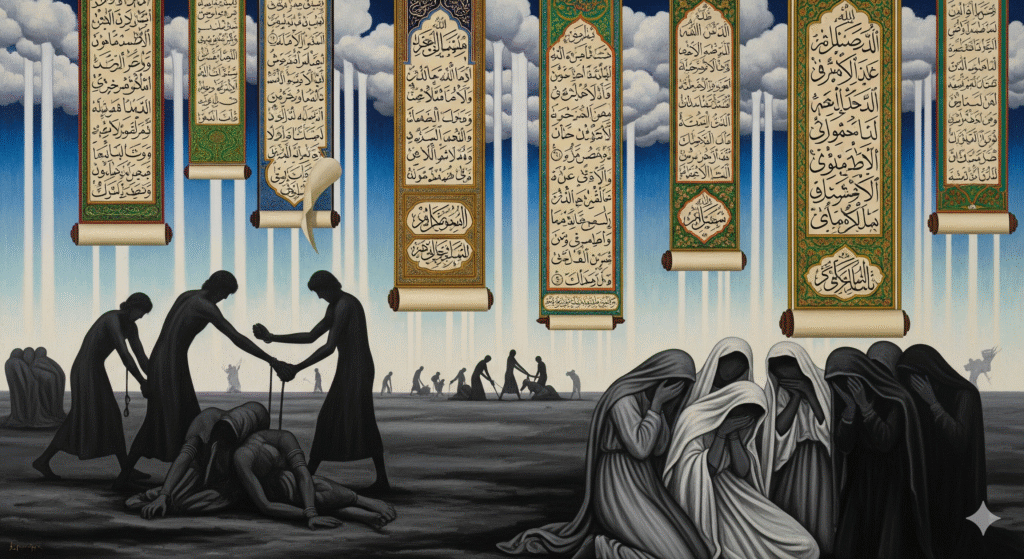
Relevant Qur’ānic Verses
Sūrah al-Mu’minūn (23:5–6):
“And those who guard their private parts, except from their wives or those whom their right hands possess, for indeed they are not to be blamed.”
Sūrah al-Nisā’ (4:24):
“And [also forbidden to you are] married women, except those whom your right hands possess (i.e., female captives or slave women).”
Sūrah al-Aḥzāb (33:50):
“O Prophet! We have made lawful for you your wives to whom you have given their dowries… and those slave women whom Allah has granted you from among the spoils of war.”
According to the interpretation presented by critics of the institution, these verses indicate that sexual relations with female slaves were considered lawful without the requirement of a formal marriage contract (nikāḥ), nor was any separate provision mentioned concerning their independent consent or approval. Within this framework, such women were regarded as part of their owner’s lawful possessions. The same principle is reiterated in Sūrah al-Ma‘ārij (70:29–30), where wives and those “whom their right hands possess” are again distinguished as categories through which sexual relations are deemed permissible.
From this perspective, the Qur’ānic text is understood as recognizing a legal distinction between a free wife acquired through marriage and a female slave acquired through ownership. Critics argue that this distinction reflects the institutional acceptance of concubinage within classical Islamic legal doctrine rather than its abolition.
Classical Islamic Exegeses (Classical Tafsīrs)
Tafsīr Ibn Kathīr (Sūrah al-Mu’minūn 23:6)
“This verse clearly establishes that men are permitted to engage in sexual relations with two categories of women: first, their wives; and second, those female slaves over whom they possess complete proprietary rights.”
Tafsīr al-Qurṭubī (Sūrah 23:6 and 4:24)
“The phrase Mā Malakat Aymānuhum refers to those women who fall under one’s complete authority through slavery. From this, the unequivocal conclusion is derived that a master possesses the full right to have sexual relations with his female slave, and that such relations are entirely lawful even in the absence of marriage.”
Al-Qurṭubī further explains that if a child is born from such a slave woman, she acquires the legal status of Umm al-Walad (“mother of a child”), yet sexual relations with her remain permissible thereafter.
Tafsīr al-Ṭabarī (Sūrah al-Nisā’ 4:24)
“The meaning of this verse is that if a married non-Muslim woman is taken captive during warfare and becomes the slave of a Muslim owner, that owner is permitted to engage in sexual relations with her even if her husband remains alive. Her previous marriage is considered automatically annulled upon her captivity.”
Historical Incident (Sunan Abū Dāwūd 2155)
According to the historical context preserved in the hadith literature, during the campaign of Awtās (following the Battle of Ḥunayn), some Muslim soldiers reportedly hesitated to engage in sexual relations with captive women because their non-Muslim husbands were still living. It is argued that, to remove this hesitation, Sūrah al-Nisā’ 4:24 was revealed, thereby permitting sexual relations with such captive women despite the existence of their previous marriages.
Critics interpret this episode as evidence that the verse legitimized sexual relations with female captives whose husbands were still alive, on the grounds that captivity nullified their former marital bonds.
“From this, the conclusion was drawn that a master possesses full authority to have sexual relations with his female slave, and that such relations are lawful even without marriage.”
Sunan Abu Dawood 2155 (Scan from Quran.com)
Slavery: The Dark Reality of Islam
The Institution of War Booty (Māl al-Ghanīmah)
Sūrah al-Anfāl – whose very Arabic title literally signifies “The Spoils of War” – consists of seventy-five verses devoted largely to the regulations governing war booty and its distribution.

In Islamic legal terminology, Ghanīmah (غنيمة) refers to property seized from the enemy (non-Muslims), including wealth, land, and women. According to Sūrah al-Anfāl (8:41), one-fifth (20 percent) of such spoils was designated as a special share.
This raises an unavoidable question: can a system that classifies human beings and women as components of war booty genuinely be attributed to a divinely guided prophet, or does it more closely resemble the practices of a conquering warlord?
Muhammad’s Ownership of Slaves and Concubines
According to historical sources such as Ibn Sa’d’s Tabaqāt and al-Ṭabarī, Muhammad possessed a substantial number of slaves. Various historical accounts and scholarly studies assert that he owned more than thirty male slaves and over one hundred female slaves (concubines). Critics argue that such numbers indicate not merely participation in the institution of slavery, but a significant degree of dependence upon and benefit from it.
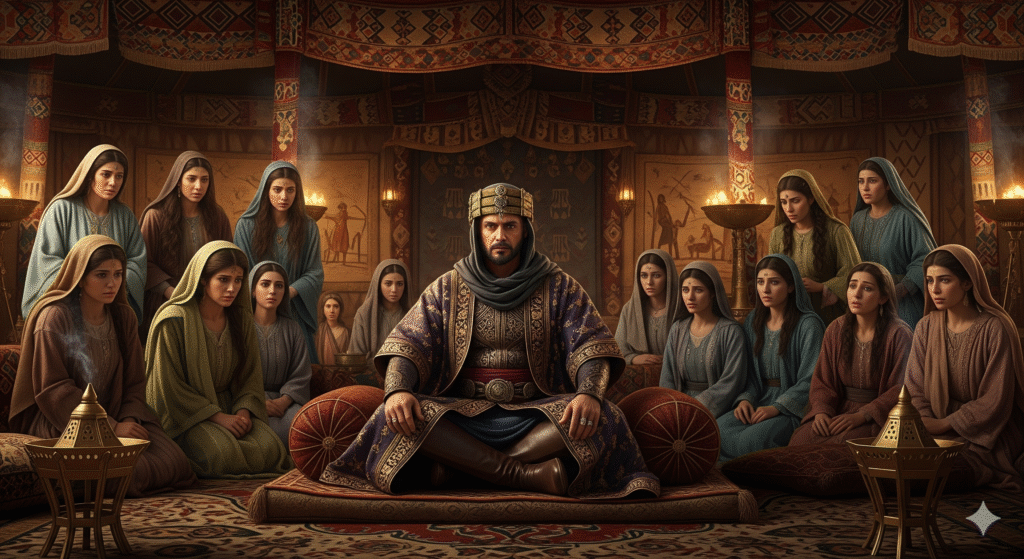
The following are among the names frequently cited in historical literature as evidence of this institution:
| Category | Notable Names | Historical Sources |
|---|---|---|
| Male Slaves | Zayd ibn Ḥārithah, Ansa, Muʿayrit, Mābūr, Abū Rāfiʿ, ʿAbd al-Raḥmān, Salīm, Abū Kubshah, Thawbān, Kurkir, Rāfiʿ, Abū Ḥafṣ, Midʿām, Fataḥ, Shukrān, Salīm Mawlā Abī Ḥudhayfah, Kirkirah, Waḥshī, Arbad, Abū Makhtūf and others | Ibn Sa’d’s Tabaqāt, al-Ṭabarī |
| Female Slaves (Concubines) | Māriyah al-Qibṭiyyah, Rayḥānah bint Zayd, Juwayriyyah bint al-Ḥārith, Ṣafiyyah bint Ḥuyayy, Umm Ayman, Umm Wakīd, Maymūnah, Khadīrah, Salmā, Naṣībah, Shīrīn (Māriyah’s sister), Taqiyyah, al-Anbar, Fāṭimah, Zaynab, Ṣafā, Umm al-ʿAlā, Khīrah and others | Tārīkh al-Ṭabarī, Ṣaḥīḥ Muslim, Ṣaḥīḥ al-Bukhārī |

The works of the Baghdadi historian al-Ṭabarī (al-Rusul wa al-Mulūk), Ibn Sa’d’s al-Tabaqāt al-Kubrā, and Ibn Hishām’s Sīrat Rasūl Allāh are frequently cited by critics as evidence that Muhammad’s household included numerous women who functioned as concubines or sexual slaves.
According to this line of interpretation, these historical records provide explicit testimony to the existence of female captives and slave women within Muhammad’s domestic and social sphere.
The Tragic Story of Ṣafiyyah bint Ḥuyayy
Following the Battle of Khaybar, Ṣafiyyah was initially allotted to a companion, Dihyah al-Kalbī, as a share of the war booty. However, upon hearing of her exceptional beauty, Muhammad reportedly took her for himself and compensated Dihyah with seven other female captives in exchange.
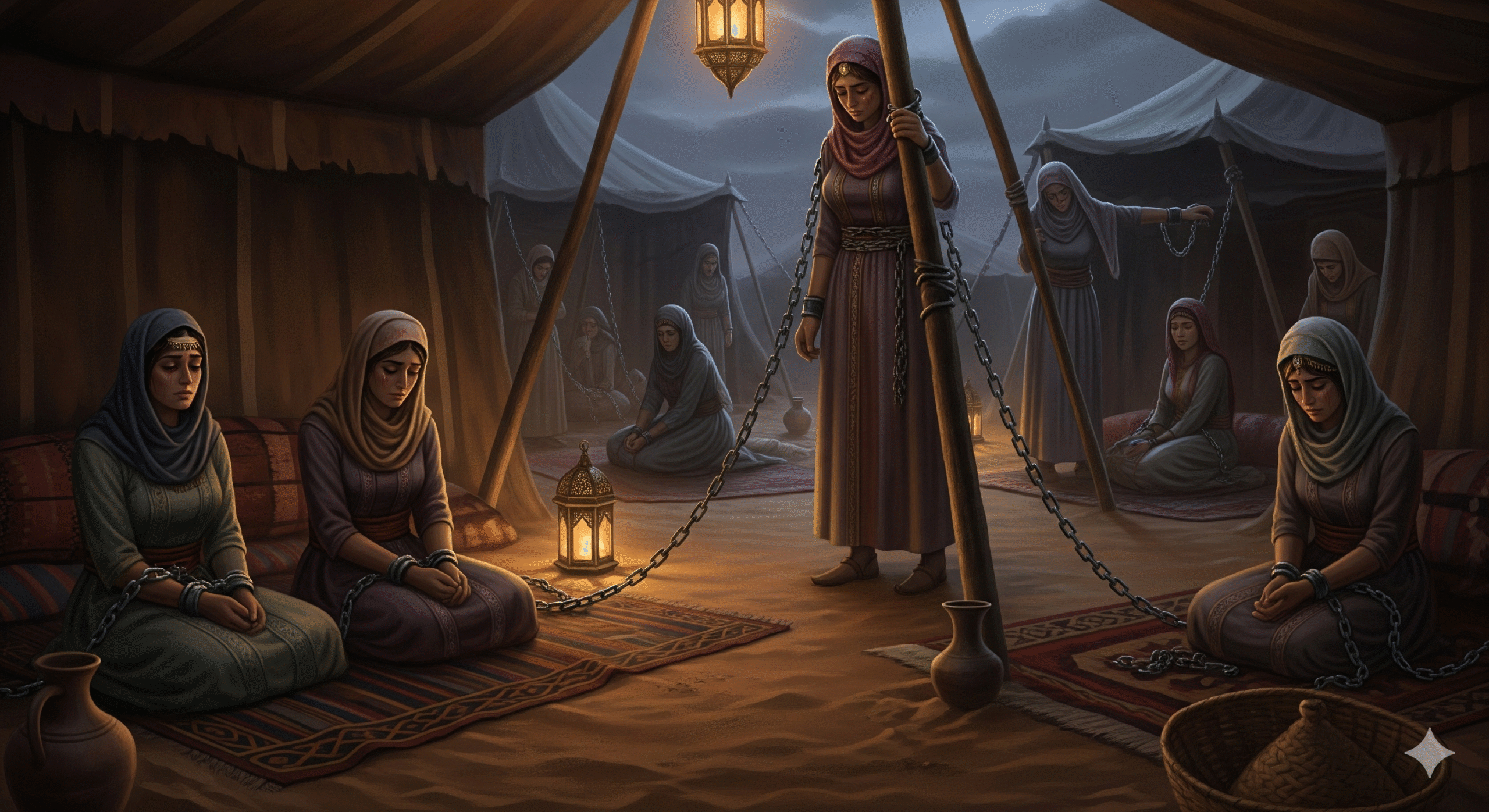
The historical accounts surrounding this episode are particularly disturbing. On the very day that Ṣafiyyah’s father and her husband, Kinānah ibn al-Rabīʿ, were allegedly subjected to severe torture – reportedly including the application of fire to his chest in an attempt to extract information about hidden treasure – before ultimately being executed, Muhammad is said to have summoned Ṣafiyyah to his bed that very night.
Ibn Isḥāq (Sīrat Rasūl Allāh, translated by A. Guillaume, pp. 511–515) records:
“Muhammad took Ṣafiyyah bint Ḥuyayy, whose husband had only recently been killed, and spent the night with her on the journey back to Medina.”
Similarly, Ibn Saʿd (Kitāb al-Ṭabaqāt al-Kabīr, Vol. 8, p. 121) states:
“When the Prophet consummated relations with Ṣafiyyah, she was only seventeen years old and exceptionally beautiful. Her husband had been tortured and executed on accusations of concealing treasure.”
(See also: Ṣaḥīḥ al-Bukhārī 371, 947, 2235, 4211.)
A fundamental question arises from these accounts: how could a woman whose father, husband, and much of her family had been violently killed freely consent to intimate relations with the very individual responsible for, or associated with, those events on the same night?
Critics regard this episode as a stark illustration of the vulnerability of female war captives and as evidence of the profound power imbalance inherent within the institution of slavery and concubinage.
Initially given to the companion Al-Kalbi as war booty.
When Muhammad saw her beauty, he kept her for himself and compensated Al-Kalbi with other slave women.
Hadiths mention that her father and husband were killed the same day, and that night Muhammad slept with her.
Ibn Ishaq, Sirat Rasul Allah (translated by A. Guillaume), p. 511-515:
“Muhammad took Safiyya bint Huyayy, whose husband had just been killed, and spent the night with her on the way back to Medina.”
Ibn Sa’d, Tabaqat al-Kabir, Vol 8, p. 121:
“When the Prophet married Safiyya, she was 17 and very beautiful. Her husband was tortured and killed for hiding treasure.”
Her husband Kinanah bin Rabi was tortured with fire and killed — (Ibn Ishaq, p. 515)
Sahih Bukhari 371 (Scan from sunna.com)
Sahih Bukhari 947 (Scan from sunna.com)
Sahih Bukhari 2235 (Scan from sunna.com)
Sahih Bukhari 4211 (Scan from sunna.com)
The Story of Juwayriyyah bint al-Ḥārith
Juwayriyyah was the daughter of the chief of her tribe. During the campaign against Banū al-Muṣṭaliq, she was taken captive by Thābit ibn Qays, one of Muhammad’s companions. Historical narratives report that Muhammad later acquired her.
According to a report attributed to ʿĀʾishah, Juwayriyyah was considered exceptionally attractive. She is described as possessing such beauty that men who saw her were captivated by her appearance. ʿĀʾishah reportedly remarked that the moment she saw Juwayriyyah approaching Muhammad, she immediately understood that he would choose to keep her for himself.
(Sources: Tārīkh al-Ṭabarī, Vol. 8, p. 57; Sīrat al-Nabī by Ibn Kathīr, p. 227)
The Hadith of ʿAlī: The Attitude Toward Captive Women
A narration recorded in Ṣaḥīḥ al-Bukhārī 4350 states:

“I said: ‘O Messenger of Allah, may I have intercourse with those women who have come into our possession as captives?’”
Muhammad is reported to have replied:
“Yes, because they are your property (Mā Malakat Aymānukum).”
The narration is frequently cited by critics as evidence that female captives acquired through warfare were viewed within classical Islamic jurisprudence as lawful property over whom their owners exercised extensive rights, including sexual access.
Sahih Bukhari 4350 (Scan from sunna.com)
The Trade and Commerce of Slaves
Critics argue that Muhammad was not merely an owner of slaves but also participated in their commercial exchange. According to historical reports, he sold a slave named Muʿabbad and acquired two other slaves in return. It is further asserted that slaves were sold in the markets of Najd in order to obtain weapons and horses. (Tārīkh al-Ṭabarī, Vol. 2, Part 1, Account of Banū Qurayẓah).
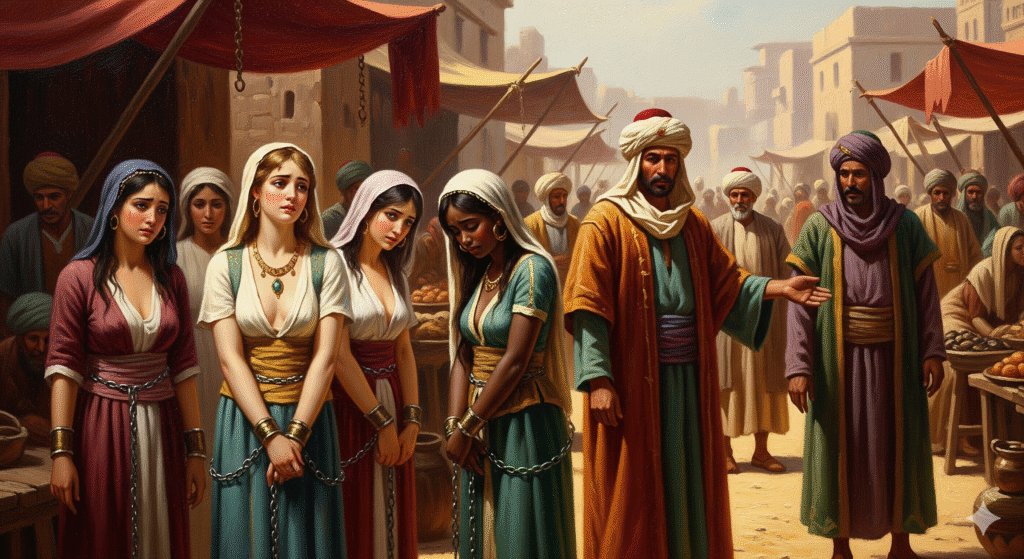
According to Ibn Saʿd, Muhammad on several occasions exchanged slaves for camels and other forms of property and merchandise. (Ibn Saʿd, Tabaqāt al-Kubrā, Vol. 1, p. 377).
(See also: Sunan Abū Dāwūd 3358, Jāmiʿ al-Tirmidhī 1239, Ṣaḥīḥ al-Bukhārī 6716.)
Critics contend that these accounts demonstrate that slaves were treated as transferable commodities that could be bought, sold, exchanged, and utilized in commercial transactions in much the same way as other forms of property.
Sunan Abu Dawud 3358 (Scan from sunna.com)
Jami’ Tirmidhi 1239 (Scan from sunna.com)
Sahih Bukhari 6716 (Scan from sunna.com)
An Inhumane Rule: Motherhood Changed Nothing
Under classical Islamic legal doctrine, if a female slave bore a child to her master, she acquired the legal designation of Umm al-Walad (“Mother of a Child”). However, critics argue that this status did not necessarily guarantee her immediate freedom, and historical discussions indicate that questions regarding her ownership and transferability continued to exist within legal discourse.
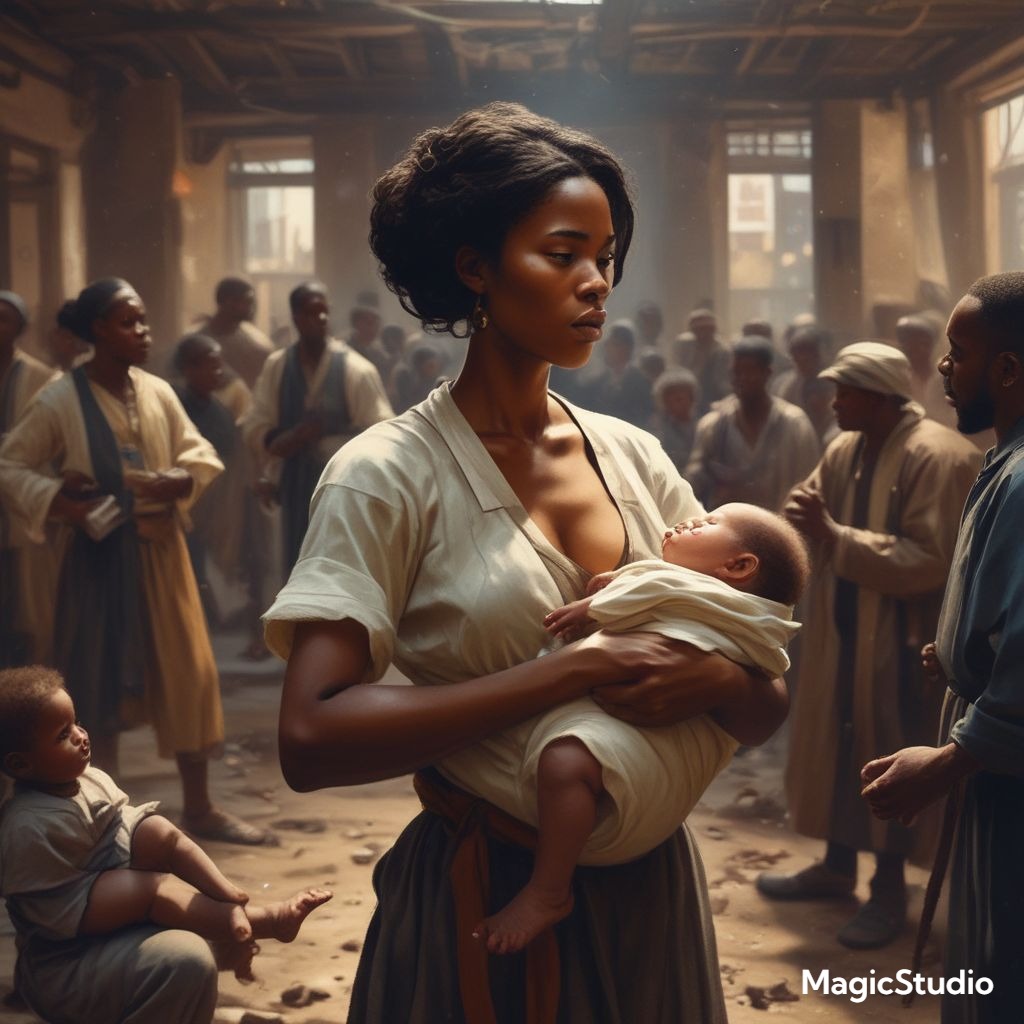
discourse.
“A slave woman who bore her master’s child was known as an Umm al-Walad, yet she could still remain within the institution of slavery.”
(Referenced in discussions attributed to al-Ṭabarī and Ibn Kathīr)
According to Sunan Ibn Mājah 2517, reports indicate that even women who had become mothers of their masters’ children could be treated as property within the marketplace. Critics interpret this as evidence that neither motherhood nor maternal dignity fundamentally altered their legal status within the institution.
Likewise, narrations found in Ṣaḥīḥ al-Bukhārī (2229, 7409) describe the practice of ʿAzl (coitus interruptus or withdrawal before ejaculation). Critics argue that one reason for this practice was to avoid pregnancy among slave women, since pregnancy could reduce a slave woman’s economic utility and market value.
From this perspective, such practices are presented as evidence that female slaves were frequently regarded not as autonomous individuals possessing inherent rights, but as economic assets whose reproductive capacity, labour, and sexual availability were subject to the interests of their owners.
(Sources: Sunan Ibn Mājah 2517; Ṣaḥīḥ al-Bukhārī 2229, 7409)
Sunan Ibn Majah 2517 (Scan from sunna.com)
Sahih Bukhari 2229 (Scan from sunna.com)
Bukhari 7409 (Scan from sunna.com)
The Slave Concubine and the Denial of Modesty Rights (ʿAwrah)
The Dress Code and Physical Exposure of Female Slaves
While the observance of ḥijāb and modest dress was mandated for free Muslim women, critics argue that female slaves were denied the same standards of bodily privacy and dignity. Within classical Islamic jurisprudence, the ʿawrah (the portion of the body that must be covered) of a slave woman was often defined far more narrowly than that of a free woman.

According to these legal opinions, a female slave’s ʿawrah extended only from the navel to the knees, meaning that much of the rest of her body could remain uncovered in public settings.
“A slave woman was required to cover only the area between the navel and the knees.”
Some juristic discussions even contain reports suggesting that clothing a slave woman in the same manner as a free and respectable woman was considered unnecessary extravagance.
1. Imam al-Shaybānī (al-Masʾūl / Classical Fatwa Literature)
Al-Shaybānī is reported to have written:
“The head, hands, chest, arms, and legs up to the knees of a slave woman may be visible in society and in the marketplace. Her ʿawrah is restricted only to the area between the navel and the knees.”
According to critics, this ruling created a legal distinction whereby slave women were not afforded the same standards of modesty and bodily protection as free Muslim women.
2. Imam Mālik (Al-Sharḥ al-Ṣaghīr)
In discussions attributed to the Mālikī legal tradition, it is stated that a slave woman could be viewed more openly by unrelated men than a free woman, except for the area between her navel and knees.
The frequently cited legal maxim states:
“عورة الأمة مع كل واحد ما بين السرة والركبة”
Translation:
“The ʿawrah of a slave woman, in relation to all men, is only that which lies between the navel and the knees.”
Critics interpret this ruling as indicating that areas such as the chest, shoulders, back, and head were not accorded the same legal protection that applied to free women.
3. Imam Aḥmad ibn Ḥanbal (Kitāb al-Kāfī)
Legal discussions within the Ḥanbalī tradition state:
“Those parts of the body that ordinarily become visible during work – such as the head, wrists, and feet – were not regarded as ʿawrah. It is also reported that Caliph ʿUmar prohibited slave women from dressing like free women by covering their heads and chests, and punished those who attempted to do so.”
A related narration is often quoted:
“إذا زوج أحدكم أمته… فلا ينظر إلى شيء من عورتها، فإن ما تحت السرة إلى الركبة عورة”
Translation:
“When one of you marries off his slave woman… he should not look at anything of her ʿawrah, for what lies between the navel and the knees constitutes her ʿawrah.”
Critics argue that these rulings institutionalized a visible distinction between free women and slave women, effectively denying the latter the same standards of modesty, privacy, and social dignity.
The Castration of Male Slaves
Although Muhammad is reported to have explicitly prohibited castration, critics note that under later Islamic empires—particularly during the Umayyad and Abbasid periods—large numbers of African and non-Muslim male slaves were allegedly subjected to castration.
According to historical accounts, these eunuchs were frequently employed in royal palaces and harems, where they served as guards for women and were prevented from producing descendants of their own.
The historian Bernard Lewis, in Race and Slavery in the Middle East, discusses the widespread practice of slave castration within various Islamic societies and its role in maintaining imperial harem systems.
Critics therefore contend that, despite the reported prohibition, the broader institution of slavery under later Islamic rule facilitated one of the largest systems of eunuch production in pre-modern history.
Hypocrisy vs. Reality
Modern Islamic apologists frequently advance a number of arguments in defense of the institution of slavery and concubinage. Critics, however, contend that the historical and textual evidence presents a markedly different picture.
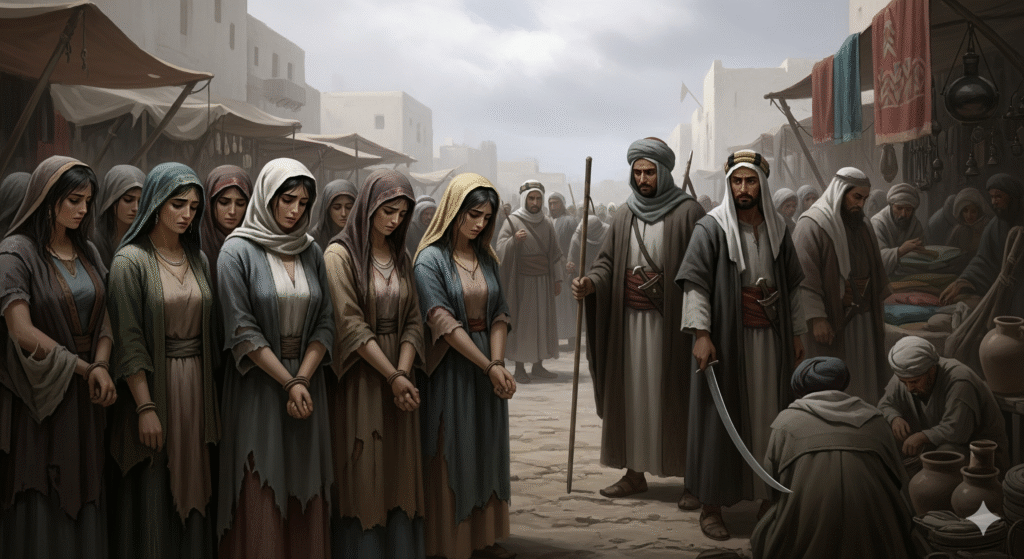
6.1 Claims and Counterclaims
Claim:
“Islam’s ultimate objective was the gradual abolition of slavery. Islam eventually eliminated slavery.”
Counterargument:
Critics argue that throughout the Qur’an and the canonical hadith literature, there exists no explicit verse or command that categorically declares slavery to be ḥarām (forbidden or unlawful). They maintain that a system presented as universally applicable until the Day of Judgment left the institution of human ownership legally intact rather than abolishing it altogether.
Claim:
“Those women became captives because they had come to fight Muslims on the battlefield.”
Counterargument:
Critics point to reports found in Ṣaḥīḥ al-Bukhārī (2541) and Bulūgh al-Marām (Jihād, Hadith 10) which state that the tribe of Banū al-Muṣṭaliq was attacked while its members were asleep and their livestock were watering. Likewise, Ṣaḥīḥ al-Bukhārī (371) records that the attack on Khaybar occurred at dawn.
According to this interpretation, many of the women later taken captive were not active combatants but individuals found in their homes at the time of the attacks.
Sahih Bukhari 2541 (Scan from sunna.com)
Bulugh al-Maram, Jihad, Hadith 10 (Scan from sunna.com)
Sahih Bukhari 371 (Scan from sunna.com)
Sunan Abu Dawood 2155 (Scan from Quran.com)
Claim:
“Islam greatly encouraged the emancipation of slaves and considered it a highly meritorious act.”
Counterargument:
Critics cite Ṣaḥīḥ al-Bukhārī (2594), which reports that when Maymūnah, one of Muhammad’s wives, freed a slave woman, Muhammad allegedly remarked that greater reward would have been obtained had she gifted the slave to one of her maternal relatives instead.
Critics further note that Māriyah al-Qibṭiyyah, who bore Muhammad a son, is not reported in these accounts as having been formally emancipated during his lifetime.
Sahih Bukhari 2594 (Scan from sunna.com)
Claim:
“Sexual relations were lawful only after marriage.”
Counterargument:
Critics argue that Qur’an 33:50 explicitly permits relations with female captives and slave women without requiring a formal marriage contract (nikāḥ), thereby establishing a separate legal category distinct from marriage.
Claim:
“Female captives were taken into Muslim households to provide protection and financial support for vulnerable women who had been left without guardians.”
Counterargument:
Critics contend that Qur’an 4:24 and Sunan Abū Dāwūd 2155 indicate that even women whose husbands were still alive could be separated from them after captivity and become lawful to their new owners.
According to this interpretation, the institution functioned not merely as a system of protection or welfare but as a mechanism that dissolved existing marriages and transferred women into the ownership of others.
Claim:
“Masters were instructed to feed and clothe slaves in the same manner as themselves.”
Counterargument:
Critics respond that improved treatment does not alter the fundamental nature of slavery itself.
As they often phrase it:
“A golden cage remains a cage.”
In their view, providing food and clothing did not eliminate the fact that slaves could still be bought, sold, exchanged, inherited, and treated as property.
Claim:
“Concubinage existed primarily to address the physical and social needs of widowed women.”
Counterargument:
Critics point to Qur’an 4:24, which they interpret as indicating that even a woman whose husband was still alive could have her previous marriage annulled upon captivity.
They further cite Sunan Abū Dāwūd 2155, which records the hesitation of some soldiers regarding captive women whose husbands remained alive, followed by the revelation of Qur’an 4:24 as a legal clarification.
From this perspective, critics argue that the institution extended beyond the care of widows and included married women whose prior marriages were considered dissolved through captivity.
Claim:
“Slaves possessed the legal right to purchase their own freedom.”
Counterargument:
Critics question how such a mechanism could function realistically for many female slaves.
They argue that a woman confined to domestic labor and subject to the authority of her owner would often have little or no practical opportunity to earn independent income. Consequently, they contend that the theoretical possibility of self-purchase did not necessarily translate into a realistic path to freedom for many enslaved women.
Contemporary Sharīʿah and Modern Atrocities
To assume that these issues belong solely to the distant past, critics argue, is a grave mistake. They contend that modern Islamist extremist movements have attempted to revive and implement these same legal concepts in contemporary times.
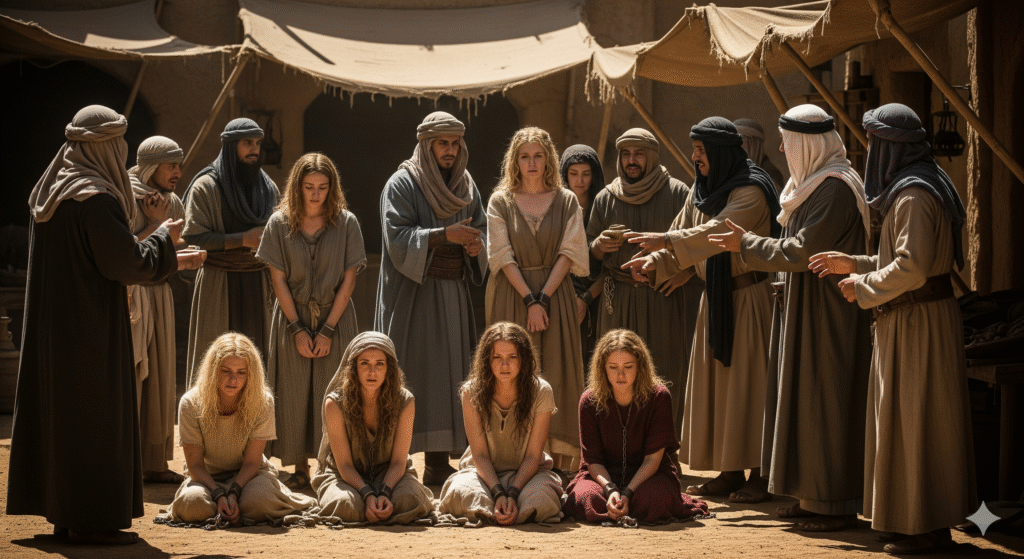
Boko Haram
In Nigeria, Boko Haram has abducted Christian schoolgirls and, according to numerous reports, justified forced conversions, sexual enslavement, and abuse by invoking the concept of Mā Malakat Aymānukum (“those whom the right hand possesses”).
Critics argue that the group’s actions represent a modern application of doctrines they claim are rooted in classical interpretations of Islamic slavery and concubinage.
ISIS (Islamic State)
The so-called Islamic State (ISIS) systematically enslaved thousands of Yazidi women and girls in Iraq and Syria. These women were bought and sold in organized slave markets, subjected to repeated sexual abuse, and treated as property.
ISIS openly justified these practices through references to classical Islamic legal texts, Qur’ānic verses concerning captives, and what it described as the prophetic precedent (Sunnah).
Critics regard this as one of the clearest modern examples of how ancient legal doctrines concerning slavery and concubinage can be revived by extremist movements in the contemporary world.
The Taliban
Critics further argue that the treatment of Hazara women and other vulnerable minority communities under Taliban rule reflects the continued influence of rigid interpretations of Sharīʿah. They contend that such interpretations preserve hierarchical attitudes toward women, religious minorities, and conquered populations.
The Perceived Threat in the Indian Context
Critics maintain that if demands for the uncompromising implementation of Sharīʿah as an immutable divine legal system were ever accepted without reform, the concepts of Māl al-Ghanīmah (war booty) and Mā Malakat Aymānukum could, at least in theory, acquire a form of religious legitimacy.
From this perspective, they argue that doctrines historically associated with the ownership of captives and the subjugation of non-Muslim women could be shielded under the broader rhetoric of religious freedom and legal autonomy.
Critics further contend that, should such debates arise in the future, many modern liberals and silent observers would likely respond with the familiar refrain:
“That was merely a practice of fourteen centuries ago.”
Yet, according to this line of argument, the persistence of extremist groups invoking these very doctrines demonstrates that historical ideas do not necessarily remain confined to history.
Conclusion
The same prophet who prohibited every drop of alcohol, outlawed the consumption of pork, waged campaigns against idol worship, and, according to certain interpretations, even discouraged music, never issued a categorical and permanent prohibition against the buying and selling of human beings, the castration of slaves, or sexual relations with vulnerable female war captives acquired through conquest.

This raises a fundamental question: if such practices were inherently immoral and contrary to divine justice, why were they not abolished with the same clarity and finality with which alcohol, usury, or idolatry were condemned?
Why was human ownership never declared unequivocally forbidden? Why was the institution of slavery allowed to remain embedded within the legal framework rather than being eradicated altogether?
Critics argue that these questions strike at the heart of the traditional apologetic narrative. In their view, the historical record reveals not a movement toward the complete abolition of slavery, but rather the regulation and normalization of an existing institution.
From this perspective, they contend that the most logical and historically consistent explanation is that Muhammad, despite being presented as a divine messenger, remained an active participant in the social order of his time—an order that incorporated slavery, concubinage, and the ownership of human beings as accepted institutions.
According to this critical interpretation, he was not merely a passive observer of that system but one of its beneficiaries and, through the legal and religious framework that emerged around him, one of its principal legitimizing figures.
📢 Did you find this article useful?
🙏 Support our work by clicking here.
References
- Ṣaḥīḥ al-Bukhārī (2224, 4350, 3894, 4104)
- Ṣaḥīḥ Muslim (Kitāb al-Nikāḥ)
- Tafsīr al-Ṭabarī
- Ibn Saʿd – al-Ṭabaqāt al-Kubrā
- Bernard Lewis, Race and Slavery in the Middle East
- M. A. S. Abdel Haleem, The Qur’an: Oxford World’s Classics Translation
- Patricia Crone, Slaves on Horses
- Kecia Ali, Sexual Ethics and Islam
- ISIS Fatwa Documents on Sabaya (available through United Nations archival sources)
Hello! Would you mind if I share your blog with my facebook group? There’s a lot of folks that I think would really enjoy your content. Please let me know. Many thanks
YES YOU CAN