
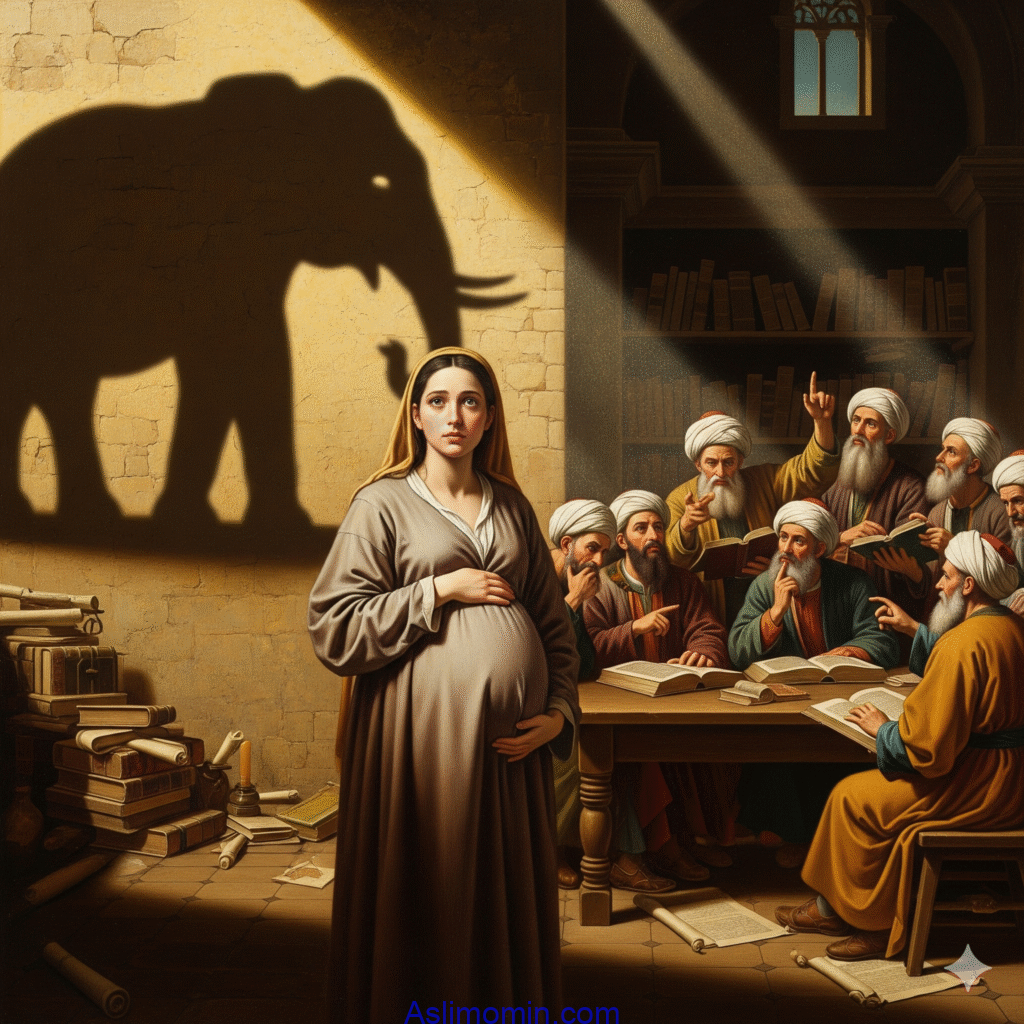
(Or is it just a religious legend built around a rugged timeline?)
A Historical Truth-Test
1. Traditional Claim: Muhammad’s Birth in 570 CE (“Year of the Elephant”)
Islamic tradition holds that Prophet Muhammad was born in 570 CE, known as ʿām al‑fīl — the Year of the Elephant — when Abraha, a Christian ruler of Yemen (Himyar), led an army with war elephants to destroy the Kaʿba, and was miraculously defeated by divine intervention (Qur’an, Surah al‑Fīl 105) .
This account also ties Muhammad’s birth directly to the same year, to create a theological linkage: the miracle protecting the Kaʿba and the Prophet’s first breath occurring in unity .
.
2. Historical Evidence: Was Abraha Alive in 570 CE?
Archaeological and epigraphic evidence suggests Abraha’s reign peaked around 552–553 CE, and he likely died before 560 CE .
Key inscriptions (Ry 506, Ry 507, CIH 541) record:
Abraha’s campaigns against Arab tribes around 552 CE,
Repairs of the Maʾrib Dam and conquests dated 548–552 CE, and
His despotic rule ended around 553–560 CE, before his recorded death by 570 CE .
Therefore, the Elephants’ Attack on the Kaʿba likely occurred around 550‑557 CE, making a 570 CE timing implausible if Abraha was no longer alive.
3. When Did the Attack Actually Happen?
Abraha built the church Al‑Qulays in Sanʿāʾ around 550–552 CE to rival the Kaʿba.
When local Arabs desecrated it, he retaliated by marching on Mecca with elephants — likely between 552 and 557 CE .
This aligns with the reign records, epigraphic data, and archaeological clues — situating the event well before 570 CE.
4. Qur’an’s Surah al‑Fīl: Story Confirmed, Date Not
Surah al‑Fīl (105:1‑5) describes:
> “Have you not seen how your Lord dealt with the army of the Elephant?”
“He sent flocks of birds striking them with stones of clay…”
“He made them like eaten straw” .
This confirms a divine failure of a military elephant-led attack.
But the Qur’an itself never gives a precise date, nor directly ties it to Muhammad’s birth. That connection is later religious tradition — not historical fact.
Direct Epigraphic Evidence
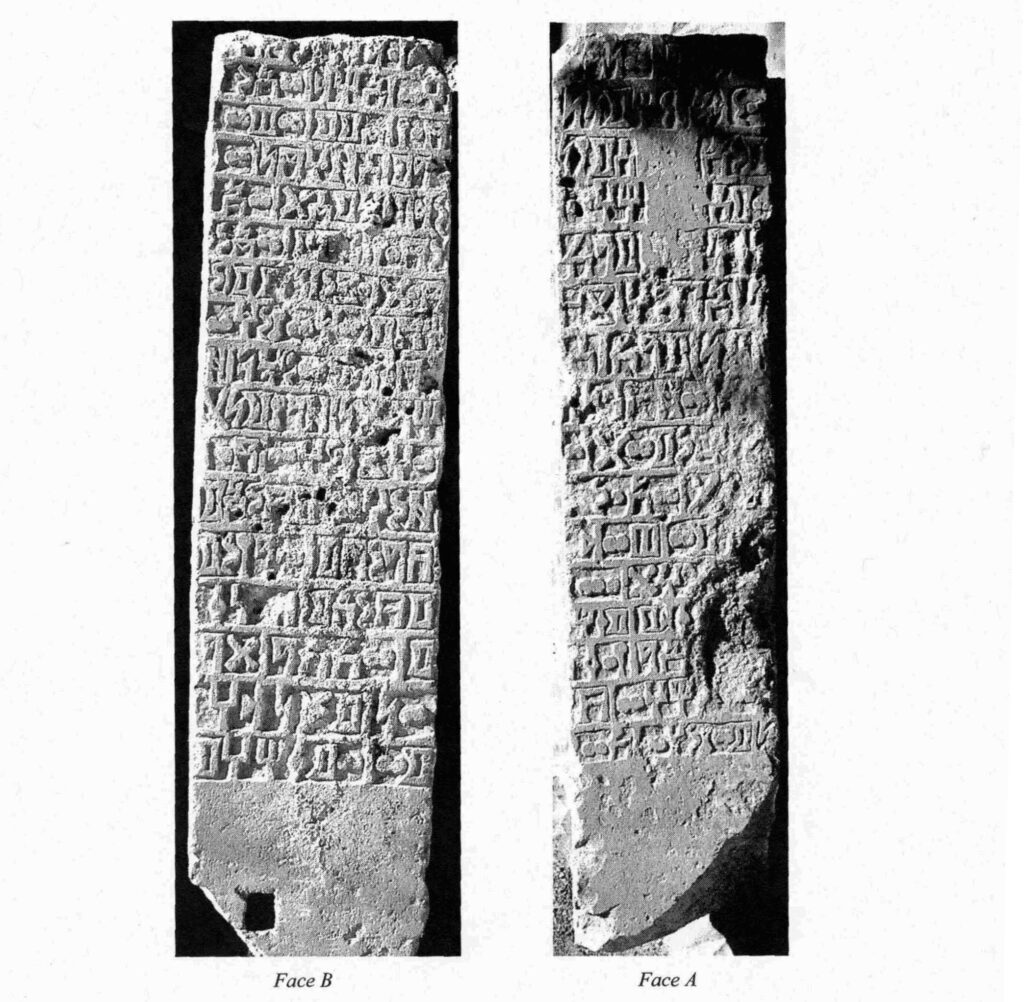
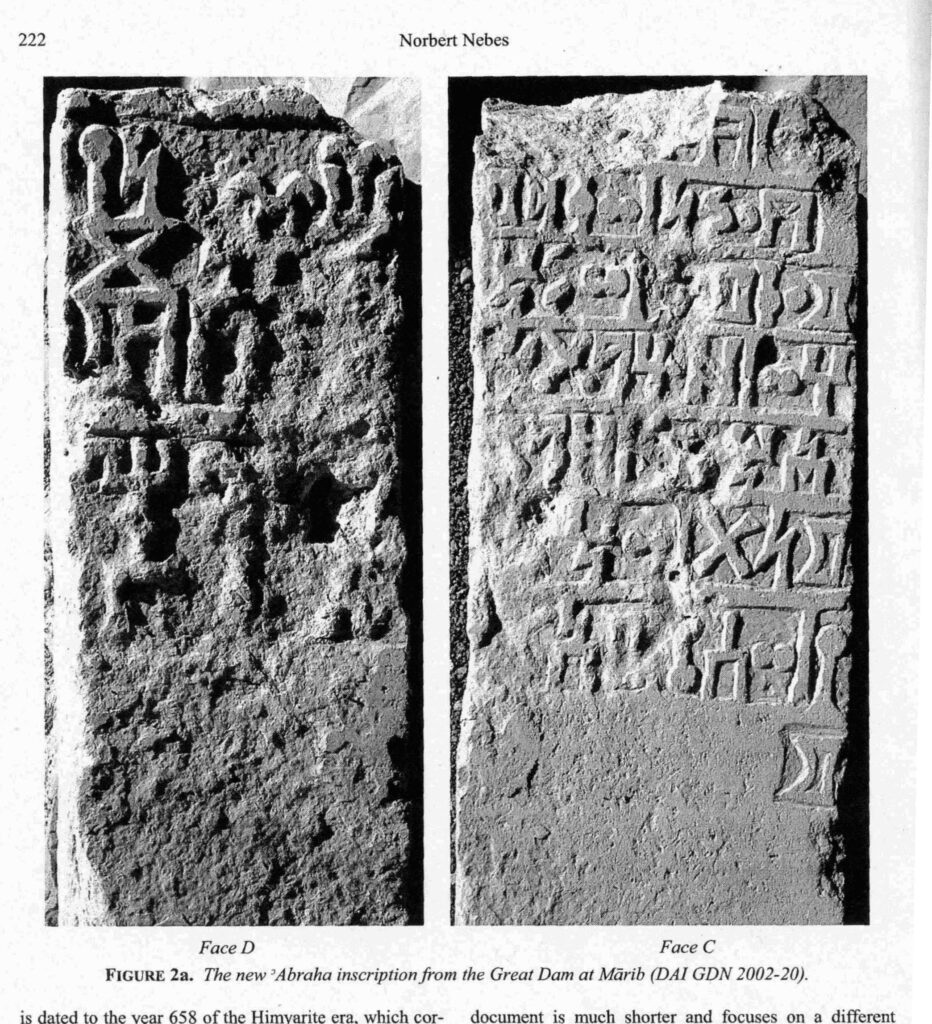
Ry 506 (552 CE) shows that Abraha was conducting campaigns in central Arabia.
Inscriptions up to 559–560 CE still confirm his reign.
After that, no inscriptions exist—indicating that by this time Abraha had died.
(Reference: Christian Robin, A New ‘Abraha Inscription from the Great Dam of Marib, PSAS 34, 2004)
Mention of Successors
After Abraha’s death, his sons (such as Masruq) became rulers, whose names appear in later inscriptions and in the writings of Arab historians.
Muhammad’s Birth and Rejection of “Year of the Elephant”
If Abraha had already died by 560 CE, it is historically impossible to link him with the “Year of the Elephant” in 570 CE.
This means Muhammad’s birth and the supposed elephant campaign do not align historically.
Ry 506 Murayghan Inscription
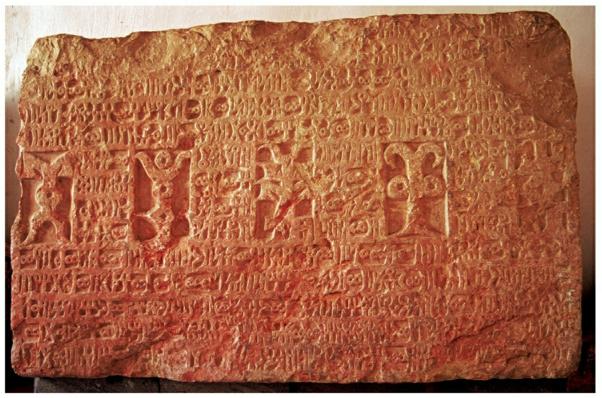
“With the might of Rahmanan and His Messiah, King Abraha Zybmn, king of Saba’, dhu-Raydan, Hadramawt and Yamnat, … inscribed this text when he raided Ma‘add for the fourth time … the king held an assembly at Haliban … Amr, son of Mundhir, submitted to Abraha and gave his son as a hostage … with the might of Rahmanan he returned from Haliban, in the month dhu-‘allan [September], in the year six hundred and sixty-two.”
The Calendar Problem
Sabaean inscriptions record dates in their local Himyaritic Era, which is thought to begin around 110 BCE.
Therefore, 662 Himyaritic = c. 552 CE.
(110 BCE + 662 = 552 CE)
Correct Dating of Ry 506
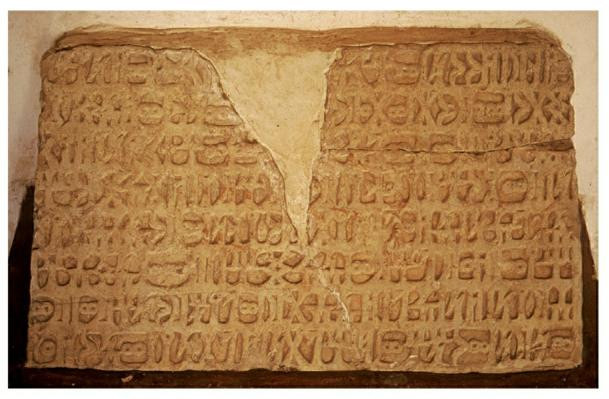
Ry 506 records “year 662, month dhu-‘allan.” When converted to CE, this corresponds to 552 CE.
Therefore, scholars (Christian Robin, Jacques Ryckmans, etc.) date Ry 506 to 552 CE.
Final Statement
The “year 662” mentioned in Ry 506 does not mean AD 662, but year 662 of the Himyaritic (Sabaean) era. Converted to the Common Era, this is 552 CE.
Thus, Ry 506 proves that Abraha’s central Arabian campaign occurred in 552 CE—long before Muhammad’s supposed “Year of the Elephant” (570 CE).
Conclusion
Epigraphic evidence clearly shows that:
- Abraha’s activity is attested only up to 560 CE.
- After that, his son ruled.
- Therefore, “Year of the Elephant = Muhammad’s birth = Abraha’s elephant campaign” is entirely fictional.
5. Comparative Table: Tradition vs. Historical Analysis
| Test | 570 CE (“Year of the Elephant”) | 552–557 CE (Historical Estimate) |
|---|---|---|
| Abraha alive? | Probably died before 560 CE | Alive and powerful |
| Church to Kaʿba tension | Not well timed | Falls right after church build (~550 CE) |
| Inscriptions agreement | Contradicts epigraphic data | Supported by Ry 506, 507, CIH 541 |
| Qur’anic mention of date | None | None |
| Muhammad birth linked? | Tradition matches | No traditional link |
Conclusion: A Myth Born of Convenience
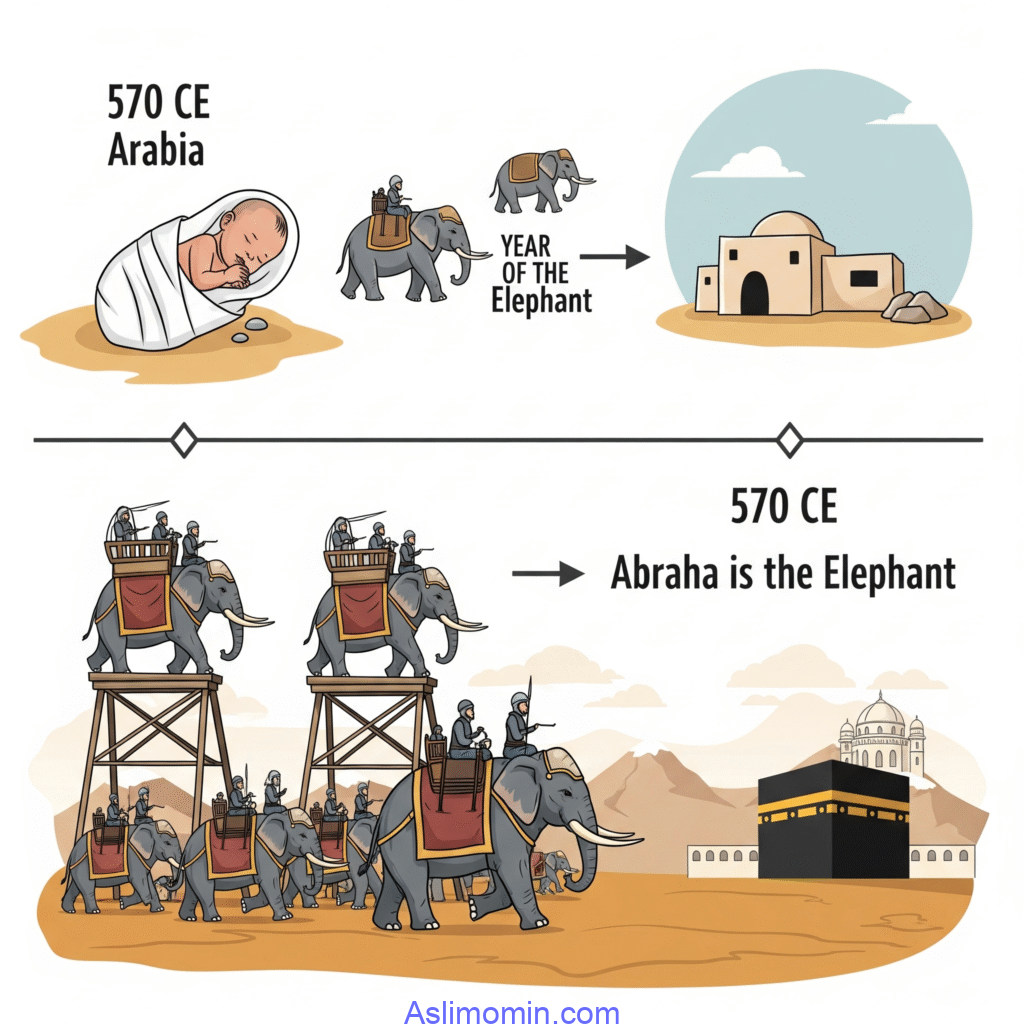
The traditional dating of 570 CE appears to serve religious symbolism, aligning Muhammad’s birth directly with a divine miracle (the Elephant incident).
But hard historical evidence points to the attack occurring in the 550s, and Muhammad’s birth may have occurred afterward, meaning the neat coincidence is likely retrospective construction.
Could it be that the discrepancy between the ‘Year of the Elephant’ and Muhammad’s birth is due to the lunar-based calculation of the Hijri calendar? Read our detailed article here: [link]
Final Thought:
“Religion crafts miracles; history demands evidence.”
If one insists Muhammad was born in the Year of the Elephant, they should also accept that the Elephant War may have occurred no closer than a decade before — making the timeline a crafted narrative, not documented history.
References:
1. Abraha inscriptions Ry 506, Ry 507 and CIH 541 – epigraphic records dating to mid‑6th century Yemen
2. Year of the Elephant, Wikipedia – recognized scholarly consensus places it ca. 570 CE traditionally, though archaeological scholars note variance
3. Surah al‑Fīl commentary – Qur’anic description of Abraha’s army destroyed by divine birds, but no date given
4. Academic discussion (Islam Reigns, Arab News) – retraced route of Abraha’s army, confirming mid‑550s timing
5. Historic analysis (Review of Religions, Western historians) – attack occurred shortly before Muhammad’s birth; discrepancy of exact year debated
📢 Did you find this article useful?
🙏 Support our work by clicking here.