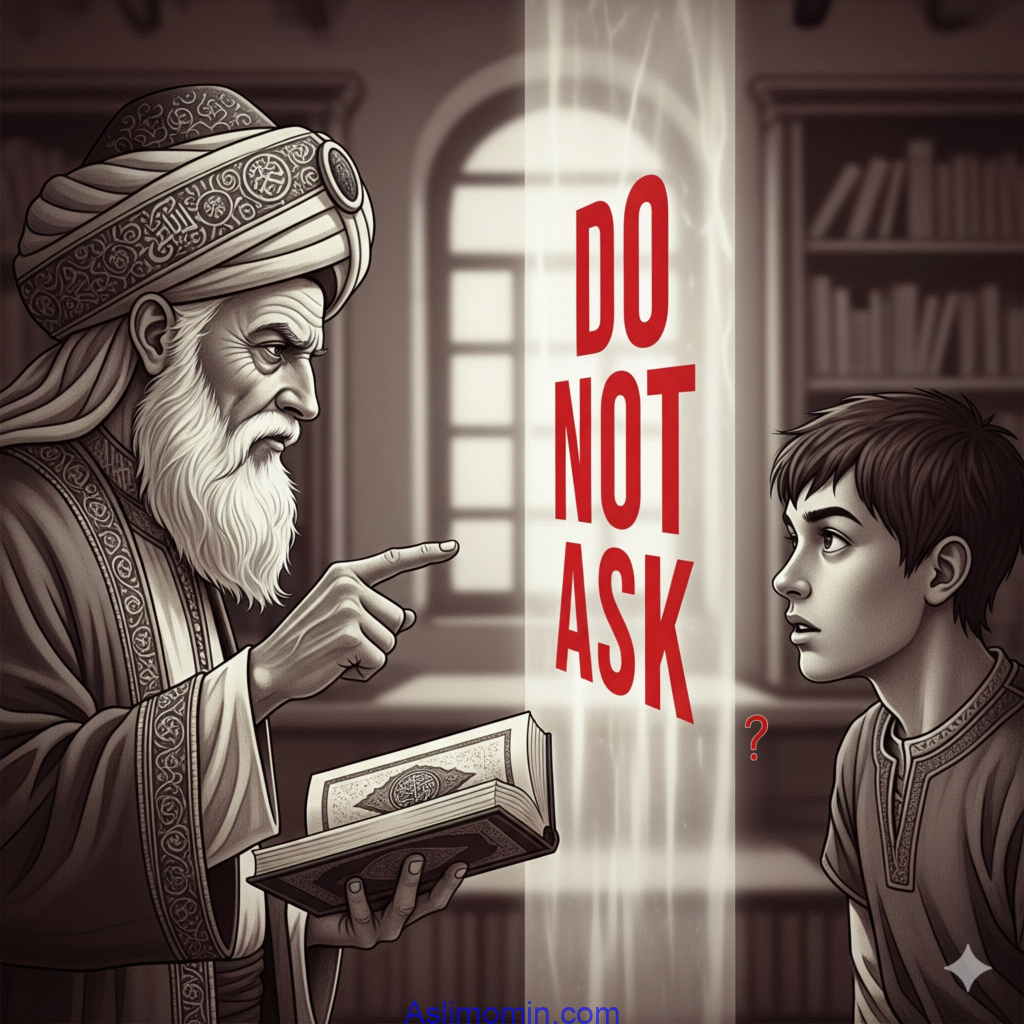
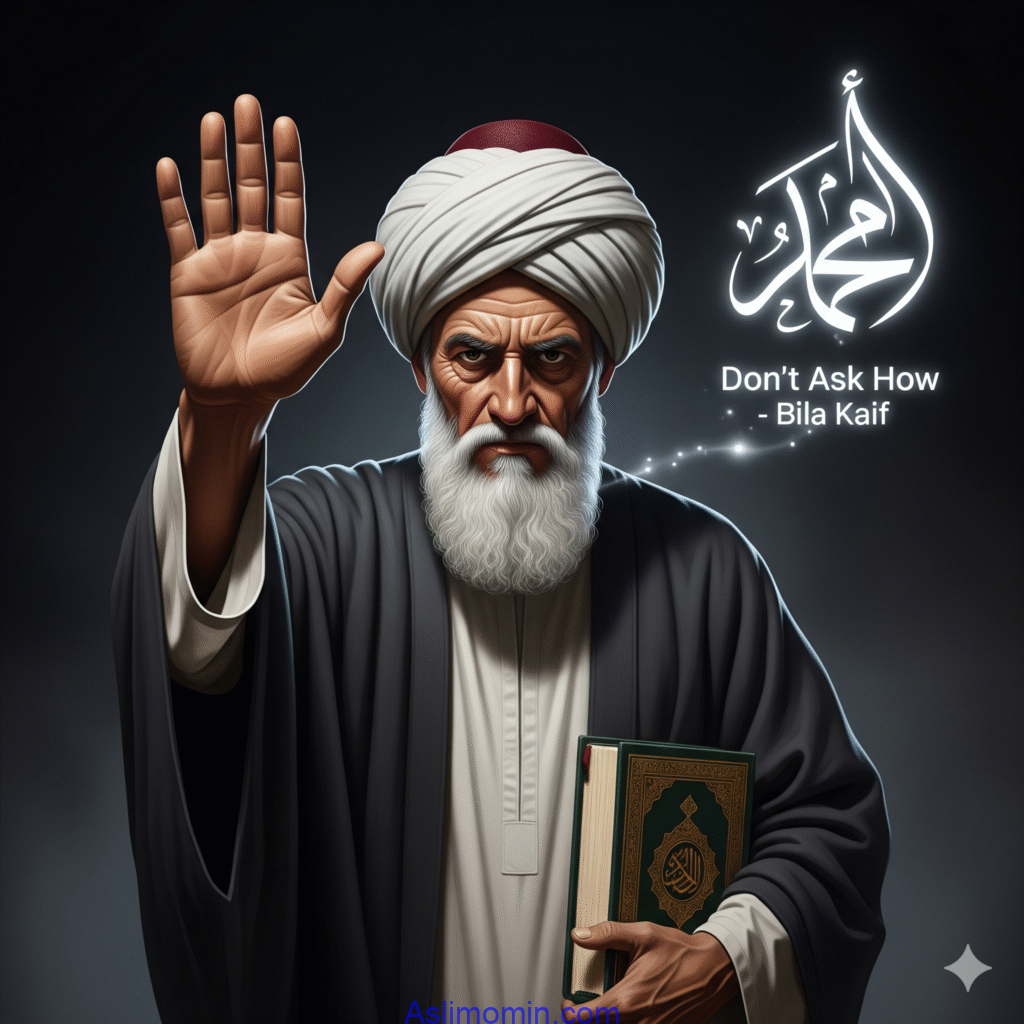
In Islamic tradition, there exists a curious weapon called “Bila Kaif” (بلا كيف).
Translation: “How? Don’t ask.”
If a Maulana has no pen, no phone, no book-still, one thing is always in his pocket: Bila Kaif. Because whenever Qur’an or Hadith describe Allah with human attributes, hand, face, eye, emotions and a thinking person asks how?, the Maulana pulls out his favorite tool:
👉 “Brother, accept it Bila Kaif. Don’t ask how. Hand is there, but don’t ask the shape. Face is there, but don’t ask the features. Throne is there, but don’t ask the furniture.”
In other words: lock the question, condemn the questioner.
Qur’an’s Own Command: “Do Not Ask Questions”
Surah al-Ma’idah (5:101):
“O you who believe! Do not ask questions about things which, if made plain to you, may cause you trouble.”

Amazing! First the Qur’an repeatedly says:
- “Think and reflect” (10:100)
- “Use your intellect” (67:10)
But the moment a real contradiction appears, the order flips: “Do not ask.”
So here is the contradiction:
- If Allah truly gave humans intellect and curiosity, why forbid questions?
- If Qur’an claims to be a clear guidance (16:89), then why plant verses that confuse in the first place?
Where “Bila Kaif” is Used
1. Allah’s “Hand” and “Face”
Qur’an (48:10): “The hand of Allah is over their hands.”
– If Allah is formless, how can He have a hand?
– Five fingers too?
The Maulana replies: “Bila Kaif.”
Hand exists, but don’t you dare X-ray it.
Qur’an (55:27): “The face of your Lord will remain.”
– If Allah is beyond form, what does “face” mean?
– Eyes, nose, beard?
Answer: “Yes, face, but don’t Photoshop it.”
Early Salafi and Hanbali scholars:
“Affirm it as it is, Allah has hand, face, eye but do not ask how. Bila Kaif.”
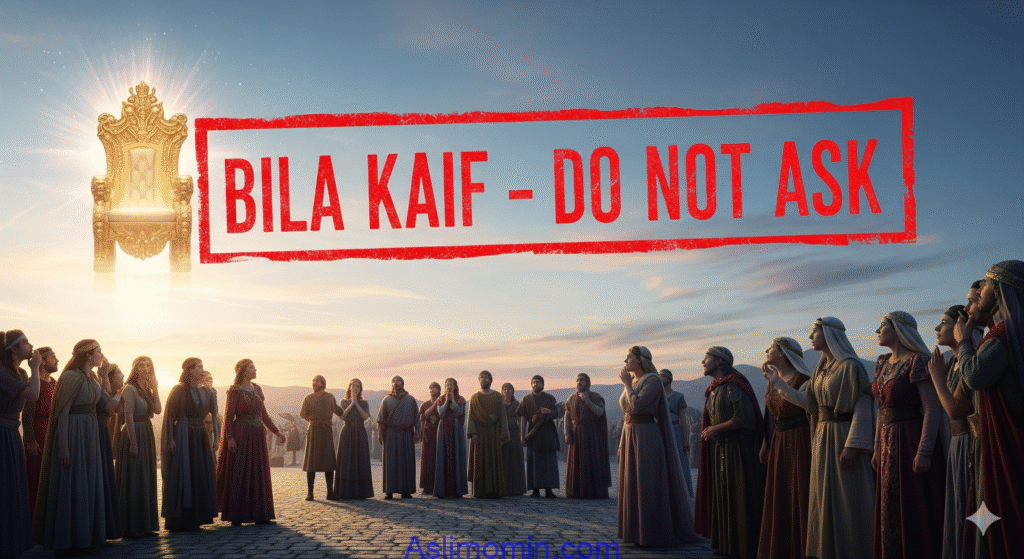
2. Allah “Sitting on the Throne”
Qur’an (20:5): “The Most Merciful rose over the Throne (Istawā ʿalā al-ʿArsh).”
Someone asks: “Sitting, on a chair or sofa?”
The reply: “He sits, but don’t ask the furniture.”
Imam Malik’s famous statement:
“Istawa is known, the ‘how’ is unknown. Belief in it is obligatory, asking about it is bidʿah (heresy).”
So, sitting is real, but if you ask how, you are sinful.
3. Allah’s “Eye”
Qur’an (54:14): “The Ark sailed under Our Eyes.”
Hadiths also mention “the Eye of Allah.”
A child innocently asks: “What is the color of that eye?”
The Maulana roars: “There is an eye… but don’t you dare draw it!”
Answer again: Bila Kaif.
The Core Contradiction
1. Logical Dilemma
If Allah has a hand, then the question “how” is natural.
Two choices exist:
- Admit it is metaphor → problem solved.
- Admit it is literal → Allah has human attributes.
But “Bila Kaif” chooses neither. It says both at once: “It exists, but don’t ask.” This is not clarity, this is intellectual evasion.
2. Why Give Humans a Mind?
The Qur’an commands: “Use reason, use intellect.”
But the moment intellect spots a flaw, “Do not question.”
So, is the human brain given only to ask questions, and then be condemned for asking?
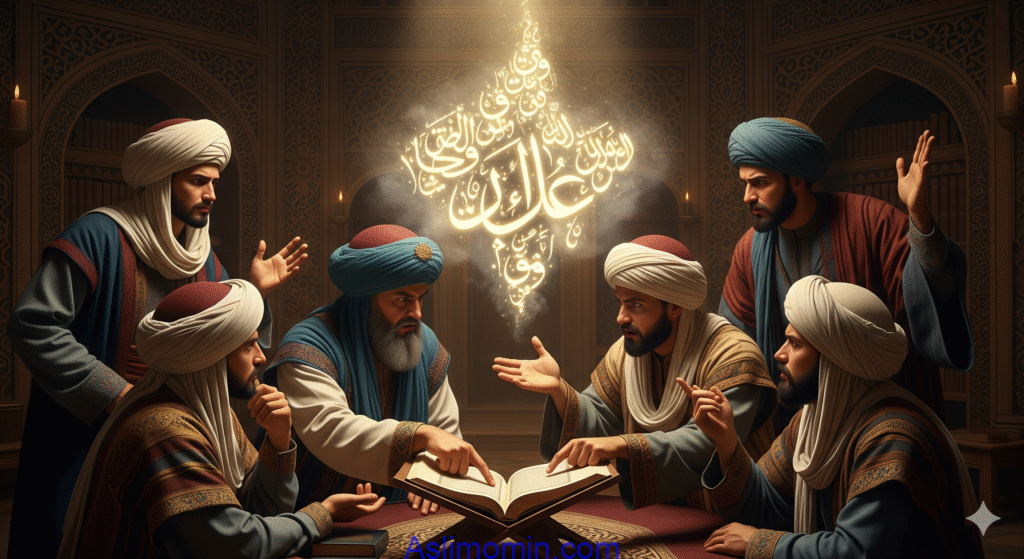
3. Early Scholars Were Also Trapped
When Imam Ahmad ibn Hanbal was asked if the Qur’an is created or uncreated, he too leaned on “Bila Kaif.”
Ibn Taymiyyah, centuries later, repeated the same formula: “Whatever is revealed, accept it, but do not ask how.”
This is not a stray excuse, it became the backbone of Islamic theology.
4. The Crisis of Language
If Allah wanted clear guidance, why use ambiguous language?
Why say hand and then forbid asking “what kind of hand”?
Why say face and then prohibit asking “what kind of face”?
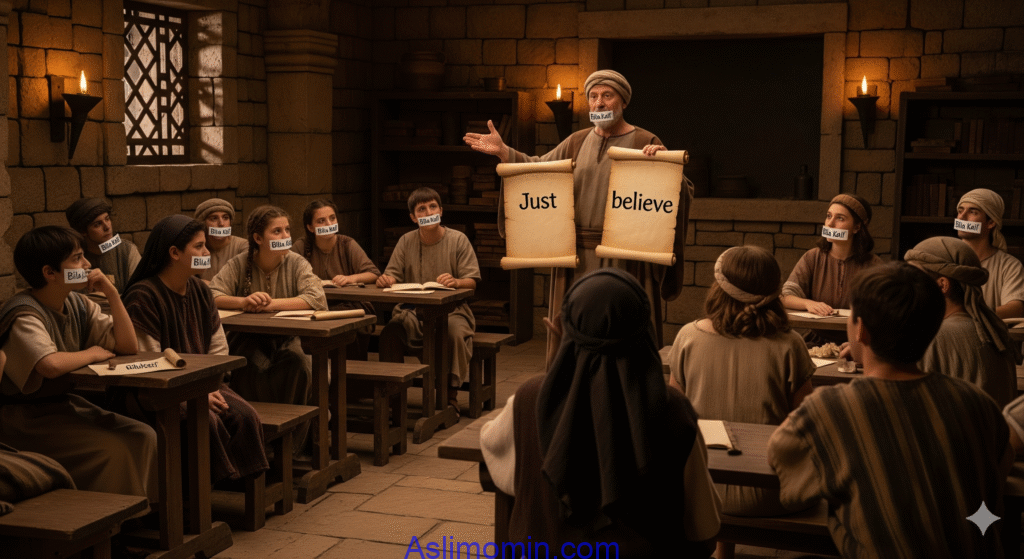
This is like a teacher telling students:
“I have great knowledge… but don’t think, just believe.”
But a teacher is supposed to share knowledge, not hide secrets.
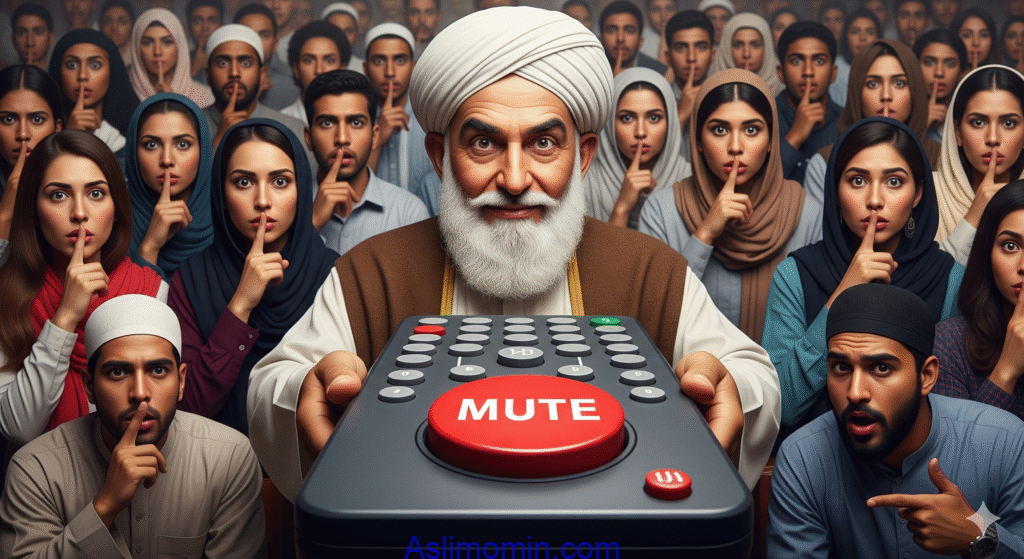
Satire Meets Truth
“Bila Kaif” is the Maulana’s mute button.
Whenever reason rises, they press the button:
👉 “Brother, stop questioning, or your faith will collapse.”
This does not provide an answer; it simply silences inquiry.
It contradicts Qur’an’s own claim of being clear and decisive guidance.
It makes blind belief a virtue, and rational inquiry a sin.
Conclusion
“Bila Kaif” is not a solution, it is an escape hatch.
It is the Maulana’s rubber stamp that says:
“Question closed.”
Its true meaning is:
“We have no answer, but silence yourself, or risk your faith.”
This is not divine clarity.
This is religious evasion dressed as piety.
👉 Silencing a question is never the same as answering it.
📢 Did you find this article useful?
🙏 Support our work by clicking here.